
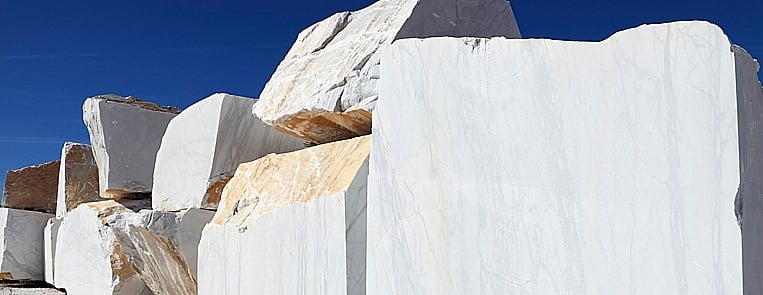
Private Tour Excursion to Lucca & the famous Marble Quarries of Carrara
Medieval art and its creation are highlighted on this interesting driving tour. We'll visit lovely Lucca and the quarries of Carrara, provider of marble for Michelangelo.
HOME » POPULAR ITALIAN DESTINATIONS » LUCCA TRAVEL GUIDE » LUCCA CULTURE GUIDE
About this guide: This guide to the culture of Lucca was written by the Italian-born travel specialists at Trips 2 Italy, a custom tour operator that has designed hand-crafted Italian vacations since 2003. Every recommendation below reflects the same first-hand knowledge our team draws on when we build a private Lucca itinerary around a traveler’s interests, dates, and pace. Read it for your research, then let us translate it into a trip designed entirely around you.
Lucca’s culture is the culture of a small republic that governed itself for a thousand years. While the rest of the Tuscany region was absorbed into Florence’s orbit, Lucca kept its independence until 1799 through silk wealth, careful diplomacy, and the most formidable walls in Italy, and that long autonomy bred a civic character travelers still sense immediately: measured, courteous, proud, and quietly prosperous.
The city expresses itself in balance rather than spectacle. Its churches are magnificent but human in scale, its main street is elegant without ostentation, and its greatest monument, the wall circuit, was turned from an instrument of defense into a public garden. Even the city’s rhythm is balanced: mornings belong to the market, afternoons to the workshops and cafes, evenings to music and the passeggiata.
Music sits at the center of it all. Lucca has produced composers for five centuries, Puccini above all, and it honors that inheritance not as a museum piece but as a nightly practice, with recitals sounding in its churches year round. Understanding Lucca means understanding a city that considers beauty a form of good governance, and the itineraries we design are built to let travelers live inside that conviction for a few days.
Giacomo Puccini was born in Lucca on December 22, 1858, into a family that had supplied the cathedral’s music for five generations, and the city formed him completely: he sang in the choirs of San Martino and studied at the local music institute before Milan and world fame. His birthplace in Corte San Lorenzo is now the Puccini Museum, an intimate house of manuscripts, letters, portraits, and the piano on which he composed, steps from a piazza that bears his statue.
The legacy is performed, not merely displayed. The church of San Giovanni hosts recitals of Puccini’s arias essentially every evening of the year, a tradition that makes Lucca one of the only cities in the world where a traveler can hear its native composer nightly. Each summer, the Festival Puccini at Torre del Lago, a short drive away beside Lake Massaciuccoli where the composer lived and worked, stages his operas in a grand open-air lakeside theater.
For music lovers, we compose entire Lucca chapters around this inheritance: the birthplace museum with an expert guide, an evening recital inside the walls, a lakeside opera night at Torre del Lago in season, and a visit to the composer’s villa on the lake. Few experiences in Italy connect an artist to his landscape so completely, and arranging them well is a matter of timing and seats we secure far in advance.
Puccini stands on a deep foundation. Luigi Boccherini, the great cellist and composer of the eighteenth century, was born in Lucca, as was Alfredo Catalani, and the city’s music institute carries Boccherini’s name today, training new generations inside the walls. Sacred music has sounded in the city’s hundred churches for a millennium, and Lucca’s choirs and chamber ensembles keep the calendar full well beyond the tourist season.
The modern counterpoint is the Lucca Summer Festival, which each July brings international rock, pop, and jazz headliners to stages set inside the walled city. Hearing a world-famous act in a Renaissance piazza, then strolling home along candlelit lanes, is a collision of centuries that perfectly captures how this city carries its heritage. We fold concerts and opera evenings into itineraries as part of our entertainment and festival experiences in Italy, with tickets and timing handled long before departure.
Between the poles of opera and festival runs a quieter musical daily life: organ vespers, conservatory recitals, and church concerts that travelers can simply walk into. Our specialists track the city’s calendar and thread these smaller performances through an itinerary, because in Lucca the best musical memory is often the unplanned-seeming one we quietly planned.
The city’s most spectacular modern tradition is Lucca Comics and Games, held in late October and early November, one of the largest festivals of comics, games, and popular culture in the world. For five days the Renaissance city fills with hundreds of thousands of visitors, elaborate costumes, exhibitions, and pavilions set against the walls, a joyful and surreal marriage of medieval streets and modern imagination.
The most moving night of the year comes earlier, on September 13, when the Luminara di Santa Croce honors the Volto Santo, the ancient crucifix of the cathedral. The electric lights of the historic center are switched off, tens of thousands of candles line the facades and streets, and a procession that has walked the same route for centuries carries the city’s history through its heart.
Around these anchors turn the seasons: the antiques market that fills the streets around the cathedral on the third weekend of each month, spring flower markets for Santa Zita, summer’s music festivals, and the November celebration of the new olive oil in the surrounding hills. We build itineraries toward these dates or deliberately around them, depending entirely on the atmosphere you want.
The gentlest of the traditions may be the loveliest. In late April, the feast of Santa Zita, the city’s beloved thirteenth-century patron of household workers, fills Piazza San Frediano and the amphitheater square with flower sellers, a custom recalling the legend of bread turned to blossoms in her apron. September then brings the Settembre Lucchese, a month-long season of fairs, concerts, and devotions that gathers the whole civic year around the Luminara at its heart.
Lucca is one of Italy’s great showcases of the Pisan-Romanesque style, and its two masterpieces face each other across a few hundred yards. San Michele in Foro raises four tiers of carved marble arcades, every column different, above the site of the Roman forum, while the Duomo di San Martino, its facade carved in the early thirteenth century, hides an interior of treasures behind an asymmetrical portico built around its bell tower. San Frediano completes the trio with a golden Byzantine-style mosaic blazing across its front.
The city’s secular architecture tells the story of its merchant republic. Tower houses once bristled above the lanes as they did in San Gimignano, and the Guinigi Tower, with its improbable rooftop oaks, survives as the most beautiful of them. The urban plan itself is a document: the Roman grid still organizes the center, the amphitheater’s oval survives as a piazza, and the walls, with their eleven bastions and monumental gates, remain the largest Renaissance structure of their kind kept fully intact in Italy.
Later centuries added grace notes rather than upheavals: the baroque garden of Palazzo Pfanner, the elegant shopfronts of Via Fillungo, and the nineteenth-century transformation of the ramparts into a promenade. We arrange architecture-focused walks with specialists who read these layers fluently, including wall-top perspectives and interiors travelers on their own often miss.
Beyond the gates, the villa architecture of the Lucchesi plain extends the story into landscape. The merchant families who built the city built country estates to match, and their descendants’ gardens, the water theater of Villa Reale di Marlia, the fountains and parterres of Villa Torrigiani, the lemon houses of Villa Grabau, form an ensemble unique in Tuscany. A villa and garden afternoon pairs beautifully with the walled city, and we arrange visits that include spaces normally seen by appointment.
Silk built this city. From the twelfth century onward, Lucca’s weavers produced some of the most coveted textiles in Europe, silks and damasks threaded with gold that dressed courts and cathedrals from London to Constantinople, and the profits raised the palaces, towers, and eventually the great walls. The Guinigi family, whose tower crowns the skyline, were silk merchants first, and the city’s medieval street plan still reflects the geography of that trade.
The tradition survives in refined echoes. Historic workshops in the region still weave damasks on traditional looms for restorations and connoisseurs, the city’s museums preserve sumptuous textiles alongside paintings, and Lucca’s enduring instinct for fine goods lives on in Via Fillungo’s centuries-old shopfronts, its goldsmiths, bookbinders, and the antiques dealers whose monthly market is among Italy’s best.
Paper carried the textile instinct into the modern age. The Lucca plain grew into one of Europe’s great papermaking districts, a craft rooted in the same watercourses and mercantile networks that once fed the looms, and the area remains a continental leader in fine paper production today. It is a reminder that Lucca’s heritage is not a closed chapter but a temperament: patient, precise, and quietly industrious behind graceful facades.
The countryside adds its own living crafts: olive oil estates pressing in November as families have for generations, and small wineries in the surrounding hills working vineyards their grandparents planted. We arrange visits that place travelers at the working bench and the press, because meeting the hands that keep these traditions alive is the difference between admiring Lucca’s heritage and being welcomed into it.
Daily life in Lucca is organized, gently but firmly, around the walls. Residents jog, cycle, and push strollers along the tree-lined circuit from first light, retirees claim the benches beneath the planes, and the four-kilometer loop functions as the city’s meeting place, gym, and garden at once. No other Italian city lives with its fortifications so affectionately.
Below, the rhythm is classically Tuscan but distinctly unhurried. Mornings fill the food shops and cafes, the buccellato bakeries perfume their corners as they have for generations, lunch is taken seriously, and the evening passeggiata flows along Via Fillungo to the piazzas, where an aperitivo in the amphitheater’s oval closes the working day. Bicycles outnumber cars inside the circuit, and the loudest sound in many lanes is conversation.
This liveability is precisely why travelers fall for Lucca, and why we design itineraries that leave room to join the rhythm rather than merely observe it: a market morning with a local cook, a cycling loop timed to the evening light, an aperitivo placed where the passeggiata flows past. Our Italian cultural tours are composed of exactly these hours, arranged through relationships and timed to the life of the place.
Lucca deserves more than a template. Since 2003, Trips 2 Italy has designed private Italian vacations one traveler at a time, hand selecting every experience based on what you tell us rather than fitting you into a predefined package. Our Italian-born team plans Lucca with the knowledge of people who call Italy home, from the tree-lined walls to the opera evenings of Puccini’s own city, and we remain at your side throughout your trip with 24/7 assistance. Tell us how you imagine Lucca, and we will craft the itinerary that matches it.
Medieval art and its creation are highlighted on this interesting driving tour. We'll visit lovely Lucca and the quarries of Carrara, provider of marble for Michelangelo.
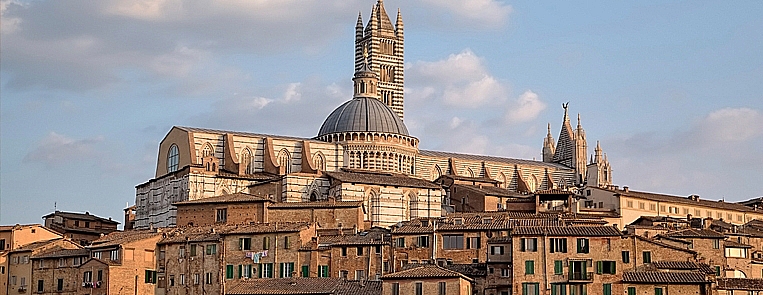
Venture on a fascinating itinerary through historic Florence and the exhilarating Tuscan countryside for a unique experience filled with art, history and traditional Tuscan fare.
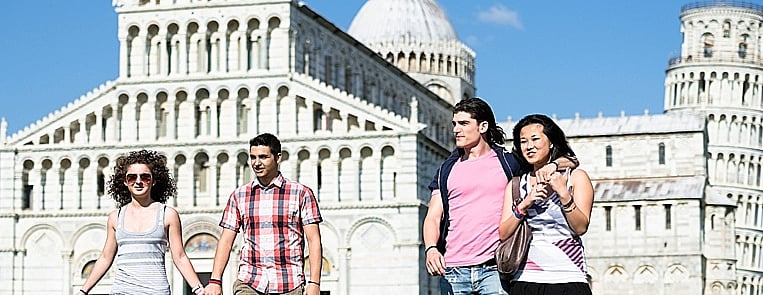
See the marvels of the medieval world, as you enjoy this private driving tour of Lucca and Pisa, home of the Leaning Tower.
Lucca is celebrated as the birthplace of Giacomo Puccini and for a musical life that includes nightly recitals and the summer opera festival at nearby Torre del Lago, along with its Pisan-Romanesque churches, its silk merchant heritage, the Lucca Summer Festival, Lucca Comics and Games, and the tree-lined Renaissance walls that shape the city’s daily life.
Yes. The composer’s birth home in Corte San Lorenzo is now the Puccini Museum, preserving manuscripts, letters, and the piano on which he worked. Trips 2 Italy pairs the museum with an expert guide, an evening aria recital in the church of San Giovanni, and, in season, a night at the open-air Festival Puccini beside the lake at Torre del Lago.
Held each year in late October and early November, Lucca Comics and Games is one of the largest festivals of comics, games, and popular culture in the world, filling the walled city with exhibitions, pavilions, and costumed visitors. It transforms the city completely, so travelers should plan around it deliberately, whether to join the spectacle or to enjoy Lucca in its quieter weeks.
On the evening of September 13, Lucca switches off the lights of its historic center and illuminates the streets with tens of thousands of candles for the procession honoring the Volto Santo, the ancient crucifix of the cathedral. It is among the most atmospheric religious festivals in Tuscany and a magnificent night to be inside the walls.
Yes. Puccini aria recitals are performed in the church of San Giovanni essentially every evening, and the city’s conservatory, choirs, and churches keep a full calendar of concerts well beyond the summer festivals. We track the calendar and reserve seats in advance so music threads naturally through your Lucca days.
Medieval silk made Lucca one of Europe’s wealthiest cities, and that inheritance shows in its palaces, the Guinigi Tower, and museum textile collections, while historic looms in the region still weave damasks for restorations. Trips 2 Italy arranges heritage-focused visits and artisan encounters that bring the story of the silk republic to life.