
Lazio Travel Guide

HOME » POPULAR ITALIAN DESTINATIONS » ITALIAN TRAVEL GUIDES BY REGION » LAZIO TRAVEL GUIDE

Lazio Travel Guide        Culture        History        Food and Wine        Things to Do        Plan My Trip

About this guide: This Lazio travel guide was written by the Italian-born travel specialists at Trips 2 Italy, a custom tour operator that has designed hand-crafted Italian vacations since 2003. Every recommendation below reflects the same first-hand knowledge our team draws on when we build a private Lazio itinerary around a traveler’s interests, dates, and pace. Read it for your research, then let us translate it into a trip designed entirely around you.

What Makes Lazio the Region Where Italy Begins?

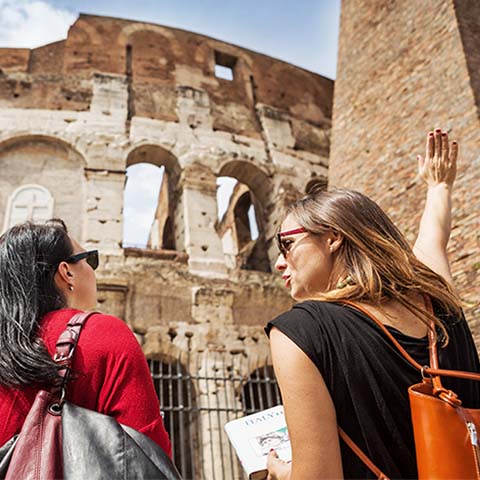
Lazio is the region where the Italian story starts. At its center stands Rome, the Eternal City, where the Colosseum, the Pantheon, the Roman Forum, and the Vatican compress three thousand years of Western civilization into a walkable historic center. No first journey to Italy is complete without it, and no lifetime of return visits ever exhausts it.

Yet Lazio’s deeper reward is everything the capital’s fame overshadows. Within an hour or two of Rome lie the painted Etruscan tombs of Cerveteri and Tarquinia, the fountain gardens of Tivoli, the excavated port city of Ostia Antica, the vineyard hills of the Castelli Romani, a coastline of sandy bays and clifftop towns, and islands that most international travelers have never heard named. The region around Rome is one of Italy’s great undiscovered pleasures precisely because the city beside it is one of its most celebrated.

Lazio rewards every kind of traveler: first-timers anchoring an Italian journey in Rome, history lovers walking from the Etruscans to the Baroque in a single week, families who want ancient ruins that feel like adventure, and returning visitors ready for the region the Romans themselves escape to on weekends. Our specialists have planned every one of those journeys many times over, and this guide reflects two decades of designing them.

Use it to shape your thinking, then let us shape the trip. Every Lazio vacation we design is composed from what you tell us, hand selected experience by experience, never assembled from a predefined package.

What Is the Geography and Climate of Lazio?

Lazio covers roughly 6,650 square miles of central Italy, stretching from the Apennine mountains in the east to a long Tyrrhenian coastline in the west, with the Tiber river crossing the region to meet the sea below Rome. Its landscape is volcanic at heart: ancient craters hold the lakes of Bolsena, the largest volcanic lake in Europe, along with Bracciano, Vico, Albano, and Nemi, and the same volcanic soils feed the vineyards and olive groves that ring the capital.

The variety within the region is remarkable. North of Rome spreads the Tuscia, a green countryside of tufa gorges, Etruscan sites, and medieval towns around Viterbo. South and east rise the Castelli Romani hills, the Ciociaria valleys with their ancient abbeys, and mountain country that climbs to the ski slopes of Terminillo. The coast runs from long sandy shores past the promontory of Monte Circeo, wrapped in the myth of the sorceress Circe, to the fishing harbors of Sperlonga and Gaeta, with the Pontine islands scattered offshore.

The climate is classically Mediterranean along the coast and in Rome, with hot, dry summers and mild winters, turning cooler in the hills and genuinely alpine in the high Apennines. Spring and autumn bring the golden light Romans call their own, and October in particular, the season of the ottobrate romane, has been celebrated for centuries as the city’s most beautiful weather. There is no wrong month for Lazio, only different versions of it.

This geography explains the region’s rhythm. Romans cool their summers at the lakes and on the islands, spend autumn weekends in the wine hills, and keep the mountains for winter, and a well-designed itinerary borrows exactly that local instinct, pairing the city’s intensity with the countryside’s release. Understanding how the landscape breathes is the first step in planning it well, and it is knowledge our Italian-born team applies to every Lazio journey we compose.

When Is the Best Time of Year to Visit Lazio?

Spring is Rome at its most seductive. From April through June the city lives outdoors, the Spanish Steps bloom with azaleas, and the countryside answers with wildflowers across the Tuscia and the first flower carpets of the Infiorata di Genzano in the Castelli Romani. Walking weather is ideal for the ruins, the gardens of Tivoli run at full water, and the coast begins to warm.

Autumn is the connoisseur’s answer. September and October bring the grape harvest to the Castelli Romani and the Cesanese hills, the light turns amber over the ruins, and the Roman table fills with porcini, game, and new wine. Summer shifts the region’s center of gravity toward the water, with long days on the Pontine islands and open-air opera under the arches of the Baths of Caracalla, while winter belongs to the museums, the churches, and the kind of unhurried Roman lunches the season was made for.

When we plan a Lazio itinerary, your dates become an instrument. We schedule the Vatican and the Colosseum for the hours and seasons when they are at their best, align wine country days with the harvest calendar, and reserve festival and opera experiences months ahead. The season you travel should shape the trip you take, and designing that alignment is precisely our work.

How Many Days Should I Spend in Lazio?

Rome alone deserves three to four days: one for ancient Rome from the Colosseum through the Forum to the Pantheon, one for the Vatican and its museums, one for the Baroque city of fountains and piazzas, and a fourth for the neighborhoods, from Trastevere’s lanes to the Jewish Quarter and the markets. Anything less turns the world’s densest concentration of art and history into a checklist.

A week transforms the trip. Two or three additional days open the classic excursions: Tivoli’s villas, Ostia Antica’s remarkably preserved streets, and a wine afternoon in the Castelli Romani hills. Ten days or more allow the region’s quieter corners, the Etruscan tombs and tufa towns of the Tuscia, the abbeys of the Ciociaria, and a slow finale on the coast or the island of Ponza, where the pace drops to the rhythm of the harbor.

Because every Trips 2 Italy itinerary is built by hand, we weigh your interests against the other destinations in your Italian journey and give Lazio the space it deserves rather than the space a standard package allows. Travelers who grant the region a full week almost always tell us the days beyond Rome were the ones that surprised them most.

Which Places Should Anchor Your Lazio Itinerary?

Rome anchors everything, and it rewards being treated as several cities in one: the ancient capital of the Forum and the Palatine, the Christian capital of St. Peter’s and the great basilicas, the Baroque theater of Piazza Navona and the Trevi Fountain, and the living city of markets, trattorias, and the evening passeggiata. Where you stay and how you sequence the days shapes the entire experience, and it is the first decision we make together.

The classic excursions come next. Tivoli holds two UNESCO World Heritage villas within minutes of each other: Hadrian’s Villa, the sprawling country palace of an emperor, and the Villa d’Este, whose terraced Renaissance gardens contain some of the most spectacular fountains ever built. Ostia Antica, the ancient port of Rome, preserves streets, warehouses, mosaics, and a theater so complete that many travelers prefer it to Pompeii for its ease and intimacy. The Castelli Romani hills add papal Castel Gandolfo above Lake Albano, Frascati and its wine estates, and Ariccia, home of Italy’s most celebrated porchetta.

Beyond them, choose by temperament. To the north, the Tuscia offers Viterbo’s medieval papal quarter, the hilltop apparition of Civita di Bagnoregio, the Renaissance monster garden of Bomarzo, and the painted Etruscan tombs of Cerveteri and Tarquinia. To the south wait Sperlonga’s whitewashed lanes, Gaeta’s sea sanctuaries, the abbeys of Montecassino and Subiaco, and the island of Ponza. Four or five of these, well chosen and well sequenced, make a journey travelers describe for years.

How Do You Get Around Lazio?

Within Rome, the historic center is best experienced on foot, with the city unfolding piazza by piazza, and we arrange private transfers for arrivals, departures, and the days when distances or summer heat call for a car and driver. Rome’s airports connect the region to the world, and the city’s position on Italy’s high-speed rail spine makes it the natural hinge of any national itinerary.

Beyond the city, the region opens most gracefully by private car. We arrange drivers who know the back roads of the Castelli Romani, the tufa gorges of the Tuscia, and the coastal routes south, turning transfer time into scenery and allowing wine tastings where every glass can be enjoyed. Tivoli, Ostia, and the hill towns can each be composed into unhurried day trips from Rome, or threaded into a route that moves your base from the capital to the coast or the countryside.

For the Pontine islands, we coordinate seasonal ferries and hydrofoils from Anzio, Terracina, or Formia, timed so the crossing becomes part of the pleasure. Every transfer in a Trips 2 Italy itinerary is arranged in advance and supported around the clock, because in a region this varied, thoughtful logistics are the difference between seeing Lazio and being carried through it.

Pacing matters as much as transport. We sequence each day so that walking, driving, and resting alternate naturally: an early museum before the day warms, a driven excursion through the hills over the middle hours, and an evening returned to the piazza. In a region where the distances are short but the density of things worth seeing is unmatched, that choreography is what keeps a week in Lazio feeling expansive rather than full.

How Do We Weave Lazio Into a Complete Italian Itinerary?

Lazio is Italy’s natural gateway. Most international journeys begin or end in Rome, and the high-speed rail network places Florence around ninety minutes away, Naples just over an hour, and Venice under four hours, which makes the region the anchor of the classic first trip to Italy. It pairs beautifully with Tuscany and Umbria for hill country journeys, and with the Amalfi Coast for travelers balancing ancient stones with sea light.

The occasion shapes the composition. For a honeymoon, we balance Rome’s grandeur with island evenings on Ponza as part of an Italian honeymoon built around the two of you. For travelers who plan around the table, the Roman kitchen and the Castelli Romani cellars can carry an entire wine and culinary journey. And for those composing something larger, Lazio becomes the opening movement of a custom trip to Italy designed entirely from what you tell us.

This guide is one of five we have written on the region. Continue with our Lazio culture guide, Lazio history guide, Lazio food and wine guide, and Lazio things to do guide, or widen the lens with our complete Italy travel guide.

Ready to Begin Planning Your Lazio Vacation?

Lazio deserves more than a template. Since 2003, Trips 2 Italy has designed private Italian vacations one traveler at a time, hand selecting every experience based on what you tell us rather than fitting you into a predefined package. Our Italian-born team plans Lazio with the knowledge of people who call Italy home, from the piazzas of Rome to the wine hills of the Castelli Romani and the harbors of the Pontine islands, and we remain at your side throughout your trip with 24/7 assistance. Tell us how you imagine Lazio, and we will craft the itinerary that matches it.

Explore Our Lazio Vacation Itineraries

Frequently Asked Questions About Traveling to Lazio

Every season offers a different Lazio. Spring brings ideal walking weather, blooming gardens, and the flower carpets of Genzano; September and October bring the grape harvest to the Castelli Romani and the celebrated golden light of the Roman autumn; summer favors the coast, the Pontine islands, and open-air opera; and winter offers the museums and churches at their calmest. The specialists at Trips 2 Italy align your dates with what the region does best in that season.

Rome deserves three to four days on its own, and a full week allows the classic excursions to Tivoli, Ostia Antica, and the Castelli Romani wine hills. Ten days open the Etruscan north, the abbeys of the south, and the islands. The right length depends on your interests and the rest of your Italian journey, which is exactly how we compose each itinerary.

Emphatically yes. Within two hours of the capital lie two UNESCO villa complexes at Tivoli, the painted Etruscan tombs of Cerveteri and Tarquinia, the preserved Roman port of Ostia Antica, papal Castel Gandolfo, the abbey of Montecassino, and the island of Ponza. These are the places Romans themselves treasure, and they remain remarkably untouched by international itineraries.

No. Rome’s center is best on foot, and for the countryside, the coast, and the hill towns we arrange private drivers who know the region intimately, which turns every excursion into scenery rather than navigation and lets wine tastings be fully enjoyed. Trips 2 Italy arranges every transfer in advance, from airport arrival to island ferries, with support around the clock.

Yes. Seasonal ferries and hydrofoils reach Ponza from the coastal ports of Anzio, Terracina, and Formia, roughly an hour to two and a half hours from the city by car. Ponza rewards at least one overnight, with its pastel harbor, cliff-backed coves, and boat days along the coastline, and it pairs naturally with Sperlonga and Gaeta on the journey south.

Wonderfully so. Gladiator arenas and chariot tracks capture young imaginations, Ostia Antica lets children walk complete ancient streets, the lakes and beaches add water days, and the Roman table pleases every generation. We compose family itineraries so history arrives as adventure, with guides chosen for their storytelling and a pace that works for every age.