

Milan Rome and Perugia Cultural Travel Package
Discover vibrant Milan, the rolling hills of Umbria, and timeless Rome, where art, history, and culinary delights come together to create unforgettable memories for every traveler. Starting from $6,862
Orvieto Travel Guide Culture History Food and Wine Things to Do Plan My Trip
About this guide: This Orvieto travel guide was written by the Italian-born travel specialists at Trips 2 Italy, a custom tour operator that has designed hand-crafted Italian vacations since 2003. Every recommendation below reflects the same first-hand knowledge our team draws on when we build a private Orvieto itinerary around a traveler’s interests, dates, and pace. Read it for your research, then let us translate it into a trip designed entirely around you.
Few arrivals in Italy match the first sight of Orvieto: a complete medieval city standing on a sheer-walled island of golden volcanic rock, its cliffs rising nearly vertical from the vineyards of the valley floor. The town has occupied this defended tabletop for some three thousand years, first as one of the great cities of the Etruscans, later as a refuge of medieval popes, and the whole of that history remains legible in its lanes, towers, and extraordinary cathedral.
The Duomo alone justifies the journey. Its facade is a wall of golden mosaic, rose marble, and carved reliefs that catches fire in the late afternoon light, and inside, the San Brizio chapel holds Luca Signorelli’s Last Judgement, the fresco cycle that Michelangelo studied before painting the Sistine Chapel. Among the hill towns of Umbria, none concentrates so much artistic weight in a single square.
Then there is the city beneath the city. Over twenty-five centuries, Orvietans carved more than a thousand caves, wells, cisterns, and cellars into the soft tufa under their streets, a subterranean labyrinth now open on guided visits, while the Pozzo di San Patrizio, a Renaissance well of astonishing engineering, spirals into the rock at the eastern edge of town.
Our specialists have planned Orvieto for art lovers, wine travelers, honeymooners, and families breaking the journey between Rome and Florence, and this guide distills what two decades of designing Umbrian itineraries has taught us. Use it to shape your thinking, then let us shape the trip itself, hand selected experience by experience around what you tell us.
Orvieto stands in southwestern Umbria, close to the border with Lazio, roughly halfway between Rome and Florence on the main artery of central Italy. The rock it crowns is a butte of tufa, the compacted volcanic ash laid down by the ancient eruptions of the Volsini volcanoes, whose collapsed craters now hold Lake Bolsena a short drive to the southwest.
The cliff is the town’s defining fact. It rises up to a few hundred feet above the valley of the Paglia river, its walls so steep that for most of history no fortification beyond the rock itself was needed. The same soft stone that made the cliff also made the city: nearly every palazzo, tower, and church in Orvieto is built of tufa quarried from beneath the streets, which is why the town glows in shades of gold and honey.
Around the base of the rock spreads classic Umbrian countryside: vineyards of the Orvieto Classico wine zone, olive groves, oak woodland, and farm roads that roll toward Todi in the northeast and the Tiber valley beyond. The climate follows the gentle inland rhythm of central Italy, with warm dry summers cooled by the town’s elevation, long luminous springs and autumns, and quiet winters when mist fills the valley and the rock floats above it like a ship.
This geography makes Orvieto both a destination and a natural crossroads. Rome is about an hour and a quarter away, Florence around two hours, and Civita di Bagnoregio, Todi, and Lake Bolsena all lie within an easy half hour, so a stay on the rock opens a wide and rewarding corner of central Italy from a single unpacking.
Late spring and early autumn are the most rewarding seasons on the rock. May and June bring green vineyards, long evenings, and the great feast of Corpus Christi, when a procession of hundreds in medieval costume carries the relic of the Miracle of Bolsena through the streets. September and October bring the grape harvest across the Classico hills, warm walking weather, and the amber light that flatters the tufa most.
Winter holds a surprise that sets Orvieto apart: Umbria Jazz Winter, the year-end edition of Italy’s celebrated jazz festival, fills theaters, palazzi, and even the cathedral square with music in the days between Christmas and New Year. The town is at its most intimate then, the restaurants glow, and the festival’s closing gospel concerts in the Duomo are an experience travelers remember for life.
Summer brings long evenings on the Corso, open-air concerts, and the pleasure of cool underground cellars and breezy belvederes when the valley below is warm. Because the town sits high and its interiors, from the caves to the churches, stay naturally cool, Orvieto handles the summer months more gracefully than most of central Italy.
When we plan an Orvieto itinerary, we align your dates with these rhythms. For Corpus Christi and Umbria Jazz Winter we reserve rooms and vantage points months ahead; for travelers who prefer stillness, we steer toward the luminous shoulder weeks when the tour groups thin, the light lengthens, and the town returns to its own unhurried pace.
A full day and an overnight is the honest minimum. The Duomo and the San Brizio chapel deserve an unhurried morning with an expert guide, the underground and the Pozzo di San Patrizio fill the afternoon, and the evening, after the day visitors ride the funicular back down, is when Orvieto becomes most fully itself, quiet and golden under the streetlamps.
Two or three days transform the visit. A second day opens the Etruscan layer, the Necropoli del Crocifisso del Tufo below the cliff and the superb Faina collection facing the Duomo, along with the quieter medieval quarter at the western end of the rock. A third day belongs to the countryside: a wine estate in the Classico hills, lunch on a terrace above the vines, and the ride to Civita di Bagnoregio at golden hour.
Orvieto also serves beautifully as a base for up to a week, calm in the evenings and central to Todi, Lake Bolsena, and the hill towns on both sides of the Umbria and Lazio border. Because every Trips 2 Italy itinerary is built by hand, we weigh how Orvieto fits the rest of your Italian journey and give it the space it deserves rather than the space a standard tour allows.
The town is organized along one gentle spine. At its heart, Piazza del Duomo opens suddenly from the lanes to reveal the cathedral facade at full height, flanked by the Museo dell’Opera del Duomo in the old papal palaces and the Faina museum opposite. Corso Cavour, the main street, runs the length of the rock past shops, cafes, and workshops, crossed at its midpoint by the Torre del Moro, whose summit offers the definitive view over the rooftops.
North of the Corso, Piazza del Popolo holds the great tufa bulk of the Palazzo del Popolo, the thirteenth-century palace of the people’s captain, and hosts the weekly market beneath its arcades. Westward the lanes grow quieter and older, descending into the medieval quarter around the church of San Giovenale, where artisans keep their studios and the cliff-edge walks look over the valley.
The eastern end of the rock belongs to arrivals and engineering: the funicular station, the Albornoz fortress with its gardens, and the Pozzo di San Patrizio sinking its double spiral into the tufa nearby. Below the cliff, the modern town of Orvieto Scalo gathers around the railway station on the Rome and Florence line.
Understanding this geography matters when choosing where to stay, and it is one of the first conversations we have with travelers. A room on the rock, within walking distance of the Duomo, changes the entire character of an Orvieto stay, while a countryside estate among the vines suits travelers who want space, a pool, and the town glowing on its cliff at dusk.
Orvieto is one of the easiest hill towns in Italy to reach, which is part of its enduring appeal. It sits directly on the main rail corridor between Rome and Florence, and by road the drive from Rome takes about an hour and a quarter through the Tiber valley. We arrange private transfers door to door, so the journey begins the moment you land, with a driver who knows exactly where to pause for the first full view of the city on its rock.
The historic center is closed to most traffic, and the classic arrival is the funicular that has climbed from the station to the top of the rock since 1888, rising through the tufa to emerge beside the fortress gardens. From there a short shuttle or a pleasant walk along the Corso reaches the Duomo. Within the walls, Orvieto is a walking town, compact and mostly level along its spine, with the steeper lanes falling away toward the cliff edges.
The surrounding sights ask for wheels: the necropolis below the cliff, the wine estates of the Classico hills, Civita di Bagnoregio, Todi, and Lake Bolsena. Every transfer in a Trips 2 Italy itinerary is arranged in advance and supported around the clock, which in a landscape of restricted traffic zones, farm roads, and small piazzas is the difference between arriving gracefully and arriving flustered.
For travelers weaving Orvieto into a longer journey, the rail line carries the long distances toward Rome, Florence, and beyond, while private drivers handle the hills, the luggage, and the day excursions. We sequence the logistics so they disappear into the trip, which is exactly where they belong.
Orvieto is the natural hinge between Rome and the hill towns of central Italy. Many of our travelers pause here for two nights on the way north to Tuscany or east into the heart of Umbria, and almost all of them tell us afterward that the pause became a highlight. It pairs beautifully with Assisi and Perugia for a week of Umbrian art and faith, with Todi and Spoleto for quiet hill-town beauty, and with Rome for an opening or closing act of grandeur.
The occasion shapes the composition. For lovers of art and history, Orvieto anchors our cultural tours of Italy, its Etruscan tombs and Signorelli frescoes bracketing two and a half millennia. For travelers composing something larger, it takes its place in a custom trip to Italy designed entirely from what you tell us, whether that means wine estates and cave cellars or a romantic cliff-top evening for two.
This guide is one of five we have written on the town. Continue with our Orvieto culture guide, Orvieto history guide, Orvieto food and wine guide, and Orvieto things to do guide, or widen the lens with our Umbria travel guide.
Orvieto deserves more than a template. Since 2003, Trips 2 Italy has designed private Italian vacations one traveler at a time, hand selecting every experience based on what you tell us rather than fitting you into a predefined package. Our Italian-born team plans Orvieto with the knowledge of people who call Italy home, from the golden facade of the Duomo to the wine cellars carved deep into the volcanic tufa, and we remain at your side throughout your trip with 24/7 assistance. Tell us how you imagine Orvieto, and we will craft the itinerary that matches it.
Discover vibrant Milan, the rolling hills of Umbria, and timeless Rome, where art, history, and culinary delights come together to create unforgettable memories for every traveler. Starting from $6,862
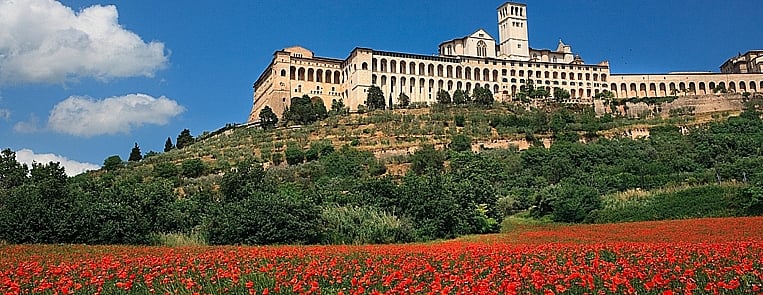
Enjoy the charming Umbria, from the Medieval and Majestic Orvieto to the peaceful Assisi. See the places where St. Francis of Assisi lived.
Late spring and early autumn offer the finest balance of weather and life on the rock: May and June bring the Corpus Christi procession and green vineyards, while September and October bring the grape harvest and golden light on the tufa. The days between Christmas and New Year add Umbria Jazz Winter, when music fills the town’s theaters and palazzi. The specialists at Trips 2 Italy align your dates with the season that best matches your interests.
Overnight, whenever the itinerary allows. Day visitors concentrate around the Duomo at midday, but in the evening the funicular carries them away and the town returns to its own rhythm: quiet lanes, glowing tufa, long dinners, and the cathedral facade by lamplight. Waking on the rock, with the valley mist below, is one of the quiet luxuries of central Italy.
One full day covers the Duomo, the San Brizio chapel, the underground caves, and the Pozzo di San Patrizio. Two or three days add the Etruscan necropolis and museums, the quiet medieval quarter, a wine estate in the Orvieto Classico hills, and a golden-hour visit to Civita di Bagnoregio. Orvieto also works beautifully as a calm base for up to a week of day trips.
Orvieto sits directly on the main corridor between the two cities, about an hour and a quarter from Rome and two hours from Florence by road. Trips 2 Italy arranges private transfers door to door with drivers who know the region, so the journey becomes a scenic part of the trip, and every arrival is timed to your itinerary rather than a timetable.
Very. The historic center runs mostly level along the top of the rock, from the fortress gardens at the eastern end to the medieval quarter in the west, and the funicular and shuttle handle the climb from the valley. We sequence sightseeing so the walking flows gently, and we arrange drivers for the sights below the cliff, from the Etruscan necropolis to the wine estates.
Three things above all: the Duomo, whose golden facade and Signorelli frescoes rank among the summits of Italian art; the Orvieto Underground, more than a thousand caves and cellars carved into the volcanic rock over twenty-five centuries; and Orvieto Classico, the historic white wine grown on the hills around the rock and aged in the town’s cool tufa cellars.