
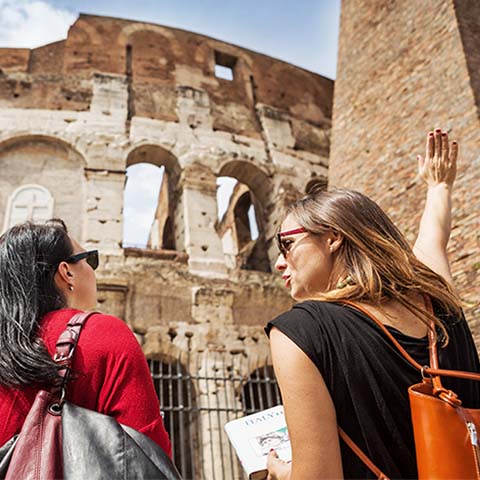
Rome, Venice and Florence Your Way 8 Days / 7 Nights
See Italy’s three iconic cities your way on an 8-day guided journey. Explore the Colosseum, the Vatican, and Florence’s cathedrals, then glide through Venice by gondola. Private driver, premium
Veneto Travel Guide Culture History Food and Wine Things to Do Plan My Trip
About this guide: This Veneto travel guide was written by the Italian-born travel specialists at Trips 2 Italy, a custom tour operator that has designed hand-crafted Italian vacations since 2003. Every recommendation below reflects the same first-hand knowledge our team draws on when we build a private Veneto itinerary around a traveler’s interests, dates, and pace. Read it for your research, then let us translate it into a trip designed entirely around you.
Veneto gathers more of Italy into one region than anywhere else in the country. Venice rises from its lagoon in the east, Verona keeps its Roman arena and its balcony of Romeo and Juliet in the west, and between them the plain is ordered by Palladian villas, walled cities, and vineyard hills. Lake Garda glitters along one border, the Prosecco hills ripple across another, and the Dolomites close the northern horizon with some of the most dramatic mountain scenery in Europe. A traveler here can step from a gondola one morning and ride an alpine cable car the next.
Binding this variety together is the memory of the Venetian Republic. For eleven centuries the Serenissima governed from the lagoon, and when it turned inland in the fifteenth century it stamped its taste on the whole terraferma. The winged lion of Saint Mark still watches from gates and columns in Verona, Vicenza, Padova, and Treviso, and the country villas that Venetian nobles raised along the Brenta and across the plain remain among the most graceful houses ever built.
Veneto rewards every kind of traveler: first-timers pairing Venice with Verona, art lovers tracing Giotto and Titian, wine enthusiasts moving between Amarone cellars and Prosecco terraces, families bound for Lake Garda, and walkers drawn to Cortina d’Ampezzo. Our specialists have planned all of these journeys many times over, and this guide distills what more than two decades of designing Veneto itineraries has taught us.
Use it to shape your thinking, then let us shape the trip. Every Veneto vacation we design is composed from what you tell us, hand selected experience by experience, never assembled from a predefined package.
Veneto covers just over 7,000 square miles of northeastern Italy, running from the Adriatic Sea to the high Alps in a single sweep. The south is the fertile plain of the Po and the Adige, the rivers that water Verona and the wine country. The center rises through the soft volcanic cones of the Euganean Hills and the vine-covered Prealps, and the north climbs into the Dolomites, whose pale limestone towers are protected as a UNESCO World Heritage landscape. Along the coast, the Venetian Lagoon spreads its islands and marshes around the most famous city on water in the world.
Water defines the region in every direction. Lake Garda, the largest lake in Italy, forms the western border and gives its eastern shore a Mediterranean softness of olives, lemons, and oleander. The Brenta canal carries a procession of patrician villas from Padova toward the lagoon, the Piave descends from the mountains through the Prosecco hills, and the Po fans into a quiet delta of reed beds and fishing villages in the far south.
The climate follows the altitude. Summers on the plain are warm and lively, moderated by lake and sea breezes at the edges, while the Dolomites stay fresh through August and turn crisp and golden in autumn. Winters bring mist and quiet beauty to Venice, reliable snow to Cortina d’Ampezzo, and mild days to the Garda shore. Spring and fall offer the finest balance across the whole region, which is why we often build Veneto itineraries around those shoulder seasons.
For travelers, the practical meaning of this geography is choice. A single Veneto itinerary can hold a floating city, a Roman one, alpine peaks, a Mediterranean lake, and two of Italy’s great wine landscapes, provided someone sequences it well. That is the work our specialists do first, matching the region’s many landscapes to the trip you actually want.
Autumn may be the region at its most rewarding. September and October bring the grape harvest to the Valpolicella and the Prosecco hills, when the terraces hum with pickers and the cellars open their most atmospheric days. Venice softens as summer recedes, the Dolomites blaze with larch gold, and the table fills with radicchio, mushrooms, and new wine.
Summer belongs to the outdoors: opera under the stars in Verona’s Roman arena from June into early September, swimming and sailing on Lake Garda, and high alpine walking in the Dolomites. Spring answers with wisteria on Venetian walls, garden season at the villas, and comfortable sightseeing weather everywhere. Winter has its own devotees, who come for Carnival in Venice, snow sports around Cortina d’Ampezzo, and the great museums and churches at their calmest.
When we plan a Veneto itinerary, your dates become an instrument. We align wine country days with the harvest calendar, reserve arena opera and Carnival experiences months ahead, and time Venice sightseeing to the hours when the basilica and the palaces are at their best. The season you travel should shape the trip you take, and designing that alignment is precisely our work.
The great events also deserve honesty about planning horizons. Arena opera, Carnival balls, the Biennale’s opening weeks, and harvest-season stays in the Prosecco hills reward travelers who decide early, because the finest experiences within them are limited by nature. Tell us your season first, and we will tell you what that season makes possible.
A first meaningful encounter with Veneto wants six to eight days: two or three for Venice and its lagoon islands, a day or two for Verona, and the remainder divided between the wine hills, the villas, and either Lake Garda or the Dolomites. That rhythm, city masterpieces in the morning and countryside light in the evening, is the region’s signature experience.
Veneto also rewards longer stays better than most regions, because its landscapes are genuinely different from one another. A second week opens the Prosecco road in depth, the thermal towns of the Euganean Hills, Padova’s fresco cycles, Palladio’s Vicenza, and unhurried alpine days around Cortina d’Ampezzo.
Because every Trips 2 Italy itinerary is built by hand, we weigh your interests and the other destinations in your Italian journey, then give Veneto the space it deserves rather than the space a standard package allows. Travelers who ask us for one perfect region often discover that Veneto alone can fill a vacation without a single repeated experience.
Venice anchors everything, a city whose basilica, palaces, and canals reward far more than the single day many travelers give it. Around it, the lagoon adds Murano’s glass furnaces, Burano’s painted houses, and Torcello’s ancient mosaics. Verona answers from the west with its first-century arena, medieval streets, and one of the most romantic evening atmospheres in Italy.
Between the two run cities that would headline any other region. Padova holds Giotto’s Scrovegni Chapel, the Basilica of Saint Anthony, and one of Europe’s oldest universities. Vicenza is Palladio’s city, its streets and hillsides an open-air museum of the most influential architect in Western history. Treviso charms with canals, arcades, and the birthplace pride of tiramisu, while the Riviera del Brenta strings patrician villas along the old waterway between Padova and the lagoon.
Then come the landscapes: Lake Garda’s castled shore at Sirmione and Malcesine, the Prosecco hills between Conegliano and Valdobbiadene, and the Ampezzo Dolomites around Cortina. The art of a Veneto itinerary is selection and sequence, because ten remarkable places visited in a rush produce fatigue, while five perfectly chosen ones produce a trip travelers describe for the rest of their lives. We build the second kind.
Where you base yourself matters as much as where you visit. A palazzo on a quiet Venetian canal, a rooftop terrace in Verona, a villa among the Valpolicella vines, and a lakefront room above a Garda harbor each create a completely different trip from the same list of destinations. We match bases to travelers as the first act of planning, because in Veneto the view from your morning espresso is part of the itinerary.
Veneto’s pleasures range from canal to mountaintop, and how you move between them shapes the whole trip. In Venice, we arrange private water taxis and launches, which turn every transfer into a small voyage down the Grand Canal. For the wine country, the villas, Lake Garda, and the Dolomites, we arrange private drivers who know the terraced back roads of Valpolicella, the viewpoints along the Prosecco hills, and the mountain passes where an unscheduled stop becomes the day’s favorite photograph.
The cities align conveniently along one of Italy’s great rail corridors, with Venice, Padova, Vicenza, and Verona connected by fast, frequent trains, and we sequence itineraries so rail handles the distances it serves best while cars and boats handle the countryside and the lagoon. Within the historic centers, everything worth seeing is reached on foot, which is exactly how these cities were designed to be experienced.
Every transfer in a Trips 2 Italy itinerary is arranged in advance and supported around the clock, from the moment you land at Venice Marco Polo airport to the morning you depart. In a region where your luggage may travel by boat, thoughtful logistics are not a detail. They are the difference between seeing Veneto and being carried through it gracefully.
Veneto sits at the head of the classic Italian journey. Venice opens or closes the beloved Venice, Florence, and Rome triangle, Milan lies under two hours west by rail through Verona, and the Dolomites connect northward into alpine Italy. The region also pairs naturally with its quieter neighbors, from the lakes of Lombardy to the vineyards of Friuli, and we design the sequence so Veneto’s variety lands exactly where your journey needs it.
The occasion shapes the composition. For couples, Venice and the Garda shore form the heart of an Italian honeymoon built around the two of you. For travelers who plan around the table, the Prosecco hills and the Valpolicella can carry an entire wine and culinary journey. And for those composing something larger, Veneto becomes a movement in a custom trip to Italy designed entirely from what you tell us.
This guide is one of five we have written on the region. Continue with our Veneto culture guide, Veneto history guide, Veneto food and wine guide, and Veneto things to do guide, then go deeper into the lagoon with our Venice travel guide.
Veneto deserves more than a template. Since 2003, Trips 2 Italy has designed private Italian vacations one traveler at a time, hand selecting every experience based on what you tell us rather than fitting you into a predefined package. Our Italian-born team plans Veneto with the knowledge of people who call Italy home, from the canals of Venice to the Valpolicella cellars and the pale peaks of the Dolomites, and we remain at your side throughout your trip with 24/7 assistance. Tell us how you imagine Veneto, and we will craft the itinerary that matches it.
See Italy’s three iconic cities your way on an 8-day guided journey. Explore the Colosseum, the Vatican, and Florence’s cathedrals, then glide through Venice by gondola. Private driver, premium
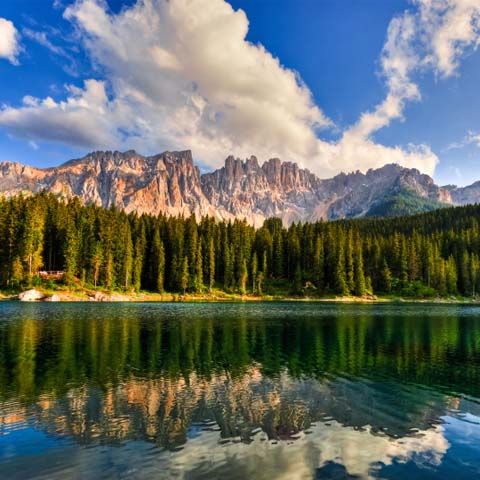
From the peaks of the Dolomites to the shores of the Italian Riviera, an escorted 16-day journey through Northern Italy: Cortina, Venice, Verona, Lakes Garda, Como and Maggiore, Milan,
Skip the packed summer hotspots and enjoy a Northern Italy family summer itinerary that feels relaxed, local, and full of together time. Italy Beyond the Crowds is a land-only
Every season offers a different Veneto. September and October bring the grape harvest to the Valpolicella and the Prosecco hills, summer brings opera in Verona’s arena and swimming on Lake Garda, spring offers ideal sightseeing weather, and winter means Carnival in Venice and snow in Cortina d’Ampezzo. The specialists at Trips 2 Italy align your dates with what the region does best in that season.
Six to eight days allows a meaningful first visit: two or three in Venice, time in Verona, and unhurried days among the wine hills, the villas, Lake Garda, or the Dolomites. Because we build every itinerary by hand, the right length depends on your interests and the rest of your Italian journey.
Far more. Verona’s Roman arena, Padova’s Giotto frescoes, Palladio’s Vicenza, the canals of Treviso, the Prosecco hills, Lake Garda, and the Dolomites all belong to the same region. Venice is the crown, but travelers who explore the terraferma discover that Veneto holds several complete vacations in one.
No. Venice is entirely car-free, the main cities connect by fast trains, and for the countryside we arrange private drivers who turn the wine roads, villa routes, and mountain passes into scenery rather than navigation. Every transfer in a Trips 2 Italy itinerary is arranged in advance and supported around the clock.
Beautifully. Cortina d’Ampezzo lies about two hours north of Venice by private car, which makes lagoon mornings and alpine afternoons part of the same vacation. Pairing the two is one of the most rewarding contrasts in all of Italian travel, and we design the transfer as a scenic journey through the Prosecco hills or the Piave valley.
Veneto is one of the world’s great honeymoon settings: a private gondola at dusk, opera under the stars in Verona, evenings on the Garda shore, and mornings among the Prosecco terraces. We design Veneto honeymoons around the couple, hand selecting every experience from what you tell us about how you imagine it.