
Romance in Rome & Tuscany
Begin your forever together in romantic Rome and Tuscany, where cobblestone streets, candlelit dinners, and unforgettable moments create the perfect honeymoon. Starting from $5,304 per person
Cortona Travel Guide Culture History Food and Wine Things to Do Plan My Trip
About this guide: This Cortona travel guide was written by the Italian-born travel specialists at Trips 2 Italy, a custom tour operator that has designed hand-crafted Italian vacations since 2003. Every recommendation below reflects the same first-hand knowledge our team draws on when we build a private Cortona itinerary around a traveler’s interests, dates, and pace. Read it for your research, then let us translate it into a trip designed entirely around you.
Cortona is among the oldest hill towns in Italy, an Etruscan stronghold whose stone walls were already ancient when Rome was young. It rises steeply above the Valdichiana in southeastern Tuscany, a compact medieval city of climbing lanes, sun-warmed piazzas, and terraces that look south across the valley to Lake Trasimeno shimmering on the Umbrian border. Few places in Italy compress so much age, art, and view into so small a circumference of walls.
The world rediscovered Cortona through Frances Mayes, whose memoir Under the Tuscan Sun and the film it inspired made the town shorthand for the Tuscan dream. Yet the fame rests on real substance: a museum holding one of the great Fra Angelico paintings in existence, an Etruscan collection of international importance, the hometown legacy of the Renaissance master Luca Signorelli, and a Franciscan hermitage in the woods above town founded by St Francis himself.
Cortona rewards travelers who stay rather than pass through. Day visitors see a pretty main street; overnight guests see the piazza empty into evening theater, the Valdichiana turn gold at sunset, and the town return to its own rhythms by morning. Our specialists have planned Cortona stays for two decades, and this guide distills what that experience has taught us about doing the town justice.
Cortona stands in the province of Arezzo, on the last Tuscan hillside before Umbria, roughly midway between Florence and Rome. The town climbs from about 500 meters at its main squares to over 600 at the Girifalco fortress, draped across the slope of a mountain spur so that nearly every street is also a viewpoint. Below spreads the Valdichiana, the broad, fertile valley the Etruscans first drained and farmed, and to the south the waters of Lake Trasimeno close the horizon.
That position explains the town’s character. Cortona has always faced its valley, growing rich on the Valdichiana’s grain, cattle, and trade roads, and its walls, nearly three kilometers around and Etruscan at their base, testify to how much that wealth was worth defending. The countryside immediately around the town is a working landscape of olive groves, vineyards of the Cortona DOC, and farms raising the white Chianina cattle that define the local table.
The climate follows the classic central Italian pattern: hot, bright summers moderated by the hilltop breeze, long mild autumns, crisp winters that occasionally dust the fortress with snow, and springs that green the valley almost overnight. Because the town sits high and open, light is Cortona’s constant companion, and the changing weather over the Valdichiana is a spectacle residents never tire of watching.
Late spring and early summer bring Cortona at its most vivid. May and June offer warm days, luminous evenings, and the Giostra dell’Archidado, the medieval crossbow tournament that fills the streets with costumed processions. High summer belongs to the festival season, when concerts, open-air cinema, and the celebrated photography exhibitions of Cortona On The Move animate the town, and the evening passeggiata becomes the day’s main event.
Autumn is the connoisseur’s choice. September and October bring the vendemmia to the Cortona DOC vineyards, porcini and game to the menus, and a softer light over the Valdichiana that photographers cross oceans for. November adds the olive harvest and the year’s new oil. Winter is quiet and genuinely local: museums without company, long lunches beside the fire, and the town’s stone lanes at their most atmospheric.
When we plan a Cortona itinerary, the calendar becomes a design tool. We time wine country days to what the estates are actually doing, secure festival experiences and exhibition access well ahead, and schedule the great museums for their calmest hours. The season you choose should shape the trip you take, and aligning the two is precisely our work.
One quiet advantage deserves mention: Cortona’s steepness is its own crowd management. Day visitors tend to stay on the flat street, so even in the busiest weeks the upper town, the fortress ramparts, and the lanes around Via Janelli remain remarkably calm. Travelers who plan their hours well, museums early, climbs late, terraces at sunset, experience a composed town in every season, and building that rhythm into each day is a standard part of our planning.
A meaningful first visit wants two nights. That allows a full day for the town itself, the MAEC and the Diocesan Museum, the climb to Santa Margherita and the fortress, and unhurried time on the piazza, plus a second day for the countryside: a wine estate of the Cortona DOC, the Le Celle hermitage, or a slow lunch at a Valdichiana farm. One night captures the essentials; two let the town’s rhythm take hold.
Cortona also makes a superb base for a longer stay. Arezzo, Montepulciano, Pienza, and Lake Trasimeno all sit within easy reach, and a villa or historic residence here puts the quiet heart of central Italy at your door while the famous cities remain day-trip close. Many of our travelers anchor four or five nights in Cortona and radiate outward, returning each evening to the terraces and the sunset.
Because every Trips 2 Italy itinerary is built by hand, we weigh Cortona against the rest of your Italian journey rather than applying a formula. For some travelers it is a perfect two-night pause between Rome and Florence; for others it becomes the week-long heart of the trip. Both versions succeed when the length matches the traveler, and that match is the first decision we make together.
Where you sleep shapes the visit. A historic residence inside the walls puts the evening piazza and the morning quiet on your doorstep, while a villa or wine estate in the surrounding hills adds pool afternoons, vineyard views, and the pleasure of returning to the countryside after a day among the stones. We match the base to the traveler as the first act of planning, because in Cortona the walk home after dinner is part of the itinerary.
Life centers on two linked squares. Piazza della Repubblica, presided over by the Palazzo Comunale and its broad medieval staircase, is the town’s living room, while Piazza Signorelli next door holds the Palazzo Casali, home of the Etruscan Academy museum, and the elegant nineteenth-century Teatro Signorelli. Via Nazionale, which locals call the Rugapiana, the flat street, runs from the piazza to the panoramic terrace of Piazza Garibaldi and is the only level walk in town.
Everything else climbs. The upper town rises through steep lanes and stairways past San Niccolò and the medieval houses of Via Janelli, one of the oldest surviving rows of domestic architecture in Italy, to the Basilica of Santa Margherita and the Girifalco fortress at the summit. The reward for the ascent is the finest panorama in this corner of Tuscany, with the whole Valdichiana and Lake Trasimeno spread below.
Outside the walls, the hillside holds the Renaissance church of Santa Maria delle Grazie al Calcinaio, the Franciscan hermitage of Le Celle folded into a wooded gorge, and the Etruscan tumulus tombs of Sodo down on the plain near Camucia, the workaday lower town where the railway station sits. Knowing how these pieces fit, and in what order to take them, is half the art of a Cortona day.
A practical note on the squares: they are living infrastructure, not monuments. The Saturday market has filled them for centuries, the theater still plays its winter season, and the town hall still governs from the palace above the famous steps. Visitors who treat the piazzas as places to linger rather than backdrops to photograph discover the sociable small-town character that has drawn writers and painters here for a century.
Cortona is easy to reach and best visited with the logistics handled. The Camucia-Cortona station on the Florence-Rome rail corridor sits at the foot of the hill, with Florence about ninety minutes away and Rome about two hours, and Perugia’s airport lies within an hour by road. We arrange private transfers from any of these gateways, so arrival means stepping from a car onto the piazza rather than negotiating connections with luggage on a hillside.
Within the walls, Cortona is entirely a walking town, and a steep one: comfortable shoes matter more than any other packing decision. The compensation is that nothing is far. The two main squares, the museums, and the finest viewpoints all sit within a few hundred meters of one another, and the climb to Santa Margherita can be softened by driving to the top and strolling down through the town instead.
For the countryside, a private driver transforms the visit. The wine estates of the Cortona DOC, the Le Celle hermitage, the Etruscan tombs on the plain, and the neighboring hill towns all reward unhurried travel on small roads, and a driver who knows them lets every tasting be enjoyed and every viewpoint earn a stop. Every transfer in a Trips 2 Italy itinerary is arranged in advance and supported around the clock.
Cortona sits at one of Italy’s natural crossroads. The Florence-Rome corridor runs along the valley below, Umbria begins at the lake a few miles south, and Montepulciano and the Val d’Orcia lie just across the Valdichiana. That geography makes the town an ideal slow chapter between the great cities, a base for exploring two regions at once, or the countryside heart of a journey through central Italy.
The occasion shapes the composition. For couples, Cortona’s terraces, wine estates, and evening piazza make it a natural chapter of an Italian honeymoon. For travelers who plan around the table, the Chianina beef and Syrah cellars of the Cortona DOC anchor a wine and culinary journey. And for those composing something larger, the town becomes a movement in a custom trip to Italy designed entirely from what you tell us.
This guide is one of five we have written on the town. Continue with our Cortona culture guide, Cortona history guide, Cortona food and wine guide, and Cortona things to do guide, then tell us which Cortona you imagine, and we will design the itinerary that delivers it.
Cortona deserves more than a template. Since 2003, Trips 2 Italy has designed private Italian vacations one traveler at a time, hand selecting every experience based on what you tell us rather than fitting you into a predefined package. Our Italian-born team plans Cortona with the knowledge of people who call Italy home, from the Etruscan walls to the sunset terraces above the Valdichiana, and we remain at your side throughout your trip with 24/7 assistance. Tell us how you imagine Cortona, and we will craft the itinerary that matches it.
Begin your forever together in romantic Rome and Tuscany, where cobblestone streets, candlelit dinners, and unforgettable moments create the perfect honeymoon. Starting from $5,304 per person
Experience ancient Rome and charming Tuscany as a family. Explore, taste, and connect on an unforgettable Italian adventure. Starting from $5,442 per person.
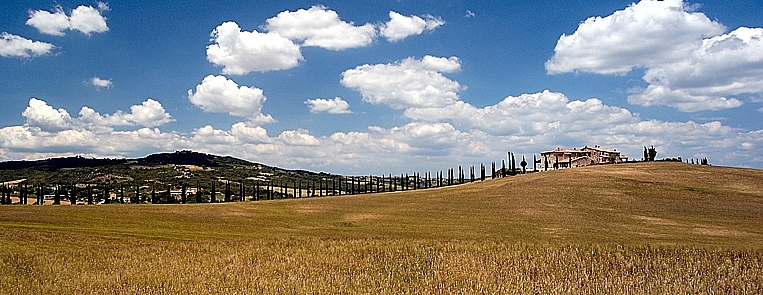
Enjoy a bit of Hollywood in Tuscany, as we tour the towns used in “Under the Tuscan Sun” and “New Moon.”
Late spring through early autumn is the classic window, with June bringing the Giostra dell’Archidado, summer the festival and exhibition season, and September and October the grape harvest and the most beautiful light over the Valdichiana. Winter offers museums without company and a genuinely local town. The specialists at Trips 2 Italy align your dates with what Cortona does best in each season.
Two nights allow a full day for the town, the museums, and the climb to Santa Margherita, plus a day for wine country or the hermitage of Le Celle. Cortona also excels as a four- or five-night base for exploring Arezzo, Montepulciano, Pienza, and Lake Trasimeno, all within easy reach by private car.
Yes, apart from Via Nazionale, the single level street, Cortona climbs everywhere, and the lanes to the upper town are genuinely demanding. Good shoes and an unhurried pace solve most of it, and the climb to the Santa Margherita basilica can be replaced by a drive to the top followed by a downhill stroll through town.
Yes. Frances Mayes restored her villa Bramasole on Cortona’s hillside, and her memoir and the 2003 film introduced the town to a worldwide audience. The villa remains a private home viewed only from the road, but the piazzas, lanes, and valley views that inspired the book are exactly where visitors spend their days.
No. The Camucia-Cortona station on the Florence-Rome line sits at the foot of the hill, and Trips 2 Italy arranges private transfers from Florence, Rome, or Perugia along with drivers for wine country and hill town days. Within the walls everything is reached on foot, which is exactly how the town was designed to be experienced.
Emphatically. The town transforms when the day visitors leave: the piazza steps fill with residents, the Valdichiana turns gold at sunset, and mornings belong to the market and the espresso bar. Our travelers consistently describe the evenings as the best part of their Cortona stay, which is why we almost always recommend at least two nights.