Family Vacations in Italy: The Insider’s Complete Guide With a Secret Your Kids Will Never Forget
Planning a family vacation in Italy is one of the best decisions you will ever make, and not for the reasons you might expect. Yes, there is the food, the history, the art, the incomparable light over Tuscan hills and Amalfi clifftops. But the thing that surprises most families, the thing nobody quite prepares them for, is how Italy seems to have been designed for exactly the multigenerational trip, the curious eight-year-old, the reluctant teenager who puts down their phone on the ramparts of a medieval castle and simply stands there, looking. Not sure which kind of trip you want? Start with our Italy vacations by trip style, nine ways to travel Italy with a summary of each.
Italy with kids works because Italy itself is still a country organized around families. Children are welcome everywhere, in locally owned restaurants, late into the evening at village piazzas, at the table next to strangers who will compliment your children in warm Italian and mean every word. There are no velvet ropes between your family and the best experiences the country has to offer.
This guide covers everything you need to plan your family vacation in Italy: the best regions by family type, the most rewarding experiences for children of every age, practical planning advice, and our specialist recommendation, a destination so perfect for families and so little-known that it gives Trips2Italy clients a genuine edge over the guidebook crowd. It has fairy-tale castles. It has the world’s finest pasta. And it is waiting for your family this summer.
Why Italy Is the World’s Best Destination for a Family Vacation
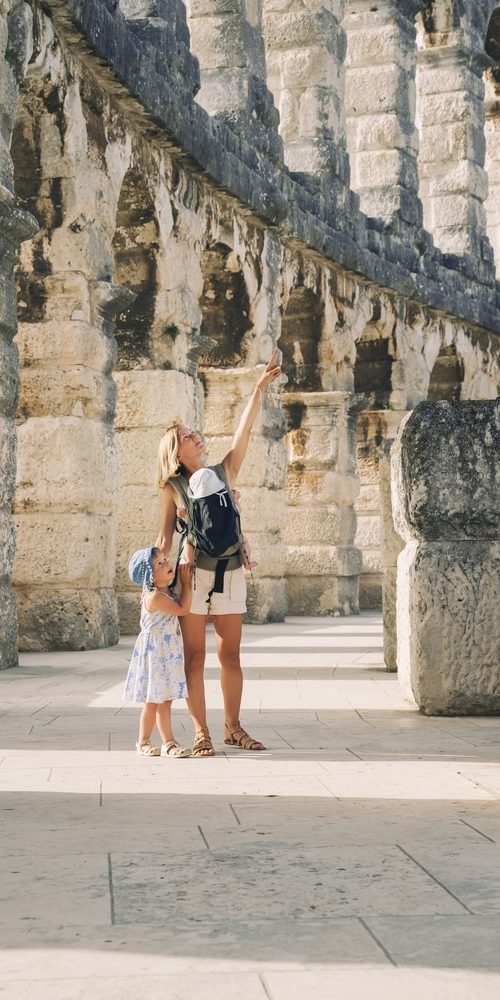
Family vacations in Italy consistently rank among the most transformative trips families ever take, and the reasons go far beyond beautiful scenery. Italy’s culture revolves around family life in a way that few other countries match. Children are treated as honored guests in restaurants, welcomed at historic sites, and absorbed into the daily rhythm of Italian towns with a warmth that makes parents feel instantly at ease.
For children, Italy is a living textbook. Ancient Rome becomes tangible the moment a child stands inside the Colosseum. The Renaissance stops being a word in a textbook and becomes a real person, Michelangelo, Leonardo, Raphael, the moment a family wanders into the Uffizi. Walking through Pompeii makes the power of volcanic eruptions feel real and immediate, turning an abstract concept into a vivid, unforgettable experience. And medieval castles, still standing, climbable, and dramatic after 7 or 8 centuries, extend the magic of museums, giving children the thrilling sense that they’ve stepped inside the story itself.
The food, of course, is a category of its own. Every Italian town has a local gelato that tastes unlike anything you’ve had elsewhere. Through every region, pasta-making classes have become one of the most beloved family experiences. With flour-dusted hands and laughter around the table, families create something delicious together while children collect memories that linger long after the journey ends. Traveling through Italy with kids isn’t a compromise; it’s an upgrade and an invitation to experience the country with more joy, curiosity, and wonder.
The Best Regions for a Family Vacation in Italy
Italy’s regions are distinct enough to constitute separate destinations, with different food, architecture, landscapes, and pace. Choosing the right one for your family depends on your children’s age, your interests, and how much ground you want to cover. Here is our specialist guide to the best options for family vacations in Italy, followed by our top recommendation for families who want something genuinely extraordinary.
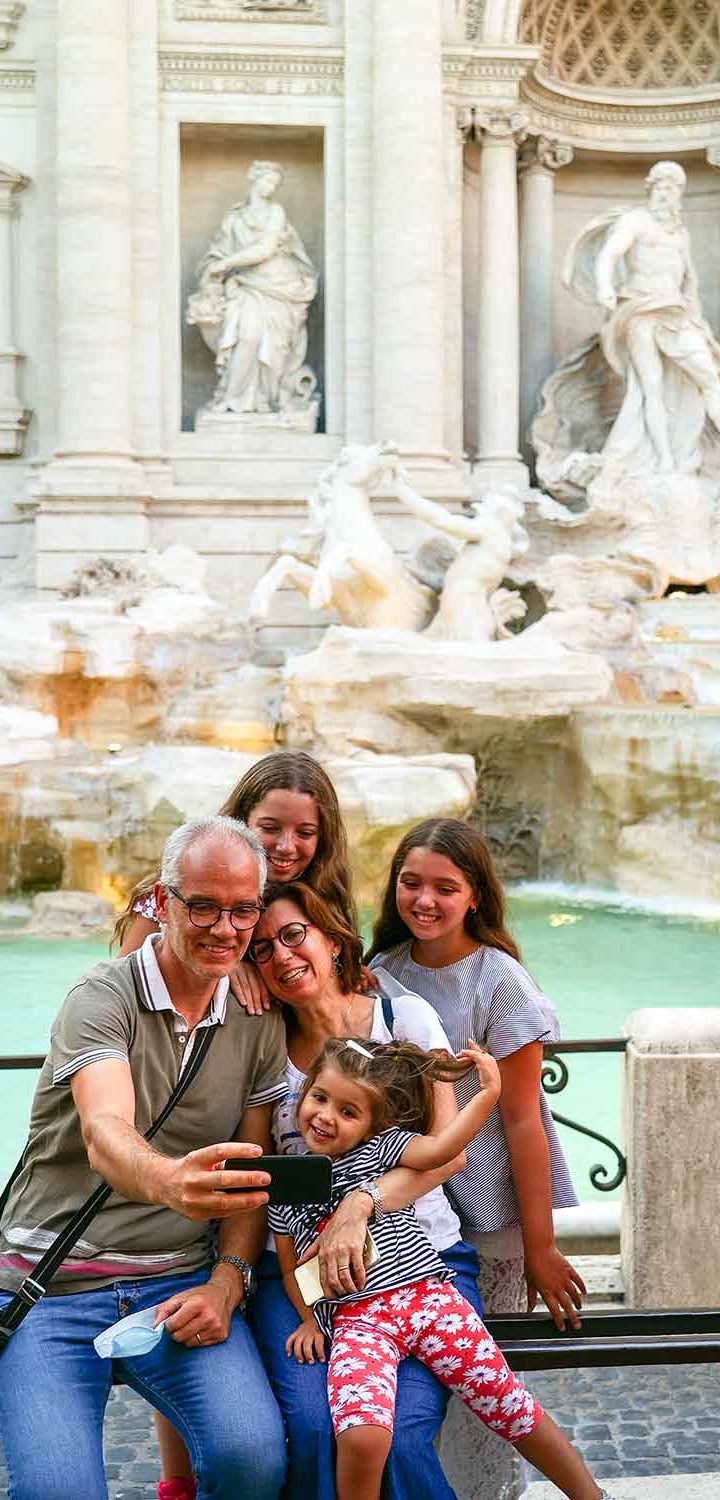
Rome | Rome is the most captivating city on earth for a family vacation in Italy. The Colosseum alone justifies the flight, especially when booked with a family guide who can tailor the storytelling to your children’s age. Add a morning at the Vatican, a toss in the Trevi Fountain, gladiator school for older kids, and a gelato crawl through Trastevere. Rome with kids rewards bold itineraries. |
Tuscany | Tuscany is the classic choice for a family vacation in Italy and earns that reputation every summer. Rolling hills, an agriturismo with a pool, farm animals for younger children, and Siena, Florence, and San Gimignano within easy reach. Florence‘s Uffizi is best approached selectively with kids, an afternoon rather than a full day. The countryside, by contrast, is inexhaustibly child-friendly. |
Amalfi Coast & Sorrento | Dramatic, photogenic, and genuinely exciting for older children and teenagers, the Amalfi Coast is best enjoyed from a base in Sorrento or Ravello. Day trips to Pompeii, one of the most child-captivating sites in all of Italy, Capri, and the coastal villages make for an extraordinarily varied family vacation. Note: narrow roads and steep steps make it less suitable for families with toddlers or strollers. |
Lake Garda | Italy’s most reliably family-friendly lake destination, Lake Garda pairs gorgeous scenery with serious child-pleasing infrastructure. Gardaland amusement park, cycling paths, sailing lessons, ferry rides between medieval lakeside villages, and the moated castle of Sirmione, all within a region that families from across Europe return to every summer. Ideal for younger children and mixed-age groups. |
Sicily | Sicily delivers the complete Italy family vacation in one island: ancient Greek temples, Mount Etna (a genuinely thrilling day out with older kids), phenomenal beaches on the southern coast, and some of the best street food in Italy. Palermo is rawer and more atmospheric than any northern Italian city. The combination of history, nature, and seafood makes Sicily one of the most rewarding choices for family travel in Italy. |
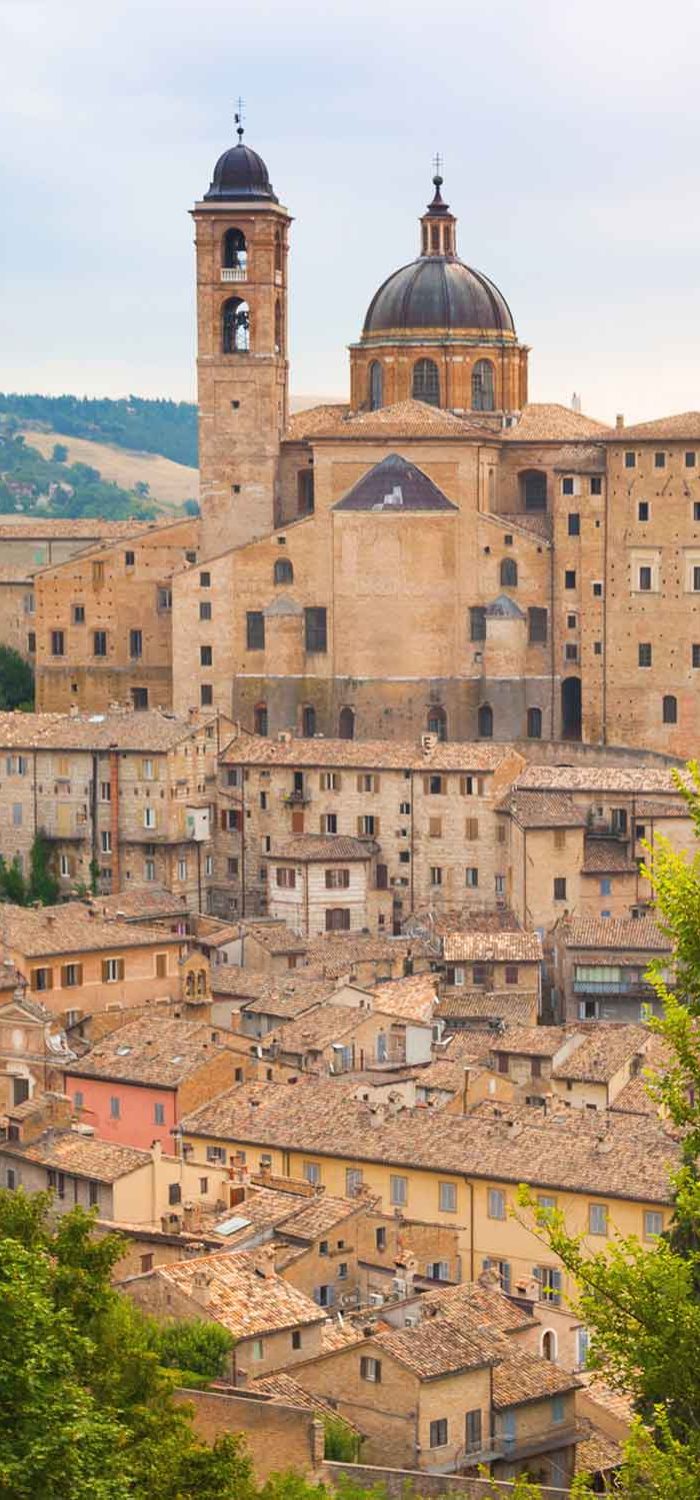
Le Marche | Marche is the most castle-dense region in Italy and its most beautifully kept secret. Stretching between the Apennines and the Adriatic, this landscape is a gentle expanse of hills crowned with some of the finest medieval and Renaissance fortresses in Europe, yet barely touched by mass tourism. The UNESCO World Heritage city of Urbino, birthplace of Raphael, rises from the Marche hills like an illustrated manuscript come to life. Pesaro, on the coast, gave the world Rossini. And the medieval fortress of Gradara is among the most fairy-tale castle experiences in all of Italy. For families who want serious medieval castle-hopping with the crowds left firmly behind, Marche belongs on any Italy itinerary. |
Emilia-Romagna | This is where Trips 2 Italy specialists consistently send families who want something beyond the obvious, and where those families consistently report as a highlight of their entire Italy trip. Emilia-Romagna is the gastronomic capital of the world (Parmigiano-Reggiano, Prosciutto di Parma, Ragù alla Bolognese all originate here), but it is also scattered with around 150 medieval and Renaissance castles so beautifully preserved they look conjured from an illustrated manuscript. The Ferrari Museum in Modena, moated Ferrara, hilltop Torrechiara, and the UNESCO-listed city of Bologna as a family base make this the most complete family vacation in Italy you have probably never considered. Until now. |
Most families planning a family vacation in Italy fly into Rome and head south. The ones who fly into Bologna and head anywhere tend not to come back the same way. Emilia-Romagna has a way of leaving its mark: it’s the Italy Italians quietly keep for themselves, the region that has been crafting the world’s finest food for centuries while the tourist buses sped past on the Autostrada.
Bologna, La Grassa, the Fat One, is the ideal family base: walkable, beautiful, and sheltered by 38 kilometres of UNESCO-listed covered porticoes that make even a summer rainstorm no obstacle to the gelato schedule. The city’s medieval Two Towers, Garisenda and Asinellil, are must-sees. The Piazza Maggiore is one of the great public squares in Italy. The food market at the Quadrilatero is an education in itself.
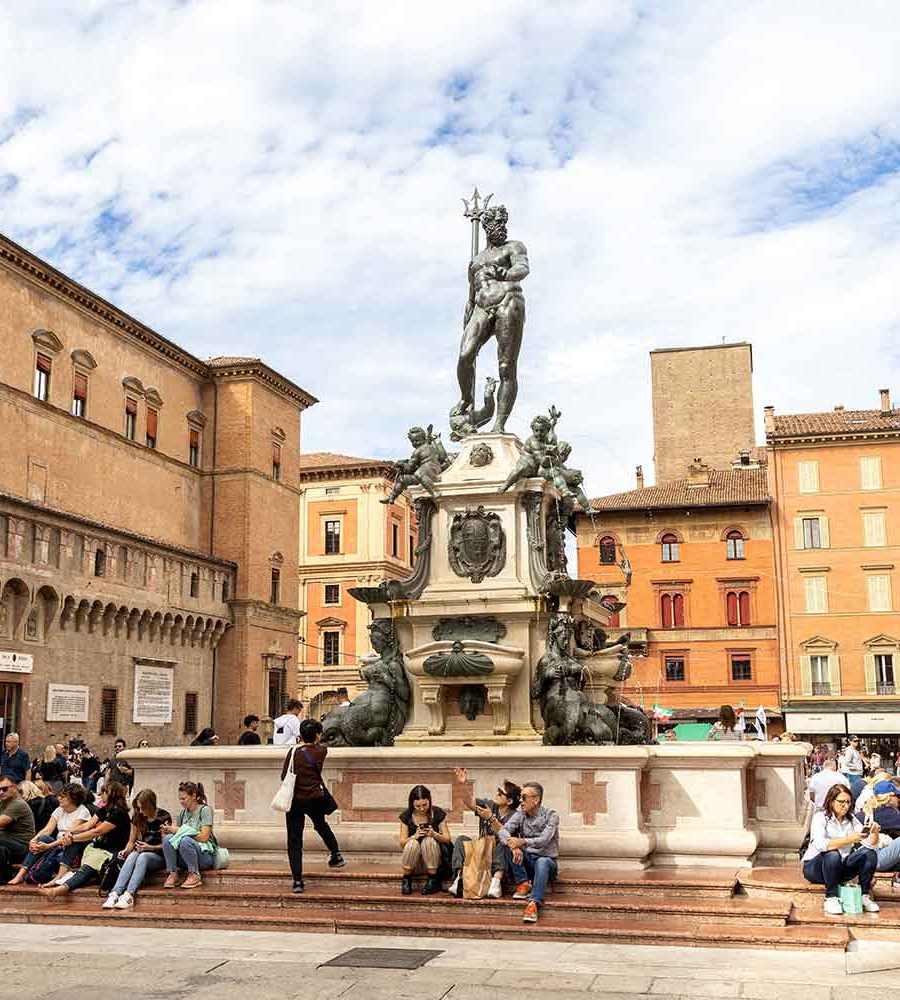
From Bologna, the entire region unfolds. Modena, home of Maserati, Ferrari, Lamborghini, and Pavarotti, keeps the Ferrari Museum at Maranello, which is frankly one of the finest family outings in Italy for children of any age. Parma is elegant, unhurried, and surrounded by castles. Ferrara, a UNESCO World Heritage city whose entire historic center is circled by Renaissance walls, has a fully moated castle standing in its center that stops families dead in their tracks.
And then there are the castles, over 100 of them, scattered across the hills and plains between Parma and the Adriatic. For a family vacation in Italy that genuinely surprises children who have seen Rome and Florence already, Emilia-Romagna is the answer every time.
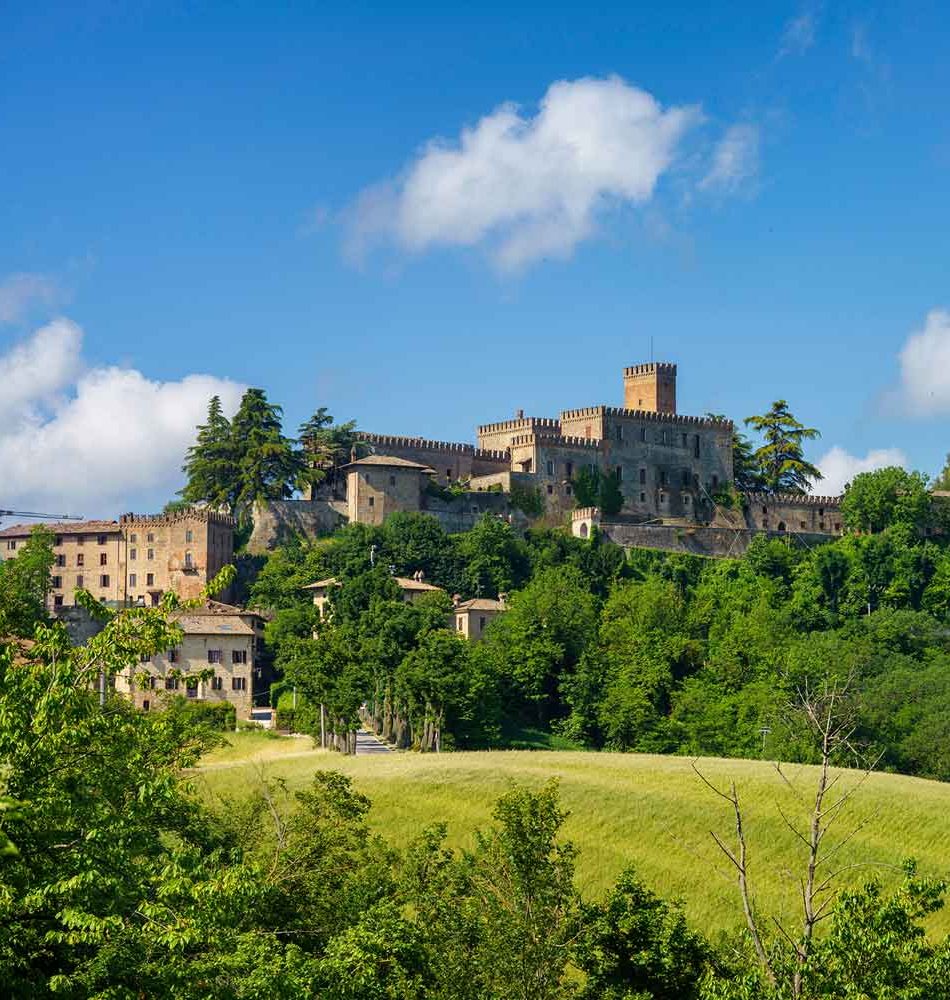
Castle-Hopping with Kids: Why It Works So Well
There is a reason children have always loved castles, and it goes beyond fairy tales. Castles are the most legible buildings in history very wall, tower, and staircase tells a story. There’s no need for explanation, captions, or hushed voices as you take time to read between the lines. The moat kept out enemies. The dungeon held the prisoner. The tower announced power to anyone within ten miles. The arrow slit framed a view that an archer once looked through, and now your twelve-year-old is looking through it.
Castles offer a different kind of wonder: where museums and churches inspire awe and quiet reflection, castles invite exploration, letting children touch, climb, and discover history with all their senses. They have ramparts that lead somewhere dramatic, courtyards large enough for a picnic, and views that make both children and parents fall quiet in a good way. As a structure for a family vacation in Italy, castle-hopping is almost uniquely effective: it provides novelty, history, physical activity, and storytelling in a single visit.
For families with younger children (ages 6-9), the magic is in the pure thrill of a real castle, moat, drawbridge, tower, all of it real and explorable. For pre-teens, the history suddenly clicks: dynasties, battles, betrayals, the Camera d’Oro at Torrechiara with its extraordinary love-story frescoes. For teenagers, it is photography, the views, the scale of the buildings, the sense that this landscape looked the same 600 years ago. And for grandparents, it is the slower pace, the beauty, the elegant architecture, and the nearby trattoria with stunning views, at the foot of the hill.
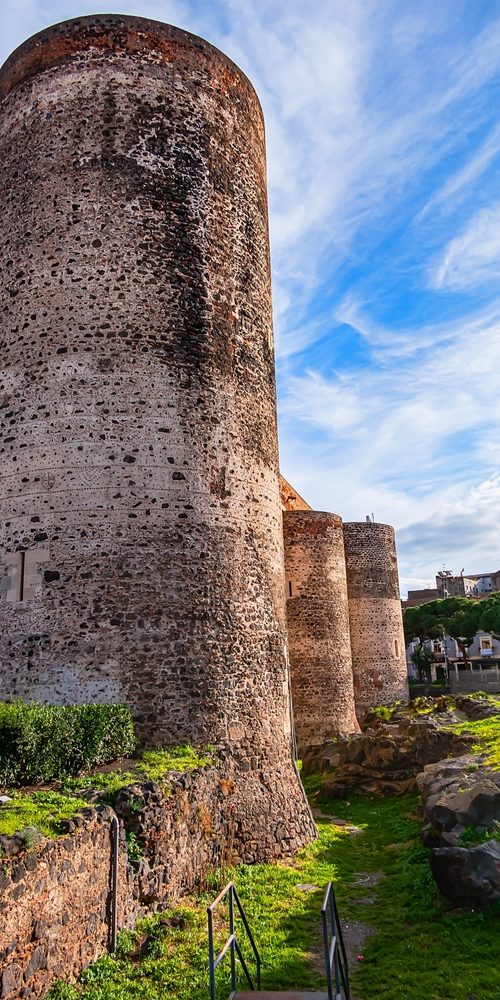
Emilia-Romagna’s Castles: The Essential Family Guide
Emilia-Romagna has over 100 historic fortresses, towers, and noble residences. These are the ones that belong at the center of your family vacation in Italy.
Castello di Torrechiara
Near Parma · 25 minutes south
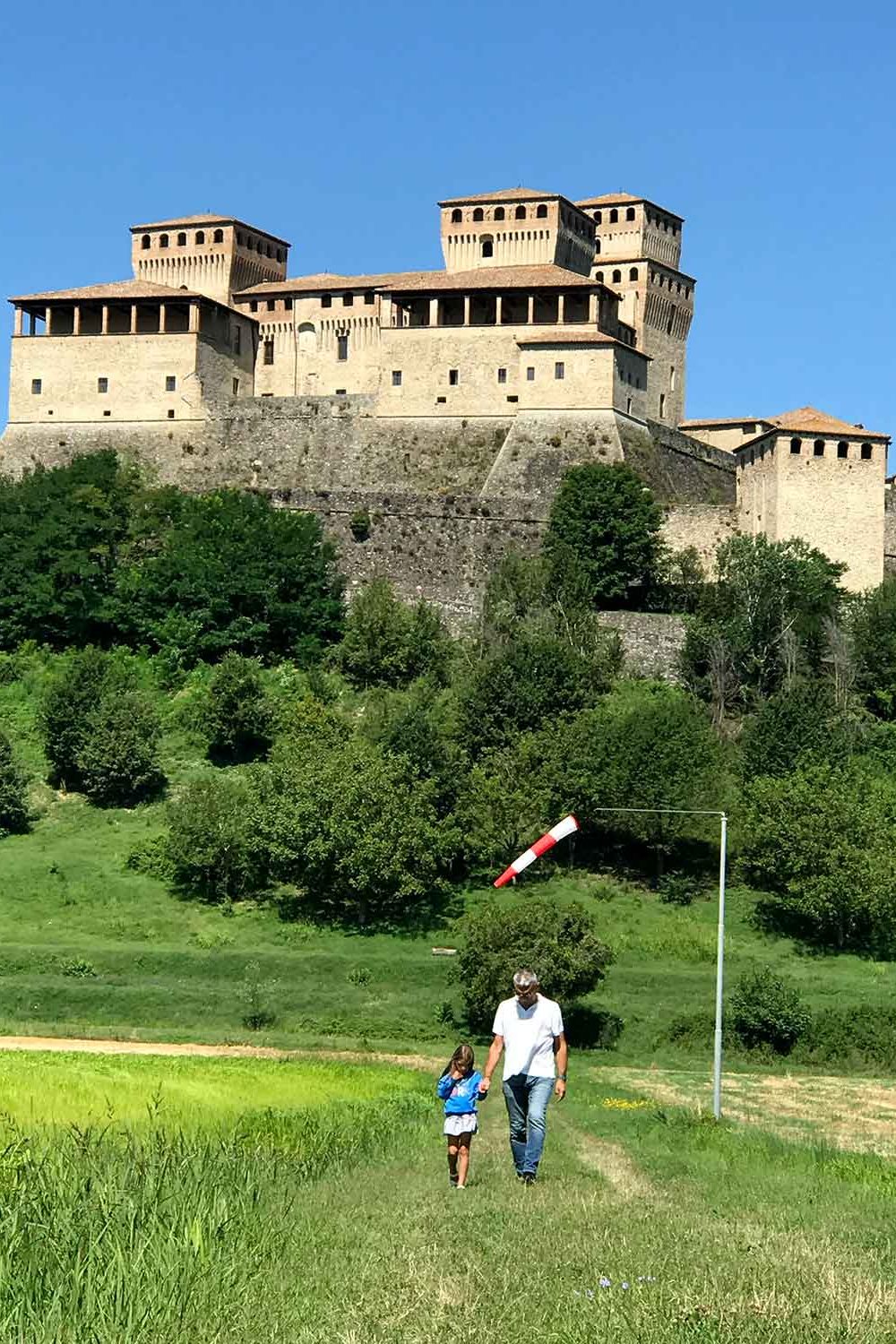
Twenty-five minutes from Parma, the road climbs through vineyards and the silhouette of Torrechiara appears on the hillside like something from a dream, four towers, crenellated walls, the late afternoon light turning the stone the precise color of honey. This is one of the best-preserved medieval castles in northern Italy, and one of the most romantic in all of Europe.
Built in the mid-15th century by the nobleman Pier Maria Rossi for his beloved Bianca Pellegrini, the castle’s crowning jewel is the Camera d’Oro, the Gold Room, its walls covered in frescoes depicting their love story in luminous Renaissance gilt. For children, the drama is in the towers: climb to the top and the panorama of the Parma hills stretches to the horizon. Arrive before 10am in summer to enjoy the ramparts before the midday heat.
Castello Estense
Ferrara City Centre
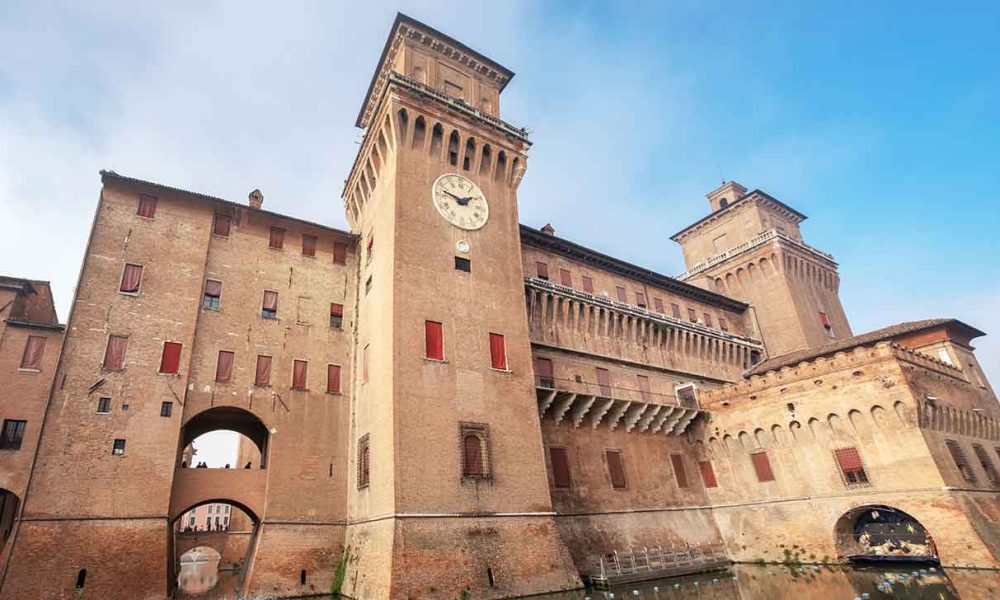
Nothing quite prepares you for the Castello Estense on first sight. In the centre of an elegant Renaissance city, a fully moated four-towered fortress rises with the absolute confidence of something built 640 years ago, which it was. Built by Niccolò II d’Este in 1385, it combines extraordinary beauty above ground with a genuinely atmospheric set of dungeons below, where members of the Este family itself were imprisoned and executed. A history lesson no child forgets.
Book the family combination ticket pairing the castle with bicycle rental. Cycling Ferrara’s 9-kilometer Renaissance walls is an afternoon that defines the visit, and Ferrara is one of the finest cycling cities in all of Italy.

Rocca di Vignola
Vignola · Between Modena & Bologna
The Rocca di Vignola’s four corner towers, thick curtain walls, and commanding mass are in exceptional condition. The Contrari family chapel inside contains Renaissance frescoes of rare delicacy. The town of Vignola is famous for its Morel cherries, the gelato outside the castle gate is something no family should miss. Pair Vignola with a morning at the Ferrari Museum in Maranello for one of the finest family days in Italy: medieval castle in the morning, Ferraris in the afternoon.
Rocca di Fontanellato
Fontanellato · North of Parma
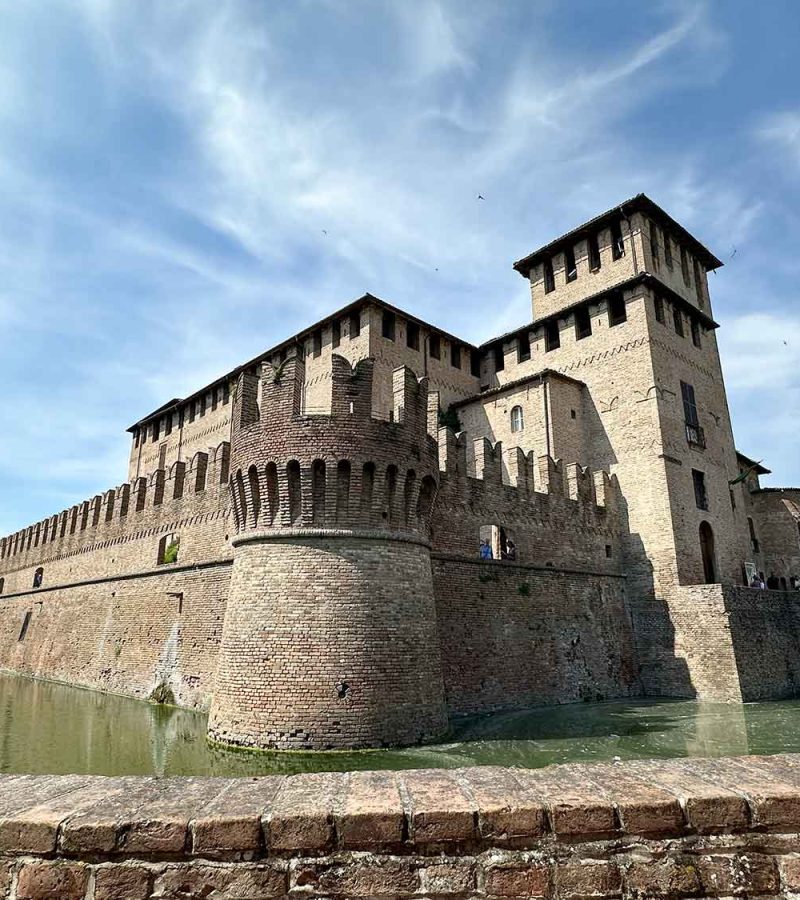
In the small village of Fontanellato stands a castle so perfectly proportioned and so completely surrounded by its original moat that children cross the drawbridge with the expression of someone walking into a dream. Inside, Parmigianino’s 1523 fresco of Diana and Actaeon, in the intimate Camera di San Paolo, is among the most exquisite Renaissance rooms in northern Italy. The village’s prosciutto and Parmigiano shops make the hour after the castle essential.
Rocca Malatestiana
Cesena · Adriatic Side
The fortress of the Malatesta lords rises from a hill above Cesena with panoramic views toward the Adriatic. Below it, the Biblioteca Malatestiana, one of the oldest continuously used libraries in the world and a UNESCO-listed treasure, rounds out a remarkable half-day. Together, the castle and library tell the story of one of Italy’s most ruthlessly cultivated Renaissance dynasties.
Worth the Detour: Rocca di Brisighella
Brisighella · Apennine Foothills
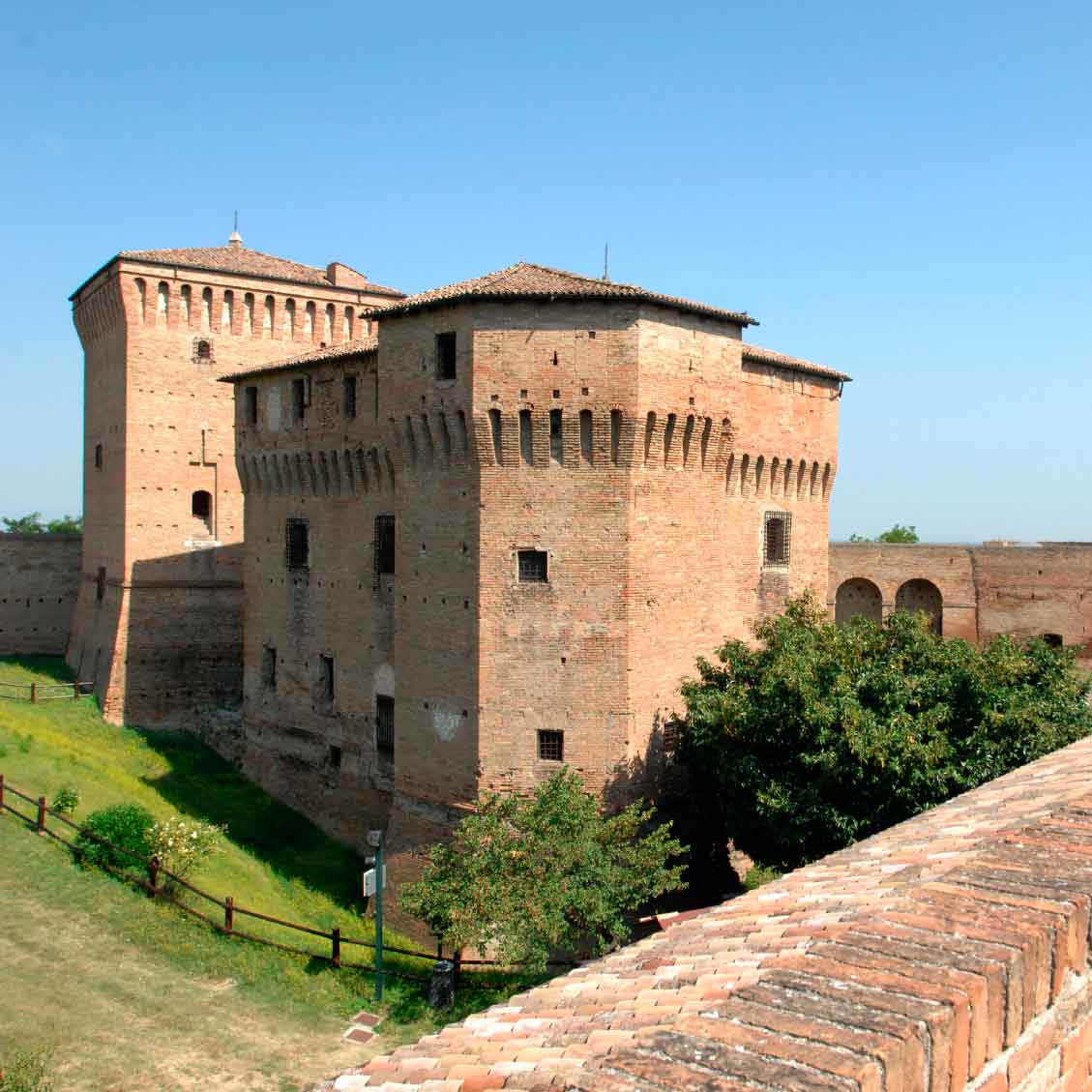
Three ancient structures crown dramatic rocky spurs above Brisighella, one of Italy’s official borghi più belli (most beautiful villages). The village’s hidden gem is the Via degli Asini, a covered medieval walkway built above the main street, running the full length of the town above the rooftops. Children run its entire length with pure delight. Stay a night at a local agriturismo if your itinerary allows; leaving feels genuinely difficult.
Marche: Italy’s Most Castle-Dense Secret
If Emilia-Romagna is Italy’s greatest family secret, Le Marche is its most beautifully kept companion. The region borders Emilia-Romagna to the south and east, running from the Apennines down to the Adriatic, and its hills are crowned with a concentration of medieval and Renaissance fortresses that rivals anywhere in Europe. Yet for international family travelers, it remains one of Italy’s most undiscovered regions.
What makes Le Marche different from Emilia-Romagna is texture. Where Emilia-Romagna’s castles are lavish and courtly, built as much for display as defense, Le Marche’s fortresses are more purely military: darker, more dramatic, and **the kind of castles children recognize immediately: complete with towers, battlements, and imposing stone wall. A family itinerary that combines both regions gets the full spectrum of Italian medieval architecture in a single trip.
Add Urbino, one of the most perfect Renaissance cities in the world, which is also named after its own city-palace, the coastal culture of Pesaro, the birthplace of Rossini, and you have a region of extraordinary depth that rewards every generation travelling together
Castello di Gradara
Pesaro e Urbino · 15 minutes from Rimini
The Castello di Gradara stops families dead in their tracks. A fairy-tale fortress so completely and so beautifully preserved that it looks conjured from an illustrated manuscript, double ring of medieval walls, working drawbridge, soaring towers, Gradara is among the most photogenic and child-captivating castles in all of Italy.
It is famous throughout Italy as the setting of the tragic love story of Paolo and Francesca, immortalized by Dante in the Divine Comedy in the 13th century. The castle interior is remarkably intact: furnished Renaissance apartments, armor collections, and a chapter of history told through rooms that tell centuries of history on their own. For families on an Adriatic or Emilia-Romagna itinerary, Gradara, just 15 minutes from Rimini, is an essential addition, combining a profound medieval story with a genuinely fairy-tale setting that children remember for years.
Rocca di Mondavio
Pesaro e Urbino · Mondavio Village
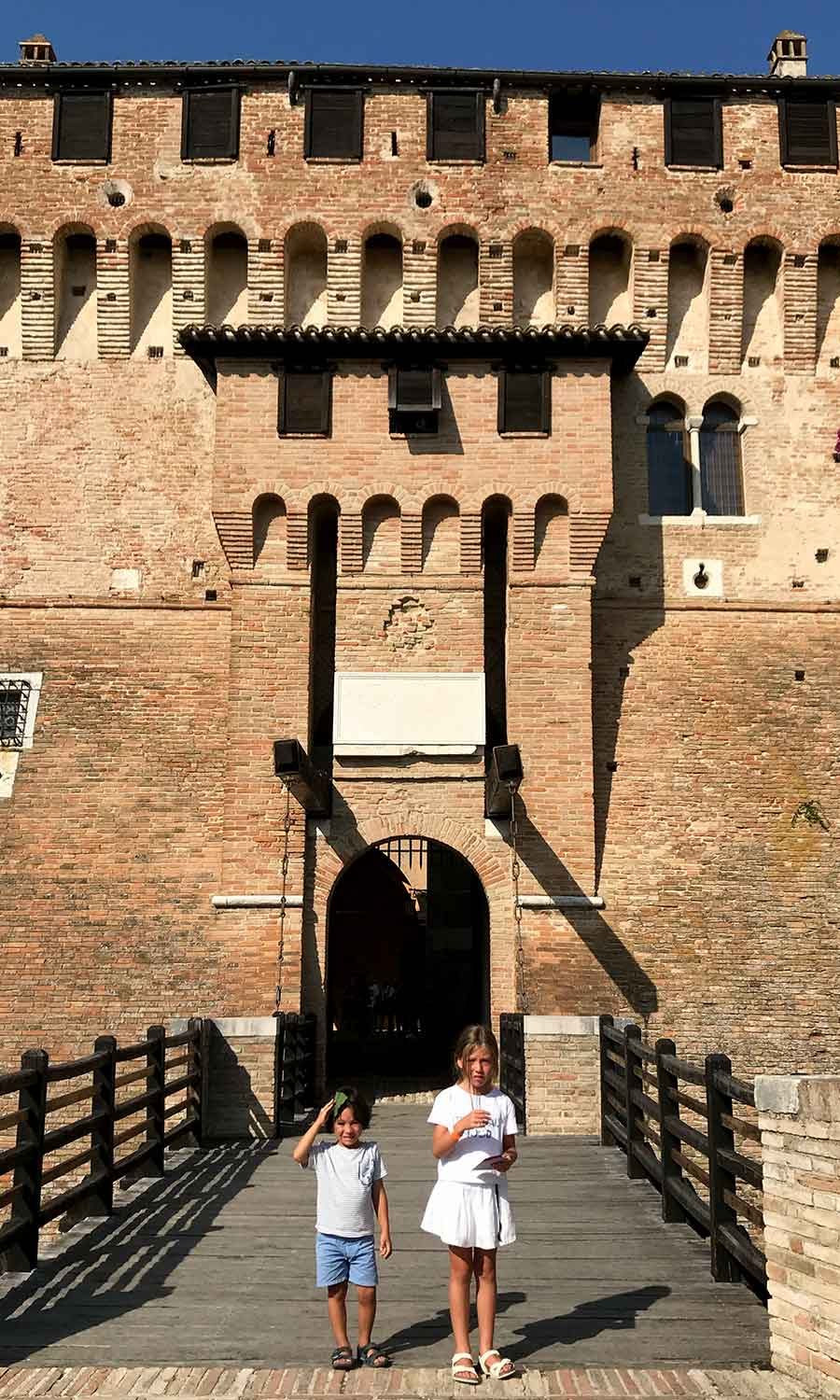
Designed in the 1480s by the brilliant military architect Francesco di Giorgio Martini, the Rocca di Mondavio is considered one of the masterpieces of Renaissance defensive architecture. Its distinctive, rounded bastions, revolutionary for their era, were designed specifically to deflect cannon fire, then the most modern weapon of war. The fortress provides a clear example of historical defensive strategy and architectural ingenuity, offering younger visitors with an interest in engineering an opportunity to engage directly with the logic and design behind its construction.
The castle is beautifully maintained and houses a museum of medieval arms and period furnishings. The surrounding village of Mondavio is quintessential Le Marche: unhurried, genuine, and excellent for a long lunch. Combine with Gradara for a complete Le Marche castle day that takes in both the romantic and the military extremes of the region’s medieval architecture.
Castelli di Arcevia
Ancona · Natural Park, Nine Castles
One of Marche’s most distinctive medieval castle experiences: not a single fortress, but a collection of nine ancient castles scattered across the hills of a natural park near Arcevia. The most atmospheric are Loretello and Avacelli, medieval villages still huddled within their original defensive walls, largely unchanged since the 14th century. Wandering their narrow streets and along their battlements offers a vivid sense of medieval life, where the history and design of these fortified settlements remain remarkably evident.
For families with older children and teenagers, a half-day exploring these hilltop settlements delivers a genuinely different quality of castle experience from the polished interiors of Gradara or Mondavio. This is exploration rather than exhibition. Bring a picnic: the landscape of the Arcevia hills is among the most beautiful in Marche, and the hike between Loretello and Avacelli, wandering their narrow streets and along their battlements, offers a vivid sense of medieval life, where the history and design of these fortified settlements remain remarkably evident.
Fortress of Acquaviva
Ascoli Piceno · Southern Le Marche
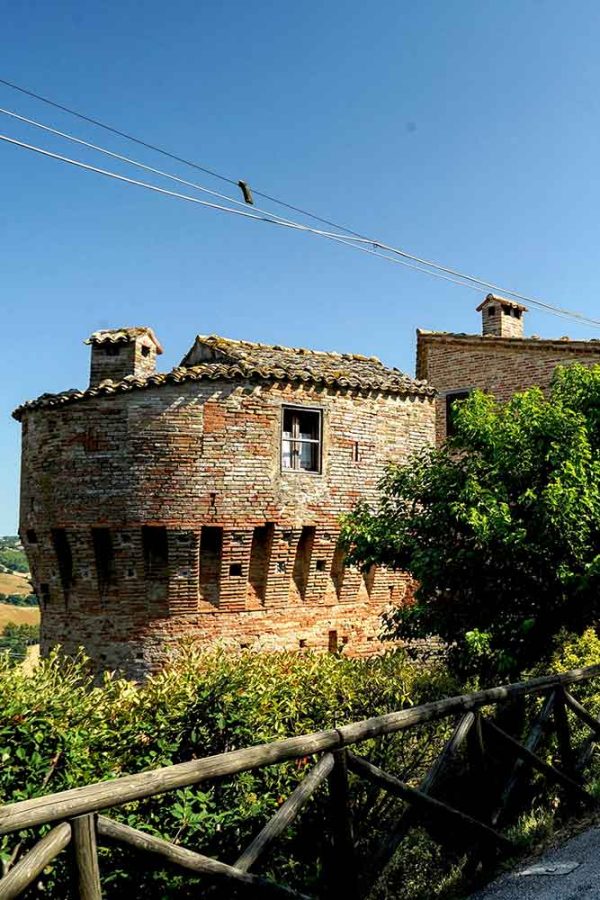
In the southern arc of Le Marche, near the extraordinary stone city of Ascoli Piceno, the Fortress of Acquaviva is a striking, well-preserved defensive structure that rewards the detour south. Ascoli Piceno itself is among the most beautiful cities in central Italy, built almost entirely in travertine marble, with a Roman bridge, a Romanesque cathedral, and a food culture built around the legendary olive ascolane (fried stuffed olives that are better than they sound and that children universally love). Pair the fortress with a morning in Ascoli Piceno for a complete family day in southern Le Marche.
Castello di Pitino
San Severino Marche · Macerata Province
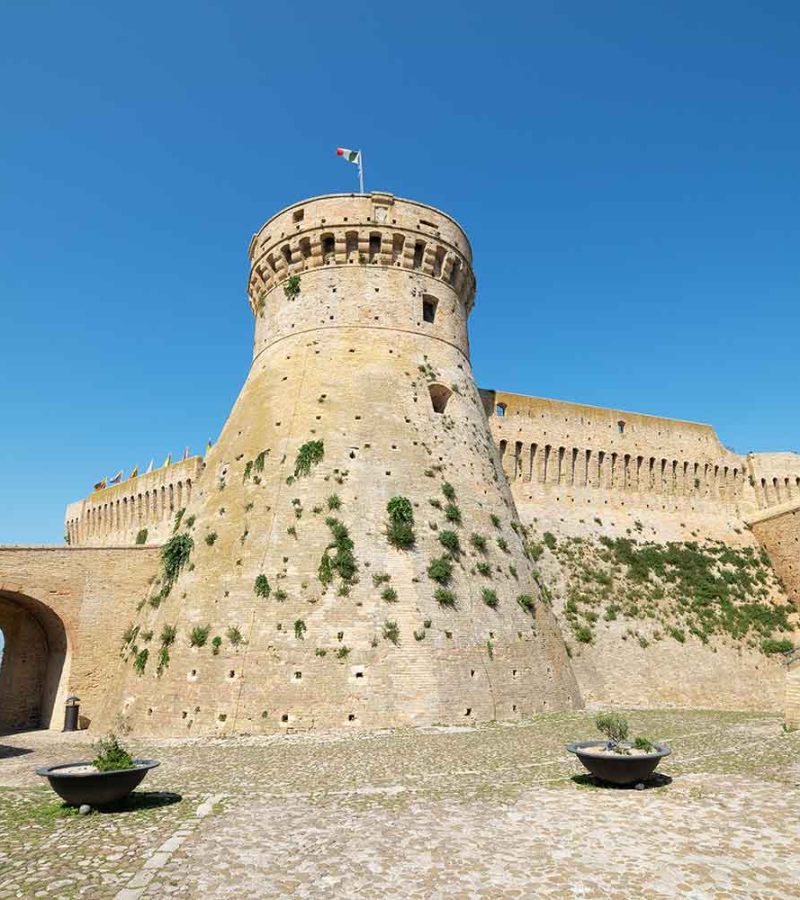
The Castello di Pitino, near San Severino Marche, is a romantic ruin of a different order: dramatic walls and towers in various states of picturesque decay, set on a commanding hilltop with views that extend across the Marche valleys in every direction. Built in the 13th century as a defensive stronghold amid regional feudal conflicts, Pitino stands as a testament to both its strategic significance and the passage of centuries. For families, it offers an experience distinct from the more polished interiors of Marche’s restored fortresses: open exploration where imagination fills in the gaps left by time.
Urbino, Pesaro & the Cultural Heart of Marche
No visit to Le Marche is complete without time in Urbino, a UNESCO World Heritage city and one of the most perfectly preserved Renaissance urban centers in the world. Built by Federico da Montefeltro in the 15th century, the Palazzo Ducale alone justifies the journey: a palace of extraordinary refinement that gave the world Raphael (born in Urbino in 1483) and formed the setting for Baldassare Castiglione’s The Book of the Courtier. The city is compact enough to explore entirely on foot, and its steep medieval lanes and hidden courtyards reward children who are given the freedom to explore.
Urbino is not a large city, which is precisely its power. Everything is within reach, everything is beautiful, and the Palazzo Ducale’s great courtyard, the view from the ducal apartments over the Marche hills, and the birthplace of Raphael (now a museum) make for a complete half-day that requires no pace-setting from parents. It is the kind of city families return to.
Pesaro, on the Adriatic coast, is the birthplace of Gioachino Rossini, composer of The Barber of Seville, William Tell, and some of the most energetic music ever written. The Rossini Opera Festival, held every August in Pesaro, is one of Italy’s great cultural events. For families visiting at other times, the Museo Nazionale Rossini is engaging even without a prior opera background, and the Adriatic beaches make a natural and relaxed half-day addition. Pesaro gives Le Marche its coastal culture, a welcome counterpoint to the drama of the inland hilltop fortresses.
The Republic of San Marino: The Castle That Is Its Own Country
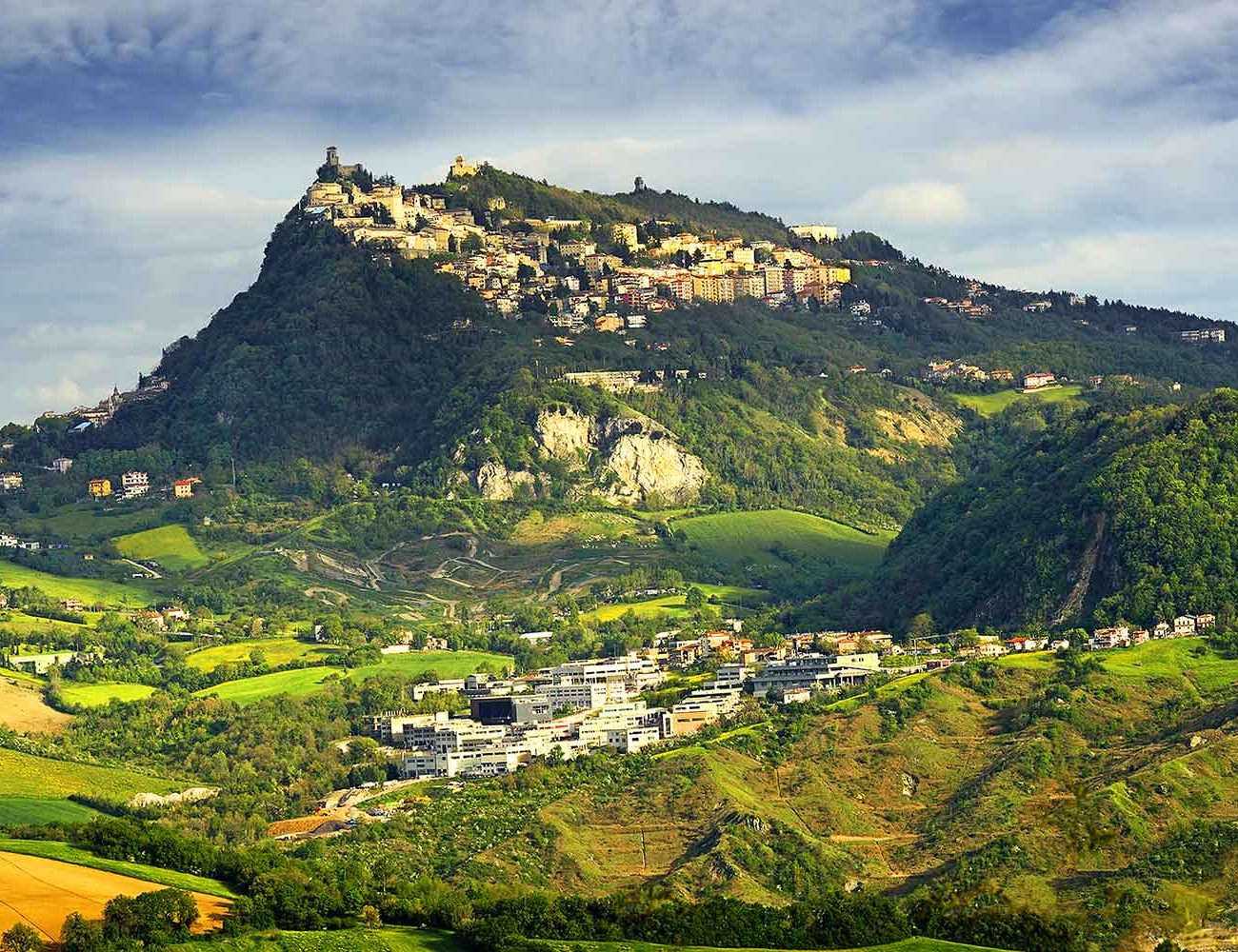
San Marino is a sovereign nation…For families exploring Marche or Emilia-Romagna, it is best appreciated as a medieval fortress rather than a modern state. Its three towers crown the peaks of Monte Titano, linked by ancient walls and ramparts stretching across the mountaintop. Children, in particular, enjoy exploring the towers and walking along the walls, experiencing the fortress’s scale, history, and panoramic views firsthand.
Republic of San Marino
Monte Titano · Independent Microstate · 60 min from Cesena, 30 min from Gradara
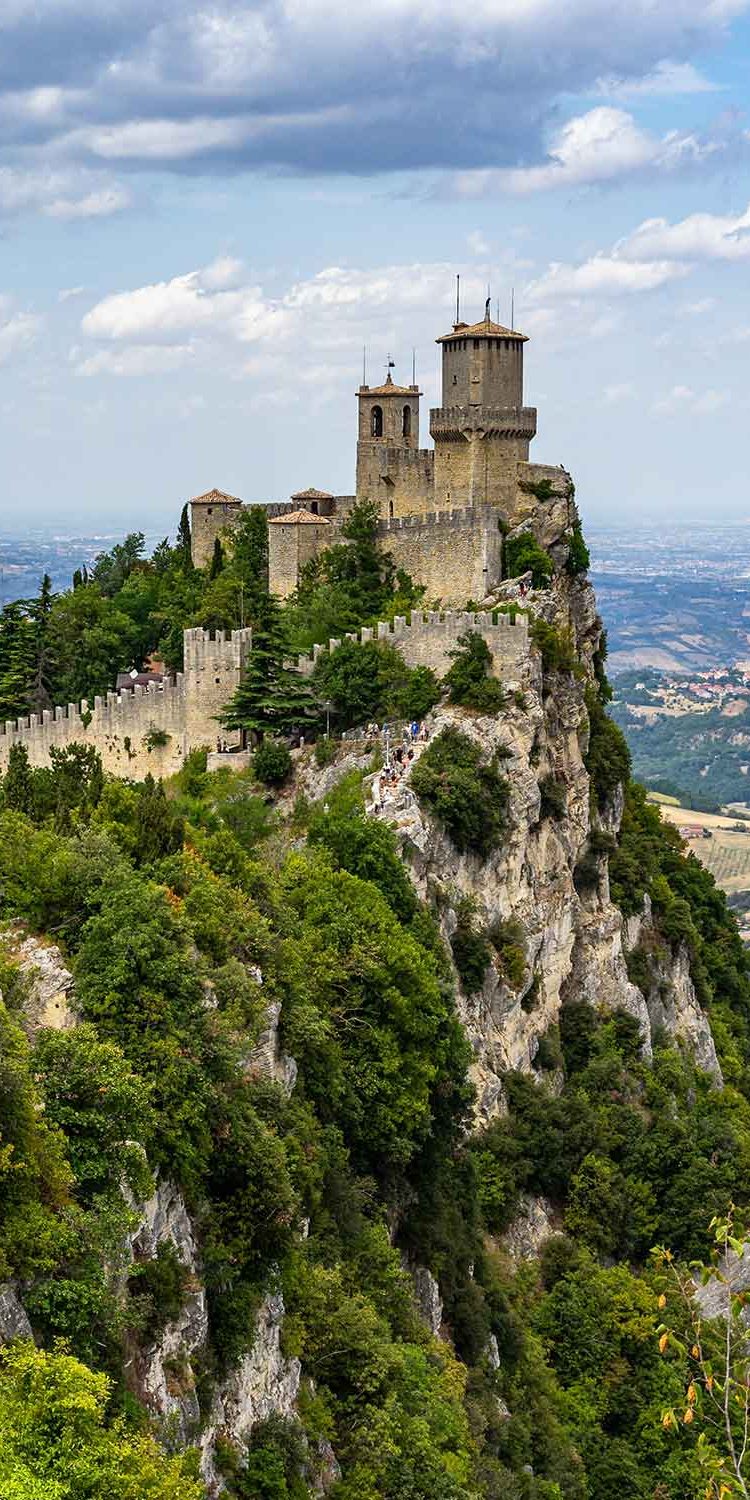
The Three Towers of San Marino, Guaita, Cesta, and Montale, crown Monte Titano’s peaks in succession, connected by medieval walls and a breathtaking ridgeline walk. The Guaita Tower, the oldest and most dramatic, houses a genuine dungeon. The Cesta Tower contains a museum of ancient arms. The walk between them, along ramparts with views across Italy in every direction, is one of the most dramatic short walks in the country and one of the finest family experiences in the Le Marche and Emilia-Romagna circuit.
entry stamp upon request, which children collect with a seriousness that is completely genuine and entirely charming.
Combine San Marino with the Castello di Gradara (30 minutes) and the Rocca Malatestiana in Cesena (60 minutes) for a castle and country day that is unlike anything else on an Italy family vacation. Arrive before 11am, the ridgeline walk in the afternoon heat requires real shade.
Beyond the Castles: The Region’s Supporting Cast
The castles are the centerpiece of a family vacation in Italy through Emilia-Romagna, but the region has depth to spare. Bologna is an ideal family base: near all locations, easily walkable, with excellent restaurants that cater to children. and 38 kilometers of covered porticoes providing shade on even the hottest summer day.

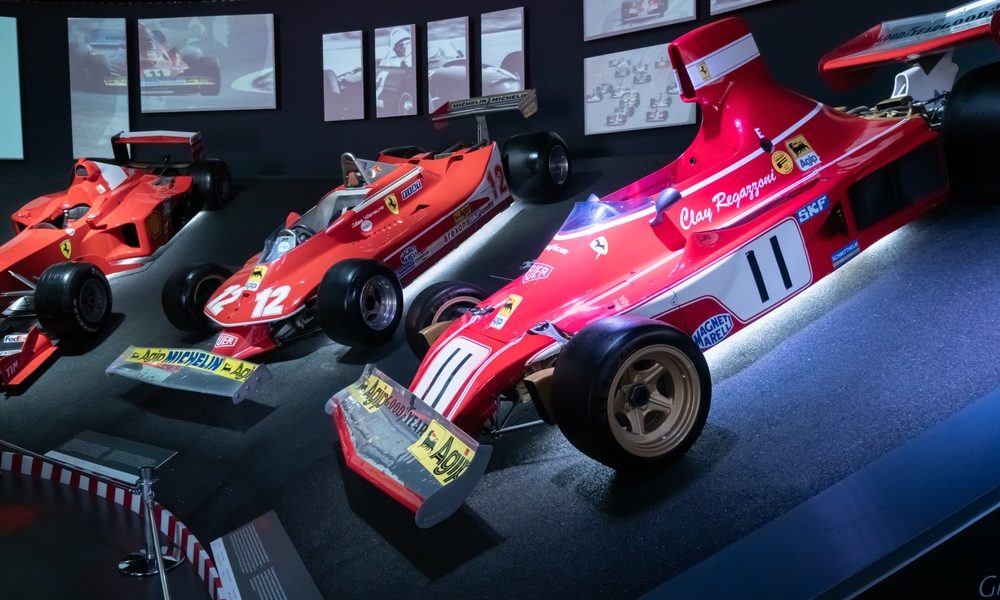
Modena’s Ferrari Museum in Maranello is, frankly, one of the best family outings in all of Italy, the scale models, championship cars, racing simulators, and exhibition spaces hold the attention of children aged five to fifteen with zero effort on anyone’s part. The city’s Romanesque cathedral is one of the finest in northern Italy, and the vibrant food market offers a leisurely visit where children and adults alike can explore and enjoy Modena’s rich culinary traditions
Parma is elegant, beautiful, and surrounded by castles. The baptistery’s medieval frescoes are remarkable; the Palazzo della Pilotta houses the extraordinary Teatro Farnese, one of Europe’s earliest permanent theatres. And the Prosciutto and Parmigiano producers in the hills nearby offer tours that are genuinely fascinating for children of all ages and adults alike.

Ferrara rewards a full day. Cycle the Renaissance walls, explore the Este Castle’s dungeons, walk the perfectly preserved addizione erculea, Renaissance streets laid out in 1492, and settle into a riverside restaurant for a long dinner. Ferrara is the most architecturally coherent historic city in northern Italy, and also one of the most overlooked on a family vacation in Italy itinerary.
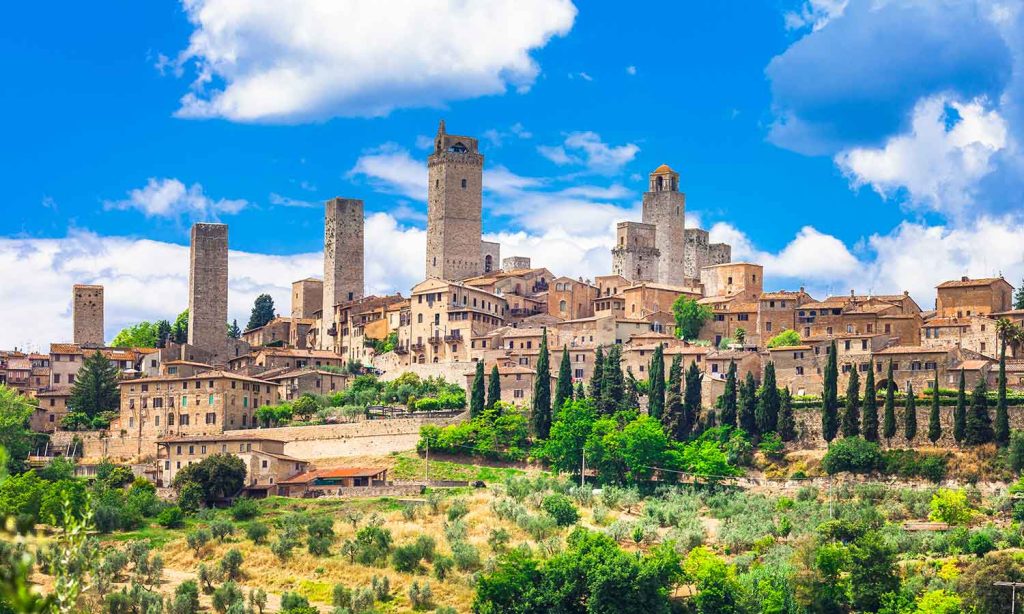
For day trips beyond the region: Tuscany’s San Gimignano is 90 minutes south and makes a natural extension for castle-mode families. San Marino, the tiny hilltop republic 90 minutes from Cesena, is irresistible for children of every age. Verona, with its Roman Arena and Romeo and Juliet mythology, is under an hour from Modena.
Planning Your Family Vacation in Italy: The Complete Guide
Best Time to Visit | The best time for a family vacation in Italy is late June or September. Late June gives you summer warmth and long days before the August peak; September combines harvest-season beauty, thinner crowds, and temperatures that make castle-climbing genuinely comfortable. July and August are viable but hot, plan all outdoor and castle visits before 11am and after 4pm, and prioritize the northern regions where hilltop elevation keeps temperatures manageable. |
How Long to Spend | Families travelling from North America need a minimum of 10 days on the ground for Italy to feel genuinely restorative rather than exhausting. A 14-day family vacation in Italy is ideal: it allows two or three distinct regions, meaningful time at each, and the slow mornings that make Italy feel like Italy rather than a checklist. For a first trip to Italy with kids, 10 days combining Rome (3 nights) with Emilia-Romagna (5 nights) is our specialists’ most-recommended starting framework. |
Getting Around | Italy’s high-speed rail network connects Bologna, Modena, Parma, Ferrara, Florence, Rome, and Venice with impressive efficiency, perfect for inter-city legs. A rental car is essential once you are in Emilia-Romagna and want to reach the smaller castle towns: Torrechiara, Fontanellato, Brisighella, and Vignola are all best reached by car. Book car rental early in summer as availability tightens significantly by May. |
Where to Stay | Bologna is the ideal urban hub for an Emilia-Romagna family vacation in Italy. For total immersion, an agriturismo in the hills near Parma or Vignola, many are within 20 minutes of multiple castle sites, provides an experience no city hotel can match: farmhouse dinners, space for children to run, and a level of authentic Italy that guests carry home with them. Ferrara makes a superb base for the eastern part of the region. |
Admission & Costs | Most Emilia-Romagna castles charge $5-12 per adult; children under 12 typically enter free or at significant discount. Combined tickets and family passes are widely available. Ferrara’s castle and bicycle rental combination ticket is exceptional value. Budget approximately $35-45 per adult per day in Emilia-Romagna for admission, transport, and good meals, significantly less than equivalent experiences in Rome or Florence. |
Italian Culture & Kids | Italy is, without question, one of the most child-welcoming countries in the world. Children are expected at restaurants, welcomed at bars for a soft drink, and included in late-evening social life in a way that surprises and delights North American and Northern European families. Do not worry about keeping children quiet in restaurants or off piazzas at 9pm, this is normal, celebrated Italian family life. Your children will be loved. |
Top Family Experiences in Italy Not to Miss
The best family vacations in Italy combine sightseeing with hands-on experiences that children actively participate in rather than passively observe. These are the activities our specialists consistently recommend, and that families consistently report as the highlights of their trip.
Experience | Why It Works for Families |
Pasta-making class | Available in virtually every Italian city, pasta-making classes are the single most universally loved family experience in Italy. Children learn, get messy, produce something edible, and remember it vividly for years. In Emilia-Romagna, the birthplace of tagliatelle al ragù, a Bologna pasta class is in a different league entirely. |
Gelato class | Making gelato, choosing flavors, cranking the machine, tasting throughout, is a two-hour experience that requires no museum-tolerance from children whatsoever. Available across Italy from specialist gelato schools. Mess is encouraged. |
Ferrari Museum, Modena | Non-negotiable for any family vacation in Italy that passes through Emilia-Romagna. Scale models, championship-winning cars, racing simulators, and the history of one of the world’s most storied brands in the actual city that created it. Genuine car interest is not required, the spectacle sells itself. |
Castle-hopping | The defining family experience of any Emilia-Romagna itinerary. Ramparts to climb, dungeons to explore, moats to admire, and courtyards where a picnic with local prosciutto and Parmigiano becomes a genuinely Italian lunch. Ages 6 and up. Combine two castles per day comfortably with time for a village lunch between. |
Cycling Ferrara’s walls | Renting bicycles and cycling the 9-kilometer Renaissance walls that encircle Ferrara is one of the finest free family activities in all of Italy. Flat, safe, dramatic, and completely free from traffic. Even young children on balance bikes manage sections of it. Two hours at a gentle family pace. |
Mount Etna, Sicily | For older children and teenagers, a guided hike or cable car ascent of Europe’s largest active volcano is a genuinely unforgettable family vacation experience. The landscape is lunar, the geology lesson writes itself, and the views across Sicily and toward the Calabrian coast are extraordinary. |
Gladiator school, Rome | Rome’s gladiator schools offer full-morning sessions where children are trained in basic Roman combat techniques by instructors in period costume and receive official Roman citizenship certificates on completion. Reliably the most-mentioned experience in post-trip feedback from Rome families. |
Gondola & boat, Venice | Venice with kids requires careful management — the city is not stroller-friendly and the labyrinth of alleys can be stressful. But a gondola ride, a boat taxi across the Grand Canal, and the Doge’s Palace deliver genuine wonder. Limit Venice to 1–2 days and base the family nearby on the mainland or at Lake Garda. |
Sample 7-Day Emilia-Romagna Family Vacation Itinerary
A specialist starting framework, your Trips2Italy planner will tailor this to your family’s pace, children’s ages, and travel dates.
Day | Location | Family Itinerary |
|---|---|---|
Day 1 | Arrive Bologna | Arrive, check in, decompress. Evening passeggiata under the porticoes. Dinner in the Quadrilatero market district. Let the neighborhood choose your trattoria. |
Day 2 | Two Towers, Piazza Maggiore, Basilica di San Petronio. Afternoon pasta-making class. Gelato from Cremeria Funivia. Early dinner – children welcome, no reservation needed. | |
Day 3 | Parma Day | Morning: Castello di Torrechiara (arrive at 9am). Lunch picnic in the castle courtyard with local prosciutto and Parmigiano. Afternoon: Rocca di Fontanellato. Dinner in Parma. |
Day 4 | Modena & Vignola | Ferrari Museum in Maranello (non-negotiable; 2-3 hours). Modena Cathedral at noon. Rocca di Vignola on the return. Cherry gelato mandatory. |
Day 5 | Castello Estense, including the dungeons. Bicycle rental and full circuit of the Renaissance walls (90 mins, flat, child-friendly). Dinner in Ferrara. | |
Day 6 | Cesena & Brisighella | Rocca Malatestiana and the Biblioteca Malatestiana. Afternoon in Brisighella – walk the Via degli Asini, explore the three peaks, stay for sunset aperitivo. |
Day 7 | Return to Bologna | Final morning in the porticoes. Last gelato. Mercato di Mezzo for Parmigiano to take home. Depart Bologna. |
Frequently Asked Questions About Family Vacations in Italy
Is Italy a good destination for a family vacation?
Italy is one of the best destinations in the world for a family vacation. Italian culture is genuinely, enthusiastically child-welcoming. Children are expected at restaurants, welcomed at late-night village piazzas, and treated as honored guests almost everywhere. The combination of hands-on history, outstanding food, natural beauty, and a pace that accommodates both sightseers and beach-lovers makes family vacations in Italy consistently among the most rewarding trips families ever take.
What is the best region for a family vacation in Italy?
The best region depends on your family’s interests and your children’s ages. For history and culture, Rome and Florence are outstanding. For beaches and volcanoes, Sicily is exceptional. For lakes and theme parks, Lake Garda suits all ages. For a genuinely insider family vacation in Italy that combines castles, world-class food, and the Ferrari Museum, Emilia-Romagna is our specialists’ top recommendation, and the region our clients most consistently describe as the highlight of their entire Italy experience.
How long should a family vacation in Italy be?
Families traveling from North America should plan for a minimum of 10 days on the ground, allowing for jet-lag recovery and a genuinely relaxed pace. A 14-day family vacation in Italy is ideal: enough time for two or three regions, meaningful experiences at each, and the slow mornings that make Italy feel like Italy. If you only have one week, we recommend focusing on a single region rather than trying to cover the country.
What is the best time to visit Italy with kids?
The best time to visit Italy with kids is late June or September. Late June offers summer warmth with manageable crowds and temperatures that make outdoor sites comfortable. September brings harvest-season beauty, noticeably thinner tourist numbers at major sites, and the most pleasant weather of the year for families exploring castles, hilltop towns, and outdoor spaces. July and August are the busiest and hottest months, viable but best approached with early morning starts and midday rest built into the schedule.
Is Italy safe for families with children?
Italy is a very safe destination for family vacations. It consistently ranks among Europe’s safer tourist destinations, with low rates of violent crime. Standard urban travel awareness applies in major cities, be mindful of pickpockets in crowded tourist areas, but Italy’s rural regions, small towns, and castle destinations are exceptionally relaxed and safe environments for children and families.
Is Emilia-Romagna worth visiting for a family vacation in Italy?
Absolutely, and in our experience, it is the most underrated family vacation destination in Italy. The combination of Emilia-Romagna’s medieval and Renaissance castles, the Ferrari Museum in Modena, moated Ferrara, UNESCO-listed Bologna, and some of the world’s finest food makes it a complete family vacation Italy experience. It has none of the crowds of Rome or Venice, consistently surprises families who expected to love it and end up finding it was the highlight of the trip.