
Amalfi Coast Culture Guide

HOME » POPULAR ITALIAN DESTINATIONS » AMALFI COAST TRAVEL GUIDE » AMALFI COAST CULTURE GUIDE

Amalfi Coast Travel Guide        Culture        History        Food and Wine        Things to Do        Plan My Trip

About this guide: This guide to the culture of the Amalfi Coast was written by the Italian-born travel specialists at Trips 2 Italy, a custom tour operator that has designed hand-crafted Italian vacations since 2003. Every recommendation below reflects the same first-hand knowledge our team draws on when we build a private Amalfi Coast itinerary around a traveler’s interests, dates, and pace. Read it for your research, then let us translate it into a trip designed entirely around you.

What Defines the Culture of the Amalfi Coast?

Amalfi Coast culture was made by the sea and the cliff together. For a thousand years these towns looked outward across the Mediterranean, trading with Byzantium, Egypt, and the Levant while the rest of Campania looked to Naples, and the exchange left its fingerprints everywhere: in the striped Arab-Norman facades, the interlaced arches of the cloisters, the majolica domes glowing green and gold above the rooftops, and a cuisine that treats lemons, anchovies, and seawater as heirlooms.

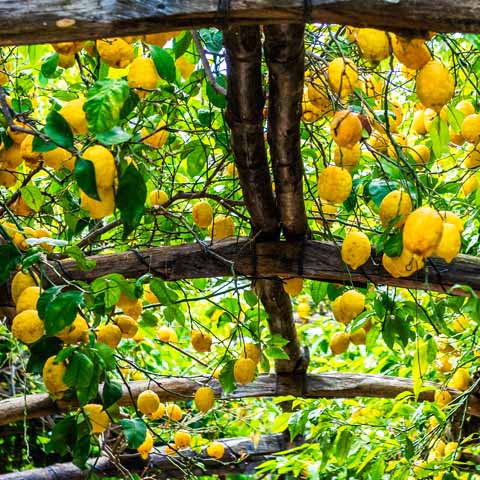
At the same time, the vertical landscape bred a culture of ingenuity and patience. Every lemon terrace was built by hand, wall by dry-stone wall, and every village stairway represents generations of labor against gravity. The people of the coast still call the terraces their giardini, their gardens, and the pride of maintaining them, along with the boats, the festivals, and the family recipes, gives the coast a cultural continuity that mass fame has never managed to dissolve.

What makes this culture so rewarding for travelers is that none of it is staged. The ceramics of Vietri are still thrown and painted by working artisans, the Ravello Festival still fills summer nights with music above the sea, and the religious processions still carry saints down stairways to the harbors. Amalfi Coast culture is not a museum exhibit. It is a life still being lived on the cliffs, and the itineraries we design are built to place travelers inside it.

How Did Art and Faith Shape the Towns of the Coast?

The coast’s greatest artworks are its churches, and they tell the story of a shoreline that faced east. The Cathedral of Saint Andrew in Amalfi, first raised in the ninth century, climbs above the town on its grand staircase with a facade of Byzantine-influenced mosaics and stripes; its bronze doors were cast in Constantinople around 1057, among the first of their kind in Italy, and the relics of the apostle Andrew have rested in its crypt since the thirteenth century.

Beside the cathedral, the Cloister of Paradise, built in the 1260s as a burial ground for Amalfi’s nobility, is one of southern Italy’s most serene spaces: a garden courtyard ringed by slender white columns and interlaced Moorish arches that would look at home in Palermo or the Levant. In Ravello, the cathedral holds a magnificent mosaic pulpit from 1272, raised on spiral columns and twisting with fantastical creatures, and bronze doors cast by Barisano da Trani in 1179.

Positano’s parish church of Santa Maria Assunta guards a Byzantine icon of the Black Madonna beneath its famous majolica dome, and nearly every village keeps a treasure out of proportion to its size: frescoed crypts, silver reliquaries, painted ceilings. We pair travelers with art and history guides who read these interiors fluently, because the coast’s churches reward slow attention, and the stories inside them, of sailors, relics, and eastern trade, explain the whole civilization of the coast.

How Does Architecture Tell the Story of the Coast?

Amalfi Coast architecture is a conversation between the Mediterranean’s shores. The barrel-vaulted white houses stacked up the ravines follow building logic shared with the Greek islands and North Africa, while the arcaded gardens and pierced arches of the great villas carry the memory of Amalfi’s Arab and Byzantine trading partners. The whole ensemble, town, terrace, and mountain together, is what UNESCO recognized in 1997: a cultural landscape where architecture and agriculture are inseparable.

Ravello holds the two most famous expressions. Villa Rufolo, built by a thirteenth-century merchant dynasty, layers a Moorish cloister and towered gardens above the sea; when Richard Wagner walked its grounds in 1880, he declared he had found the magic garden of Klingsor from his opera Parsifal. Villa Cimbrone, reimagined at the turn of the twentieth century by an English lord, culminates in the Terrace of Infinity, a marble-busted balcony hung over a thousand feet of air that many consider the finest view in the Mediterranean.

The humbler architecture rewards attention equally: the Saracen watchtowers that stud every headland, raised in the sixteenth century against corsair raids; the covered passages of Atrani, where the lanes tunnel beneath the houses; and the dry-stone terrace walls, the macere, that hold the lemon gardens to the cliffs. We build architecture-focused days with specialists who read all of it, from cathedral to garden to watchtower, as a single coherent story.

Why Is Ravello the Coast's Capital of Music?

Ravello’s musical identity begins with Wagner’s 1880 visit to Villa Rufolo, and the town has spent a century and a half honoring the association. The Ravello Festival, founded in 1953, remains its centerpiece: through the summer months, orchestras and soloists perform on a stage cantilevered over the gardens of Villa Rufolo, with the coastline and the sea falling away behind the musicians. Concerts timed to sunrise or sunset there are among the most moving musical experiences in Italy.

The festival crowned Ravello’s longer history as a refuge for artists. Greta Garbo found privacy here, Gore Vidal wrote for decades from his villa La Rondinaia, the swallow’s nest, and painters, composers, and writers from Grieg to Virginia Woolf passed through the town’s gardens and terraces. That inheritance gives Ravello an atmosphere unlike anywhere else on the coast: quieter, more contemplative, tuned to beauty rather than spectacle.

Music threads through the rest of the coastal calendar as well, from chamber concerts in cloisters and churches to the brass bands that lead every village festa. We fold performances into itineraries as part of our entertainment and festival experiences in Italy, securing seats for Villa Rufolo concerts well ahead and timing Ravello stays so the music becomes the evening’s architecture rather than a lucky accident.

Which Craft Traditions Still Live Along the Coast?

Vietri sul Mare, at the coast’s eastern gate, has been a ceramics town since at least the fifteenth century, and its workshops still hand-throw and hand-paint the majolica that colors the entire coastline: the tiled dome of its own church of San Giovanni Battista, the numbered plaques on village houses, the lemon-painted tables of a thousand terraces. Watching a ceramicist lay cobalt and yellow onto a plate freehand, in a workshop the family has kept for generations, explains the coast’s visual identity better than any museum.

Amalfi’s craft is paper. From the Middle Ages the town turned the streams of the Valle dei Mulini to the making of bambagina, a soft cotton-rag paper prized by courts and chanceries across Italy, and the Museo della Carta, housed in a medieval mill, still demonstrates the craft on the original water-driven machinery. A few workshops continue to produce Amalfi paper by hand, and wedding invitations and artists’ editions still leave this small valley for the whole world.

Positano contributes fashion: the moda Positano tradition of light, sea-bright clothing and handmade leather sandals, born in the 1950s and 1960s when the town dressed the international set, survives in ateliers where sandals are still cut and fitted while you wait. This is where our insider access matters most. We arrange studio visits with ceramicists, papermakers, and sandal makers, often in workshops that do not advertise, with hands-on sessions where travelers learn the first gestures of the craft from the people who have practiced it for decades.

What Festivals Fill the Amalfi Coast Calendar?

The coast’s great feast belongs to Saint Andrew, Amalfi’s protector, celebrated on June 27 and again on November 30. His silver bust is carried through town, and the festival’s climax is unforgettable: the bearers charge the cathedral’s sixty two steps at a run, sweeping the saint up the staircase while the piazza roars. It is southern Italian devotion at full voltage, and experiencing it from a well-chosen vantage point is something we arrange for travelers who time their visit to it.

Every fourth year, Amalfi hosts the Regatta of the Ancient Maritime Republics, racing crews from Pisa, Venice, and Genoa in a pageant that revives the rivalries of the medieval sea. Summer nights bring the Luminaria di San Domenico in Praiano, when thousands of candles turn the village into constellations, and August 15 fills Positano with the feast of the Assumption and fireworks over the water. Autumn and winter answer with harvest feasts in the hill villages and processions that thread the stairways with song.

These festivals are the coast’s living calendar, and they repay planning. We track the dates year-round, position travelers in the right town on the right evening, and pair the spectacle with the quieter privileges around it: a terrace above the procession route, a table after the fireworks, an introduction to the families who have carried the saint for generations. Even outside the great feast days, nearly every summer week brings a village celebration somewhere along the coast, and folding one into an itinerary is often the evening travelers remember longest.

What Is Daily Life Like on the Amalfi Coast?

Life on the coast follows the vertical geography. Mornings begin early and low, at the harbors where fishing boats land and the espresso bars fill, then climb: to the terraces where lemons are picked into shoulder baskets, to the kitchen gardens, to the workshops. The stairways are the villages’ true streets, and the exchange of greetings on them, everyone known to everyone, remains the coast’s social fabric even in the towns the whole world visits.

The day still bends around lunch and the sea. Shops close in the deep afternoon, families swim in the coves their grandparents swam in, and the evening brings the passeggiata along the marinas and belvederes, gelato in hand, before dinner unfolds at the unhurried southern pace. Sunday remains sacred to the long family lunch, and the year still turns on the agricultural calendar of the terraces: lemons through spring and summer, grapes in September, olives and chestnuts as the cold arrives.

The deepest travel experiences here come from stepping inside these rhythms rather than photographing them: a dawn hour with the fishermen of Cetara, a morning picking lemons with a terrace farmer, an afternoon in a Vietri workshop, an evening festa in a village the guidebooks skip. Our Italian cultural tours are composed of exactly these hours, arranged through relationships our Italian-born team has built along this coast since 2003.

Ready to Begin Planning Your Amalfi Coast Vacation?

The Amalfi Coast deserves more than a template. Since 2003, Trips 2 Italy has designed private Italian vacations one traveler at a time, hand selecting every experience based on what you tell us rather than fitting you into a predefined package. Our Italian-born team plans the Amalfi Coast with the knowledge of people who call Italy home, from the cliff stairways of Positano to the garden terraces of Ravello, and we remain at your side throughout your trip with 24/7 assistance. Tell us how you imagine the Amalfi Coast, and we will craft the itinerary that matches it.

Explore Our Amalfi Coast Vacation Itineraries

Frequently Asked Questions About Amalfi Coast Culture

The coast is celebrated for its Arab-Norman churches and cloisters, the gardens and music of Ravello, the hand-painted ceramics of Vietri sul Mare, Amalfi’s medieval papermaking, Positano’s fashion tradition, and a festival calendar crowned by the feast of Saint Andrew. UNESCO recognized the entire coastline as a World Heritage cultural landscape in 1997.

Founded in 1953, the Ravello Festival stages orchestral and chamber concerts through the summer on a platform suspended over the gardens of Villa Rufolo, the villa whose grounds inspired Wagner in 1880. Sunrise and sunset concerts above the sea are among Italy’s great musical experiences, and Trips 2 Italy secures seats and times Ravello stays around the program.

Yes, and it is one of the coast’s richest experiences. We arrange visits with the ceramicists of Vietri sul Mare, the papermakers of Amalfi’s Valle dei Mulini, and Positano’s sandal makers, often in family workshops that do not advertise, including hands-on sessions where the artisan teaches the first gestures of the craft.

Villa Rufolo, built by a medieval merchant dynasty, pairs Moorish cloisters with gardens that inspired Wagner’s Parsifal and now host the Ravello Festival. Villa Cimbrone, reimagined by an English lord a century ago, ends at the Terrace of Infinity, a belvedere many consider the finest view in the Mediterranean. Together they are the twin summits of Ravello’s garden culture.

The feast of Saint Andrew in Amalfi on June 27 and November 30, with its famous running of the saint up the cathedral steps, leads the calendar, joined by the Luminaria di San Domenico in Praiano each August, the Assumption fireworks in Positano, and, every fourth year, the Regatta of the Ancient Maritime Republics. We position travelers in the right town on the right evening.

Wonderfully so. Children respond to the coast’s ceramics painting sessions, boat days, watchtowers, and festivals, and the villages welcome multiple generations at the same table as a matter of course. We compose family itineraries so culture arrives as adventure, with the pacing, stairways, and swim stops all matched to the group.