Romance in Rome & Tuscany
Begin your forever together in romantic Rome and Tuscany, where cobblestone streets, candlelit dinners, and unforgettable moments create the perfect honeymoon. Starting from $5,304 per person
HOME » POPULAR ITALIAN DESTINATIONS » CORTONA TRAVEL GUIDE » CORTONA THINGS TO DO GUIDE
Cortona Travel Guide Culture History Food and Wine Things to Do Plan My Trip
About this guide: This guide to things to do in Cortona was written by the Italian-born travel specialists at Trips 2 Italy, a custom tour operator that has designed hand-crafted Italian vacations since 2003. Every recommendation below reflects the same first-hand knowledge our team draws on when we build a private Cortona itinerary around a traveler’s interests, dates, and pace. Read it for your research, then let us translate it into a trip designed entirely around you.
Start where the town starts: Piazza della Repubblica, the medieval heart of this ancient Tuscan hill town, where the Palazzo Comunale’s broad stone staircase serves as grandstand, meeting point, and the most photographed steps in the Valdichiana. Adjoining it, Piazza Signorelli holds the Palazzo Casali and the arcaded facade of the Teatro Signorelli, and Via Nazionale, the Rugapiana, threads the two squares toward the sweeping terrace of Piazza Garibaldi.
Two museums anchor the sightseeing. The MAEC in Palazzo Casali holds the famous Etruscan bronze lamp, the Tabula Cortonensis, and galleries running from Etruscan princes to Gino Severini, while the Diocesan Museum beside the cathedral keeps Fra Angelico’s Annunciation, one of the defining paintings of the early Renaissance, alongside masterworks by the hometown painter Luca Signorelli.
Timing is the essential craft. Cortona’s center is compact, and midday coaches can briefly crowd the flat street, so we schedule the museums for the quiet early hours, the climbs for the softening afternoon, and the terraces for sunset, when the Valdichiana and Lake Trasimeno perform below. A day arranged in that order feels twice as long and ten times as private.
Allow time for the smallest pleasures between the landmarks: the antique shop windows along the flat street, the framed glimpses of the valley at the end of every climbing lane, and the Palazzo Comunale steps at the hour when residents claim them. Cortona’s essential sights can be listed in a paragraph; the town around them is the reason travelers stay longer than they planned.
The signature Cortona experience is vertical. From the town center, a steep lane climbs to the Basilica of Santa Margherita, resting place of the town’s thirteenth-century patron saint, and the route is itself a gallery: the mosaic Stations of the Cross that line it were designed by Gino Severini, Cortona’s Futurist master, so the walk ascends through modern art toward medieval devotion.
The basilica repays the effort with its luminous interior and the silver-cased remains of the saint above the high altar, and the path continues to the Fortezza del Girifalco, the Medici fortress of 1556 crowning the hill at over 600 meters. Its ramparts deliver the finest panorama in this corner of Italy: the whole Valdichiana quilted below, Lake Trasimeno silver to the south, and on clear days the profile of Monte Amiata on the horizon.
We arrange the climb to suit the traveler: on foot for those who want the full pilgrimage, or by private car to the summit with an unhurried descent through the town for those who prefer the views without the gradient. Late afternoon is the connoisseur’s hour, when the stone turns honey-colored and the valley below begins its slow evening change of light.
Give the MAEC a full morning. The Cortona lamp and the Tabula Cortonensis are the headliners, but the galleries also hold Etruscan gold, an Egyptian collection gathered by an eighteenth-century academician, and Severini’s twentieth-century works, and the museum connects to the monumental Sodo tombs on the plain below, where sphinx-carved altars mark the graves of Etruscan princes. Seen together with an archaeologist, museum and tombs become a single story.
The Diocesan Museum asks for slow attention: Fra Angelico’s Annunciation rewards long looking, and the collection around it, Signorelli’s late masterpieces and a moving crucifix by Pietro Lorenzetti, is dense out of all proportion to its size. The town’s churches extend the gallery: San Francesco with Brother Elias’s tomb and its relic of the True Cross, San Niccolò with its double-sided Signorelli standard, and the cathedral’s calm Renaissance nave.
Just below the walls, Santa Maria delle Grazie al Calcinaio is the connoisseur’s stop, a serenely proportioned Renaissance church of 1485 by Francesco di Giorgio Martini that architects travel specifically to see. We sequence these interiors across a stay rather than a single afternoon, because Cortona’s art asks for freshness of eye, and we arrange the guides who turn each room into a story.
A practical rhythm serves art lovers well: one museum in the morning while attention is fresh, a long lunch, and a single church or the Calcinaio in the afternoon, with the terraces as the palate cleanser between them. The town’s compact center makes this pace effortless, and it leaves the evening free for the passeggiata, which is a cultural monument in its own right.
Three kilometers from the walls, the hermitage of Le Celle folds into a wooded gorge beside a mountain stream: stone cells, small bridges, and the tiny room where St Francis stayed after founding the retreat around 1211. Capuchin friars still keep the place, and its silence, broken only by water, makes it the most restorative hour within reach of the town. We pair it with a slow return through the olive terraces.
Inside the walls, quiet is a matter of direction and hour. Climb away from the flat street and the lanes empty within a minute: Via Janelli’s medieval houses lean over a street that has barely changed in six centuries, the upper town’s stairways deliver framed views of rooftops and valley, and the ramparts walk along the Etruscan wall courses puts twenty-five centuries under your hand with rarely another visitor in sight.
Early morning belongs to those who stay overnight. Before the day visitors arrive, the piazza is a stage set of long shadows, the bars serve the town’s own breakfast, and the Garibaldi terrace looks over a valley still under mist. Travelers who give Cortona its dawn and its dusk, and spend midday in the countryside, experience a different town from the one the coaches see.
The hillside is made for walking. Trails climb from the town through olive groves to the summit of Monte Sant’Egidio, follow the old pilgrim paths toward Le Celle, and trace the wall circuit where Etruscan masonry underpins the medieval stone. Every route ends in a view of the Valdichiana, and spring and autumn turn the hikes into the day’s highlight rather than its exercise.
The valley floor and the lake add range. E-bike rides roll between wine estates and Chianina farms on quiet lanes, horseback excursions cross the countryside the Etruscans farmed, and Lake Trasimeno, twenty minutes south, offers sailing, kayaking, and ferry rides to its islands. We fold these into itineraries as part of our active trips in Italy, matched carefully to ability and appetite.
Active Cortona pairs naturally with its rewards: the morning hike ends at an estate lunch, the bike ride at a cellar door, the lake afternoon with dinner on the terrace as the sun drops behind the hills. We design the pairing deliberately, because in this corner of Tuscany effort and pleasure were never meant to be separate itineraries.
Photographers should plan around the light. Dawn gives mist on the Valdichiana and empty lanes, late afternoon sets the stone glowing and rakes the valley with long shadows, and the blue hour from the fortress ramparts is the day’s finale. We time walks and drives accordingly, because in Cortona the view is the town’s greatest artwork and it changes by the hour.
Evening is the town’s finest exhibition. The passeggiata flows along the Rugapiana, the steps of the Palazzo Comunale fill like theater seating, and the aperitivo hour spreads tables across Piazza della Repubblica as the swifts wheel overhead. Sunset calls everyone to the terraces, at Piazza Garibaldi or up at the fortress, where the Valdichiana and Lake Trasimeno dissolve into gold.
Summer deepens the program. The legacy of the Tuscan Sun Festival, which made Cortona a summer stage from 2003, lives on in concerts at the Teatro Signorelli and events in the piazzas, while the exhibitions of Cortona On The Move keep palace doors open into the warm evenings. On festival nights the town feels like a private party to which every visitor is somehow invited.
Dinner completes the evening: candlelit rooms inside the walls, estate tables among the vines, and fine dining kitchens working the Valdichiana’s pantry with contemporary craft. We reserve the table that suits each night’s mood and arrange the drives home afterward, because the last glass of Cortona Syrah should never be rationed against the road.
Arezzo lies thirty minutes north, with Piero della Francesca’s Legend of the True Cross frescoes, Vasari’s house, and, on the first weekend of each month, one of Italy’s great antiques fairs spilling across its sloping Piazza Grande. It is the natural art-lover’s day trip, and we arrange the timed fresco entries and the specialist guides who unlock the cycle’s meaning.
Westward across the valley wait the wine capitals: Montepulciano with its Renaissance palaces and cellars carved deep beneath the town, Pienza, the pocket-sized ideal city of pope Pius II with its pecorino shops, and the Val d’Orcia’s cypress ridges beyond. Southward, Lake Trasimeno offers Castiglione del Lago’s lakeside castle and the ferry to Isola Maggiore, while Perugia and Assisi carry a day deep into Umbria’s medieval heart.
Cortona’s gift is choice within twenty minutes’ radius of the piazza, and composing it well is our craft. As part of a custom trip to Italy, we sequence the excursions by geography and light, with a private driver who knows where the road earns an unscheduled stop, so each day away sharpens rather than dilutes the pleasure of returning to the hill at evening.
Two destinations a day, well chosen, is the connoisseur’s pace: Montepulciano’s cellars in the morning and Pienza before the light flattens, or Arezzo’s frescoes followed by a slow return through the Valdichiana’s farm roads. We sequence these days by geography and light, with a driver who knows exactly where the road earns an unscheduled stop, and we always leave the evening free for the hill at home.
Cortona deserves more than a template. Since 2003, Trips 2 Italy has designed private Italian vacations one traveler at a time, hand selecting every experience based on what you tell us rather than fitting you into a predefined package. Our Italian-born team plans Cortona with the knowledge of people who call Italy home, from the Etruscan walls to the sunset terraces above the Valdichiana, and we remain at your side throughout your trip with 24/7 assistance. Tell us how you imagine Cortona, and we will craft the itinerary that matches it.
Begin your forever together in romantic Rome and Tuscany, where cobblestone streets, candlelit dinners, and unforgettable moments create the perfect honeymoon. Starting from $5,304 per person
Experience ancient Rome and charming Tuscany as a family. Explore, taste, and connect on an unforgettable Italian adventure. Starting from $5,442 per person.
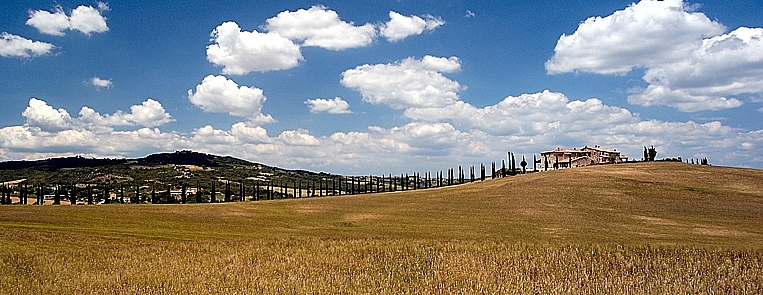
Enjoy a bit of Hollywood in Tuscany, as we tour the towns used in “Under the Tuscan Sun” and “New Moon.”
The climb from Piazza della Repubblica past Severini’s mosaic Stations of the Cross to the Basilica of Santa Margherita and the Girifalco fortress is the signature Cortona experience, crowned by the finest panorama in the area over the Valdichiana and Lake Trasimeno. Pair it with Fra Angelico’s Annunciation in the Diocesan Museum for the town’s essential day.
A day covers the piazzas, one museum, and the fortress climb, but the town’s character lives in its evenings and early mornings, which only overnight guests experience. Trips 2 Italy usually recommends two nights, using the second day for the Le Celle hermitage, the Etruscan tombs, or a wine estate of the Cortona DOC.
Bramasole, the villa Frances Mayes restored, remains a private home, so it is admired from the road outside Porta Colonia rather than visited. The town itself is the real set: the piazzas, the flat street, and the valley views that made the book beloved are all freely enjoyed, and our guides weave the story into a walking tour for devotees.
The ramparts of the Girifalco fortress hold the widest panorama, with the Valdichiana and Lake Trasimeno spread below, followed closely by the terrace at Piazza Garibaldi, the churchyard of Santa Margherita, and the upper town’s lanes. Sunset is the hour that repays the climb most generously, especially in the long light of early autumn.
Arezzo, Montepulciano, Pienza, the Val d’Orcia, and Lake Trasimeno all lie within about forty minutes, and Perugia and Assisi extend the range into Umbria. Trips 2 Italy arranges each excursion with a private driver and sequences the days by geography and light, so travelers explore two regions from a single unpacked base.
Ideal. The town rewards sitting as much as sightseeing: a morning on the piazza steps, an unhurried museum, a long estate lunch, and the evening passeggiata make a complete and memorable day. We design slow itineraries deliberately, with drivers softening the hills and every reservation timed so the day never feels managed.