
Romance in Rome & Tuscany
Begin your forever together in romantic Rome and Tuscany, where cobblestone streets, candlelit dinners, and unforgettable moments create the perfect honeymoon. Starting from $5,304 per person
HOME » POPULAR ITALIAN DESTINATIONS » CORTONA TRAVEL GUIDE » CORTONA HISTORY GUIDE
About this guide: This guide to the history of Cortona was written by the Italian-born travel specialists at Trips 2 Italy, a custom tour operator that has designed hand-crafted Italian vacations since 2003. Every recommendation below reflects the same first-hand knowledge our team draws on when we build a private Cortona itinerary around a traveler’s interests, dates, and pace. Read it for your research, then let us translate it into a trip designed entirely around you.
Cortona is one of the oldest continuously inhabited hill towns in Italy. Legend gave it a founder from the deepest past, Dardanus, ancestor of the Trojans, and the ancients themselves regarded the city as already venerable. History confirms the essence of the myth: as Curtun, Cortona was a major Etruscan center and is counted among the twelve great cities of the Etruscan League, dominating the fertile Valdichiana from its defensible height on the frontier of what is now Tuscany.
The city’s power is still measurable in stone. In the fourth century BC the Etruscans wrapped the hilltop in walls nearly three kilometers around, built of blocks so massive that later ages assumed giants had set them. Long stretches of that circuit survive at the base of the medieval walls, and gates like the Porta Bifora still carry Etruscan masonry, making a walk around Cortona’s perimeter one of the most direct encounters with the Etruscan world anywhere in Italy.
Below the town, the plain preserves the graves of its princes. The monumental tumulus tombs of Sodo and Camucia, great earth mounds over stone burial chambers, testify to the wealth the Valdichiana generated, and the altar platform of the second Sodo tumulus, with its sphinx-and-warrior sculptures, remains one of the most striking Etruscan monuments ever excavated.
That antiquity is not an abstraction; it is the town plan. Cortona’s main streets still follow the contours the Etruscans engineered, the medieval town sits within the ancient circuit rather than beyond it, and gardens and cellars inside the walls regularly turn up worked stone twenty-five centuries old. Few places in Italy let a traveler stand in one spot and touch so many layers of the same continuous settlement.
Cortona’s museum holds two of the most important Etruscan objects ever found. The first is the Cortona lamp, a bronze oil chandelier of the fourth century BC discovered in a field near the town in 1840: sixteen lamps ring a ferociously sculpted gorgon’s face, surrounded by sirens, satyrs, and waves. No comparable piece of Etruscan bronze casting survives anywhere, and scholars still debate the sanctuary it must once have lit.
The second arrived in 1992, when a bronze tablet now called the Tabula Cortonensis came to light. Its two hundred words make it one of the longest Etruscan texts known, apparently recording a land contract witnessed by the town’s leading families. Because the Etruscan language remains only partly understood, every substantial text is a Rosetta stone in waiting, and the tablet has become central to the study of this productively mysterious civilization.
Both treasures live in the MAEC in Palazzo Casali, alongside the collections the Accademia Etrusca began assembling in 1727, when Cortona became one of Europe’s first centers of Etruscan scholarship. We arrange museum visits with archaeologist guides who connect the galleries to the walls and tombs outside, so the objects return to the landscape that produced them.
Rome absorbed Cortona gradually, as it did all of Etruria, and the city passed the imperial centuries as a quiet Roman town above a prosperous agricultural valley. Its most dramatic ancient hour came in 217 BC, when Hannibal, having crossed the Apennines, marched past Cortona’s hill and destroyed a Roman army in the misty ambush at Lake Trasimeno, a few miles south. The battlefield’s place names still remember the slaughter.
The empire’s collapse struck hard. Cortona was sacked by the Goths in the sixth century and passes almost out of the record for centuries, its people holding on within the old walls while the drained Valdichiana below reverted to marsh. Like many Etruscan hilltops, the town survived on the defensibility its founders had chosen, waiting out the dark centuries above a valley that had become a fever plain.
Revival came with the Middle Ages. By the thirteenth century Cortona was a free and combative commune, rebuilding its walls, raising the Palazzo Comunale on its central square, and asserting itself against Arezzo and Perugia. In 1325 the town gained its own bishop and, under the Casali family who ruled for most of a century, a small court with genuine ambitions in art and learning.
Franciscan history runs deep here. Around 1211, in the wooded gorge above the town, St Francis of Assisi established the hermitage of Le Celle, a cluster of stone cells beside a mountain stream where he returned in the last years of his life. The hermitage still functions, home to Capuchin friars, and the tiny cell associated with the saint remains one of the most moving Franciscan sites in Italy, a short drive from the walls.
Francis’s follower Brother Elias, one of the order’s most consequential and controversial figures, raised the church of San Francesco inside the town in 1245, among the earliest Franciscan churches anywhere. It preserves a relic of the True Cross he brought from Constantinople, and Elias himself lies buried there, giving Cortona a direct link to the order’s founding generation.
The town’s own saint arrived a generation later. Margherita of Cortona, a farmer’s daughter whose life turned to penitence and service after her lover’s murder, spent her last decades here tending the poor and sick, founding a hospital, and dying in 1297. Canonized in 1728, she remains Cortona’s patroness, and her remains rest in the basilica bearing her name at the top of the town, the goal of seven centuries of pilgrimage.
The Franciscan chapter also explains the town’s devotional geography. The sanctuary of Santa Margherita crowns the hill where the saint spent her final years, Le Celle keeps the order’s austere beginnings in the gorge outside the walls, and San Francesco anchors its urban presence below. Walking the three in a single day, as pilgrims have for centuries, traces the whole arc of the movement that reshaped thirteenth-century Italy.
The independent commune’s story ended in 1411, when Cortona was sold to Florence, and the town spent the Renaissance inside the Florentine, later grand ducal, state. The arrangement cost Cortona its politics but enriched its art. Fra Angelico lived and painted in the Dominican convent here in the 1430s, leaving the Annunciation that remains the town’s greatest treasure, and around 1450 Cortona produced its own master in Luca Signorelli, whose career carried the town’s name across central Italy.
The era built as well as it painted. The pilgrimage church of Santa Maria delle Grazie al Calcinaio, begun in 1485 below the walls to Francesco di Giorgio Martini’s design, is among the most harmonious Renaissance buildings in Tuscany. In 1556 Cosimo I de’ Medici crowned the hilltop with the fortress of Girifalco, whose star-cornered bastions still command the summit and mark Florence’s final word on the town’s independence.
Under the grand dukes, Cortona settled into the long, productive quiet of a provincial capital of learning and agriculture. The eighteenth century brought its most distinctive institution, the Accademia Etrusca of 1727, whose scholars, library, and museum made this small hill town a name in the learned correspondence of Enlightenment Europe.
The modern centuries were kind in an unglamorous way. The Lorraine grand dukes completed the draining of the Valdichiana, returning the valley to the agricultural wealth it had known under the Etruscans, and Cortona entered united Italy in 1860 as a quiet market town. Its remoteness from industry preserved the medieval fabric intact, so the twentieth century inherited a town the Renaissance would still recognize.
Art kept faith with the place. Gino Severini, born in Cortona in 1883, became a founder of Futurism in Paris and late in life gave his hometown the mosaic Stations of the Cross that climb to the Santa Margherita sanctuary, a gift uniting the town’s newest art with its oldest devotion. Scholars, painters, and foreign residents were quietly discovering Cortona decades before the world followed.
The world arrived in 1996, when Frances Mayes published Under the Tuscan Sun, her memoir of restoring the villa Bramasole on Cortona’s hillside. The book and the 2003 film made the town a global emblem of the Tuscan good life. Cortona absorbed the fame with remarkable grace: the piazza still belongs to its residents, the market still runs on Saturday, and the town’s deep past remains the foundation of its present.
Fame has been managed with unusual discipline. Cortona capped its growth within the ancient walls, kept the Saturday market and the theater season at the center of civic life, and let the surrounding farmland remain farmland, so the view from the fortress today is recognizably the one the Etruscans commanded. The town the world fell for in 1996 survives precisely because its residents declined to turn it into a set.
The town rewards a chronological walk. Begin with the Etruscan walls and the MAEC’s bronzes, descend to the Sodo tumuli on the plain, then return through the medieval centuries on Piazza della Repubblica, at San Francesco with Brother Elias’s tomb, and along the ancient houses of Via Janelli. The Renaissance waits in the Diocesan Museum and at the Calcinaio church, and the Medici era crowns the sequence at the Girifalco fortress.
Two sites deserve unhurried time. The Basilica of Santa Margherita, holding the saint’s remains above the town she served, condenses seven centuries of devotion into a single luminous space, and Le Celle, folded into its wooded gorge, preserves the Franciscan beginning almost untouched. Taken together with the fortress terraces above them, they explain Cortona’s history more eloquently than any text.
Sequence and storytelling are what we add. Our historian and archaeologist guides walk these sites in narrative order, so twenty-five centuries arrive as a story rather than a shuffle, and we arrange the quiet hours, the drives between the outlying sites, and the access that lets the past speak clearly. It is the same craft behind all our cultural tours across Italy, applied to one of the country’s oldest towns.
Cortona deserves more than a template. Since 2003, Trips 2 Italy has designed private Italian vacations one traveler at a time, hand selecting every experience based on what you tell us rather than fitting you into a predefined package. Our Italian-born team plans Cortona with the knowledge of people who call Italy home, from the Etruscan walls to the sunset terraces above the Valdichiana, and we remain at your side throughout your trip with 24/7 assistance. Tell us how you imagine Cortona, and we will craft the itinerary that matches it.
Begin your forever together in romantic Rome and Tuscany, where cobblestone streets, candlelit dinners, and unforgettable moments create the perfect honeymoon. Starting from $5,304 per person
Experience ancient Rome and charming Tuscany as a family. Explore, taste, and connect on an unforgettable Italian adventure. Starting from $5,442 per person.
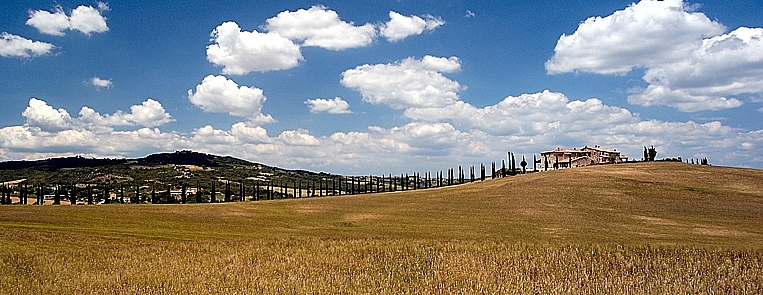
Enjoy a bit of Hollywood in Tuscany, as we tour the towns used in “Under the Tuscan Sun” and “New Moon.”
Cortona is among the oldest hill towns in Italy, flourishing as the Etruscan city of Curtun by the early centuries of the first millennium BC and counted among the twelve great cities of the Etruscan League. Its massive fourth-century BC walls still underpin the medieval circuit, and legend pushed its founding back to Dardanus, ancestor of the Trojans.
A bronze oil chandelier of the fourth century BC, discovered near Cortona in 1840 and displayed in the town’s MAEC museum. Sixteen lamps surround a sculpted gorgon’s face ringed with sirens and satyrs, and no comparable masterpiece of Etruscan bronze casting survives anywhere, which makes it one of the most important Etruscan objects ever found.
Margherita of Cortona was a thirteenth-century penitent who devoted her life to the town’s poor and sick after her lover’s murder, founding a hospital and dying here in 1297. Canonized in 1728, she is Cortona’s patron saint, and her remains rest in the hilltop basilica that bears her name, reached by the lane lined with Severini’s mosaics.
The Eremo Le Celle is a Franciscan hermitage in a wooded gorge just outside Cortona, founded by St Francis of Assisi around 1211 and still inhabited by Capuchin friars. The saint’s tiny cell survives beside the mountain stream, and Trips 2 Italy includes the hermitage in history and spiritual itineraries as one of central Italy’s most moving Franciscan sites.
Yes. The monumental tumulus tombs of Sodo and Camucia rise from the plain below the town, including an altar platform carved with sphinxes and warriors, and the MAEC museum curates both the tombs and the treasures found in them. Trips 2 Italy arranges visits with archaeologist guides who connect the tombs, the walls, and the museum into a single story.
The Fortezza del Girifalco was raised in 1556 under Cosimo I de’ Medici on the site of earlier strongholds at the town’s highest point. Built to anchor Florentine control after Cortona passed to Florence in 1411, it now serves as an exhibition and events space, and its ramparts offer the finest panorama over the Valdichiana and Lake Trasimeno.