Things To Do in Palermo

HOME » POPULAR ITALIAN DESTINATIONS » PALERMO TRAVEL GUIDE » PALERMO THINGS TO DO GUIDE

Palermo Travel Guide        Culture        History        Food and Wine        Things to Do        Plan My Trip

About this guide: This guide to things to do in Palermo was written by the Italian-born travel specialists at Trips 2 Italy, a custom tour operator that has designed hand-crafted Italian vacations since 2003. Every recommendation below reflects the same first-hand knowledge our team draws on when we build a private Palermo itinerary around a traveler’s interests, dates, and pace. Read it for your research, then let us translate it into a trip designed entirely around you.

What Belongs at the Top of Every Palermo Itinerary?

Begin with the Arab-Norman ensemble that makes the capital of the Sicily region unique in the world. The Palatine Chapel inside the Royal Palace is the essential first encounter, its golden mosaics and carved Arab ceiling best met early, before the day’s groups arrive. The cathedral follows down the Cassaro, with its royal tombs and rooftop walkways above the old city.

The small piazza that holds the Martorana and San Cataldo compresses the twelfth century into a single stop, the red domes outside and Byzantine gold within, and the Quattro Canti and Fontana Pretoria add the baroque theater a few steps away. This entire royal route is walkable, and sequencing it well is the difference between a checklist and a story.

Timing and access are where planning shows its value. The chapel, the palace’s royal apartments, and the cathedral’s treasury and roofs each run their own calendars, and the light in the mosaic interiors changes hour by hour. We arrange timed entries, expert guides, and the right order for the day, so the marquee sites meet our travelers at their best.

Around the monuments, leave room for the city itself: a coffee amid the morning market noise, the lanes of the Kalsa, and the first paper cone of street food. Palermo rewards travelers who alternate its masterpieces with its life, and we compose days deliberately around that rhythm.

What Is the Signature Palermo Experience?

A market morning, without question. Walking Ballaro or the Capo as the stalls hit full voice, tasting panelle straight from the fryer and the season’s fruit from the grower’s own crate, hearing the abbanniata echo down lanes that have traded for a thousand years: no museum explains Palermo half as well. It is the city’s daily opera, and every traveler should have a seat.

We arrange these mornings with local cooks and food guides who shop the markets daily, which changes everything: the stalls open up, the tastings multiply, the stories flow, and travelers move through the crowd as guests rather than onlookers. The morning can end in a kitchen where the basket becomes lunch, or continue as a street food walk through the old quarters.

The market walk also teaches the city’s geography painlessly. Ballaro leads naturally to the Royal Palace and the Albergheria’s churches, the Capo to the Teatro Massimo, and the Vucciria to the harbor and the Kalsa, so we often build whole days that unfold outward from a market morning into art, architecture, and an unhurried evening.

For travelers who prefer the evening version, the street food walk after dark is its own theater: the grills of the old quarters lighting up, the Vucciria’s squares filling with conversation, and the city’s night appetite on full display. Morning or evening, the principle is the same: Palermo’s food is a living performance, and the best seats are arranged in advance.

Why Is Monreale the Essential Excursion From Palermo?

In the hills above the city, the cathedral of Monreale holds one of the supreme artistic achievements of the Middle Ages: nearly the entire interior sheathed in golden mosaic, culminating in the vast Christ Pantocrator whose gaze fills the apse. Built by King William II from 1174 as the crown of the Norman kingdom, it is the finale toward which every Arab-Norman itinerary builds.

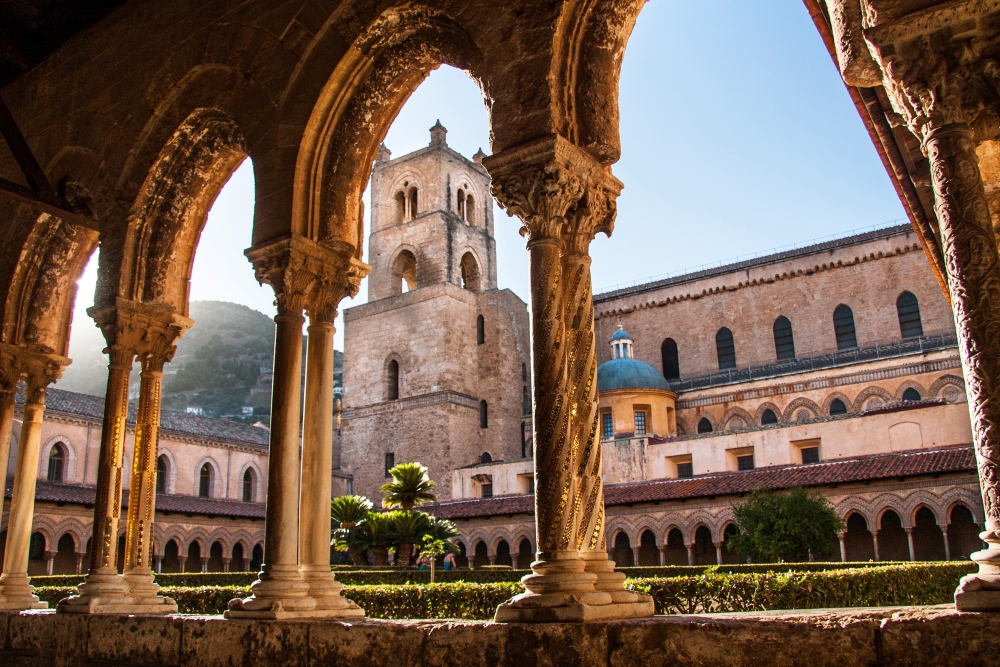
The adjoining cloister is its own masterpiece, a garden courtyard surrounded by more than two hundred paired columns, no two capitals alike, carved with biblical scenes, beasts, and vines by the twelfth century’s finest sculptors. The terraces above reward the climb with views over the Conca d’Oro to the sea, with Palermo spread across the plain below.

Light matters at Monreale more than almost anywhere in Italy. The mosaics change character through the day as the sun moves across the nave, and the interior rewards visitors who arrive when the golden surfaces are lit rather than in shadow. Reading that calendar of light, and booking the visit accordingly, is exactly the kind of detail our planning is built on.

Monreale asks for half a day done properly: a private driver for the short journey into the hills, a guide who can read the mosaic cycle as the narrative it was designed to be, and time in the town’s lanes afterward. We often pair the morning at Monreale with an afternoon at Mondello or a countryside lunch, a sequence our travelers consistently name among their favorite days in Sicily.

Which Museums, Churches, and Oratories Reward Art Lovers?

Palazzo Abatellis in the Kalsa is one of Italy’s great regional galleries, home to the mesmerizing Triumph of Death fresco and Antonello da Messina’s Annunciata, a small painting that repays a long look. The Regional Archaeological Museum answers with the sculpted metopes of Selinunte, masterpieces of Greek art from Sicily’s western temples.

The oratories are Palermo’s most intimate marvels. In Santa Cita and the Rosario di San Domenico, Giacomo Serpotta spun stucco into white lace, allegories, battle scenes, and tumbling putti, across rooms built for baroque confraternities, and the Oratory of San Lorenzo adds the poignant frame of Caravaggio’s stolen Nativity. These small rooms often receive a fraction of the visitors their quality deserves.

The church list runs deep: the Gesu’s polychrome marble interior, Santa Caterina with its convent pastry tradition revived, San Giovanni degli Eremiti’s red domes above a quiet cloister garden, and the Capuchin catacombs for travelers drawn to the city’s more unusual history.

We compose art days with specialists who read these rooms fluently, arrange timed access so masterpieces get quiet minutes, and secure after-hours and special openings where relationships allow. Palermo rewards depth extraordinarily well, and depth is precisely what a custom itinerary provides.

Where Do Palermitans Go for the Sea and the Outdoors?

Mondello is the city’s beloved beach, a crescent of pale sand and turquoise water curled beneath Monte Pellegrino, fifteen minutes from the center. Laid out as a resort in the Belle Epoque, it keeps its Liberty-style bathing pavilion standing over the water and its unhurried ritual of swims, long seafood lunches, and evening gelato. From late spring into October, an afternoon here is the perfect counterweight to the city’s density.

Monte Pellegrino itself rewards the ascent, by road or on foot along the old pilgrim paths, to the grotto sanctuary of Santa Rosalia and lookouts over the gulf that explain Goethe’s admiration. The Capo Gallo reserve beyond Mondello keeps wilder coves, and the sea itself invites boat afternoons along the headlands in the warm months.

Within the city, green refuges balance the stone: the Orto Botanico’s giant fig trees and palm avenues have shaded visitors since 1795, the English Garden and Villa Giulia offer shaded strolls, and the Foro Italico’s seafront lawns fill with families at sunset. These pauses are part of how Palermo is meant to be experienced.

Families settle into this side of Palermo especially well, pairing beach time with puppet theater and street food adventures as part of a family vacation to Italy, while walkers and swimmers can thread the coast into a broader active trip in Italy. We match the outdoor days to the season and the travelers, with drivers and boats arranged so the logistics disappear.

How Should You Spend Your Evenings in Palermo?

Start with the passeggiata. As the light softens, Via Maqueda and the Cassaro fill with the whole city walking, and joining that current, gelato or aperitivo in hand, is Palermo’s gentlest pleasure. The baroque facades glow at dusk, the street musicians take their corners, and the markets’ evening incarnations begin to sizzle.

The Teatro Massimo crowns the city’s nights. An opera, ballet, or concert beneath its great dome is one of Italy’s finest evenings, and even outside performance times the theater’s illuminated staircase presides over the square’s nightly gathering. We secure seats well in advance for travelers who want a performance at the heart of their Palermo stay.

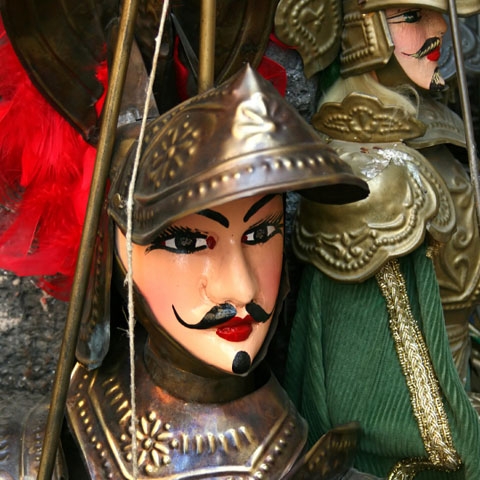
For families and the culturally curious, an evening at the opera dei pupi is pure delight: carved knights clashing through the epics of Charlemagne in an intimate family-run theater, an art form recognized by UNESCO and beloved by children and grandparents alike. It pairs beautifully with an early dinner and a gelato on the walk home.

Dinner deserves its own planning: a rooftop with the cathedral floodlit, a courtyard in the Kalsa, a chef’s tasting of the new Sicilian kitchen, or the Vucciria’s smoky grills for travelers who want the city at its most unvarnished. We reserve each evening to match its day, because in Palermo the night is not an afterthought but a second act.

What Day Trips Pair Well With Palermo?

Cefalu leads the list: an hour east along the coast, a golden Norman cathedral with mosaics that complete the Arab-Norman story rises above a fishing town of narrow lanes and a long curve of beach beneath a dramatic crag. It is among the most satisfying single days in Sicily, and we time it to include both the mosaics and a long seafront lunch.

West of the city, the Doric temple of Segesta stands alone and nearly intact on its hillside, one of the most moving Greek sites anywhere, and pairs naturally with the medieval mountain town of Erice, whose stone lanes look down on the salt pans of Trapani glittering along the coast. Wine country days in the western hills add cellars, vineyards, and estate lunches.

Closer at hand, Bagheria’s eccentric baroque villas reward a short excursion, and the fishing towns along the gulf serve seafood lunches worth the drive on their own. Travelers who love the water can trade wheels for a hull entirely, with a boat day along the coast’s headlands, caves, and swimming coves in the warm months.

Farther afield, the temples of Agrigento make an ambitious but unforgettable day, and the island of Ustica tempts swimmers in high summer. How far to reach depends on the trip’s rhythm, and that judgment is our craft: as part of a custom trip to Italy, we sequence excursions so each one refreshes the journey rather than crowding it, with every driver and detail arranged and supported around the clock.

Ready to Begin Planning Your Palermo Vacation?

Palermo deserves more than a template. Since 2003, Trips 2 Italy has designed private Italian vacations one traveler at a time, hand selecting every experience based on what you tell us rather than fitting you into a predefined package. Our Italian-born team plans Palermo with the knowledge of people who call Italy home, from the golden mosaics of the Palatine Chapel to the market lanes of Ballaro and the curve of the beach at Mondello, and we remain at your side throughout your trip with 24/7 assistance. Tell us how you imagine Palermo, and we will craft the itinerary that matches it.

Explore Our Palermo Vacation Itineraries

Frequently Asked Questions About Things to Do in Palermo

The Palatine Chapel inside the Royal Palace is the essential first encounter, followed closely by a market morning in Ballaro or the Capo and the excursion to Monreale’s mosaic cathedral. All three depend on timing and access, which is why Trips 2 Italy builds itineraries around early entries, expert guides, and the right sequence.

Absolutely. The cathedral’s golden mosaics and the carved cloister rank among the supreme works of medieval art, and the hilltop town looks over the Conca d’Oro to the sea. It is a short drive from the city, and we arrange it as a half-day with a private driver and an art historian guide.

You can wander them freely, and they are wonderful theater, but a market walk with a local cook or food guide transforms the experience: the stalls open up, the tastings multiply, and the history becomes visible. Trips 2 Italy arranges these mornings with companions the vendors know by name.

Yes, especially from late spring through October. Palermo’s Liberty-era beach town curls beneath Monte Pellegrino fifteen minutes from the center, with pale sand, calm turquoise water, and long seafood lunches. An afternoon there balances the historic center’s intensity beautifully.

Cefalu’s Norman cathedral and beach, the Greek temple at Segesta paired with the mountain town of Erice, the wine country of the western hills, and, for ambitious days, the temples of Agrigento. We arrange each with a private driver and timing that keeps the day unhurried.

Three well-planned days cover the Arab-Norman monuments, a market morning with street food, the oratories and galleries, Monreale, and an evening or two of passeggiata and performance. Add a fourth or fifth day for Cefalu, Segesta, or the beach, and the city unfolds without hurry.