Italian Peninsula and Sicily 17 Day Escorted Tour | Vacation Packages for 2025 – 2026
Explore Rome, Florence, Venice and Sicily as art, history and breathtaking landscapes create the ultimate Italian journey. Starting from $6,404 per person.
HOME » POPULAR ITALIAN DESTINATIONS » ITALIAN TRAVEL GUIDES BY REGION » SICILY » SICILY HISTORY GUIDE
Sicily’s human history extends back to prehistoric times, with archaeological evidence suggesting settlement as far back as 8000 BC when Sicani and Siculi peoples inhabited the island alongside the Elymian culture in the western region, creating distinct communities that developed sophisticated agricultural and trading networks. The arrival of Greek colonists beginning in the 8th century BC fundamentally transformed Sicily, introducing democratic city-states and sophisticated artistic traditions that would make Syracuse and other Sicilian cities rival the power and influence of mainland Greek city-states themselves. The Syracuse colony, founded in 733 BC by settlers from Corinth, grew to become one of the ancient world’s most powerful cities, commanding a naval empire that rivaled Athens and producing extraordinary cultural achievements in philosophy, mathematics, drama, and sculpture.
These Greek settlements created the foundation for Sicily’s enduring cultural identity, establishing temples, theaters, and civic institutions that persist as ruins and archaeological treasures to this day. The Valley of the Temples near Agrigento represents perhaps the greatest concentration of Greek temples outside Greece itself, with five massive Doric temples still standing after 2,500 years, testifying to the architectural ambition and engineering sophistication of these ancient communities. Sicilian Greeks contributed significantly to Western philosophy and science, with figures like Archimedes revolutionizing mathematics and mechanics through their innovations, while dramatists created plays that were performed throughout the Greek world.
The island’s prosperity and power attracted military attention from rival empires, leading to warfare and conquest that would define subsequent Sicilian history, as the island’s strategic position and agricultural wealth made it perpetually valuable to expanding powers seeking dominion over Mediterranean trade and resources.
Roman conquest of Sicily, completed in 242 BC following a series of devastating wars, marked a fundamental shift in Sicilian history as the island was incorporated into the Roman Republic and transformed into Rome’s most important granary, supplying grain for the empire’s growing urban populations. The First Punic War (264-241 BC) between Rome and Carthage was largely fought for control of Sicily, with naval battles and strategic campaigns demonstrating how crucial Sicily was to Roman expansion and security. Sicily’s transformation into Rome’s primary grain supplier enriched some landowners while creating conditions for agricultural slavery on a vast scale, with thousands of enslaved people working massive agricultural estates called latifundia, conditions that eventually sparked two major slave revolts in 135 BC and 104 BC—conflicts so severe that Roman armies required years to suppress them.
Roman Sicily also developed important urban centers with sophisticated infrastructure including aqueducts, theaters, and administrative buildings, while cities like Messina, Syracuse, and Palermo became significant trading ports handling commerce throughout the Mediterranean world. The Roman period saw the spread of Christianity throughout Sicily, with the island becoming an important center of early Christian faith, as evidenced by the catacombs and basilicas that emerged during this era. Following the western Roman Empire’s collapse in the 5th century AD, Sicily passed under the control of various Byzantine emperors, who maintained the island as a crucial possession within their remaining Mediterranean territories, preserving Greek and Latin cultural traditions while introducing Byzantine artistic and religious influences.
The Byzantine period, lasting nearly 300 years, saw Sicily develop distinctive characteristics that blended Western Roman traditions with Eastern Byzantine culture, creating unique artistic and architectural forms that would influence subsequent Sicilian development. The island remained relatively prosperous during this period, with active trade networks and agricultural productivity supporting a stable society despite periodic invasions and conflicts, until Arab forces from North Africa began their conquest of the island in 827 AD, initiating another transformative period in Sicilian history.
The Arab conquest of Sicily, beginning in 827 AD and completed by 902 AD, initiated one of Sicily’s most prosperous and culturally significant periods, as Arab emirs established an Islamic emirate that transformed the island’s economy, agriculture, and urban development through the introduction of new crops, irrigation techniques, and commercial systems. Under Arab rule, Sicily became exceptionally prosperous, with Palermo developing into a major Mediterranean port city with a population exceeding 300,000 inhabitants—making it one of the world’s largest cities at that time—while new crops including lemons, oranges, sugar cane, and cotton were introduced alongside advanced agricultural technologies. Arab scholars and administrators brought sophisticated mathematical, astronomical, and administrative knowledge that elevated Sicilian civilization to extraordinary cultural heights, with Arab and Jewish merchants establishing trading networks extending from North Africa through the Levant and beyond.
The Arab period lasted approximately 200 years until Norman adventurers from northern France, initially hired as mercenaries by competing Sicilian factions, gradually consolidated power and launched a systematic reconquest of the island beginning in 1091. The Norman kingdom that emerged from this conquest, established by Roger I and his successors, represents one of history’s most remarkable multicultural achievements, where Norman rulers respected and incorporated existing Arab and Byzantine administrative systems, architectural traditions, and religious practices while maintaining overall Christian political control. Under Roger II and subsequent Norman kings, Sicily achieved extraordinary prosperity and cultural flowering, with the royal court in Palermo attracting scholars from throughout the Mediterranean, Christian, Muslim, and Jewish intellectuals collaborating on translations and scholarly works that became foundational to European intellectual development during the High Middle Ages.
This 13th-century Kingdom of Sicily represented a model of religious tolerance and administrative sophistication that was unparalleled in medieval Europe, with multicultural urban centers, sophisticated legal codes, and artistic achievements that influenced European civilization development. The Norman kingdom would gradually lose power and territory throughout the 13th century, eventually fragmenting as control passed to the Angevin dynasty from France, initiating a period of decline that would ultimately lead to Spanish domination and Sicilian subordination to foreign powers for several subsequent centuries.
Following the dramatic Sicilian Vespers uprising in 1282—a violent rebellion against Angevin rule in which Sicilians slaughtered thousands of French soldiers in a single night—the island passed under the control of the House of Aragon, beginning Spanish domination that would persist for over 400 years and profoundly shape Sicilian identity and culture. During this extended period of Spanish rule, Sicily experienced economic decline and increasing marginalization within Spanish imperial priorities, with resources and attention directed toward more valuable territories in the Americas and Mediterranean possessions. The feudal system became increasingly oppressive, with a powerful Sicilian aristocracy dominating rural populations and accumulating vast latifundia estates worked by agricultural laborers with minimal rights or prosperity, creating conditions of significant poverty and social inequality throughout the countryside.
The Spanish Inquisition’s establishment in Sicily led to the expulsion of Jews in 1492 and the persecution of Muslims, events that dismantled communities that had coexisted for centuries and impoverished Sicily’s commercial and intellectual capacity. Despite these challenges, Baroque art and architecture flourished in Sicilian cities during the 17th and particularly the 18th centuries following the 1693 earthquake, with the reconstruction of southeastern Sicily creating some of Mediterranean Europe’s most distinctive and beautiful urban centers, as though the disaster had provided opportunity for renewed artistic and architectural expression.
The Bourbon dynasty assumed control of Sicily in 1713 following the War of Spanish Succession, introducing some administrative reforms but failing to reverse underlying economic decline or address the feudal structures and social inequality that plagued the island. By the late 18th and early 19th centuries, Sicily had become increasingly impoverished relative to other Italian regions, with landlessness and agricultural uncertainty driving mass emigration, particularly to the Americas, where millions of Sicilians sought economic opportunities unavailable at home.
Giuseppe Garibaldi’s famous Expedition of the Thousand in 1860 proved decisive in Sicilian history, when a charismatic revolutionary general landed in western Sicily with just over 1,000 volunteers and, through a combination of military brilliance and popular support from Sicilian peasants and townspeople, conquered the entire island within months. Garibaldi’s success represented the culmination of the Risorgimento (Italian reunification movement) and demonstrated the depth of Sicilian aspiration for liberation from foreign domination and integration into a unified Italian state. Sicilians voted overwhelmingly in favor of union with the newly forming Italian nation-state, believing that political unity with the rest of Italy would bring prosperity, modernization, and improved living conditions to an island that had experienced centuries of marginalization and economic decline.
The post-unification period, however, proved disappointing for many Sicilians, as the new Italian national government prioritized development of northern industrial regions while Sicily remained a largely agricultural society with limited industrial development and continued poverty in rural areas. The gap between northern and southern Italy widened throughout the 20th century, with Sicily receiving inadequate investment in infrastructure, education, and economic development relative to northern regions, creating persistent economic disparities that remain evident today. This northern-southern economic divergence contributed to extensive emigration from Sicily, particularly during the early 20th century, with hundreds of thousands of Sicilians departing for the United States, Australia, and other nations seeking economic opportunities unavailable at home.
During World War II, Sicily served as a crucial strategic location where American and Allied forces launched their invasion of Fascist Italy in 1943, with beaches and ports throughout Sicily becoming battlegrounds and subsequently sites of liberation. The post-war period saw gradual modernization and development, though Sicily’s economy remained dependent primarily on agriculture and increasingly on tourism, with modern infrastructure improvements and European Union membership bringing significant development in recent decades.
Contemporary Sicily preserves extraordinary archaeological and historical sites where visitors can tangibly experience the layers of history that shaped this remarkable island. The Valley of the Temples near Agrigento offers Greece’s most intact assemblage of temple ruins, where the magnificently preserved Temple of Concordia stands as perhaps the world’s best-preserved classical structure, while the nearby archaeological museum houses exceptional Greek sculptures and artifacts explaining the sophistication of ancient Sicilian Greek civilization. The excavations at Syracuse reveal the urban layout and infrastructure of one of the ancient Mediterranean’s greatest cities, while the National Archaeological Museum in Palermo houses the famous bronze sculptures of Riace Warriors and countless examples of Greek, Roman, and Arab-period artifacts.
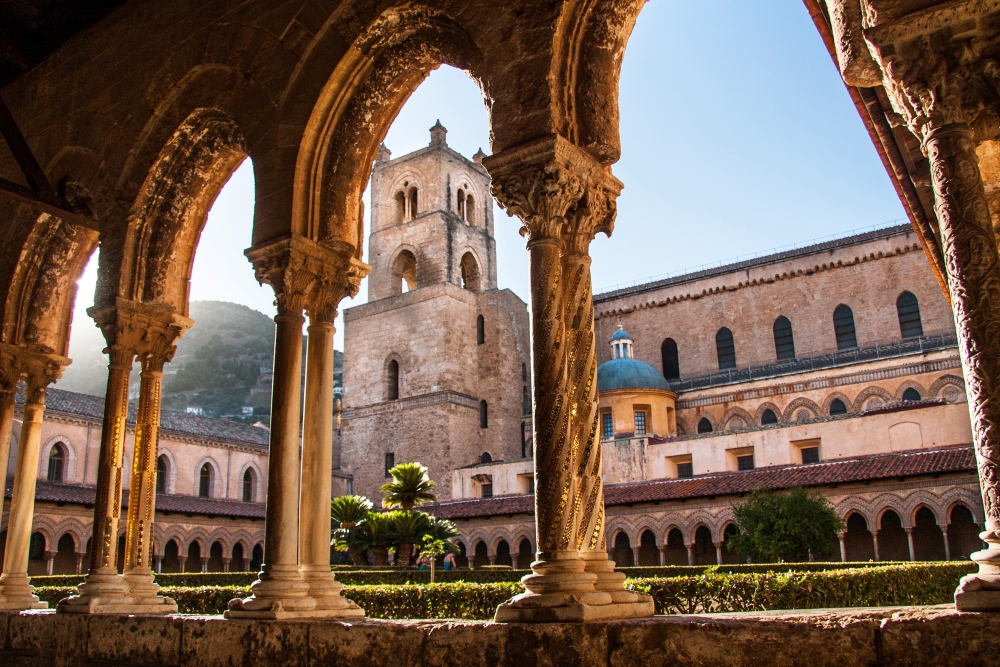
Norman palaces throughout Palermo, including the Palazzo dei Normanni (now Sicily’s Regional Parliament) and the Monreale Cathedral with its stunning Byzantine mosaics, demonstrate the architectural and artistic achievements of the medieval Norman period, while the Baroque towns of southeastern Sicily showcase 18th-century city planning and architecture in remarkably preserved states. WWII historical sites including the American landing beaches near Syracuse and various military monuments commemorate the strategic importance of Sicily during Europe’s most significant 20th-century conflict, while the Mafia history museum in Palermo documents Sicily’s complex relationship with organized crime, a phenomenon that dramatically shaped 20th-century Sicilian history.
These historical sites collectively provide opportunities for visitors to walk through millennia of Sicilian history, encountering the physical evidence of Greek, Roman, Arab, Norman, Spanish, and Italian periods in ways that bring historical narrative to vivid life and demonstrate why Sicily’s history matters profoundly to understanding European and Mediterranean civilization development across thousands of years.

Explore Rome, Florence, Venice and Sicily as art, history and breathtaking landscapes create the ultimate Italian journey. Starting from $6,404 per person.

Discover Palermo, Taormina and Sicily’s treasures as ancient ruins, seaside villages and breathtaking landscapes create an unforgettable island escape. Starting from $1,268 per person.

Experience Sicily’s wonders as you explore Catania, Siracusa, Palermo and Taormina—where history, flavors and landscapes create an unforgettable island adventure. Starting from $2,309 per person.
The Valley of the Temples near Agrigento houses five magnificent Greek temples dating to the 5th century BC, with the Temple of Concordia standing as one of the world’s best-preserved classical structures. The archaeological park at Syracuse includes the Greek theater, ancient city ruins, and the National Archaeological Museum housing the famous Riace Warriors bronze statues.
The Cappella Palatina in Palermo’s Norman Palace showcases stunning Arab-Norman fusion architecture and mosaics. Monreale Cathedral displays extraordinary Byzantine mosaic artwork. The Norman Palace itself now houses Sicily’s Regional Parliament. These sites demonstrate how remarkably Norman rulers incorporated Islamic and Byzantine traditions into Christian frameworks.
The medieval towns of Mondello, Cefalù, and Mondello preserve medieval street layouts and architecture. The UNESCO Val di Noto region showcases Baroque architectural achievements emerging from medieval history. Museums throughout Sicily display medieval manuscripts, artifacts, and religious artworks demonstrating medieval cultural flourishing.
Beaches near Syracuse and Gela mark American and Allied landing sites during the 1943 invasion. Military monuments throughout the island commemorate the strategic importance of Sicily during WWII. The Museo dello Sbarco in Syracuse documents the invasion history through artifacts and historical exhibits.
Arab rule (827-1091 AD) introduced new crops including citrus fruits, sugar cane, and cotton alongside advanced irrigation technologies. Palermo developed into one of the world’s largest cities with 300,000 inhabitants. Arab scholars and merchants established sophisticated trading networks and intellectual traditions that influenced European civilization development.
The Museo dell’Emigrazione Siciliana in Palermo documents Sicily’s massive emigration to the Americas during the 19th and 20th centuries through artifacts, photographs, and personal narratives. Many emigration records and family history resources can be accessed to trace Sicilian ancestry relevant to millions of diaspora communities worldwide.