
Capri History Guide

HOME » POPULAR ITALIAN DESTINATIONS » CAPRI TRAVEL GUIDE » CAPRI HISTORY GUIDE

Capri Travel Guide        Culture        History        Food and Wine        Things to Do        Plan My Trip

About this guide: This guide to the history of Capri was written by the Italian-born travel specialists at Trips 2 Italy, a custom tour operator that has designed hand-crafted Italian vacations since 2003. Every recommendation below reflects the same first-hand knowledge our team draws on when we build a private Capri itinerary around a traveler’s interests, dates, and pace. Read it for your research, then let us translate it into a trip designed entirely around you.

How Did Capri's Story Begin?

Capri was old before the emperors arrived. Prehistoric peoples lived on the island, and their traces, along with the bones of Ice Age animals, were unearthed in the nineteenth century during construction work and studied by the island’s great amateur scholar Ignazio Cerio, whose museum in Capri town still displays the finds. Greek settlers from the Bay of Naples colonies followed, terracing the slopes and leaving their most visible monument in the Scala Fenicia, the stairway of hundreds of steps cut into the cliff between the harbor and Anacapri, part of the ancient world of the Campania region.

Even the island’s name is an antique riddle. Some derive it from the Greek kapros, the wild boar, whose fossil remains were indeed found on the island; others from the Latin capreae, the goats that grazed its heights. Both animals suit the place: a wild, steep island where the land rises straight from the sea and every field had to be won from the rock.

For centuries Capri lived in the orbit of Neapolis, the great Greek city across the bay, supplying it and sheltering in its shadow. That long apprenticeship to a glittering neighbor set the pattern of the island’s history: close enough to power and fashion to be discovered, separate enough to remain itself. Rome was about to discover it spectacularly.

Why Did Roman Emperors Choose Capri?

In 29 BC, Augustus, returning from the East, stopped at Capri and fell under its spell. He acquired the island for Rome from the city of Naples, trading the larger and richer island of Ischia for it, an exchange that tells you everything about Capri’s pull. He called it Apragopolis, the city of sweet idleness, built the first imperial villas, and made the island the private retreat of the most powerful man in the world.

His successor Tiberius went further: in AD 27 he moved the seat of empire itself to the island and ruled Rome from Capri for the last decade of his life. Ancient authors credited him with twelve villas scattered across the island, and the greatest, Villa Jovis, still crowns Monte Tiberio in the east, a palace of cisterns, ramps, and halls stacked a thousand feet above the strait. From this eyrie, dispatches ran to every frontier of an empire that stretched from Spain to Syria.

Tiberius left Capri with a dark legend, fed by the hostile Roman historians who described orgies and executions on the cliffs, including the sheer drop still called the Salto di Tiberio. Modern scholars read those accounts skeptically, but the legend became part of the island’s atmosphere, and standing in the ruined halls of Villa Jovis with the whole bay below, travelers understand both the emperor’s choice and the stories it bred.

The Roman island was more than palaces. Cisterns gathered every drop of rain for the imperial household, a lighthouse signaled across the strait, and the sea caves themselves were drawn into the villas’ pleasures, adorned with statues as marine dining rooms and shrines. When your boat noses into a grotto today, you are entering a Roman room, and a good guide can furnish it again in words.

What Happened to Capri After the Roman Empire?

When the empire fell, Capri fell with it into a long obscurity. The island passed under Byzantine influence, then medieval Naples, enduring the scourge of the southern Tyrrhenian: pirate raids. Saracen and later Barbary corsairs struck the island repeatedly across the centuries, which is why the older settlements retreated uphill from the water and why watchtowers still stud the coastline.

The great monument of the medieval island is the Certosa di San Giacomo, the Carthusian monastery founded in 1371 by Giacomo Arcucci, count and secretary to Queen Joanna I of Naples. Its cloisters, cells, and seaward gardens anchor the southern edge of Capri town, and its monks, gathering the island’s flowers and herbs, began the tradition that centuries later became Capri’s perfume industry.

Through these centuries the island lived divided in two. Capri town and Anacapri, separated by the cliff and connected only by the Scala Fenicia’s steps, developed as distinct communities with separate patron saints, separate dialect inflections, and a rivalry that survives today in cheerful form. A carriage road between them was built only in the nineteenth century, astonishingly late, which preserved Anacapri’s separateness and much of its character.

There was even a brief Napoleonic drama: in 1806 the British fortified Capri as a miniature Gibraltar, and in 1808 the French took it back in a daring assault up the cliffs of Anacapri, one of the odder episodes in the island’s long habit of attracting empires.

How Did the Blue Grotto's Rediscovery Change Everything?

In 1826, a German poet and painter named August Kopisch, guided by the local fisherman Angelo Ferraro and accompanied by the artist Ernst Fries, swam into a sea cave on the island’s northwest coast that local tradition avoided as a haunt of spirits. What he found inside, a cavern filled with impossible silver-blue light rising from an underwater opening, became one of the most famous natural wonders in Europe almost overnight.

The Romans had known the cave well; it had served as a nymphaeum, a marine shrine, for the imperial villas, and Roman statues were later recovered from its floor, with ancient bases still resting there today. But its nineteenth-century rediscovery arrived at the perfect Romantic moment. Kopisch’s account electrified northern Europe, painters and poets followed, and the Grotta Azzurra became the single image that fixed Capri in the world’s imagination.

The Blue Grotto effectively created modern Capri. In its wake came the first hotels, founded in the mid-nineteenth century as the island learned to receive the travelers the cave attracted, and the Grand Tour bent its route south to include the little island. Tourism, which would become the island’s destiny, entered through a hole in the rock barely three feet high.

The rediscovery also restored the cave’s oldest identity. As excavations and soundings revealed Roman statuary and carved landing places within, it became clear that the nineteenth century had not found something new but recovered something imperial, a shrine the ancients had treasured and the intervening centuries had feared. Few places compress the island’s whole story, emperor to poet to traveler, into a single chamber of light.

What Was Capri's Golden Age of Expatriates?

From the late nineteenth century to the mid-twentieth, Capri became the Mediterranean’s most celebrated refuge for foreigners in flight from convention. Artists, writers, exiles, and eccentrics of every nationality settled on the island, drawn by its beauty, its tolerance, and its distance from the rules of home. For a few square miles of limestone, the concentration of talent and personality was extraordinary.

Axel Munthe built Villa San Michele above Anacapri and told its story in a memoir read around the world. Maxim Gorky kept a villa where Russian revolutionaries, Lenin among them, came to visit and argue about the future. Jacques d’Adelsward-Fersen raised Villa Lysis to poetry and scandal, Norman Douglas caught the whole expatriate carnival in South Wind, and after the Second World War came Graham Greene, Pablo Neruda, and the film stars of the dolce vita years, when the Piazzetta became a stage the world’s photographers watched.

This era gave Capri its modern identity: cosmopolitan, stylish, faintly legendary. The Capri pant was born here, the beach club culture of Marina Piccola flourished, and the island learned to hold fame and village life in a single small hand. The villas, gardens, and cafe tables of that age are all still present, and walking them with a guide who knows the stories is like reading the island’s best biography on location.

Which Places Bring Capri's History to Life Today?

Villa Jovis is the essential pilgrimage: a walk of about forty-five minutes from the Piazzetta through lanes and vineyards ends at the ruined palace of Tiberius, where cisterns, halls, and the emperor’s loggia hang above the strait. The site rewards a guide who can rebuild it in words, restoring marble and power to the bare brick, with all of Campania spread below as the visual aid.

The Certosa di San Giacomo carries the medieval island, its quiet cloisters now hosting exhibitions and concerts, while the Scala Fenicia lets strong-legged travelers climb the Greeks’ own stairway between the harbor and Anacapri. Villa San Michele preserves the expatriate golden age in one perfect house and garden, and the Cerio Museum in Capri town keeps the island’s deep past, from fossils to prehistoric tools.

The Blue Grotto itself is a historical monument as much as a natural one: travelers glide by rowboat into the same shrine the emperors consecrated and the Romantics made famous. We compose history-focused Capri days that string these sites into a single narrative, from Greek steps to Roman palace to monastery to memoir, paired with historians who make two thousand years feel continuous rather than scattered.

How Is Capri Preserving Its Heritage?

Capri’s preservation challenge is unique: a tiny island carrying an immense reputation and welcoming visitors in numbers that would strain a small city. Its response has been careful stewardship. Building regulations protect the whitewashed vernacular architecture and the terraced landscape, archaeological authorities maintain Villa Jovis and the island’s Roman remains, and institutions such as the Cerio Foundation and the Swedish foundation at Villa San Michele curate the island’s natural and human history with scholarly devotion.

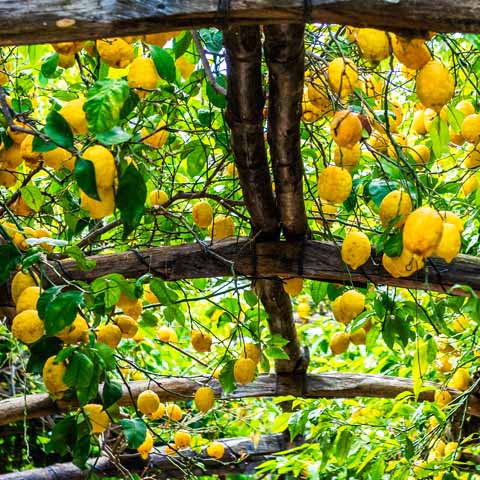
Conservation extends to the living island. The famous blue lizard of the Faraglioni, found nowhere else on earth, is studied and protected on its rock stacks. The island’s walking paths, lemon terraces, and vineyards are maintained as working landscape rather than scenery, and Anacapri guards its village character with quiet determination. Even the sandal makers and perfumers represent heritage kept alive by practice rather than preserved behind glass.

For travelers, this means the island’s past is unusually present and welcoming. We arrange encounters with the people who keep it so, from garden custodians to archaeologists to artisans, as part of our cultural tours across Italy. History on Capri is not confined to its ruins. It is the family trade, the festival, the path, and the view, and meeting its keepers is one of the island’s quiet privileges.

Ready to Begin Planning Your Capri Vacation?

Capri deserves more than a template. Since 2003, Trips 2 Italy has designed private Italian vacations one traveler at a time, hand selecting every experience based on what you tell us rather than fitting you into a predefined package. Our Italian-born team plans Capri with the knowledge of people who call Italy home, from the Piazzetta’s quiet morning hours to a private boat gliding beneath the Faraglioni, and we remain at your side throughout your trip with 24/7 assistance. Tell us how you imagine Capri, and we will craft the itinerary that matches it.

Explore Our Capri Vacation Itineraries

Frequently Asked Questions About the History of Capri

Augustus acquired the island in 29 BC, trading Ischia for it and building its first imperial villas, and Tiberius ruled the Roman Empire from Capri itself from AD 27 until his death a decade later. His clifftop palace, Villa Jovis, still crowns the island’s eastern summit and is one of the great Roman sites of southern Italy.

The ruined palace of Emperor Tiberius on Monte Tiberio, the largest of the twelve villas ancient authors attributed to him on Capri. Its cisterns, halls, and loggia stand a thousand feet above the strait, reached by a scenic walk from Capri town. Trips 2 Italy pairs the visit with historian guides who rebuild the palace in words as you walk its ramps.

The cave was rediscovered in 1826 by the German poet August Kopisch, guided by a local fisherman, though the Romans had known it centuries earlier and used it as a marine shrine for the imperial villas. Its silver-blue light captivated Romantic Europe and effectively launched Capri’s modern fame.

A Carthusian monastery founded in 1371 above Capri’s southern cliffs, the island’s greatest medieval monument. Its cloisters and seaward gardens now host exhibitions and summer concerts, and its monks began the herbal traditions that grew into Capri’s perfume craft. Trips 2 Italy weaves the Certosa into history and garden walks that end at the nearby Gardens of Augustus.

From the late nineteenth century the island drew expatriates seeking beauty and freedom: Axel Munthe of Villa San Michele, Maxim Gorky and his revolutionary guests, Norman Douglas, Curzio Malaparte, Graham Greene, and Pablo Neruda among them. Their villas and haunts survive, and we arrange literary walks that bring this golden age to life.

The ancient stairway of more than nine hundred steps cut into the cliff between Marina Grande and Anacapri, attributed to the island’s Greek settlers. Until the nineteenth century it was the only link between the harbor and the upper town, and travelers with strong legs can still climb it today, passing beneath Villa San Michele.