
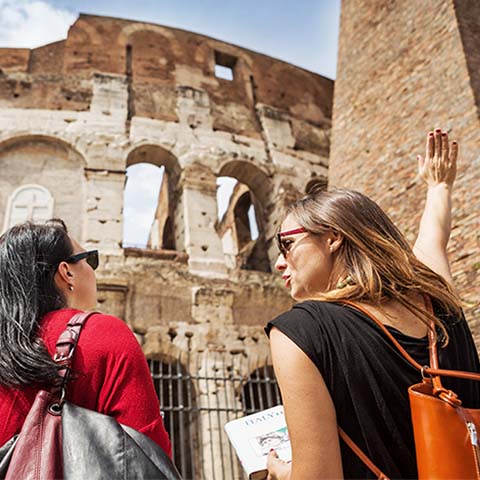
Rome, Venice and Florence Your Way 8 Days / 7 Nights
See Italy’s three iconic cities your way on an 8-day guided journey. Explore the Colosseum, the Vatican, and Florence’s cathedrals, then glide through Venice by gondola. Private driver, premium
HOME » POPULAR ITALIAN DESTINATIONS » VENICE TRAVEL GUIDE » VENICE HISTORY GUIDE
About this guide: This guide to the history of Venice was written by the Italian-born travel specialists at Trips 2 Italy, a custom tour operator that has designed hand-crafted Italian vacations since 2003. Every recommendation below reflects the same first-hand knowledge our team draws on when we build a private Venice itinerary around a traveler’s interests, dates, and pace. Read it for your research, then let us translate it into a trip designed entirely around you.
Venice was born from refuge. As Roman authority faded in the fifth and sixth centuries and successive invasions swept the mainland, the people of the Veneto withdrew to the islands of the lagoon, where shallow waters no army could cross became the walls of a new home. Tradition dates the city’s founding to the year 421, and the earliest settlements grew on islands like Torcello, whose cathedral still stands as a witness to those first centuries.
What began as shelter became a society. The lagoon communities learned to build on water, driving oak and alder pilings into the mud to carry their churches and homes, to harvest salt as their first great commodity, and to sail. Nominally under the protection of Byzantium, the lagoon towns gradually knit themselves into something new, with their own elected leadership and their own horizon, which faced the sea.
The deeper origins of the story belong to the mainland, to the Roman cities of the Veneto whose refugees became the first Venetians. Standing in Torcello’s quiet cathedral, on an island now nearly returned to nature, a traveler can touch the exact beginning of one of history’s most improbable cities.
The lagoon itself is the first monument of Venetian history, and seeing it slowly, by boat, with the story told well, makes everything in the city afterward more intelligible. We often begin history-focused itineraries exactly this way, out on the water where Venice began, before a single palace door is opened.
Tradition holds that the Venetians elected their first doge in 697, beginning an unbroken line of 120 doges across eleven centuries, the longest-lived republic in history. La Serenissima, the Most Serene Republic, built its power not on land but on water, mastering shipbuilding, navigation, and commerce until Venetian galleys carried the trade of the known world.
By the thirteenth century Venice commanded the routes between Europe and the East, and the Fourth Crusade of 1204 left the Republic with ports and islands across the eastern Mediterranean, the stato da mar that made a city of islands into an empire of the sea. Silks, spices, gold, and ideas flowed through the Rialto, and the wealth they generated built the palaces that still line the Grand Canal.
The Republic governed itself with a sophistication centuries ahead of its time, balancing the doge against councils and courts so that no family could seize the state. That political stability, rare in medieval Europe, is one reason Venice could build continuously and magnificently for a thousand years, and it is written into the fabric of the Doge’s Palace, which was at once residence, parliament, and courthouse.
Traces of that maritime world are everywhere once you learn to see them: the winged lions of St. Mark on gateways and wellheads, the rope and rudder motifs carved into palace facades, the very names of the streets, rive and fondamente, that remember a city addressed from the water. Our guides teach travelers to read these signs, and the city becomes legible in a way few visitors ever experience.
The Arsenal was the industrial heart of the Republic and arguably the first great industrial complex in the world. Behind two miles of walls, thousands of specialized workers, the arsenalotti, built and fitted the galleys that carried Venetian power, and at its height the yard could assemble a ship in a single day using methods that anticipated the modern production line by four centuries.
Its scale astonished contemporaries. Dante visited in the early fourteenth century and set a scene of the Inferno among its boiling pitch, and foreign visitors were escorted through it deliberately, as a demonstration that Venice could replace a fleet faster than any rival could sink one.
The Arsenal still stands, its great gateway crowned with lions brought from Greece, and portions of it now host the Biennale and the Italian navy. Walking its perimeter with a guide who can people the walls again is one of the most vivid historical experiences the city offers, and we include it in itineraries designed for travelers drawn to how Venice actually worked.
The fifteenth and sixteenth centuries brought Venice to the height of its wealth and cultural power. The city that had sent Marco Polo east in the thirteenth century now received the world in return: merchandise, manuscripts, and minds. When printing arrived, Venice became the publishing capital of Europe, and the press of Aldus Manutius gave the world the italic type and the portable book.
Wealth became architecture and art. The palaces of the Grand Canal reached their full splendor, Bellini and then Titian raised Venetian painting to the summit of European art, and the state spent lavishly on churches, scuole, and public ceremony. The city’s confraternities commissioned the great narrative cycles that still hang where they were painted, records of a society at the height of its confidence.
The same centuries saw Venice’s communities layer and deepen. The historic Ghetto, established in 1516, became one of the most significant centers of Jewish life and scholarship in Europe, and its synagogues and campo remain a moving chapter of the city’s story. Golden age Venice was above all a city of the world, and its monuments still speak that language.
For travelers, the golden age is the most visible layer of the city. Nearly every celebrated facade on the Grand Canal, most of the paintings in the great collections, and the ceremonial spaces of the Palace all date from these two centuries, which means a well-guided walk through Venice is, in large part, a walk through the Republic at its height.
As ocean routes shifted the world’s trade toward the Atlantic, Venice gradually traded dominance for refinement. The eighteenth century city became Europe’s capital of pleasure and culture, the age of Vivaldi, Goldoni’s theater, Canaletto’s views, and the first Carnival the whole continent traveled to attend. In 1797 the Republic’s eleven centuries closed when Napoleon’s armies reached the lagoon, and Venice passed into a new era.
The nineteenth century brought Austrian administration, the arrival of the railway causeway that joined the islands to the mainland, and finally, in 1866, union with the young Kingdom of Italy. Venice entered modern Italy carrying its entire past intact, a city whose fabric had never been rebuilt to another century’s taste.
That continuity is the gift a traveler inherits today. The city Napoleon entered is, street for street and stone for stone, the city you walk now, and few places on earth allow history to be experienced with so little imagination required.
The Doge’s Palace is the Republic made visible, from the council chambers where a thousand years of policy were argued to the prisons across the Bridge of Sighs, and its secret itineraries open the hidden offices, archives, and torture chambers of the state behind the state. St. Mark’s Basilica, with its treasury and the original bronze horses carried home from Constantinople, holds the Republic’s faith and its plunder in one golden room.
The Museo Correr wraps the story of Venetian civilization around the great square, while the naval history collections near the Arsenal preserve the galleys, gondolas, and instruments of the sea power that paid for everything. In the Ghetto, the synagogues and the museum tell five centuries of Jewish Venetian life with quiet force.
Torcello remains the most moving site of all, the nearly empty island where the lagoon’s first cathedral still stands among the marshes, holding mosaics that predate the Basilica itself. History in Venice is not confined to museums; it is the city, and the right sequence of places, in the right order, lets a traveler watch the entire story assemble itself across a few unforgettable days.
We compose history itineraries chronologically whenever the traveler’s interests allow it, beginning in Torcello’s silence and ending beneath the Tiepolo ceilings of the settecento, so that eleven centuries arrive as a narrative rather than a list. It is the difference between information and understanding, and it is what our guides do best.
Venice today is engaged in one of the great preservation efforts in the world. International foundations and Venetian institutions restore facades, canvases, and entire churches in continuous rotation, the MOSE barrier system now protects the city during the highest tides, and UNESCO status guards the lagoon as a single historic landscape.
Preservation here is not only structural but human. The city works to keep its artisan economies, its markets, and its resident life thriving inside the historic fabric, because a Venice that is lived in is a Venice that survives. Travelers who engage the city thoughtfully, through its craftspeople, its music, and its neighborhood life, become part of that continuity.
We design history-focused itineraries with expert guides who bring the Republic back to life room by room, from the Doge’s Palace to the quiet islands where the story began, often as part of our Italian cultural tours and visits to architectural and historical sites across Italy. History in Venice is not behind glass. It is underfoot, overhead, and all around, and the right guide makes a millennium feel present tense.
Venice deserves more than a template. Since 2003, Trips 2 Italy has designed private Italian vacations one traveler at a time, hand selecting every experience based on what you tell us rather than fitting you into a predefined package. Our Italian-born team plans Venice with the knowledge of people who call Italy home, pairing you with guides who make eleven centuries of the Republic feel present tense, and we remain at your side throughout your trip with 24/7 assistance. Tell us how you imagine Venice, and we will craft the itinerary that matches it.
See Italy’s three iconic cities your way on an 8-day guided journey. Explore the Colosseum, the Vatican, and Florence’s cathedrals, then glide through Venice by gondola. Private driver, premium
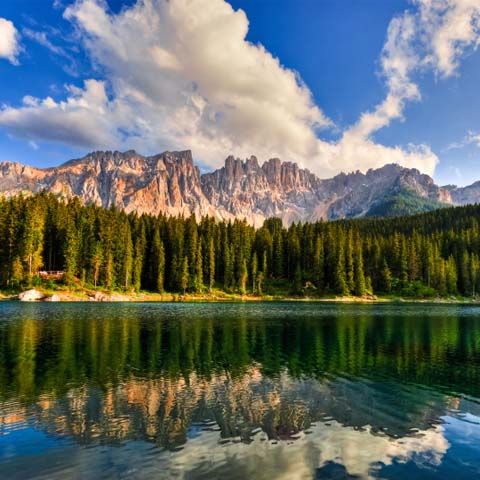
From the peaks of the Dolomites to the shores of the Italian Riviera, an escorted 16-day journey through Northern Italy: Cortina, Venice, Verona, Lakes Garda, Como and Maggiore, Milan,
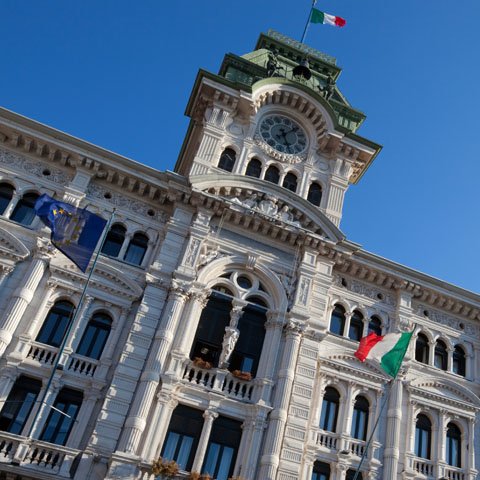
Skip the packed summer hotspots and enjoy a Northern Italy family summer itinerary that feels relaxed, local, and full of together time. Italy Beyond the Crowds is a land-only
Tradition dates the founding of Venice to the year 421, when mainland communities took refuge on the islands of the lagoon. The city grew through the early Middle Ages, elected its first doge in the late seventh century by tradition, and endured as the independent Republic of Venice for roughly eleven hundred years, until 1797.
Safety. The shallow lagoon protected settlers from the invasions that swept the Italian mainland as Roman authority faded. The Venetians then engineered permanence, driving millions of timber pilings into the lagoon bed to support stone and brick construction. The water that began as a refuge became the foundation of a maritime empire.
Known as La Serenissima, the Most Serene Republic, it was an independent state governed by an elected doge balanced by councils and courts, and it lasted about eleven centuries, the longest-lived republic in history. Its power rested on shipping and trade, with territories along the Adriatic and across the eastern Mediterranean.
Yes. Marco Polo was born into a Venetian merchant family and set out east with his father and uncle in 1271, returning a quarter century later. The account of his travels, dictated while a prisoner of war, shaped Europe’s picture of Asia for centuries and reflects exactly the outward-facing merchant culture that made Venice rich.
Portions of the Arsenal open to visitors, particularly during the Biennale, when its magnificent rope works and docks host exhibitions, and its monumental gateway and walls can always be appreciated from the surrounding Castello district. We include the Arsenal in history-focused itineraries with guides who restore its working life in the telling.
Venice has always settled slowly into the lagoon, and the city now manages the water it lives with more effectively than at any point in its history. The MOSE barrier system protects the city during exceptional tides, and continuous restoration keeps the historic fabric sound. Venice has been adapting to its lagoon for sixteen centuries, and that adaptation is part of what a visit reveals.