
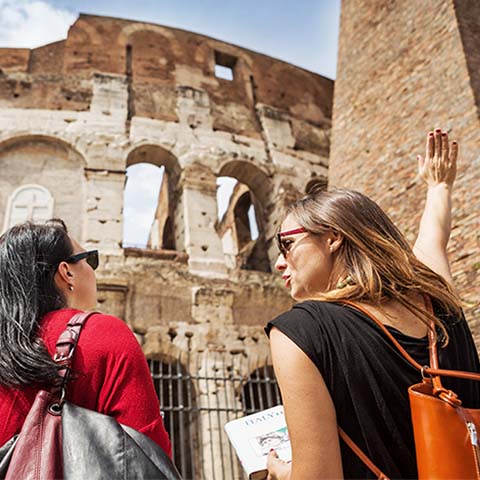
Rome, Venice and Florence Your Way 8 Days / 7 Nights
See Italy’s three iconic cities your way on an 8-day guided journey. Explore the Colosseum, the Vatican, and Florence’s cathedrals, then glide through Venice by gondola. Private driver, premium
About this guide: This guide to the culture of Venice was written by the Italian-born travel specialists at Trips 2 Italy, a custom tour operator that has designed hand-crafted Italian vacations since 2003. Every recommendation below reflects the same first-hand knowledge our team draws on when we build a private Venice itinerary around a traveler’s interests, dates, and pace. Read it for your research, then let us translate it into a trip designed entirely around you.
Venetian culture was formed by a thousand years of looking outward. As the great maritime republic of the Mediterranean, Venice traded with Byzantium, the Levant, and the silk and spice routes beyond, and it absorbed something from every shore its galleys touched. The result is a culture that belongs fully to Italy yet resembles nowhere else in it: Byzantine gold above Gothic arcades, Eastern spice in the cooking, and a civic identity built on the sea.
That identity endures in daily life. Venetians still measure their city by campi rather than streets, still speak with traces of the old Venetian language, and still order their year around feasts the Republic celebrated centuries ago. The city sits within the wider cultural landscape of the Veneto, whose villas, opera traditions, and painting schools share the same deep roots.
Understanding this culture is the difference between seeing Venice and reading it. Every recommendation that follows comes from specialists who grew up inside Italian culture and who plan each journey so the city’s traditions unfold in their proper settings.
The visitor feels this distinctness immediately. The city sounds different, water and bells instead of traffic. It moves differently, by boat and by bridge. And it celebrates differently, with feasts that cross the lagoon on boats and processions that have kept their routes for centuries. Venetian culture is not a subject to study before a trip; it is the medium the whole trip takes place in, which is why we plan every itinerary from inside it.
The Venetian school changed the direction of Western painting. Where other traditions built pictures on line and drawing, Venice built them on color and light, and the succession of masters who worked here reads like a history of the art itself: Giovanni Bellini, Giorgione, Titian, Tintoretto, Veronese, and later Tiepolo, whose ceilings turned palaces into skies.
The city still holds these painters where they belong. The Gallerie dell’Accademia gathers the tradition under one roof, the Scuola Grande di San Rocco preserves Tintoretto’s greatest cycle in the rooms it was painted for, and the Frari holds Titian’s Assumption above its high altar. Encountering Venetian painting in Venetian buildings, lit by the same lagoon light that shaped it, is an experience no museum elsewhere can reproduce.
The tradition never closed. The Venice Biennale, founded in 1895, remains the most important contemporary art exhibition in the world, filling the Giardini, the Arsenale, and palaces across the city. We sequence art itineraries so the story unfolds in order, from Byzantine mosaic to the present, with specialists who can read a ceiling as fluently as a canvas.
For travelers who love painting, we sequence these encounters so the tradition unfolds chronologically, and we arrange visits with conservators and scholars when a deeper conversation is wanted. Venice rewards expertise, and providing it is precisely what a custom itinerary is for.
Venetian architecture is the Republic’s autobiography written in stone and water. The earliest chapters are Veneto-Byzantine, the golden domes and mosaics of St. Mark’s and the arcaded palaces whose rounded arches remember Constantinople. The city’s greatest flowering came with Venetian Gothic, a style found nowhere else, in which Eastern tracery and Western structure meet in facades like the Doge’s Palace and the Ca’ d’Oro, lace carved from Istrian stone and floated on the canal.
The Renaissance arrived by sea as everything did, and architects like Sansovino gave the city its classical library and mint facing the Palace, while Palladio, working across the water, raised San Giorgio Maggiore and the Redentore into two of the most serene silhouettes in Italy. The Baroque answered with Santa Maria della Salute, the great votive church whose volutes and dome have anchored the entrance of the Grand Canal since the seventeenth century.
Because Venice was never rebuilt to later tastes, these styles stand side by side in original condition, and an attentive walk becomes a seminar in eight centuries of design. Our architecture-focused itineraries pair travelers with specialists who read facades the way musicians read scores, and who know the courtyards, staircases, and rooftop altane that ordinary visits never reach.
Venice gave the world Antonio Vivaldi, who composed many of his concertos for the celebrated orphanage conservatories of the city, where orphaned girls trained into some of the finest musicians in Europe. The tradition of music written for Venetian rooms, and played in them, has never stopped.
Teatro La Fenice, among the most storied opera houses in existence, has premiered works by Rossini, Bellini, and Verdi and remains the center of the city’s musical life. Around it, churches and scuole host chamber performances where baroque music sounds as it was meant to, in the acoustics it was written for.
We arrange evenings at La Fenice and private performances in historic settings as part of our cultural itineraries, timed so that music becomes a thread through the trip rather than a single outing. For travelers who plan journeys around the arts, our specialists build the calendar first and the itinerary around it.
Venetian craftsmanship remains a living economy rather than a museum piece. On Murano, glass dynasties that have worked the furnaces for generations still gather molten glass on the blowpipe and turn it into forms the island invented centuries ago. On Burano, lacemakers preserve a needle lace tradition that once dressed the courts of Europe.
In the city itself, the squeri, the boatyards where gondolas are built and repaired, still shape each hull by eye and by inheritance, and the mask makers of the old workshops still model the faces of Carnival in leather and papier mache. These are working ateliers, and the finest of them open their doors through relationships rather than tickets.
This is where our insider knowledge matters most. We arrange studio visits with master artisans, demonstrations at working furnaces, and time with craftspeople who explain not just the technique but the family history inside it. Anyone can watch a demonstration arranged for the public. Meeting the artisan whose name is on the work, in the workshop where it happens, is a different experience entirely.
Vivaldi’s own churches and the rooms of the old conservatories still host performances of the Four Seasons a few steps from where it was written, and hearing it there, on period instruments in candlelight, is among the most affecting evenings the city offers. For music lovers, we can build an entire Venetian itinerary around the performance calendar.
Carnival is the most famous, two weeks of masks, costume, and candlelit elegance that revive the eighteenth century in the city that invented it. The tradition reaches back to the Republic, and its masked balls in historic palaces remain among the great evenings Europe has to offer.
The rest of the calendar is just as Venetian. The Festa del Redentore in July crosses the lagoon on a bridge of boats and ends in fireworks above the water, the Regata Storica in September fills the Grand Canal with historic vessels and costumed rowers, and the Festa della Madonna della Salute in November continues a procession of gratitude the city has made since 1631.
Timing a visit to a festival transforms it, and access matters as much as dates. We secure invitations and well-placed vantage points as part of our entertainment and festival experiences in Italy, so that a traveler stands inside the celebration rather than at the edge of it.
Beyond the great dates, the city keeps a calendar of neighborhood feasts, artisan open studios, and seasonal rowing events on the lagoon that rarely reach guidebooks at all. Our specialists track this quieter calendar year round, and some of the most memorable moments we place in itineraries come from it.
Daily Venetian life follows rhythms the visitor can learn quickly and enjoy deeply. Mornings belong to the markets, above all the Rialto, where the city has bought its fish and produce for a thousand years. The late afternoon belongs to the ombra, a small glass of wine taken standing, with cicchetti, the small plates that are Venice’s great contribution to the art of the aperitivo.
The campo is the Venetian living room. Children play where nobles once paraded, neighbors linger on the well heads, and the evening settles in without a single car to interrupt it. Time spent in a neighborhood square, watching the city conduct its own life, is as culturally rich as any museum hour.
Our Italian cultural tours are built to place travelers inside these rhythms: market mornings with cooks who shop there, aperitivo evenings in neighborhood bacari, and walks timed to the hours when the city belongs to Venetians. Culture in Venice is not only what hangs on walls. It is how the city spends its day.
These daily rituals are also the easiest place for a visitor to step inside Venetian life rather than watch it. An ombra ordered at the counter, a morning greeting in the campo, an unhurried hour watching the boats make their deliveries: culture in Venice is participatory, and it welcomes those who arrive with curiosity and time.
Venice deserves more than a template. Since 2003, Trips 2 Italy has designed private Italian vacations one traveler at a time, hand selecting every experience based on what you tell us rather than fitting you into a predefined package. Our Italian-born team opens doors to the artisans, performances, and traditions that define Venetian culture, and we remain at your side throughout your trip with 24/7 assistance. Tell us how you imagine Venice, and we will craft the itinerary that matches it.
See Italy’s three iconic cities your way on an 8-day guided journey. Explore the Colosseum, the Vatican, and Florence’s cathedrals, then glide through Venice by gondola. Private driver, premium
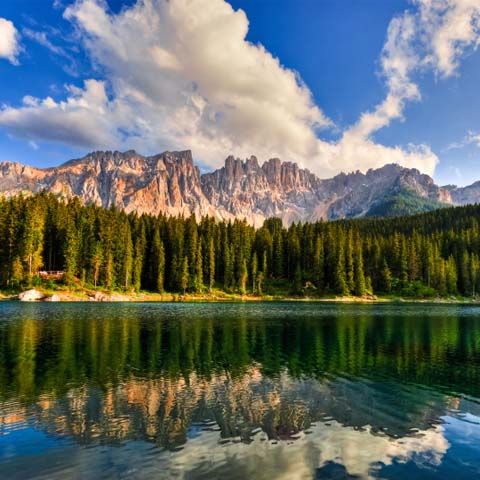
From the peaks of the Dolomites to the shores of the Italian Riviera, an escorted 16-day journey through Northern Italy: Cortina, Venice, Verona, Lakes Garda, Como and Maggiore, Milan,
Skip the packed summer hotspots and enjoy a Northern Italy family summer itinerary that feels relaxed, local, and full of together time. Italy Beyond the Crowds is a land-only
Venice is celebrated for the Venetian school of painting, from Bellini and Titian to Tintoretto and Veronese, for its Byzantine and Gothic architecture, for opera at Teatro La Fenice, for Murano glass and Burano lace, and for Carnival. Its distinct culture grew from a thousand years as an independent maritime republic trading between East and West.
Carnival fills the two weeks leading up to Lent, typically falling in late January or February depending on the year. The celebration includes masked processions, costume in the squares, and candlelit balls in historic palaces. We arrange Carnival experiences well in advance, since the finest evenings are secured by invitation.
Murano is the island of glass, home to furnaces and family workshops that have shaped Venetian glass for more than seven centuries. Burano is the island of lace and of famously colorful fishermen’s houses. They sit in different parts of the lagoon and pair beautifully in a single day on a private launch.
Yes. Teatro La Fenice maintains a full season of opera, ballet, and concerts, and an evening there ranks among the great cultural experiences in Italy. We reserve performances as part of our custom itineraries and pair them with dinner arranged for the hour the curtain falls.
Founded in 1895, the Biennale is the world’s most important recurring exhibition of contemporary art, held in odd years, with an equally influential architecture edition in even years. It runs from spring through late autumn across the Giardini, the Arsenale, and venues throughout the city. Art-focused itineraries are planned around its calendar.
Venetians appreciate visitors who treat the city as a living home rather than a stage set: quiet voices in churches, appropriate dress at religious sites, and respect for the narrow calli where residents are going about their day. A greeting in Italian is always welcomed. Our guides share these courtesies naturally as part of every itinerary.