
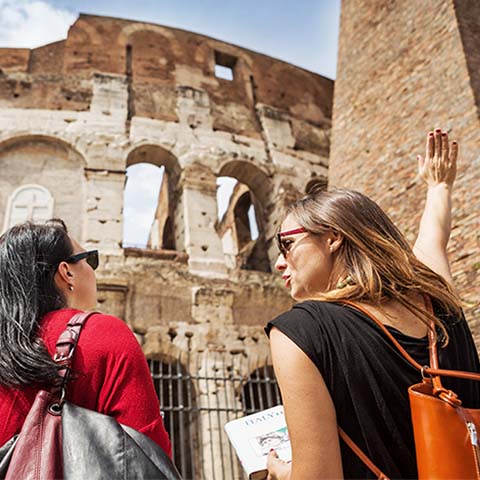
Rome, Venice and Florence Your Way 8 Days / 7 Nights
See Italy’s three iconic cities your way on an 8-day guided journey. Explore the Colosseum, the Vatican, and Florence’s cathedrals, then glide through Venice by gondola. Private driver, premium
HOME » POPULAR ITALIAN DESTINATIONS » ITALIAN TRAVEL GUIDES BY REGION » VENETO TRAVEL GUIDE » VENETO CULTURE GUIDE
About this guide: This guide to the culture of Veneto was written by the Italian-born travel specialists at Trips 2 Italy, a custom tour operator that has designed hand-crafted Italian vacations since 2003. Every recommendation below reflects the same first-hand knowledge our team draws on when we build a private Veneto itinerary around a traveler’s interests, dates, and pace. Read it for your research, then let us translate it into a trip designed entirely around you.
Veneto’s culture is the culture of a vanished state that never quite vanished. The Venetian Republic governed this land for centuries, and its legacy is not confined to Venice: the same taste for color, ceremony, and graceful living spread across the terraferma with the winged lion of Saint Mark, shaping how Verona builds, how Vicenza designs, and how Treviso sets a table. Veneto still speaks its own dialect with affection, and Venetian words surface in daily speech from the lagoon to the mountains.
It is also a culture built on exchange. Venice faced east for a thousand years, trading with Byzantium and the Levant, and the habit of gathering beauty from everywhere and refining it at home became the regional character. Gold mosaics, spiced sweets, silk, glass, and printing all arrived through the lagoon and radiated inland, meeting the older Roman inheritance of Verona and Padova along the way.
What makes the region so rewarding for travelers is that none of this is preserved behind glass. The glass furnaces of Murano still roar, the arena of Verona still fills for opera, the villas still host their families and their harvests, and the spritz hour still gathers every piazza at six in the evening. Veneto’s culture is not a subject to visit. It is a life still being lived, and the itineraries we design are built to place travelers inside it.
The visitor feels the layers quickly. A single Veneto day can pass from a Roman amphitheater through a Gothic palace to a Palladian villa and end at a bacaro counter where the recipes predate all three. Culture here is not homework to finish before the trip; it is the medium the whole trip takes place in, and we plan every itinerary from inside it.
The story begins, surprisingly, in Padova, where Giotto frescoed the Scrovegni Chapel around 1305 and taught European painting to feel. A century and a half later, Venice answered with its own revolution: where Florence drew, Venice glowed. Giovanni Bellini bathed his Madonnas in lagoon light, Giorgione invented mood itself, and Titian carried Venetian color to every court in Europe over a career of some seventy years.
The generation that followed turned the city into a theater. Tintoretto covered the Scuola Grande di San Rocco with cycles of astonishing energy, Veronese filled palace ceilings with silk and silver light, and in the eighteenth century Tiepolo gave the villas their airborne heavens while Canaletto fixed the city’s portrait for the world. The Accademia Galleries gather this tradition into one unmissable collection, and the churches and scuole keep masterpieces exactly where they were painted to be seen.
The difference between seeing this art and understanding it is the storyteller. We pair travelers with art historians who unfold the Venetian school painting by painting, arrange timed entries at the Scrovegni Chapel and the great galleries, and sequence the encounters so the story builds from Giotto’s chapel to Tiepolo’s ceilings. For serious enthusiasts, we can compose entire itineraries around a single painter or a single century.
Andrea Palladio, a stonemason’s apprentice who became the most influential architect in Western history, made Veneto his canvas. In Vicenza he wrapped the medieval Basilica in its famous double loggia, lined the streets with palaces, and closed his career with the Teatro Olimpico, the oldest surviving indoor theater in the world, whose painted street scenes still deceive the eye exactly as they did at its opening in 1585.
In the countryside he perfected the villa. La Rotonda, crowning its hill outside Vicenza with four identical porticoed faces, became the most imitated house on earth, and the working villas he designed across the plain married farm and temple with a serenity no one has improved upon. Vicenza and the Palladian villas of Veneto are protected together as a UNESCO World Heritage Site, and his books carried the style to England, Russia, and the plantation houses and capitols of America.
Palladio is best understood in person and in sequence: the town palaces in the morning, the theater at midday, and a villa in the golden afternoon, ideally with access to interiors that open by arrangement. We compose Palladian days with architecture specialists who read these buildings fluently, and for devoted travelers we extend the thread along the Riviera del Brenta, where Villa Foscari and its successors line the old canal route toward Venice.
Venice is one of music’s holy cities. Antonio Vivaldi taught and composed here, writing the Four Seasons for the orphaned musicians of the Ospedale della Pieta, and the city opened the world’s first public opera houses in the seventeenth century. Its great survivor, La Fenice, remains among the most beautiful theaters in existence, risen from its ashes more than once and still anchoring a full opera and concert season.
Verona answers with the grandest stage in Italy: the first-century Roman arena, where a summer opera festival has filled the ancient stones with Aida, Carmen, and tens of thousands of candle-lit spectators every year since 1913. An arena night, with the mountains fading behind the stage and the chorus rising into open sky, is one of the supreme experiences in European music, and securing the right seats for it is planning work we know intimately.
Between the two, music threads through the whole region: Vivaldi performed in Venetian churches, chamber concerts in villa salons, and organ and choral traditions in the great basilicas of Padova. We fold performances into itineraries at the level travelers prefer, from a single unforgettable arena evening to a journey composed around music itself, always with tickets, transfers, and timing handled before you arrive.
Venetian glass is the region’s most famous craft, worked on Murano since 1291, when the republic moved the furnaces offshore. Masters there still gather, blow, and shape molten glass with movements refined over seven centuries, and watching a piece take form in the heat of a working furnace remains one of the most mesmerizing demonstrations in Italy. Burano keeps the sister art of needle lace, its stitches once prized by the courts of Europe.
The lagoon also preserves rarer trades. In the surviving squeri, the boatyards of Venice, gondolas are still built by hand from eight woods to a design refined over centuries, and the mask makers who serve Carnival still model and gild papier-mache in small workshops. On the mainland, Bassano del Grappa continues its centuries-old ceramics tradition, and the Riviera del Brenta remains one of the world’s great centers of handmade footwear, heir to the shoemakers’ guild of the republic.
This is where our insider access matters most. We arrange furnace visits with master glassblowers, lace demonstrations on Burano, mask workshops where travelers gild their own creation, and studio visits that do not advertise. Anyone can shop for Venetian glass. Meeting the hands that make it, in the room where it happens, is a different experience entirely, and it is one we have spent two decades earning the relationships to offer.
Carnival rules the winter. For roughly two weeks before Lent, Venice fills with masks, capes, and candlelit balls, reviving a tradition the republic celebrated for centuries, and experiencing it well, from costume fittings to a seat at a masked ball in a palazzo, requires arrangements made far in advance. Summer answers with the Festa del Redentore in July, when Venetians cross a bridge of boats to the Redentore church and fireworks fill the lagoon sky.
The contemporary calendar is just as rich. The Venice Biennale, founded in 1895, alternates its great art and architecture exhibitions through the pavilions of the Giardini and the Arsenale, and the Venice International Film Festival, the oldest in the world, brings cinema to the Lido each September. September also stages the Regata Storica, when costumed processions and racing gondolas take over the Grand Canal.
The terraferma keeps its own traditions: Verona’s arena opera festival all summer, the living chess game of Marostica played by costumed townspeople in even-numbered Septembers, and village festivals celebrating everything from white asparagus to new wine. We fold festivals into itineraries as part of our entertainment and festival experiences in Italy, timed so the calendar becomes a reason to travel rather than an accident.
The village festivals deserve special mention for travelers who want Veneto at its most unguarded. These local celebrations, dedicated to a single beloved ingredient or a patron saint, fill town squares with long tables, local cooks, and multigenerational company, and they are among the best windows into regional life a visitor can find. Our specialists track this calendar across the provinces and route itineraries through the celebrations worth planning a day around.
Daily life in Veneto follows rituals travelers can learn in a day. Morning belongs to espresso at the bar and the market, whether that is the fish stalls of the Rialto or the arcaded squares of Padova. The early evening brings the ritual the region gave the world: the spritz, invented in these provinces and poured in every piazza at the aperitivo hour, or in Venice an ombra of wine with cicchetti at a crowded bacaro counter.
The rhythm changes with the landscape. In Venice, life moves at walking and rowing pace, timed to vaporetto bells and the acqua alta calendar. In the wine hills, the year turns on pruning, harvest, and the racking of the new vintage, while the mountain valleys around Cortina keep alpine rhythms of hay cuts, transhumance, and first snow. Veneto is also one of Italy’s most industrious regions, and the pride of its family workshops, from glass to footwear to wine, is a culture in itself.
The deepest travel experiences here come from stepping inside these rhythms rather than observing them: a market morning with a cook who shops it daily, a bacaro crawl with a Venetian who knows every counter, a harvest lunch at a working estate in the Valpolicella. Our Italian cultural tours are composed of exactly these hours, arranged through relationships and timed to the life of the place.
Veneto deserves more than a template. Since 2003, Trips 2 Italy has designed private Italian vacations one traveler at a time, hand selecting every experience based on what you tell us rather than fitting you into a predefined package. Our Italian-born team plans Veneto with the knowledge of people who call Italy home, from the canals of Venice to the Valpolicella cellars and the pale peaks of the Dolomites, and we remain at your side throughout your trip with 24/7 assistance. Tell us how you imagine Veneto, and we will craft the itinerary that matches it.
See Italy’s three iconic cities your way on an 8-day guided journey. Explore the Colosseum, the Vatican, and Florence’s cathedrals, then glide through Venice by gondola. Private driver, premium
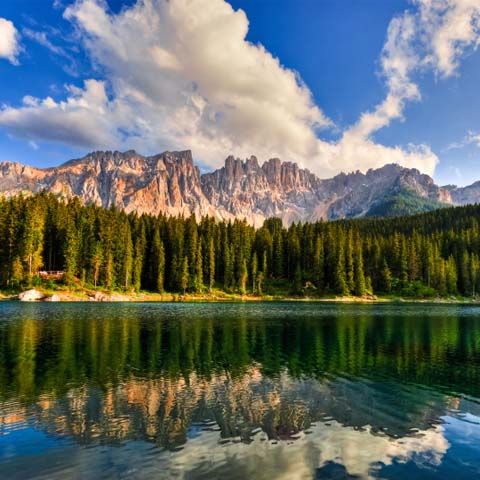
From the peaks of the Dolomites to the shores of the Italian Riviera, an escorted 16-day journey through Northern Italy: Cortina, Venice, Verona, Lakes Garda, Como and Maggiore, Milan,
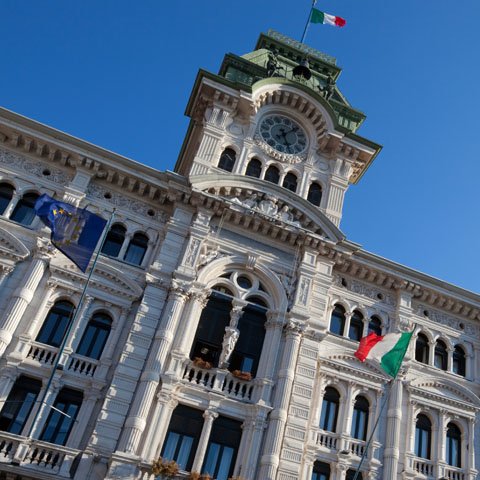
Skip the packed summer hotspots and enjoy a Northern Italy family summer itinerary that feels relaxed, local, and full of together time. Italy Beyond the Crowds is a land-only
Veneto gave the world the Venetian school of painting, Palladio’s architecture, Murano glass, Carnival, and opera in Verona’s Roman arena. Its culture blends the maritime elegance of the old republic with the Roman inheritance of Verona and Padova, and it remains vividly alive in workshops, festivals, and daily rituals like the spritz hour.
Carnival fills the two weeks or so before Lent, usually falling in February, with masked balls, costumed processions, and celebrations across the city. The finest experiences, from costume fittings to palazzo balls, must be secured far in advance, which is exactly the kind of arrangement Trips 2 Italy makes for travelers planning around it.
Vicenza holds his palaces, the Basilica Palladiana, and the Teatro Olimpico, the oldest indoor theater in the world, while La Rotonda and the Palladian villas spread across the surrounding countryside and along the Riviera del Brenta. Vicenza and the villas are protected together as a UNESCO World Heritage Site, and we arrange visits with architecture specialists, including interiors that open by appointment.
Yes, and it is one of the region’s essential experiences. We arrange visits to working furnaces with master glassblowers, along with lace demonstrations on Burano and mask workshops in Venice, through relationships Trips 2 Italy has built over two decades. Watching a piece take shape in the heat is far more memorable than any shop window.
Founded in 1895, the Biennale is one of the world’s great cultural exhibitions, alternating art and architecture editions through the pavilions of the Giardini and the Arsenale, generally from spring through late autumn. It pairs beautifully with the city’s permanent collections, and its seasons are an excellent reason to time a Venice stay.
For music lovers, absolutely. The summer festival has staged opera in the first-century Roman amphitheater since 1913, and a performance under the open sky with thousands of candles is among Europe’s great evenings. Seats vary enormously in experience, so we secure the right tickets and pair the night with a private dinner in the old city.