

Milan Rome and Perugia Cultural Travel Package
Discover vibrant Milan, the rolling hills of Umbria, and timeless Rome, where art, history, and culinary delights come together to create unforgettable memories for every traveler. Starting from $6,862
HOME » POPULAR ITALIAN DESTINATIONS » ORVIETO TRAVEL GUIDE » ORVIETO THINGS TO DO GUIDE
Orvieto Travel Guide Culture History Food and Wine Things to Do Plan My Trip
About this guide: This guide to things to do in Orvieto was written by the Italian-born travel specialists at Trips 2 Italy, a custom tour operator that has designed hand-crafted Italian vacations since 2003. Every recommendation below reflects the same first-hand knowledge our team draws on when we build a private Orvieto itinerary around a traveler’s interests, dates, and pace. Read it for your research, then let us translate it into a trip designed entirely around you.
Every Orvieto day orbits the Duomo. Give the facade two audiences, morning and late afternoon, because Maitani’s golden screen changes character completely with the light, and reserve an unhurried hour inside for the San Brizio chapel, where Luca Signorelli’s Last Judgement rewards slow looking more than almost any painted space in Umbria or beyond. The Cappella del Corporale opposite, with the relic of the Miracle of Bolsena, completes the cathedral’s story.
Timing and access are where our value shows. The chapel admits a limited number of visitors at a time, midday brings the day-trip surge up the funicular, and the difference between experiencing Signorelli in near solitude and viewing him over shoulders is entirely a matter of scheduling. We arrange private guides and sequence the morning so the masterpieces come first, at their quietest.
The essential circuit continues around the square: the Museo dell’Opera del Duomo in the papal palaces, with sculptures and paintings made for the cathedral across seven centuries, and the Museo Claudio Faina facing the facade, whose Etruscan vases and bronzes set the town’s deep past directly against its medieval summit. Allow more time for this single square than seems reasonable; every traveler we plan for wishes they had.
Beneath every street of the historic center lies a second city. Across twenty-five centuries, Orvietans cut more than a thousand caves, wells, cisterns, quarries, and cellars into the soft tufa of their rock, and guided tours descend daily into the finest of them, a cool, silent labyrinth where the town’s whole history reads in the walls.
The standard circuit visits a great cave complex at the cliff’s southern edge: Etruscan wells dropping square and black through the floor, a medieval olive mill with its presses and millstones intact, quarries that supplied the tufa blocks of the palaces overhead, and wall after wall of pigeon niches, the dovecotes that fed the town through sieges and lean winters. Windows cut through the cliff face open sudden, dizzying views over the valley.
The temperature holds cool and constant, the footing is easy, and the experience suits nearly every traveler, from children who love the mystery to retirees who appreciate the gentle pace. We arrange private underground visits with specialist guides who go beyond the standard script, and we pair them with a cave-cellar wine tasting so that the descent through history ends, as it should in Orvieto, with a glass of the wine the caves were dug to keep.
At the eastern edge of the rock, beside the fortress gardens, the Pozzo di San Patrizio sinks its perfect cylinder some 175 feet through the tufa to the aquifer below. Antonio da Sangallo the Younger built it for Pope Clement VII after the Sack of Rome in 1527, wrapping two independent spiral staircases around the shaft in a double helix, 248 steps each, lit by seventy windows onto the luminous central void.
The descent is the point. Mule trains once went down one stair and up the other without ever meeting, and modern visitors follow the same one-way spiral, watching the disk of sky shrink overhead and the light turn cool and green until the bridge at the bottom crosses the still water. The climb back up, window by window, is gentler than its numbers suggest, with the engineering itself as company.
It is one of the most photogenic and most memorable half hours in central Italy, and it pairs naturally with the fortress gardens above, the Etruscan Belvedere temple beside the funicular, and the panoramic walk along the cliff edge. We schedule the well early or late in the day, when the spiral is quietest and the light through the windows is at its best, and we make sure the walk back along the rock ends somewhere with a view and a glass.
The town rewards travelers who walk past the obvious. West of the Duomo, the lanes descend gradually into the medieval quarter, the oldest inhabited corner of the rock, where the streets narrow, the tufa darkens with age, and the twelfth-century church of San Giovenale stands at the cliff edge over the valley, its interior layered with faded frescoes. Artisan studios and cave workshops thread the whole quarter, and the cliff-edge lanes offer the town’s loveliest unplanned views.
At the town’s central crossing, the Torre del Moro rises above the rooftops; its bell, cast in 1313 and rung ever since, carries the emblems of the medieval guilds, and the climb ends at a terrace with the definitive panorama, the Duomo’s striped flank, the sea of tiled roofs, and the whole volcanic country rolling toward Lake Bolsena. A few streets north, Piazza del Popolo opens around its great tufa palace, at its best on market mornings.
Collectors of quieter beauty should add the church of San Domenico, where Thomas Aquinas taught and where the Gothic tomb of Cardinal de Braye by Arnolfo di Cambio repays the detour, and the simple sunset ritual of the fortress gardens, where the valley turns gold below the ramparts. These are the textures that turn a monument visit into an Orvieto stay, and our walking itineraries are composed to find them.
Evening is Orvieto’s finest hour. When the last day visitors ride the funicular down, the town exhales: the passeggiata flows along Corso Cavour, the facade of the Duomo glows under its lamps with the square nearly empty, and the lanes fill with the low murmur of dinner behind medieval doorways. Simply walking after dark, from the tower to the cathedral and out to the cliff edge, is an experience we build deliberately into every Orvieto stay.
The aperitivo hour belongs to the wine bars, many of them set in caves and vaulted cellars, where Orvieto Classico by the glass comes with lumachelle rolls and boards of Umbrian cured meats. Dinner follows the town’s unhurried clock: umbrichelli and pigeon in a trattoria’s stone rooms, or a fine dining tasting menu that sends the old repertoire out in modern dress, and we reserve the table that suits the evening’s mood.
The calendar adds its own nights: concerts and opera at the gilded Teatro Mancinelli through the season, festival evenings around Corpus Christi in June, open-air music on summer piazzas, and the year-end crescendo of Umbria Jazz Winter, when the whole town becomes a venue and the Duomo itself hosts the closing gospel concerts. For travelers who love their evenings composed, Orvieto at night is reason enough to stay over.
The most dramatic lies half an hour west: Civita di Bagnoregio, the tiny town on its crumbling pinnacle of the same volcanic tuff, reached only by a long pedestrian footbridge over a moonscape of eroding badlands. Called the dying town, it is in truth one of Italy’s most startlingly beautiful places, especially in the soft light of morning or golden hour, and it pairs with Orvieto as naturally as two chapters of the same geological story.
Northeast, forty minutes through the countryside, Todi stacks its perfect medieval self above the Tiber valley, its great piazza ringed by cathedral and civic palaces, its lanes blessedly quiet, with the Renaissance temple of Santa Maria della Consolazione standing below the walls. Southwest, Lake Bolsena fills the vast crater of the Volsini volcanoes, the largest volcanic lake in Europe, with swimming, lakeside lunches of coregone whitefish, and the miracle church at Bolsena town that gave Orvieto its great feast.
Wine estates in the Classico hills, truffle woods, and the hill towns along the Umbria and Lazio border fill out the map, and Rome itself lies close enough that some travelers use Orvieto as a serene final base before flying home. Every excursion runs with a private driver and unfolds at your pace, whether as part of a custom trip to Italy or a slow week based on the rock, and we sequence each day so the driving stays short and the rewards stay long.
No two travelers should see Orvieto the same way, because the town offers half a dozen different trips in one. Art lovers get Signorelli at opening time with a historian, the cathedral museum, and Arnolfo’s tomb in San Domenico; families get the underground caves, the well’s spiral staircases, the tower climb, and gelato on the Corso, a day children genuinely love; wine travelers get the cave cellars and the Classico estates with lunch among the vines.
Romantics get the town at its most golden: a sunset walk on the ramparts, a cellar dinner in candlelight, the facade by lamplight on the way home, and a morning coffee on a quiet piazza before the day visitors arrive, the makings of an unforgettable stop on an Italy honeymoon. Walkers and the simply curious get the cliff-edge paths, the medieval quarter, and Civita’s footbridge at first light.
Our specialists compose these days from what you tell us: your pace, your passions, your dates, and how Orvieto fits the wider journey between Rome, Umbria, and Tuscany. We arrange the guides, the timed entries, the drivers, and the tables, we sequence the town so its quietest hours belong to you, and we remain available around the clock while you travel. That is what turns a stop at a famous rock into one of the defining memories of an Italian trip.
Orvieto deserves more than a template. Since 2003, Trips 2 Italy has designed private Italian vacations one traveler at a time, hand selecting every experience based on what you tell us rather than fitting you into a predefined package. Our Italian-born team plans Orvieto with the knowledge of people who call Italy home, from the golden facade of the Duomo to the wine cellars carved deep into the volcanic tufa, and we remain at your side throughout your trip with 24/7 assistance. Tell us how you imagine Orvieto, and we will craft the itinerary that matches it.
Discover vibrant Milan, the rolling hills of Umbria, and timeless Rome, where art, history, and culinary delights come together to create unforgettable memories for every traveler. Starting from $6,862
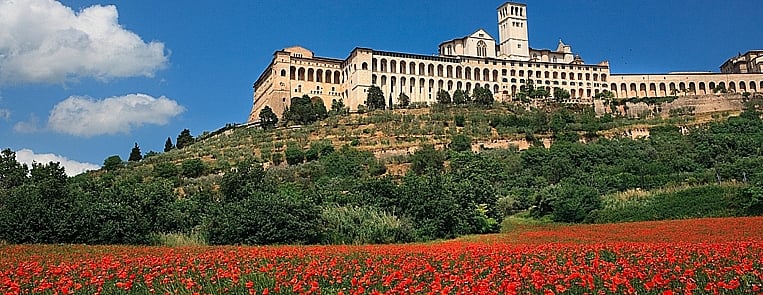
Enjoy the charming Umbria, from the Medieval and Majestic Orvieto to the peaceful Assisi. See the places where St. Francis of Assisi lived.
The essentials are the Duomo with Signorelli’s San Brizio chapel, the Orvieto Underground cave tours, the descent of the Pozzo di San Patrizio’s double-helix staircase, the Torre del Moro climb for the panorama, the Etruscan necropolis and Faina museum, and a wine tasting in a tufa cave cellar. Trips 2 Italy sequences them so each arrives at its quietest hour.
Yes, it is one of the most distinctive experiences in central Italy. Guided visits descend into a labyrinth of caves carved over twenty-five centuries, passing Etruscan wells, a medieval olive mill, tufa quarries, and walls of pigeon dovecotes, with sudden windows opening through the cliff face. The footing is easy, the temperature cool and constant, and the tour suits nearly every age.
Yes. Visitors descend one of the two spiral staircases, 248 steps, cross the bridge over the water at the bottom, and climb the other spiral back up, following the same one-way system designed for mule trains in the sixteenth century. Seventy windows light the shaft, the descent is steady rather than strenuous, and the engineering makes it one of Orvieto’s most memorable half hours.
Absolutely. The tiny town stands on an eroding pinnacle of volcanic tuff half an hour from Orvieto, reached by a pedestrian footbridge over a landscape of badlands, and it is among the most visually stunning places in Italy. We arrange it as a half-day excursion with a private driver, timed for morning or golden-hour light, often paired with lunch at a countryside estate.
Very. Children love the underground caves, the spiral staircases of the great well, the tower climb, and the funicular ride up the rock, and distances in the historic center are short with gelato never far away. Trips 2 Italy composes family days that balance the caves and climbs with pool time at a countryside estate, keeping every generation happy.
Stay for the passeggiata along Corso Cavour, an aperitivo of Orvieto Classico in a cave wine bar, dinner of umbrichelli and pigeon in a vaulted trattoria, and the Duomo facade by lamplight in a nearly empty square. Seasonal evenings add concerts at the Teatro Mancinelli, Corpus Christi pageantry in June, and Umbria Jazz Winter between Christmas and New Year.