
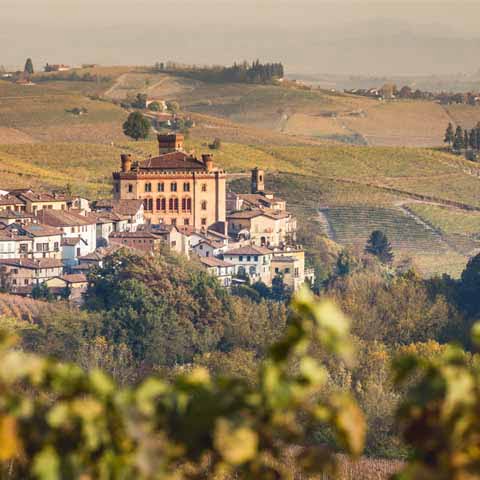
Flavors of Langhe Tour | Vacation Packages for 2025 – 2026
Experience Piedmont’s Langhe region as you savor world-class wines, explore hilltop villages and discover castles in Italy’s gourmet heartland. Starting from $1,448 per person.
About this guide: This guide to the history of Alba was written by the Italian-born travel specialists at Trips 2 Italy, a custom tour operator that has designed hand-crafted Italian vacations since 2003. Every recommendation below reflects the same first-hand knowledge our team draws on when we build a private Alba itinerary around a traveler’s interests, dates, and pace. Read it for your research, then let us translate it into a trip designed entirely around you.
People have farmed the hills around Alba since the Neolithic age, and Ligurian tribes held the site where the town now stands long before Rome arrived in this part of Piedmont. The Romans founded Alba Pompeia here in the first century BC, planting a proper town on the Tanaro’s banks at the crossing of roads that linked the Ligurian coast with the plains of the Po.
Alba Pompeia prospered. It minted citizens of consequence, none greater than Publius Helvius Pertinax, the son of a local freedman who rose through the army and the imperial administration to become Roman Emperor in the year 193. His reign lasted only three months before the Praetorian Guard cut it short, but Alba has never forgotten that one of its own once wore the purple.
The Roman town never disappeared; it simply sank beneath its successor. Modern Alba stands directly on the ancient street grid, and excavations beneath the cathedral square and surrounding cellars have revealed the theater, temple podium, mosaics, and walls of Alba Pompeia. Guided underground routes now descend through these layers, and walking them with an archaeologist, an experience we arrange for history-minded travelers, makes the town’s twenty centuries feel suddenly compact.
Even the vine arrived early. Ancient authors already praised the wines of these hills in Roman times, and the terraced slopes that UNESCO now protects continue an agricultural pattern the legionaries’ descendants would recognize. Few places in Italy let a traveler stand in a Roman theater in the morning and taste the modern result of that same two-thousand-year agricultural project in the afternoon.
After the turbulence that followed Rome’s fall, Alba re-emerged in the Middle Ages as a free commune, governing itself and growing rich on the trade of its fertile hills. Its leading families announced their power in the manner of the age: by building towers. At the medieval peak, chroniclers counted the town’s towers in the dozens upon dozens, and the legend of a hundred towers became Alba’s enduring epithet.
It was a combative age. Alba contended constantly with Asti, its powerful commercial rival to the north, through wars, alliances, and commercial rivalries that shaped both towns, a rivalry now happily reduced to the annual mockery of the Donkey Palio. Within the walls, the same rivalries played out family against family, tower against tower, in the pattern repeated across the communal Italy of the era.
Time and prudence lowered most of the towers, their brick recycled into palaces and churches, but the survivors still preside over Piazza Risorgimento, and the medieval street plan remains the town’s skeleton. Each autumn the pageant of the Giostra delle Cento Torri fills those streets with costumed processions, a living memory of the communal age. Walking the center with a guide who can point out the truncated towers hidden inside later buildings turns an ordinary stroll into an excavation.
The commune’s prosperity rested on the same foundations as today’s: the fertility of the surrounding hills and the town’s role as their market. Medieval Alba regulated its trades, its fairs, and its wine with civic statutes, and Via Maestra was already the commercial spine it remains, a continuity of function across eight centuries that few European towns can claim so directly.
As the free communes faded, Alba passed through the hands of the great dynasties contending for northern Italy. The marquesses of Montferrat held it repeatedly, the Visconti of Milan took their turns, and the town changed masters with the wars that swept Piedmont through the fourteenth, fifteenth, and sixteenth centuries, its walls and castles earning their keep with each siege.
In the seventeenth century Alba settled definitively under the House of Savoy, the dynasty that would eventually unite Italy, and its fortunes became those of the Savoyard state: steady administration, agricultural improvement, and integration into the orbit of Turin. The counts and marquesses of the surrounding hills, the Falletti of Barolo foremost among them, built the castles and estates that still crown the wine villages.
That aristocratic world midwifed the modern wines. In the nineteenth century, Giulia Colbert Falletti, the last marchioness of Barolo, and the statesman Camillo Benso di Cavour, whose family castle at Grinzane still overlooks its vineyards, championed the transformation of local Nebbiolo into a dry, structured wine of European stature. Barolo earned its title as the wine of kings when the Savoy court adopted it, and the Langhe’s modern identity was born in those cellars.
The nineteenth and early twentieth centuries tested the Langhe. Phylloxera ravaged the vineyards, poverty drove emigration from the high hills, and the world wars took their toll. Alba’s darkest and proudest chapter came in the autumn of 1944, when partisans liberated the town and held it as a free republic for twenty-three days before the occupying forces returned, an episode immortalized by the Alba-born writer Beppe Fenoglio, whose novels gave the Langhe’s resistance and rural hardship a permanent place in Italian literature.
Peace brought an astonishing reversal of fortune. In 1946 the pastry maker Pietro Ferrero founded his confectionery workshop in Alba, turning the local hazelnut harvest into products that conquered the world and the town into the seat of a global company. In the same years, a visionary local restaurateur named Giacomo Morra promoted the white truffle internationally, famously presenting the season’s finest specimens to world leaders and stars, and the truffle fair grew into an international event.
The vineyards completed the resurgence. From the 1960s onward, and spectacularly in the 1980s and 1990s, the winemakers of Barolo and Barbaresco vaulted from rural obscurity to the summit of world wine, earning Italy’s highest classifications and drawing collectors and travelers to hills their grandparents had struggled to farm. Modern Alba is the rare town whose twentieth century ended far more gloriously than it began.
The transformation was cultural as well as economic. Fenoglio’s novels, published largely after his early death in 1963, turned the Langhe’s hardship years into literature of the first rank, the Slow Food movement founded in neighboring Bra in the 1980s made the region a world capital of thoughtful eating, and a university of gastronomic sciences took residence in nearby Pollenzo. The hills that once exported their young now draw students, chefs, and travelers from every continent.
Start beneath the streets. The underground itineraries of Alba Sotterranea descend through the Roman city, from theater walls to temple foundations, led by archaeologists who reassemble Alba Pompeia in the visitor’s imagination. Above ground, the civic museum gathers the town’s archaeology, and the cathedral of San Lorenzo layers Romanesque, Gothic, and Renaissance work, including gloriously carved and inlaid choir stalls from the early sixteenth century.
The medieval town tells its own story around Piazza Risorgimento, where the surviving towers rise over the cafes, and along the lanes where sharp eyes find tower stumps embedded in later palaces. San Domenico’s Gothic interior rewards a quiet visit, and the town hall preserves paintings that include a celebrated early Renaissance panel by Macrino d’Alba, the town’s own painter.
The castles complete the circuit. Grinzane Cavour, minutes from town, pairs its Cavour associations with a regional enoteca and wine museum, Serralunga d’Alba preserves one of Italy’s most striking fourteenth-century keeps, and the castle of Barolo houses the modern museum of wine. We sequence these sites into history-focused days with guides chosen for their narrative gift, so the centuries arrive as a story rather than a list.
Vines have grown on these hills since before the Romans, who noted the region’s wines, and Nebbiolo itself enters the written record in the thirteenth century, when documents from the region mention the grape that would define the Langhe. For centuries it produced wines mostly sweet or rustic, prized locally but unknown beyond Piedmont, while the hills’ true wealth remained wheat, hazelnuts, and silk.
The nineteenth century changed everything. The Falletti and Cavour estates, aided by winemaking expertise of the era, transformed Nebbiolo into the dry, long-lived Barolo that captivated the Savoy court, and in 1894 Domizio Cavazza, the pioneering director of Alba’s own enological school, founded the cooperative cellar at Barbaresco that gave the twin wine its independent name and pride. Alba’s wine school, founded in 1881, still trains the Langhe’s winemakers today.
The twentieth century brought classification and consecration: Barolo and Barbaresco stood in the first rank of Italy’s controlled denominations and rose in 1980 to the pinnacle DOCG status, and in 2014 UNESCO inscribed the vineyard landscape itself as World Heritage. The history is drinkable. Tasting an aged Barolo in a cellar whose family lived this entire arc, an experience we arrange with producers we have known for years, is the region’s most eloquent history lesson.
Alba treats preservation as a civic habit. The Roman city is protected and interpreted rather than sealed away, the medieval towers and churches are maintained with the same care the vineyards receive, and the town’s museums, from the civic archaeological collections to the exhibitions mounted in San Domenico and the Ferrero Foundation’s celebrated art shows, keep the cultural life as vigorous as the commercial one.
The countryside enjoys formal guardianship. The 2014 UNESCO inscription of the Langhe-Roero and Monferrato vineyard landscape binds the region to protect not just monuments but an entire working countryside: the vine rows, the hilltop silhouettes, the castles, and the winegrowing culture that sustains them. UNESCO also named Alba a Creative City of Gastronomy in 2017, recognition that its food traditions constitute heritage in their own right.
For travelers, this means Alba’s past is unusually intact and unusually alive: you can descend to a Roman theater, lunch beneath medieval towers, and end the day in a cellar whose family has farmed the same cru for a century. We arrange encounters with this living heritage as part of our cultural tours, from archaeologist-led descents to conversations with the custodians of the region’s traditions.
Alba deserves more than a template. Since 2003, Trips 2 Italy has designed private Italian vacations one traveler at a time, hand selecting every experience based on what you tell us rather than fitting you into a predefined package. Our Italian-born team plans Alba with the knowledge of people who call Italy home, from the truffle stalls of the old town to the Barolo and Barbaresco villages in the hills around it, and we remain at your side throughout your trip with 24/7 assistance. Tell us how you imagine Alba, and we will craft the itinerary that matches it.
Experience Piedmont’s Langhe region as you savor world-class wines, explore hilltop villages and discover castles in Italy’s gourmet heartland. Starting from $1,448 per person.
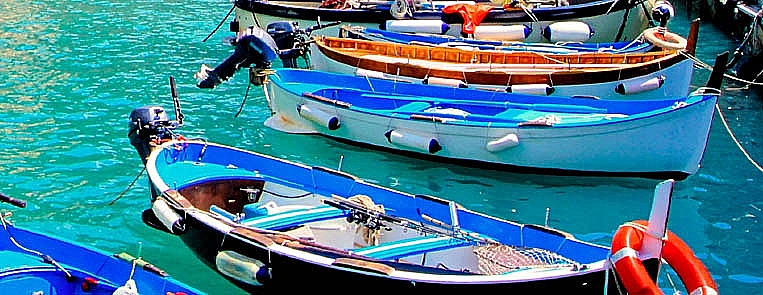
Discover the breathtaking sights of the Italian Riviera and venture through the Italian Alps surrounding Aosta Valley and Piedmont.
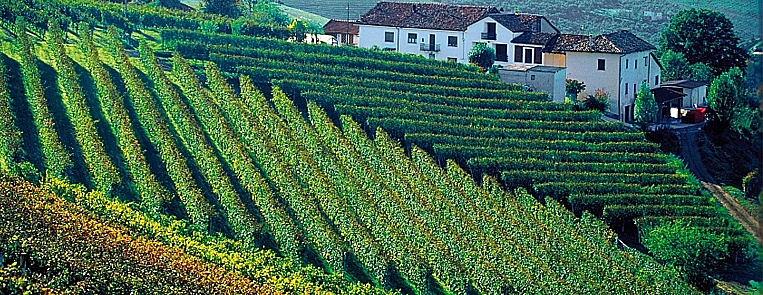
Langhe is a land to taste slowly day by day through its great wines, impressive castles and unforgettable dishes. You will dream to be back there again.
The Romans founded the town as Alba Pompeia in the first century BC, and it prospered at the crossing of routes between the Ligurian coast and the Po plain. Its most famous son was Publius Helvius Pertinax, who became Roman Emperor in the year 193. Substantial remains of the Roman city survive beneath the modern streets and can be visited on guided underground routes.
In its medieval age as a free commune, Alba’s leading families raised dozens of brick tower houses as declarations of power, and the town entered legend as the city of a hundred towers. Several survive around Piazza Risorgimento, others hide truncated within later buildings, and the annual Giostra delle Cento Torri pageant keeps the memory alive each autumn.
In October 1944 partisans liberated Alba and held it as a free republic for twenty-three days before occupying forces retook the town. The episode became one of the most celebrated stories of the Italian resistance through the writing of Beppe Fenoglio, Alba’s great novelist, whose books gave the Langhe’s wartime experience a permanent place in Italian literature.
Yes. The underground itineraries of Alba Sotterranea descend beneath the cathedral square and surrounding cellars to the theater, temple foundations, and mosaics of Alba Pompeia, led by qualified archaeologists. Trips 2 Italy arranges these guided descents as part of history-focused Alba itineraries, paired with the civic museum’s collections.
Barolo took its modern dry form in the nineteenth century under the Falletti of Barolo and the Cavour family, earning the title of the wine of kings at the Savoy court, and Barbaresco gained its independent identity in 1894 through Domizio Cavazza’s cooperative cellar. Both wines rose to Italy’s highest DOCG classification in 1980 and now stand among the most collected wines in the world.
Yes. In 2014 UNESCO inscribed the Vineyard Landscape of Piedmont: Langhe-Roero and Monferrato, protecting the vine rows, hilltop villages, and castles around Alba as a living cultural landscape shaped by centuries of winegrowing. Alba itself was also named a UNESCO Creative City of Gastronomy in 2017, and we design drives and walks that explore the inscribed hills properly.