Piedmont History Guide

HOME » POPULAR ITALIAN DESTINATIONS » ITALIAN TRAVEL GUIDES BY REGION » PIEDMONT TRAVEL GUIDE » PIEDMONT HISTORY GUIDE

Piedmont Travel Guide        Culture        History        Food and Wine        Things to Do        Plan My Trip

About this guide: This guide to the history of Piedmont was written by the Italian-born travel specialists at Trips 2 Italy, a custom tour operator that has designed hand-crafted Italian vacations since 2003. Every recommendation below reflects the same first-hand knowledge our team draws on when we build a private Piedmont itinerary around a traveler’s interests, dates, and pace. Read it for your research, then let us translate it into a trip designed entirely around you.

How Did Piedmont Begin?

Before Rome, the land at the foot of the mountains belonged to Ligurian and Celtic peoples, among them the Taurini, who held the upper Po valley and gave their name to the city that became Turin. Hannibal fought his way past them after crossing the Alps in 218 BC, a reminder that Piedmont’s destiny has always been bound to its passes: whoever held these valleys held the doors between Italy and the lands beyond the mountains.

Rome organized the region with its usual thoroughness. Augusta Taurinorum, founded under the emperor Augustus, was laid out as a perfect military grid, and modern central Turin still walks that Roman plan street by street, with the Palatine Gate surviving as one of the best-preserved Roman city gates anywhere. Other colonies grew into Asti, Vercelli, and Novara, and Roman roads threaded the alpine valleys toward Gaul.

Vercelli, in fact, entered history well before the emperors: near the city in 101 BC, Roman armies broke the migrating Cimbri in one of the republic’s most consequential battles, securing Italy’s northwestern approaches for centuries. Episodes like these gave the region its enduring self-image as a threshold land, the hinge on which Italy opens toward Europe.

When the empire faded, the passes kept their importance. Lombard dukes and Frankish counts contested the valleys, and the great abbeys rose to guard the pilgrimage and trade routes, none more dramatically than the Sacra di San Michele, raised at the end of the tenth century on its rock pinnacle above the Susa Valley, where it still stands as the emblem of the whole region.

What Was Piedmont's Medieval Story?

Medieval Piedmont was a chessboard of competing powers. The marquisates of Montferrat and Saluzzo, ruled by families whose ambitions reached as far as the Crusader states, faced proud communes like Asti and Vercelli, grown rich on banking and the traffic of the Via Francigena, the great pilgrimage road that entered Italy through these valleys. Asti’s merchants financed courts across Europe, and the city’s surviving towers still advertise the fortunes its families made.

Through this contested landscape a family from the western Alps advanced with extraordinary patience. The counts of Savoy, gatekeepers of the mountain passes, spent centuries acquiring valleys, towns, and titles on both slopes of the Alps, becoming dukes in 1416. Their genius was persistence: marriages, treaties, and sieges each added a square to the board, and by the fifteenth century the house had made itself the region’s gravitational center.

The turning point came in 1563, when Duke Emmanuel Philibert, having restored his occupied duchy through diplomacy and a famous victory, moved the Savoy capital from Chambery across the mountains to Turin. The decision reoriented the dynasty toward Italy and set in motion everything that followed, from the Baroque rebuilding of the capital to, three centuries later, the unification of the peninsula itself.

How Did the House of Savoy Shape Piedmont?

From 1563 the Savoy state rebuilt itself around Turin with deliberate magnificence. The dukes laid out the porticoed streets and disciplined squares that still define the city, and their architects, Guarino Guarini and then Filippo Juvarra, gave the capital domes and palaces to rival any in Europe. A ring of pleasure residences rose around it, from the hunting lodge of Stupinigi to the vast palace of Venaria Reale, the crown of buildings UNESCO now protects as the Residences of the Royal House of Savoy.

The dynasty’s shrewdness matched its architecture. Navigating the wars of the great powers, the Savoys won a royal title in the early eighteenth century, eventually styling themselves Kings of Sardinia while ruling from Turin. Their state was studied across Europe as a model of administration and soldiering, a small kingdom run with a precision that would later prove decisive for Italy’s destiny.

The court also seeded the region’s civilian glories. The Egyptian collections that became Turin’s great museum, the university’s academies, the silk and textile industries, and the cafe culture of the capital all grew under royal patronage. When travelers walk the Royal Palace, climb to Juvarra’s Superga, or stand in Venaria’s Great Gallery, they are reading the dynasty’s ambition in marble and light, and we arrange historians who make those rooms speak.

Why Is Piedmont Called the Cradle of Italian Unification?

In the nineteenth century this disciplined little kingdom accomplished something extraordinary: it unified Italy. After Napoleon’s storm passed and the Congress of Vienna restored the Savoys in 1814, Turin became the magnet for patriots from every corner of the peninsula. The Kingdom of Sardinia alone kept a constitution after the upheavals of 1848, and its capital filled with exiles, newspapers, and ideas.

The architect of unification worked from a Turin palazzo. Count Camillo Benso di Cavour, a Piedmontese aristocrat with a modernizer’s mind, built railways, reformed finances, and maneuvered France into war with Austria in 1859, setting off the cascade that swept through the peninsula. When the first Italian parliament proclaimed the Kingdom of Italy in 1861, it met in Turin, and Victor Emmanuel II, the Savoy king, became the first king of a united Italy.

The human drama behind the statecraft still colors the story. Giuseppe Garibaldi, the sword of unification, and Giuseppe Mazzini, its conscience, orbited the Turin of Cavour and the king in an uneasy constellation of rivals who together accomplished what none could alone. The city’s cafes served as their unofficial chanceries, and more than one clause of modern Italy was argued out over chocolate and vermouth beneath gilded ceilings that visitors can still sit under today.

Turin served as the new nation’s first capital until 1865, and the city preserves the whole drama: Palazzo Carignano, where the parliament sat and where the Museum of the Risorgimento now unfolds the story, the cafes where conspirators argued, and Cavour’s own haunts. Walking unification’s places with a historian who can people them again is one of the most rewarding days we design in the region, part of our broader cultural tours across Italy.

How Did Piedmont Enter the Modern Era?

Losing the capital, Turin reinvented itself as Italy’s workshop. The city pioneered Italian cinema in the early twentieth century, and in 1899 a group of investors founded an automobile factory whose initials, FIAT, would become synonymous with Italian industry. The Lingotto plant, with its famous rooftop test track, drew hundreds of thousands of workers northward and made Turin one of Europe’s great industrial capitals.

Before the assembly lines fully claimed it, Turin enjoyed a decade as the Hollywood of early Italian cinema, producing silent epics whose sets and ambitions astonished the world, a legacy the National Cinema Museum now celebrates inside the Mole Antonelliana. The same era gave the city its grand exposition parks along the Po and confirmed a taste for engineering audacity that the region has never lost.

The twentieth century tested the region hard. Piedmont’s mountains sheltered some of Italy’s most determined partisan resistance during the Second World War, a history the region honors deeply, and the postwar boom transformed Turin into a city of migration and manufacturing, with all the energy and strain that brought. As heavy industry ebbed late in the century, the city faced the question every great industrial capital eventually faces: what comes next?

The answer has been a renaissance of culture and taste. The 2006 Winter Olympics remade Turin’s confidence and its infrastructure, the Lingotto became galleries and concert halls, the royal residences were restored one by one, and the region’s food and wine, championed by the Slow Food movement founded in Bra in the 1980s, carried Piedmont’s name to the world. Today’s visitor meets a region that has folded its industrial chapter into a longer story of quiet excellence.

Which Places Bring Piedmont's History to Life Today?

Turin itself is the great archive. The Roman Palatine Gate opens the story, the Royal Palace and Palazzo Madama carry the Savoy centuries, Palazzo Carignano holds the Risorgimento, and the Mole Antonelliana and Lingotto tell the modern chapters. The Egyptian Museum adds a collection that is itself a piece of history, assembled by the dynasty two centuries ago, while Juvarra’s Superga keeps the royal tombs and one of the finest views in northern Italy.

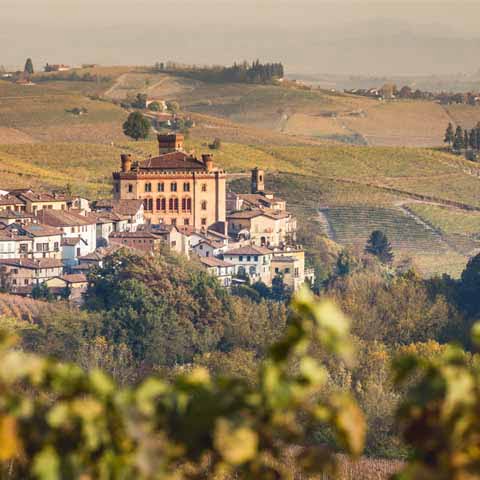
Beyond the capital, the Sacra di San Michele delivers the Middle Ages at their most dramatic, Asti’s towers and Vercelli’s basilica of Sant’Andrea recall the age of communes and pilgrims, and the castle of Grinzane Cavour, where the statesman himself once served as mayor, watches over the vineyards of the Langhe. Venaria Reale and Stupinigi display Baroque courtly life at full scale, their restorations among Europe’s most admired.

Sequence matters as much as selection. We compose history-focused itineraries so the centuries arrive in order, Roman gate to medieval abbey to Baroque palace to Risorgimento parlor, with historians chosen for their narrative gift. Three thousand years make far more sense as a story than as a shuffle, and building that story is precisely our craft.

How Is Piedmont Preserving Its Heritage?

Piedmont holds a remarkable portfolio of UNESCO World Heritage: the Residences of the Royal House of Savoy, the Sacri Monti devotional complexes it shares with neighboring Lombardy, Ivrea, inscribed as an exemplary industrial city of the twentieth century, and the vineyard landscape of the Langhe-Roero and Monferrato, recognized in 2014 as a living cultural landscape shaped by centuries of winegrowing. Few regions anywhere carry so many different kinds of heritage at once.

The restorations behind those listings are stories in themselves. Venaria Reale, derelict for generations, reopened after one of Europe’s largest heritage projects and now stands beside Versailles in ambition. The Egyptian Museum was retold gallery by gallery, the Sacra di San Michele is continuously conserved on its exposed crag, and in the wine country, building codes and vineyard registers protect the harmony of village, castle, and vine that earned the UNESCO inscription.

For travelers this means the past here is unusually intact and unusually welcoming. Where access allows, we arrange encounters with the preservation world itself, from palace restoration studios to historic cellar archives, and our historians frame each site within the region’s longer arc. History in Piedmont is a working enterprise, and meeting its custodians is one of the region’s quiet privileges.

Ready to Begin Planning Your Piedmont Vacation?

Piedmont deserves more than a template. Since 2003, Trips 2 Italy has designed private Italian vacations one traveler at a time, hand selecting every experience based on what you tell us rather than fitting you into a predefined package. Our Italian-born team plans Piedmont with the knowledge of people who call Italy home, from Turin’s royal arcades to the vineyard ridges of the Langhe and the gardens of Lake Maggiore, and we remain at your side throughout your trip with 24/7 assistance. Tell us how you imagine Piedmont, and we will craft the itinerary that matches it.

Explore Our Piedmont Vacation Itineraries

Frequently Asked Questions About the History of Piedmont

Because unification was engineered from here. The Savoy Kingdom of Sardinia, ruled from Turin, kept Italy’s only surviving constitution after 1848, and its prime minister Cavour maneuvered the peninsula toward union. When the Kingdom of Italy was proclaimed in 1861, the first parliament met in Turin’s Palazzo Carignano, and the city served as capital until 1865.

An alpine dynasty that spent nearly a thousand years turning mountain passes into a kingdom. Counts, then dukes, then kings, they moved their capital to Turin in 1563, rebuilt it as a Baroque showpiece, and ultimately provided united Italy with its royal family. Their palaces around Turin are protected today as UNESCO World Heritage.

A tenth-century abbey balanced on a rock pinnacle above the Susa Valley, the architectural symbol of Piedmont and one of the most dramatic medieval sites in Italy. It guarded the pilgrimage routes over the Alps, and its silhouette is said to have helped inspire a famous historical novel. We arrange visits with guides who bring its monastic centuries to life.

Central Turin still follows the grid of Roman Augusta Taurinorum, and the Palatine Gate is among the best-preserved Roman city gates in existence. Asti, Vercelli, and Novara all grew from Roman colonies, and museum collections across the region carry the era’s traces. A historian-led walk makes the Roman city visible beneath the Baroque one.

For anyone curious how modern Italy came to exist, yes. Housed in Palazzo Carignano, where the first Italian parliament met, it unfolds the unification story in the very rooms where much of it happened. Trips 2 Italy pairs the museum with Cavour’s Turin and the royal residences so the whole drama connects.

The Residences of the Royal House of Savoy around Turin, the Sacri Monti devotional complexes, the Langhe-Roero and Monferrato vineyard landscape, and Ivrea, recognized as an industrial city of the twentieth century. Trips 2 Italy weaves several inscriptions into a single unhurried itinerary, from palace to abbey to vineyard ridge.