Flavors of Langhe Tour | Vacation Packages for 2025 – 2026
Experience Piedmont’s Langhe region as you savor world-class wines, explore hilltop villages and discover castles in Italy’s gourmet heartland. Starting from $1,448 per person.
About this guide: This guide to the culture of Alba was written by the Italian-born travel specialists at Trips 2 Italy, a custom tour operator that has designed hand-crafted Italian vacations since 2003. Every recommendation below reflects the same first-hand knowledge our team draws on when we build a private Alba itinerary around a traveler’s interests, dates, and pace. Read it for your research, then let us translate it into a trip designed entirely around you.
Alba’s culture grows straight out of its soil. In this corner of Piedmont, identity is measured in vineyard rows, hazelnut groves, and the secret woods where truffles hide, and the town’s calendar, economy, and conversation all follow the agricultural year. Where other Italian towns organize their pride around a cathedral or a painter, Alba organizes its pride around the land and what the land gives.
That inheritance produced a culture of remarkable seriousness about pleasure. The Langhe treats a truffle, a bottle of Barolo, or a hazelnut cake as objects worthy of scholarship, ceremony, and fierce debate, and the international Slow Food movement, born in nearby Bra, simply formalized a philosophy these hills had practiced for generations: that food is culture, and that doing things slowly and well is a form of civilization.
Yet Alba wears this depth lightly. It remains a working market town where the Saturday stalls matter more than any monument, where winemakers and truffle hunters greet each other on Via Maestra, and where the visitor is welcomed into the rhythm rather than performed for. The itineraries we design are built to place travelers inside that rhythm, at the market, in the cellar, and at the table.
The Langhe also gave modern Italy two of its essential literary voices. Beppe Fenoglio, born in Alba, wrote the partisans and hill farmers of these ridges into the national canon, and Cesare Pavese, from the Belbo valley just beyond, made the same hills a landscape of memory and longing. Their pages remain the deepest cultural preparation a traveler can bring here, because the country they describe, proud, laconic, and bound to its land, is still recognizably the one outside the car window.
No ingredient on earth is more bound to a single town. The white truffle of Alba, Tuber magnatum Pico, resists every attempt at cultivation, surfacing only where soil, tree roots, and autumn weather conspire, which makes the hunters who find it, the trifolau, figures of genuine local mystique. They work at dawn or by night with trained dogs, guarding the locations of productive trees as family secrets passed between generations.
The town built its modern identity around this treasure. The truffle fair, first organized in the late 1920s, grew from a local market into an international event that draws chefs and connoisseurs from every continent, and the annual world truffle auction at the castle of Grinzane Cavour sends the season’s finest specimens to bidders around the globe. For two months each autumn, this small Piedmontese town commands the world’s gastronomic attention.
We arrange for travelers to enter this world properly: private truffle hunts with a trifolau and his dog in the woods outside town, followed by tastings where the morning’s find is shaved over fresh tajarin. Watching the dog work a hillside, and understanding why the hunter trusts it more than any map, teaches more about Alba’s culture in two hours than any museum could.
Alba builds in red brick, and its architecture reads like the town’s autobiography. The surviving medieval towers around Piazza Risorgimento recall the age when rival families raised more than a hundred of them, competing in height as openly as they competed in commerce. The Cathedral of San Lorenzo anchors the square, its brick facade and bell tower blending Romanesque bones with the Gothic ambitions of the late fifteenth century.
A few streets away, the church of San Domenico preserves its Gothic portal and fragments of medieval fresco beneath austere vaults, and today doubles as one of the town’s most atmospheric exhibition spaces. Between the monuments run the streets themselves, arcaded in places, opening into small squares where the medieval plan still governs daily movement, all of it resting literally on Roman foundations that surface in cellars and underground routes across the center.
The countryside completes the architectural story. Every surrounding hilltop carries a castle, from the medieval fortress of Serralunga d’Alba to Grinzane Cavour, and the villages beneath them grew in rings around church and keep. UNESCO recognized this ensemble of villages, castles, and vine rows as a single cultural landscape, shaped continuously by human hands since Roman times, and we design drives and walks that read it the way its builders intended.
Alba even produced its own Renaissance painter. Macrino d’Alba, active around the turn of the sixteenth century, painted altarpieces for the courts and churches of Piedmont, and his luminous panels still hang in the town hall and regional collections, a reminder that this market town participated in the great artistic conversations of its age. Seeing his work where it was made, minutes from the truffle stalls, captures Alba’s blend of the earthy and the refined better than any description.
Autumn is one long celebration. The International Alba White Truffle Fair runs from early October into December, wrapping the truffle market in concerts, cooking demonstrations, and street festivities. On the first Sunday of October, the town stages its famous Donkey Palio, a joyously irreverent race first run in 1932 as a mischievous answer to the solemn horse Palio of neighboring Asti, preceded by a costumed medieval pageant of more than a thousand participants recalling the town’s age of a hundred towers.
Spring answers with Vinum, the Langhe’s great wine festival, when producers of Barolo, Barbaresco, and the wider region pour their new releases at tasting stations along Via Maestra and the whole town becomes a cellar without walls. Through the year, the surrounding villages add their own harvest feasts and patron saint days, small festivals where the visitor is a guest rather than a spectator.
Experiencing these events well requires timing and access: the right weekend, reserved tastings, and a table when the town is at its fullest. We track the Langhe’s festival calendar year round and fold its highlights into itineraries as part of our entertainment and festival experiences in Italy, so the celebration becomes the centerpiece of the trip rather than a lucky accident.
In the Langhe, wine is not a product but a patrimony. The families who farm Nebbiolo on these slopes have often done so for four or five generations, and the vineyard names, Cannubi, Rabaja, Vigna Rionda, carry the weight that palace names carry elsewhere. Conversation in Alba returns constantly to the vintage, the weather, and the eternal friendly rivalry between Barolo and Barbaresco, two expressions of the same grape separated by a few miles and endless nuance.
The culture rewards attention to its rituals. Wine here is drunk with food, poured for guests with quiet pride, and discussed with the precision of people who watched the grapes ripen. The harvest, the vendemmia of late September and October, remains a communal event that pulls families back to the villages, and the fog that follows it, the nebbia that gave Nebbiolo its name, marks the turn toward truffle season and the cellar’s long quiet work.
We open this culture through its people: tastings hosted by the winemaking families themselves, walks through historic vineyard crus with someone who can explain why one slope commands reverence and its neighbor merely respect, and harvest visits when the cellars are alive. These are arrangements built on relationships our Italian-born team has cultivated since 2003, and they are the difference between tasting the wine and understanding it.
The tradition renews itself deliberately. Alba’s enological school, founded in 1881, still trains the next generation of the Langhe’s winemakers, and the region’s youth increasingly return to family cellars after studies and harvests abroad, bringing new ideas home to old vineyards. The result is a wine culture that manages to be both deeply conservative and quietly innovative, and conversations across a tasting table here often span three generations of the same family.
The high Langhe hills above Alba grow what many consider the world’s finest hazelnut, the round and aromatic Tonda Gentile, celebrated today under the Nocciola Piemonte label. For centuries these groves were the poor cousin of the vineyards, until Piedmontese confectioners blended local hazelnuts with chocolate and created gianduja, the silky union that became the region’s signature sweet.
Alba turned that tradition into a global story. In 1946 the pastry maker Pietro Ferrero began producing a hazelnut and chocolate cream in the town, and the family company that grew from his workshop carried Alba’s name and its hazelnut heritage to every corner of the world. The town remains the company’s home, a rare case of a small Italian market town standing at the center of a worldwide sweet tradition.
The living heritage is best explored at the source. Pastry shops along Via Maestra still make torta di nocciole, the dense hazelnut cake served with a glass of sweet Moscato, alongside bonet, the amaretti and chocolate pudding of the Langhe, and gianduja in every form. We arrange visits to hazelnut farms in the Alta Langa and tastings with confectioners who explain the craft, a sweet counterpoint to the truffle and the vine.
Alba keeps the rhythms of a prosperous market town. Mornings begin with espresso taken standing and a stop at the newsstand, Saturday brings the market that has filled the central piazzas since the Middle Ages, and the late afternoon passeggiata draws the whole town onto Via Maestra to walk, greet, and be seen. The aperitivo hour follows naturally, a glass of Arneis or a vermouth, invented just up the road in Turin, with something small to eat.
The agricultural year gives the routine its deeper structure. Spring belongs to the vineyard’s first work, summer to the groves and long evenings, autumn to the double harvest of grapes and truffles when the town works hardest and celebrates most, and winter to the cellar, the braise, and the fireside. Even Alba’s industry follows the land: the scent of roasting hazelnuts and chocolate drifts from the factory quarters on certain mornings, a reminder of what built the town’s modern comfort.
The finest cultural experiences here come from joining these rhythms rather than observing them: a market morning with a local cook, an afternoon in a village bar during the passeggiata, a harvest lunch at a family estate. Our Italian cultural tours are composed of exactly these hours, arranged through relationships and timed to the life of the place.
Alba deserves more than a template. Since 2003, Trips 2 Italy has designed private Italian vacations one traveler at a time, hand selecting every experience based on what you tell us rather than fitting you into a predefined package. Our Italian-born team plans Alba with the knowledge of people who call Italy home, from the truffle stalls of the old town to the Barolo and Barbaresco villages in the hills around it, and we remain at your side throughout your trip with 24/7 assistance. Tell us how you imagine Alba, and we will craft the itinerary that matches it.
Experience Piedmont’s Langhe region as you savor world-class wines, explore hilltop villages and discover castles in Italy’s gourmet heartland. Starting from $1,448 per person.
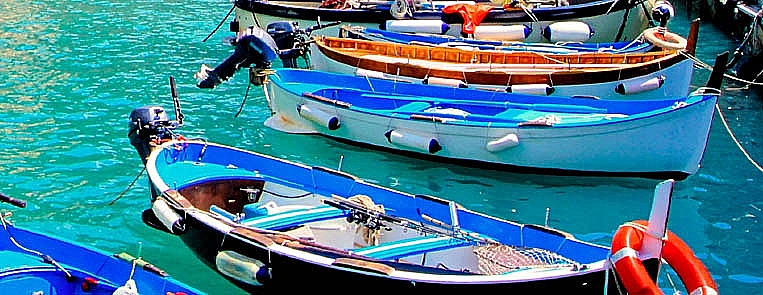
Discover the breathtaking sights of the Italian Riviera and venture through the Italian Alps surrounding Aosta Valley and Piedmont.
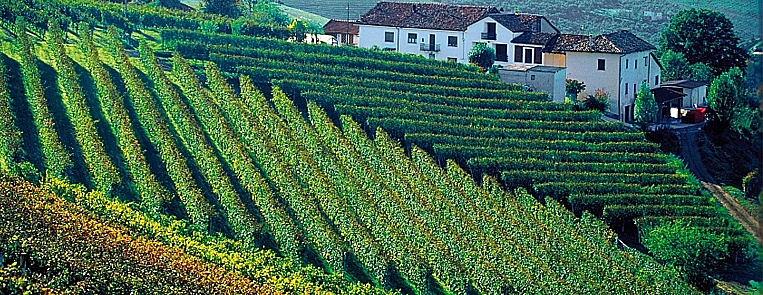
Langhe is a land to taste slowly day by day through its great wines, impressive castles and unforgettable dishes. You will dream to be back there again.
Alba is the world capital of the white truffle and the heart of Barolo and Barbaresco wine culture, celebrated for its autumn truffle fair, its Donkey Palio and medieval pageant, its hazelnut and chocolate heritage including the birthplace of gianduja cream, and a market-town daily life that has followed the agricultural calendar for centuries.
A trifolau is a Langhe truffle hunter, working at dawn or by night with a trained dog to find white truffles among the roots of oaks, poplars, and willows in the hills around Alba. The craft passes through families along with fiercely guarded knowledge of productive spots. Trips 2 Italy arranges private hunts with experienced trifolau, followed by tastings of the morning’s find.
The Palio degli Asini runs on the first Sunday of October, opening the truffle season with a costumed medieval pageant through the streets followed by the famously unpredictable donkey race. It began in 1932 as Alba’s witty reply to the horse Palio of neighboring Asti and remains one of Piedmont’s most beloved festivals.
The International Alba White Truffle Fair, from early October into early December, leads the calendar, joined by the Donkey Palio on the first Sunday of October and the Vinum wine festival in spring. Trips 2 Italy tracks the regional calendar year round and secures the reservations and access these peak weekends require.
The hills above Alba grow the prized Tonda Gentile hazelnut, and Piedmontese confectioners blended it with chocolate to create gianduja. In 1946 Pietro Ferrero began producing his hazelnut cream in Alba, and the company that grew from his workshop made the town the center of a worldwide sweet tradition that its pastry shops still honor daily.
Yes, and it is the best way to understand the Langhe. We arrange visits hosted by winemaking families, walks through historic Barolo and Barbaresco vineyard crus, and harvest experiences during the vendemmia, when the villages are at their most alive. These encounters turn wine from a product into the story of the families and hills that make it.