Things To Do in Apulia

HOME » POPULAR ITALIAN DESTINATIONS » ITALIAN TRAVEL GUIDES BY REGION » APULIA TRAVEL GUIDE » APULIA THINGS TO DO GUIDE

Apulia Travel Guide        Culture        History        Food and Wine        Things to Do        Plan My Trip

About this guide: This guide to things to do in Apulia was written by the Italian-born travel specialists at Trips 2 Italy, a custom tour operator that has designed hand-crafted Italian vacations since 2003. Every recommendation below reflects the same first-hand knowledge our team draws on when we build a private Apulia itinerary around a traveler’s interests, dates, and pace. Read it for your research, then let us translate it into a trip designed entirely around you.

What Belongs at the Top of Every Apulia Itinerary?

Alberobello first. The UNESCO-listed trulli district is one of Italy’s singular sights, and it changes completely with the hour: early morning and evening return the cone-roofed lanes to their residents, while the quieter Aia Piccola quarter rewards travelers who step beyond the main slope. Pair it with a slow drive through the Itria Valley, where trulli scatter among vineyards along every lane.

Lecce follows, ideally with time to watch the pietra leccese turn to honey in the late light, the facade of Santa Croce and the enclosed Piazza del Duomo leading a city-wide gallery of carved baroque. Then the coast: Polignano a Mare, where the old town balances on limestone cliffs above the pebble cove of Lama Monachile, and Bari Vecchia, with the Basilica di San Nicola and the pasta makers of the Arco Basso.

This is where planning shows its value most. We arrange guides who turn facades and cone roofs into stories, schedule the marquee sights for the hours when they are at their best rather than their busiest, and sequence the drives so the landscape does half the storytelling. The difference between meeting Alberobello in the right hour and the wrong one is the difference between wonder and endurance.

Give the region more than a checklist. Apulia changes character by the hour, luminous white at midday, honey and rose at dusk, and travelers who return to the same lane at different times understand why photographers never exhaust it. We build unstructured hours into every Apulian day on purpose, because they are where the region does its quiet work.

What Is It Like to Explore the White Towns of the Itria Valley?

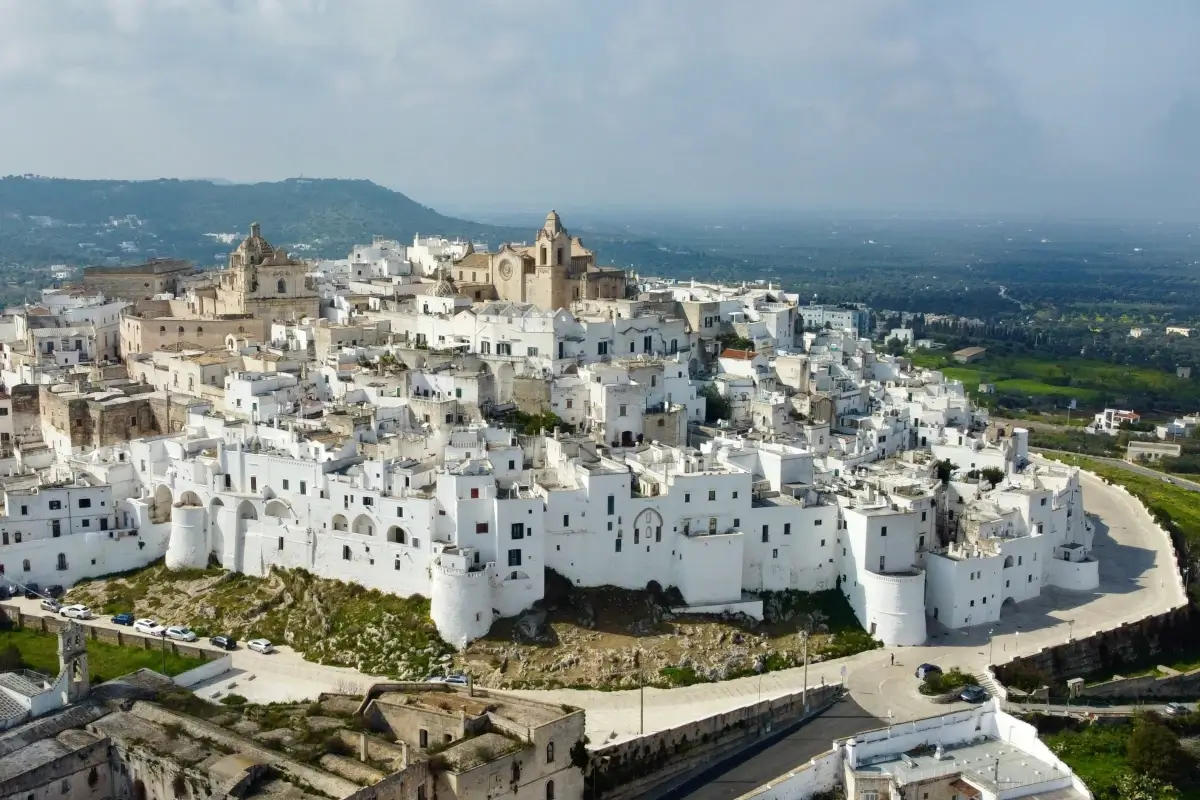
Ostuni is the celebrated Citta Bianca, a whitewashed hill town stacked above the olive plain with the Adriatic glittering beyond, its lanes spiraling up to a fifteenth-century cathedral. The town rewards wandering without a map, then a long lunch on a terrace with the white city falling away below.

Its neighbors each keep a distinct personality. Locorotondo winds in perfect circles around its hilltop, wine cellars tucked beneath flower-hung balconies; Cisternino remains one of Italy’s most authentic small towns, famous for its butcher-grills where dinner is chosen at the counter; and Martina Franca answers with baroque palaces, a grand ducal palace, and a summer opera festival of national standing. Together they form one of the most rewarding town-hopping landscapes in Italy.

The valley is best met at the connoisseur’s pace: one town in the morning before day visitors arrive, a countryside lunch, a second town as the light softens, and an hour with no plan at all. With a private driver threading the drystone lanes, the white towns become a single unhurried composition, and we design those days town by town around each traveler.

How Should You Experience Apulia's Two Coastlines?

The Adriatic coast is the sculpted one: white towns above blue water, sea caves undercutting the limestone, and harbors like Monopoli where fishing boats still paint the old port. Polignano a Mare is its dramatic heart, and seeing its cliffs and grottoes from the water, on a private boat threading the caves, reframes everything you walked that morning.

The Ionian side, along the Salento’s western shore, answers with long white-sand beaches and shallow turquoise water that has earned comparisons to the Maldives, at their finest between Gallipoli and Santa Maria di Leuca, where the two seas meet below the lighthouse at Italy’s heel. Beach clubs make effortless days of it from June through September, and the water stays swimmable well into October.

We compose coastal days around the wind, a detail locals live by: when one sea is rough, the other is usually glass. Private boat charters, cliff walks, sea cave swims, and long seafood lunches are arranged in advance and adjusted on the ground, so the coast delivers its best on the days you have.

Polignano a Mare deserves its own evening. The town’s terraces overlook the cove as the light fails, statues of Domenico Modugno, its most famous son, sing Volare to the sea, and dinner above the water carries the kind of drama travelers cross oceans for. We reserve those evenings well ahead and pair them with a morning boat along the caves.

What Makes the Gargano and the Tremiti Islands Worth the Journey?

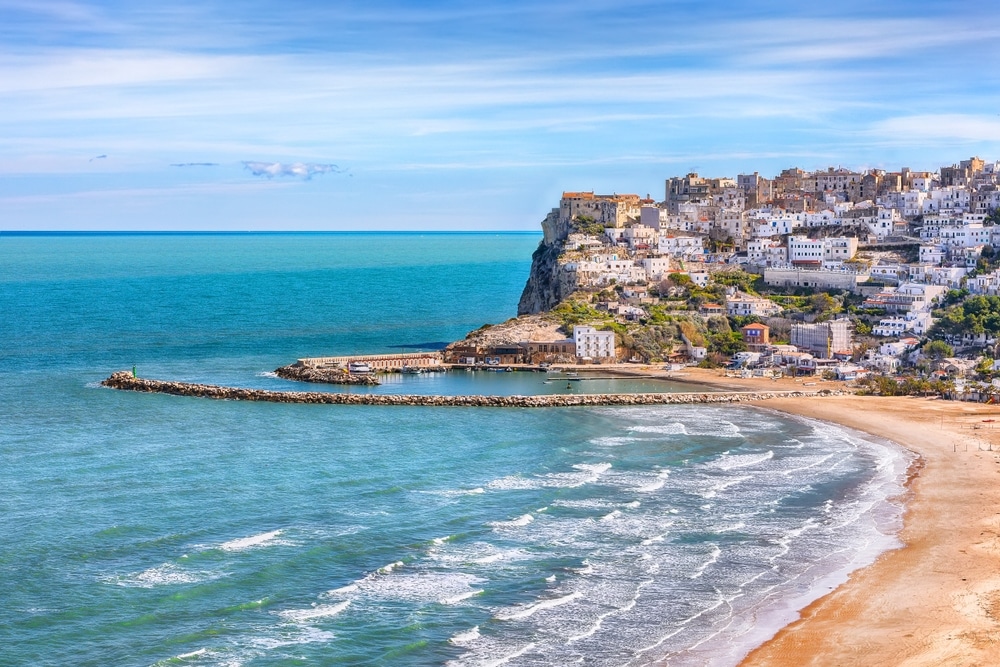
The Gargano is Apulia’s wild north, a forested limestone promontory that shoulders into the Adriatic like an island that never quite let go. Vieste and Peschici crown its cliffs in white, the coast between them hides arches, stacks, and beaches beneath dramatic headlands, and the trabucchi, the spidery wooden fishing platforms of the northern shore, still lower their nets as they have for centuries.

Inland rises the Foresta Umbra, a primeval beech forest so ancient UNESCO recognizes it as natural World Heritage, and the sanctuary town of Monte Sant’Angelo, where pilgrims have descended into the grotto of Saint Michael since the fifth century. Offshore, the Tremiti Islands offer some of the cleanest water in the Adriatic for swimming and snorkeling, reached by boat for one of the region’s finest day trips.

The Gargano rewards two or three dedicated days, and we sequence them carefully: a boat morning along the sea caves, a forest afternoon, a sanctuary visit, and evenings in Vieste’s old town. It is a different Apulia from the trulli country, and travelers who include both understand the region’s full range.

What Should You See in the Salento?

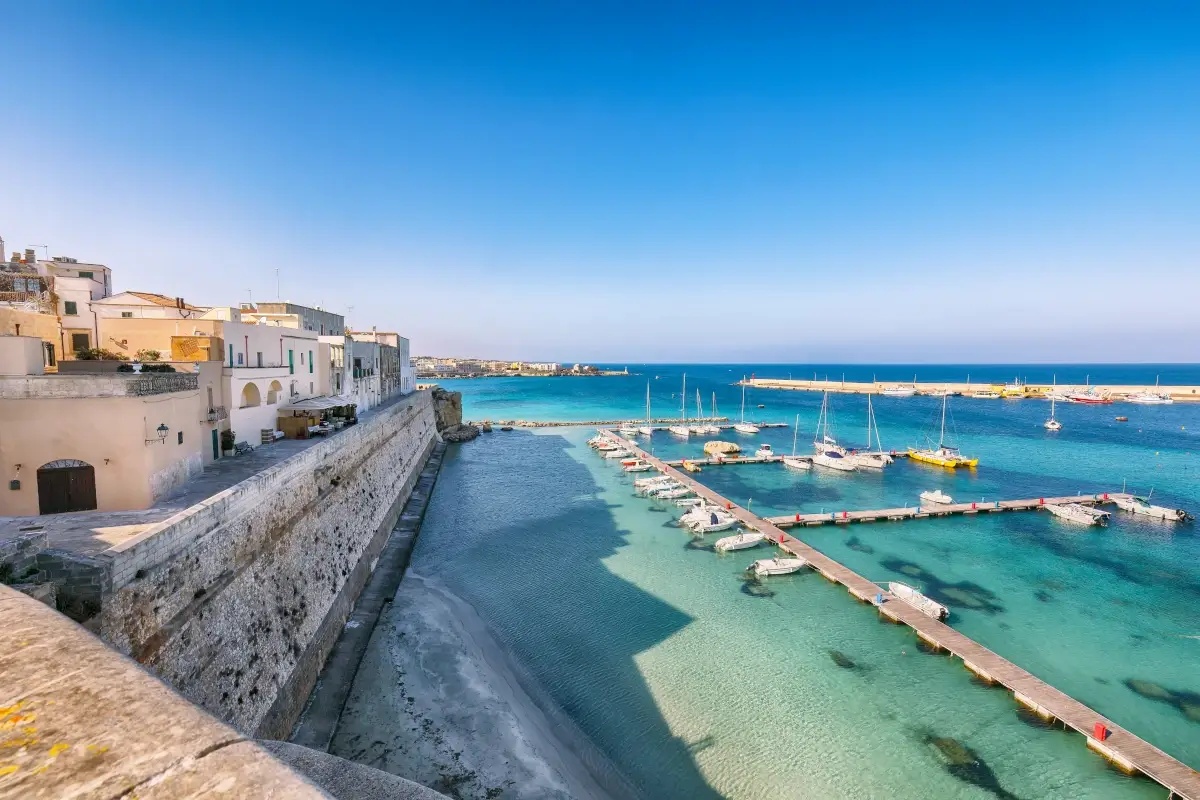
Beyond Lecce, the Salento unfolds as a peninsula of fortified towns, olive plains, and coastline in constant argument with the sea. Otranto, the easternmost town in Italy, holds a cathedral whose twelfth-century mosaic floor spreads a tree of life across the entire nave, and whose martyrs’ chapel tells the story of 1480 with quiet force. Gallipoli rings its island old town with baroque churches and Ionian sunsets.

The coast between them is a necklace of marvels: the sea cave pools of Grotta della Poesia, long celebrated among the world’s most beautiful natural swimming places, the white cliffs of Santa Cesarea Terme, and Santa Maria di Leuca at the very tip, where villas from the nineteenth century face the meeting of two seas. Inland, Galatina keeps one of southern Italy’s great fresco cycles in Santa Caterina d’Alessandria.

Summer adds the pizzica festivals and the great illuminations of the town feasts, and our Salento days are composed to catch them: a morning mosaic, an afternoon swim, an evening procession under the luminarie. Our specialists sequence the peninsula so its art, its beaches, and its festivals interleave rather than compete.

Photographers should plan the Salento around light. Dawn belongs to Otranto’s pale bastions and the east-facing coast, late afternoon to Gallipoli’s golden old town and the Ionian horizon, and the luminarie turn festival towns into constellations after dark. We time peninsula days accordingly, with a driver who knows exactly where to stand when the light arrives.

Why Should the Grotte di Castellana Be on Your List?

Beneath the Murge plateau, the Grotte di Castellana open into one of Italy’s great cave systems, explored in 1938 and now revealing roughly two miles of visitable galleries. The route descends through the Grave, a vast sinkhole lit by a shaft of daylight, then winds past stalactite forests and alabaster draperies to the Grotta Bianca, the White Cave, a chamber of crystalline formations often described as the brightest cave in the world.

The caves make a perfect counterpoint to the sunlit region above, cool on the hottest August afternoon and genuinely awe-inspiring for every generation, which is why they anchor many of our family days in central Apulia. They sit minutes from the Itria Valley, pairing naturally with Alberobello or a masseria lunch.

Apulia’s underground story continues elsewhere: the frantoi ipogei, the underground olive mills of the Salento, the cave-riddled ravine of Gravina in Puglia, and the karst springs of the coast all read the same limestone in different accents. We arrange the caves with timed entries and expert guides, woven into days that balance the subterranean with the sea.

Central Apulia hides one more marvel above ground: Gravina in Puglia, whose stone bridge across a cave-riddled ravine reached a global audience in a recent James Bond film, and whose rock churches reward the curious. It pairs naturally with Altamura’s bakeries and Castel del Monte for a full day on the high Murge.

What Day Trips and Extensions Pair Well With Apulia?

Matera is the essential excursion. The ancient cave city of the Sassi, a UNESCO World Heritage Site just across the border in Basilicata, sits under an hour from the Itria Valley, and its stone amphitheater of dwellings, rock churches, and panoramic ravine makes an unforgettable contrast with Apulia’s whitewashed towns. Many of our itineraries give it a full day or an overnight.

Within the region, the cathedral at Trani, the castle town of Barletta, and the baroque and wine towns of the deep Salento all reward dedicated days, while walkers and cyclists find ideal terrain on the Itria Valley’s quiet lanes and the coastal paths of the Gargano, experiences we arrange as part of our active trips in Italy. Boat days, from Polignano’s caves to the Tremiti Islands, extend the list for travelers who love the water.

Farther afield, Apulia links gracefully to Rome, Naples, and the Amalfi Coast by rail and short flights, closing a southern journey or opening a longer Italian one. As part of a custom trip to Italy, we sequence extensions so each one refreshes the journey rather than crowding it, with every transfer arranged and supported around the clock.

Whatever the extensions, the guiding principle is rhythm. Apulia rewards alternation, a cave morning followed by a beach afternoon, a famous town followed by an undiscovered one, and an itinerary that breathes this way sends travelers home rested rather than spent. Composing that rhythm around each traveler is the heart of what we do.

Ready to Begin Planning Your Apulia Vacation?

Apulia deserves more than a template. Since 2003, Trips 2 Italy has designed private Italian vacations one traveler at a time, hand selecting every experience based on what you tell us rather than fitting you into a predefined package. Our Italian-born team plans Apulia with the knowledge of people who call Italy home, from the trulli of the Itria Valley to the baroque streets of Lecce and the two seas of the Salento, and we remain at your side throughout your trip with 24/7 assistance. Tell us how you imagine Apulia, and we will craft the itinerary that matches it.

Explore Our Apulia Vacation Itineraries

Frequently Asked Questions About Things to Do in Apulia

Alberobello’s UNESCO-listed trulli district is the region’s singular sight, best met in early morning or evening light, followed closely by baroque Lecce and the clifftop old town of Polignano a Mare. Trips 2 Italy schedules the marquee sights for their finest hours and pairs them with guides who turn stone into story.

Ostuni, the celebrated White City above the olive plain, Locorotondo with its circular lanes and wine cellars, Cisternino with its famous butcher-grills, and baroque Martina Franca each offer a distinct personality. Two towns a day, joined by countryside lunches and a private driver, is the connoisseur’s pace, and we compose those days town by town.

Among the best on the Italian mainland. The Ionian coast of the Salento offers long white sand and shallow turquoise water, the Adriatic answers with coves, cliffs, and sea caves, and the Tremiti Islands add pristine snorkeling. The season runs long, with warm seas from June well into October, and we plan coastal days around the wind so you always swim the calmer sea.

Yes. The cave city of Matera, a UNESCO World Heritage Site in neighboring Basilicata, lies under an hour from the Itria Valley and pairs unforgettably with Apulia’s white towns. We build it into most Apulian itineraries as a full day or an atmospheric overnight among the Sassi.

A spectacular karst cave system beneath central Apulia, explored in 1938, descending through a vast daylight sinkhole to the crystalline Grotta Bianca, often called the brightest cave in the world. The caves sit minutes from Alberobello, stay cool through summer, and delight every generation, making them a favorite on our family itineraries.

Yes, and it is one of the region’s defining experiences. Private charters explore the sea caves and cliffs around Polignano a Mare, the grottoes of the Gargano near Vieste, and the islands and coves of the Salento, often with a swim stop and a seafood lunch. Trips 2 Italy arranges the boat, the route, and the timing around the day’s sea.