Things To Do in Trieste

HOME » POPULAR ITALIAN DESTINATIONS » TRIESTE TRAVEL GUIDE » TRIESTE THINGS TO DO GUIDE

Trieste Travel Guide        Culture        History        Food and Wine        Things to Do        Plan My Trip

About this guide: This guide to things to do in Trieste was written by the Italian-born travel specialists at Trips 2 Italy, a custom tour operator that has designed hand-crafted Italian vacations since 2003. Every recommendation below reflects the same first-hand knowledge our team draws on when we build a private Trieste itinerary around a traveler’s interests, dates, and pace. Read it for your research, then let us translate it into a trip designed entirely around you.

What Belongs at the Top of Every Trieste Itinerary?

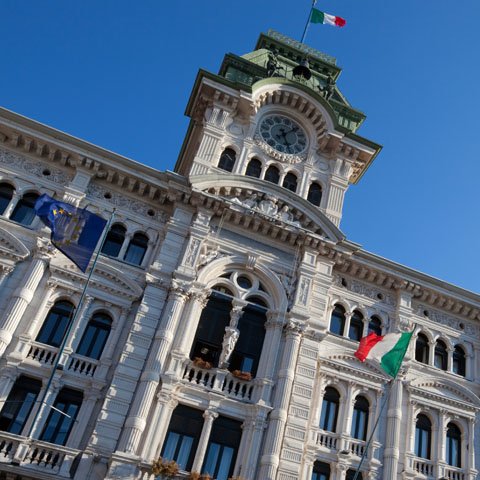
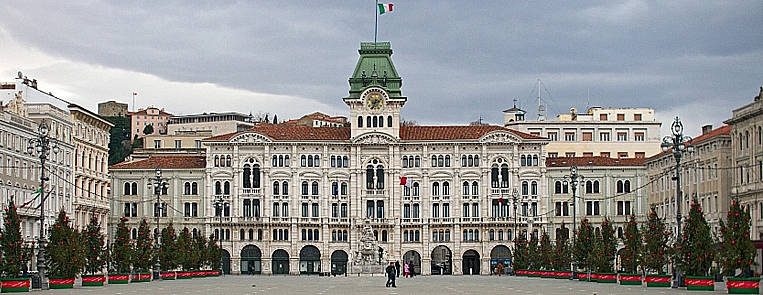
Piazza Unita d’Italia first, and ideally twice. By day, the largest sea-facing square in Europe reads as a lesson in imperial ambition, its palaces parading toward the open water; after dark, softly lit and swept by sea air, it becomes one of Italy’s great evening rooms. It anchors every itinerary we design in this corner of the Friuli Venezia Giulia region, and it costs nothing but time.

From the square, the essential city unfolds on foot: the Molo Audace pier reaching into the gulf, where the whole town strolls at sunset; the Canal Grande with its cafe terraces and church-closed vista; and the old town lanes threading past the Arch of Riccardo toward the Roman theatre. A first morning spent linking these, coffee stops included, teaches the city’s geography and its temperament together.

The museums reward the curious in equal measure. The Revoltella, the palace-turned-gallery of a great nineteenth-century merchant, layers his opulent apartments beneath a serious collection of modern art, the castle museum on San Giusto keeps armor and the city’s ancient stones, and the Joyce and Svevo collections delight readers. None demands a full day, which suits the city’s rhythm of alternating culture with coffee.

Timing and rhythm are our craft here. We sequence Trieste days so the square, the pier, and the cafes arrive at their finest hours, pair the walks with guides who carry the city’s stories lightly, and keep the pace unhurried, because Trieste rewards travelers who sit down as much as those who press on. This is a city to inhabit, not to sprint through.

Why Is Miramare Castle the Signature Excursion?

Miramare is the image most travelers carry home: a white castle on a green promontory, built around 1860 for Archduke Maximilian of Habsburg and his wife Charlotte, its rooms preserved with their furnishings and its windows filled with sea. The interiors, fitted like the cabins of a flagship, tell the story of the naval archduke who sailed from here to become Emperor of Mexico and never returned.

The park deserves equal time: twenty-two hectares of gardens descending the promontory, planted with species Maximilian gathered on his voyages, with pergolas, a small harbor, and viewpoints over water so clear the castle seems to float. The surrounding gulf is a protected marine reserve, and the walk along the coast from Barcola, with the castle growing ahead, is among the finest approaches in Italy.

We arrange Miramare as it should be experienced: a morning visit timed for the light in the seaward rooms, a guide who gives Maximilian and Charlotte their full tragic dimension, and a driver who makes the return as effortless as the arrival. Paired with lunch on the water or an afternoon on the Carso above, it composes one of the most satisfying days on the northern Adriatic.

What Will You Discover on San Giusto Hill?

The hill is the city’s original address, and a single unhurried climb crosses two thousand years. At the top, the cathedral of San Giusto presents its rose-windowed facade and, inside, golden Byzantine-influenced mosaics that rank among the treasures of the upper Adriatic. Beside it, the Habsburg castle raises ramparts with the finest panorama in the city, the roofs falling away to the harbor and the gulf beyond.

The ancient city keeps the hill company. Columns of the Roman forum stand beside the cathedral, the Roman theatre curves into the slope below, still hosting summer performances, and the descent through the old town passes the Arch of Riccardo, the Augustan gate that has watched its little piazza for two millennia. Few places in Italy layer their history so compactly.

We pair the climb with historian guides who read each stratum in order, then let the hill do what it does best: slow visitors down. The castle bastions invite lingering, the cathedral rewards quiet minutes with the mosaics, and the walk down ends naturally in a cafe. It is the essential Trieste half day, and we schedule it for the morning light or the late afternoon glow depending on the season.

What Makes the Carso Plateau Worth Exploring?

Twenty minutes above the city waits a different world: the Carso, the limestone plateau of sinkholes, stone villages, and wind-bent oaks that runs into Slovenia. Its underworld astonishes first. The Grotta Gigante, one of the largest show caves on earth, opens a single chamber roughly a hundred meters high, descended by staircases past stalagmites the size of towers, a spectacle that impresses travelers of every age.

Above ground, the plateau is walking and tasting country. Trails cross the karst heath between villages where road signs are bilingual, the Val Rosandra gorge cuts wild limestone scenery minutes from the city, and in autumn the sumac turns the whole plateau a famous red. Osmize open their courtyards along the lanes, pouring Terrano and Vitovska beside plates of home-cured prosciutto.

The classic panorama walk is the Napoleonica, a level path carved along the karst rim above the city, where walkers and climbers share two miles of cliff-edge views over the whole gulf, from the harbor cranes to Miramare’s white point. Reached in minutes from the upland village of Opicina, it makes an effortless golden-hour outing, and we often close a Carso afternoon there so the plateau’s finale is the city itself, spread out and shining below.

We compose Carso days to the traveler’s appetite: a cave descent and a panoramic walk for the active, cellar visits and osmiza tables for the epicurean, and for many guests a braid of all of it, with a driver managing the lanes. These afternoons suit our active trips in Italy as naturally as our culinary journeys, and they show travelers a borderland Italy few ever meet.

Why Walk the Rilke Path to Duino Castle?

The Rilke path is the most beautiful short walk on this coast: roughly two kilometers of clifftop trail between Sistiana bay and Duino, winding through pine and karst scrub high above the Adriatic, with white limestone plunging to blue water at every overlook. It is named for Rainer Maria Rilke, who began his Duino Elegies while staying at the castle in 1912, reportedly hearing the poems’ opening line in the Bora wind on these cliffs.

Duino Castle itself, seat of the princes of Thurn und Taxis for centuries and still their home, opens its halls, terraces, and gardens to visitors, with memorabilia of the poets and musicians the family hosted. Below, the romantic ruin of the older castle clings to its own rock, and the view from the bastions runs the whole arc of the gulf to Trieste shining in the distance.

The walk asks only comfortable shoes and an hour, which makes it ideal as the centerpiece of a coastal half day. We arrange it with a driver positioned at either end, a castle visit timed to the quieter hours, and lunch afterward in Sistiana or above the mussel farms along the shore, where the afternoon’s scenery becomes the evening’s first course.

What Do Evenings Offer in Trieste?

Evening is Trieste’s finest hour. The city gathers on the Molo Audace as the sun drops behind the gulf, then drifts to the great square as the facades light up, and the aperitivo hour fills the cafe terraces along the canal with glasses of Malvasia and spritzes in the Triestine manner. The passeggiata here has the sea for a companion, which lends it a grandeur all its own.

Culture keeps imperial hours. The Teatro Verdi has staged opera since 1801 and remains one of Italy’s respected houses, its season running through the cooler months, while summer moves music outdoors to the castle courtyard of San Giusto and the Roman theatre. The historic cafes stay open late, serving as the city’s salons exactly as they did when Joyce kept his table.

Dinner completes the evening’s architecture. Seafood rooms above the harbor serve the gulf’s catch with the lights of the moles trembling on the water, the buffets offer their convivial counters for a heartier, more local night, and the canal terraces hold the middle ground, aperitivo sliding into dinner as the church facade glows at the water’s end. We reserve the room that suits each evening’s mood, so the day’s last chapter is composed rather than improvised.

October adds the Barcolana, when the gulf fills with thousands of sails and the waterfront becomes a week-long festival culminating in one of the largest regattas on the planet. We arrange opera evenings, waterfront tables, and Barcolana viewpoints as composed conclusions to each day, because in Trieste the evening is not what remains of the day; it is the day’s destination.

What Day Trips Pair Well With Trieste?

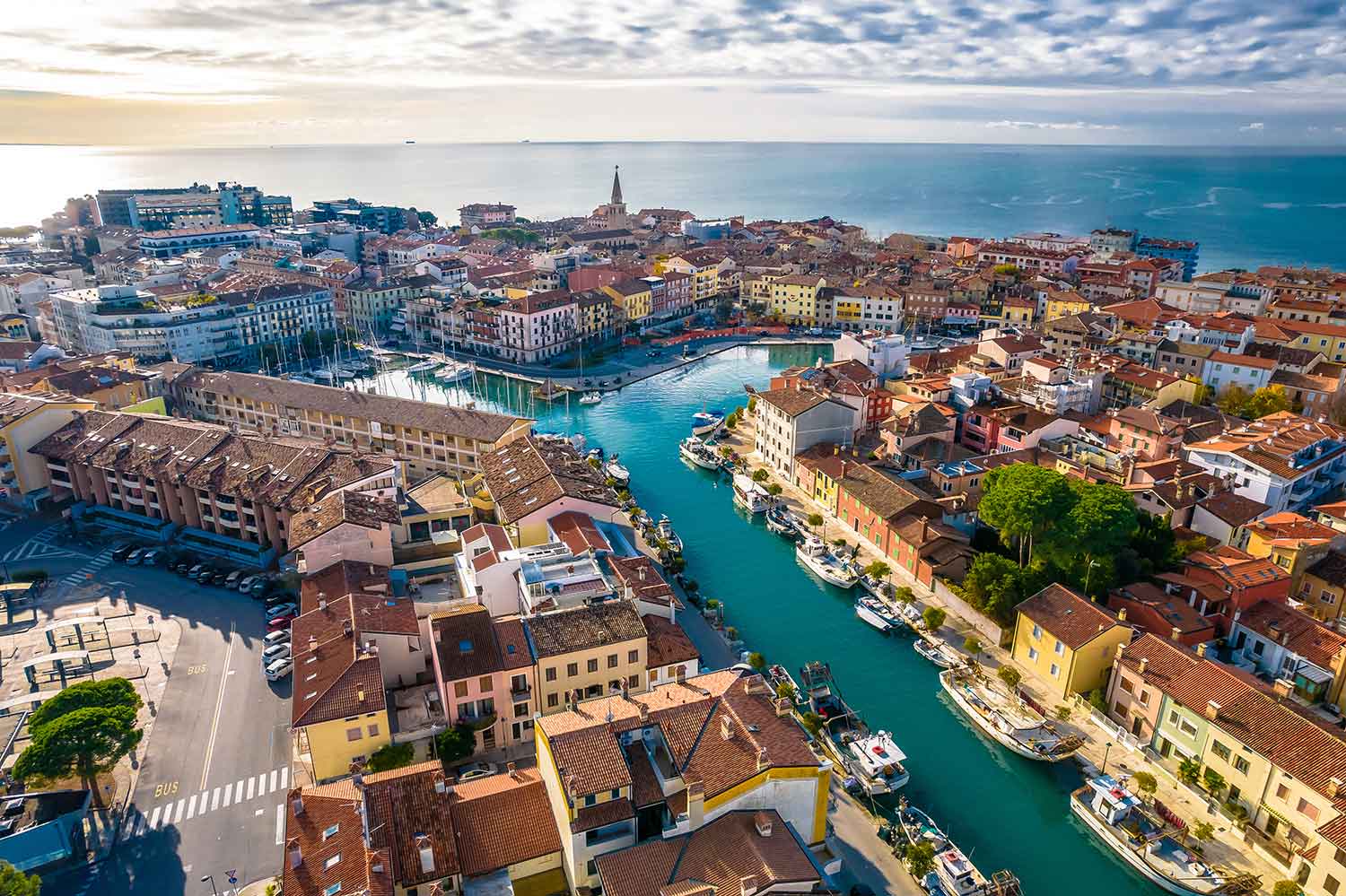
Aquileia leads the list. Under an hour away lies one of the great cities of the Roman Empire, its basilica floored with an ocean of fourth-century mosaic, its excavations and river port open to the sky, a UNESCO World Heritage Site that pairs perfectly with Trieste’s own Roman stones. The lagoon island of Grado, with its early Christian churches and sandy seafront, completes the same day beautifully.

Wine country waits in the opposite direction. The Collio hills around Gorizia, an hour away, produce some of Italy’s most admired white wines among slopes that fold seamlessly into Slovenia, and a day of tastings there, with a long estate lunch, shows the borderland at its most generous. Across the open border, the Lipica stud farm, home of the white Lipizzaner horses for over four centuries, makes a memorable half day.

History lovers can reach further into the region. Palmanova, the Renaissance fortress town built as a perfect nine-pointed star, astonishes from its walls, and Cividale del Friuli preserves the finest Lombard monuments in Italy above its emerald river gorge, both under ninety minutes away and both UNESCO-recognized. Either pairs naturally with a wine stop on the way home, which is exactly how we compose them.

For families, the Grotta Gigante, the castle ramparts, and the seafront combine into days that hold every generation’s attention, woven into a family vacation to Italy at the right pace. However far you reach, we sequence each excursion with private drivers and thoughtful timing as part of a custom trip to Italy, so every day away returns you to the great square in time for the evening light.

Ready to Begin Planning Your Trieste Vacation?

Trieste deserves more than a template. Since 2003, Trips 2 Italy has designed private Italian vacations one traveler at a time, hand selecting every experience based on what you tell us rather than fitting you into a predefined package. Our Italian-born team plans Trieste with the knowledge of people who call Italy home, from the great sea-facing square to the wine cellars of the Carso plateau, and we remain at your side throughout your trip with 24/7 assistance. Tell us how you imagine Trieste, and we will craft the itinerary that matches it.

Explore Our Trieste Vacation Itineraries

Frequently Asked Questions About Things to Do in Trieste

Piazza Unita d’Italia, the largest sea-facing square in Europe, is the essential experience, ideally seen both in daylight and after dark, followed closely by Miramare Castle on its promontory. Trips 2 Italy sequences both at their finest hours as the foundation of every Trieste itinerary.

Miramare sits a short drive or coastal walk north of the center, its state rooms preserved with Maximilian and Charlotte’s furnishings and its park descending to a protected marine reserve. We arrange morning visits with expert guides and private transfers, often paired with lunch on the water or an afternoon on the Carso plateau.

Yes. It is one of the largest show caves on earth, with a single chamber roughly a hundred meters high descended by dramatic staircases among giant stalagmites. It sits about twenty minutes from the city on the Carso plateau and combines naturally with an osmiza visit or a karst walk.

A clifftop trail of roughly two kilometers between Sistiana bay and Duino Castle, named for the poet who began his Duino Elegies at the castle in 1912. It offers the coast’s finest views, requires only an easy hour, and pairs beautifully with a castle visit and a seafood lunch, all of which we arrange with drivers at either end.

The Barcolana takes place on the second Sunday of October, when thousands of sailboats fill the Gulf of Trieste in one of the largest regattas in the world, preceded by a week of waterfront festivities. We build October itineraries around it, securing viewpoints, gulf experiences, and tables in advance.

Very. The Grotta Gigante’s vast chamber, the castle ramparts of San Giusto, boat outings on the gulf, the seafront at Barcola, and pastry stops in the grand cafes keep every generation engaged, and we compose family itineraries so history and landscape arrive as adventure rather than obligation.