Flavors of Langhe Tour | Vacation Packages for 2025 – 2026
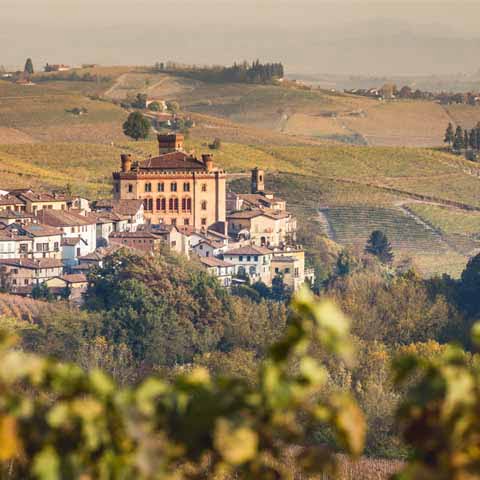
Experience Piedmont’s Langhe region as you savor world-class wines, explore hilltop villages and discover castles in Italy’s gourmet heartland. Starting from $1,448 per person.
HOME » POPULAR ITALIAN DESTINATIONS » ITALIAN TRAVEL GUIDES BY REGION » PIEDMONT TRAVEL GUIDE » PIEDMONT CULTURE GUIDE
About this guide: This guide to the culture of Piedmont was written by the Italian-born travel specialists at Trips 2 Italy, a custom tour operator that has designed hand-crafted Italian vacations since 2003. Every recommendation below reflects the same first-hand knowledge our team draws on when we build a private Piedmont itinerary around a traveler’s interests, dates, and pace. Read it for your research, then let us translate it into a trip designed entirely around you.
Piedmontese culture is built on reserve, precision, and depth. Shaped by centuries under the House of Savoy, whose court demanded discretion and excellence in equal measure, the region developed a temperament Italians themselves describe as serious, courteous, and quietly proud. Turin does not perform for visitors the way some cities do; it simply continues being excellent and lets you notice.
The culture braids three strands. From the court came the royal residences, the academies, the theaters, and the cafe rituals of the capital. From the countryside came an agrarian civilization of vine, hazelnut, and rice, whose seasonal calendar still governs the region’s festivals and its table. And from the mountains came alpine traditions of wool, wood, and dialect that survive in the high valleys, where Franco-Provencal and Occitan are still spoken in scattered villages.
What rewards travelers is how alive all of it remains. The historic cafes still pour bicerin under gilded ceilings, the Palio di Asti still thunders through a medieval piazza each September, and the philosophy of eating well and slowly, formalized here when the Slow Food movement was founded in Bra, remains ordinary daily practice. Piedmontese culture is not curated for tourism, and the itineraries we design are built to place travelers inside it rather than in front of it.
Turin holds one of Europe’s most surprising museum landscapes. The Egyptian Museum, founded in 1824 from Savoy collections, is the oldest museum in the world devoted to Egyptian civilization and the most important outside Cairo, its galleries of intact tomb assemblages and royal statuary recently retold with theatrical brilliance. A few streets away, the Mole Antonelliana, the vertiginous spire that symbolizes the city, houses the National Cinema Museum, a joyously immersive tribute to an art form Turin helped pioneer as Italy’s first film capital.
The royal inheritance fills the center. The Royal Palace, the Sabauda Gallery’s old masters, the Royal Armoury, and Palazzo Madama, a castle wearing a Baroque facade, gather the Savoy centuries into a single walkable ensemble. Beyond them, Turin has become one of Italy’s liveliest contemporary art cities, with the Castello di Rivoli’s contemporary collections installed in an unfinished royal residence and a November art week that draws the international art world.
Two quieter collections reward the curious. The Museum of the Risorgimento in Palazzo Carignano tells the unification of Italy in the rooms where its first parliament actually sat, and the automobile museum honors the industry that built modern Turin with a design lover’s eye. Even the Shroud of Turin, kept in the cathedral and displayed only on rare occasions, has a dedicated museum that recounts its long and debated history.
The difference between seeing these collections and understanding them is the storyteller. We pair travelers with art historians and Egyptologists who unfold the galleries room by room, arrange timed and early access where it matters, and sequence the museums so the city’s story builds rather than blurs. For collectors and serious enthusiasts, we compose entire Turin days around a single collection or theme.
Turin is Italy’s great Baroque capital, and its architecture was an act of statecraft. When the Savoy dukes moved their capital here in 1563, they rebuilt the city as a demonstration of order and ambition: straight porticoed streets, uniform facades, and squares like Piazza San Carlo composed with courtly discipline. Two architects of genius gave the program its soul, Guarino Guarini with his dizzying geometric domes, and Filippo Juvarra, whose Basilica of Superga watches the city from its hilltop and whose hunting lodge at Stupinigi spreads like a Baroque snowflake.
Around the capital stands the crown of residences the UNESCO list protects as the Residences of the Royal House of Savoy, from the vast restored palace of Venaria Reale with its luminous Great Gallery to castles at Racconigi and Rivoli. Farther out, the region’s older soul appears: the eleventh-century Sacra di San Michele balanced on its mountain crag above the Susa Valley, medieval towers in Asti, and the Sacri Monti, hillside devotional complexes of chapels and statuary that UNESCO also recognizes.
The wine country adds its own vernacular of castle-topped villages, from Grinzane Cavour to Serralunga d’Alba, rising over the vineyard sea. We build architecture-focused days with specialists who read these buildings fluently, and where access allows, we open doors that day visitors never find, from palace apartments to private historic interiors.
The calendar’s grandest weeks belong to autumn. From October into early December, Alba’s International White Truffle Fair turns the little capital of the Langhe into the world’s most fragrant marketplace, with a truffle auction, a medieval pageant, and the irreverent donkey Palio that gently teases its grander neighbor. Asti’s true Palio arrives each September, among the oldest horse races in Italy, preceded by the Douja d’Or wine celebrations and a procession of a thousand costumed figures.
Winter brings one of Europe’s strangest and most exhilarating spectacles: the Carnival of Ivrea, where the town divides into orange-throwing teams in a ritualized battle commemorating a medieval revolt, filling the streets with citrus and ceremony. Spring and summer scatter flower festivals across the lake gardens, alpine processions through the high valleys, and patronal feasts in every wine village, each with its band, its long tables, and its specific beloved dish.
Music holds its own place in the calendar. Turin’s Teatro Regio, rebuilt in the twentieth century behind its original Baroque facade, carries an opera tradition that premiered works by Puccini, and each September the city joins Milan in the MITO festival, filling churches, palaces, and concert halls with weeks of classical performance. Stresa answers on the lake with its own summer festival, its concerts drifting between waterfront halls and the islands themselves.
These are the moments when the region’s reserve lifts and its full character shows. We track the festival calendar year-round and fold the right events into itineraries as part of our entertainment and festival experiences in Italy, securing vantage points, tables, and access far enough ahead that the celebration becomes the centerpiece of the trip rather than a lucky accident.
Turin’s most delicious craft is chocolate. The city has worked cocoa since the Savoy court’s seventeenth-century fashion for it, and when Napoleonic blockades made cocoa scarce, Turin’s chocolatiers stretched it with the Langhe’s round hazelnuts and created gianduja, the silken paste that became the gianduiotto, the little gold-wrapped ingot still cut and folded by hand in historic workshops. Watching a master chocolatier temper and mold the day’s batch explains the city’s sweet tooth better than any pastry case.
The region’s other liquid craft is vermouth, invented in Turin in the late eighteenth century when herbalists began infusing Moscato wine with alpine botanicals. The tradition has revived brilliantly, and tastings that walk through the botanicals, from wormwood to alpine herbs, are among the city’s most pleasurable hours. In the countryside, coppersmiths, cheesemakers in the high valleys, and the wool towns around Biella, whose mills clothe the world’s finest tailoring, keep older skills alive.
This is where insider access matters most. We arrange visits to family chocolate workshops, vermouth cellars, alpine dairies, and textile archives, often in rooms that do not advertise, with the makers themselves as hosts. Anyone can buy a gianduiotto. Watching it made, in the workshop, with the person whose family has made it for generations, is a different experience entirely, and it is one we have spent two decades earning the relationships to offer.
Daily life in Turin is conducted at cafe tables. The city’s historic cafes, all velvet, marble, and mirrored gold, have served as parliament annexes, literary salons, and conspiratorial corners since the eighteenth century, and the rituals endure: a morning espresso standing at the counter, a bicerin, the layered chocolate and coffee specialty, taken slowly on a cold afternoon, and the aperitivo hour, a tradition Turin claims to have invented alongside its vermouth, opening every evening.
The arcades set the city’s rhythm. Twelve miles of porticoes let the passeggiata proceed in every weather, past bookshops, chocolatiers, and market halls, and Porta Palazzo hosts one of Europe’s largest open-air markets, where the region’s farms lay out their produce every morning. Life is unhurried, courteous, and precise, and visitors who adopt the pace find the city opens to them.
In the countryside the agricultural year still governs. Vines are pruned in winter silence, the rice paddies flood into mirrors each May, hazelnuts are gathered in late summer, and the vendemmia and truffle season carry autumn. Village life centers on the market, the church, and the long Sunday lunch, and travelers who step into that rhythm, a market morning with a cook, a harvest afternoon in the rows, discover the region’s true tempo.
Even the region’s famous reserve is best understood as a form of hospitality. The Piedmontese do not embrace strangers on sight, but once a table is shared, the welcome runs deep and lasts, which is why the introductions we provide matter so much here. Travelers who arrive with a mutual friend, in effect, meet a different region than travelers who arrive with a checklist.
Piedmont’s culture is deep but discreet, and its best rooms open by relationship rather than by ticket. A museum becomes a different experience with an Egyptologist who knows which three objects will stay with you. A festival becomes unforgettable with seats among the contrada rather than behind the barriers. A craft becomes personal when the chocolatier or the vermouth master sets the tools in front of you and begins to talk.
Because our team is Italian-born and has worked these connections since 2003, we plan Piedmontese culture from the inside: private palace visits where access allows, workshop doors that do not advertise, village festivals that never reach guidebooks, and tables where the conversation matters as much as the food. These are not options selected from a list. They are arrangements composed for each traveler based on what they tell us.
That method is the difference between a cultural tour and a cultural life briefly shared, and it is the standard behind our Italian cultural tours. Travelers who first come to Piedmont for the wine tend to return for everything around it, and our itineraries for returning guests grow deeper into the region rather than wider across the map.
Piedmont deserves more than a template. Since 2003, Trips 2 Italy has designed private Italian vacations one traveler at a time, hand selecting every experience based on what you tell us rather than fitting you into a predefined package. Our Italian-born team plans Piedmont with the knowledge of people who call Italy home, from Turin’s royal arcades to the vineyard ridges of the Langhe and the gardens of Lake Maggiore, and we remain at your side throughout your trip with 24/7 assistance. Tell us how you imagine Piedmont, and we will craft the itinerary that matches it.

Experience Piedmont’s Langhe region as you savor world-class wines, explore hilltop villages and discover castles in Italy’s gourmet heartland. Starting from $1,448 per person.

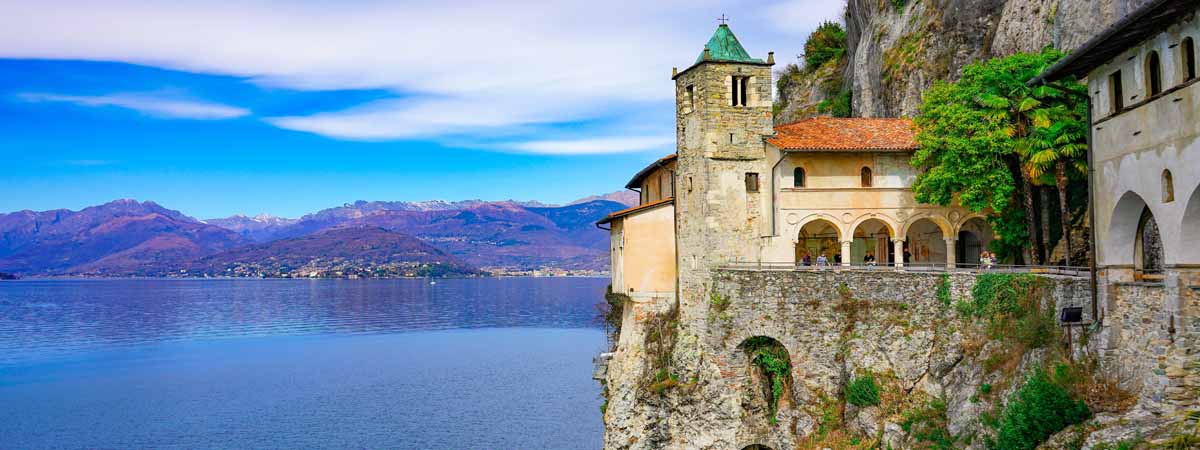
Experience Lake Maggiore, the Borromean Islands and Villa Taranto as gardens, lakeside towns and scenic journeys create a magical Italian escape. Starting from $1000 per person.

Experience Turin as royal palaces, grand piazzas and chocolate cafés reveal the elegance and history of Italy’s first capital. Starting from $1,644 per person.
Turin’s royal Savoy heritage and Baroque architecture, the Egyptian Museum and National Cinema Museum, the historic cafe and chocolate traditions, the Palio di Asti and Alba’s truffle fair, and a food philosophy so influential that the Slow Food movement was founded in the Piedmontese town of Bra. It is a culture of depth and understatement rather than spectacle.
It is one of the great museums of the world, the oldest devoted to Egyptian civilization and the most important collection outside Cairo, with intact tomb assemblages and royal statuary presented with theatrical flair. Trips 2 Italy arranges private Egyptologist-led visits and timed entries so the galleries unfold as a story rather than a queue.
Each winter the town of Ivrea stages the Battle of the Oranges, a ritualized combat in which teams on foot pelt carriage-borne opponents with oranges, commemorating a medieval uprising. It is among Europe’s most extraordinary festivals, and experiencing it well requires positioning and arrangements made in advance.
Yes, and it is one of the city’s richest experiences. We arrange visits to family chocolate workshops where gianduiotti are still shaped by hand, and tastings in vermouth cellars that walk through the alpine botanicals behind Turin’s most famous invention. These arrangements come from relationships Trips 2 Italy has built over two decades.
Alba’s International White Truffle Fair from October into early December, the Palio di Asti in September, the Carnival of Ivrea in winter, and the wine harvest celebrations that fill the Langhe and Monferrato each autumn. We track the calendar year-round and build itineraries so festivals become the trip’s centerpiece.
Exceptionally so, and refreshingly uncrowded in spirit. Beyond the Egyptian Museum, the Sabauda Gallery holds Savoy old masters, Palazzo Madama spans two thousand years of decorative arts, and the Castello di Rivoli makes Turin one of Italy’s leading contemporary art cities. We compose art itineraries with specialists matched to your interests.