
Milan Rome and Perugia Cultural Travel Package
Discover vibrant Milan, the rolling hills of Umbria, and timeless Rome, where art, history, and culinary delights come together to create unforgettable memories for every traveler. Starting from $6,862
HOME » POPULAR ITALIAN DESTINATIONS » PERUGIA TRAVEL GUIDE » PERUGIA FOOD AND WINE GUIDE
Perugia Travel Guide Culture History Food and Wine Things to Do Plan My Trip
About this guide: This guide to the food and wine of Perugia was written by the Italian-born travel specialists at Trips 2 Italy, a custom tour operator that has designed hand-crafted Italian vacations since 2003. Every recommendation below reflects the same first-hand knowledge our team draws on when we build a private Perugia itinerary around a traveler’s interests, dates, and pace. Read it for your research, then let us translate it into a trip designed entirely around you.
Perugia eats the way landlocked, hill-farmed Umbria has always eaten: from the woods, the fields, and the fire. This is a cuisine of black truffles and wild game, of pork raised and cured with a skill so renowned that Italians still call a pork butcher’s shop a norcineria after the Umbrian town of Norcia, and of olive oil pressed from the hills that ring the city.
Its character is honesty rather than elaboration. Meats turn on the spit or grill over embers, pastas are rolled by hand and sauced with what the season provides, and legumes that once fed farm families, the tiny lentils of Castelluccio among them, now anchor some of the region’s most beloved plates. Little arrives at the table that could not have been produced within sight of the city walls.
That fidelity to place makes Perugia deeply rewarding for travelers who care where food comes from. Every culinary day we design here connects the plate to its source, from the frantoio that pressed the oil to the woods where the truffle was unearthed, because in Umbria the story of a dish is always a story about the land.
Perugia itself adds an urban register to this farm cuisine. As a capital and university city it developed serious cafes, pastry traditions, and a chocolate industry of world renown, so its tables move easily between rustic and refined. A single well-planned day here can run from a market-stall torta al testo at noon to an elegant fine dining room at night, and composing that arc is exactly the kind of planning our culinary itineraries are built on.
Perugia’s most beloved everyday food is not a pasta but a flatbread. Torta al testo takes its name from the testo, the flat disc of stone or cast iron on which it is cooked, a method that reaches back to the region’s ancient farmhouses. The round is split while warm and filled, most classically with local sausage and bitter greens, or with prosciutto and soft cheese.
Every Perugian family holds opinions about the proper thickness, the right fillings, and whose version reigns supreme, which tells you the dish is a matter of identity rather than convenience. It appears everywhere from market stalls to countryside feasts, and it turns a simple lunch between museums into a genuinely local act. Order it standing at a counter with a glass of local red and you are, for those minutes, entirely Perugian.
We build torta al testo into our Perugia days deliberately: a hands-on farmhouse session where the griddle does its work in front of you, a market morning where the warm rounds come off the testo as you watch, or a countryside lunch where it opens a longer Umbrian table. Travelers remember it the way others remember a first true Neapolitan pizza, as a taste that fixes a place in the memory.
Begin with the hand-rolled pastas. Strangozzi and umbricelli, thick strands made of flour and water, carry the region’s signature sauces: shaved black truffle, wild boar ragu, or a simple tomato with the local olive oil. In autumn the woods take over the menu, with porcini mushrooms, game birds, and chestnuts joining the truffles in nearly every kitchen.
The fire supplies the second courses. Spit-roasted porchetta perfumed with wild fennel, grilled sausages from the norcineria counter, and pigeon prepared in rich old recipes speak to centuries of hunting and husbandry in these hills. Around them orbit the cured meats of Norcia, sheep’s milk pecorino, and the lentils and beans that give Umbrian cooking its farmhouse depth.
Perugia adds its own sweet signature: desserts built on chocolate and hazelnut, the torcolo cake baked for the city’s patron saint, and pastries that appear with the feast days that still shape the calendar. A well-designed food itinerary sequences these tables so each meal reveals a different register of the tradition, from market stall to farmhouse to fine dining room, and that sequencing is precisely the work we do.
Seasonality governs everything. Spring brings wild asparagus and fresh legumes, summer the vegetables and lake fish of Trasimeno, autumn the porcini, game, and new wine, and winter the black truffle at its most intense along with the olive oil just pressed in November. We time culinary itineraries to this calendar deliberately, because a menu in Perugia is less a list than a weather report, and eating with the season is the whole point.
Umbria is Italy’s great black truffle region, and Perugia sits at its heart. The prized black winter truffle reaches its peak from late autumn through early spring around Norcia and the Valnerina, summer varieties keep the kitchens supplied the rest of the year, and the shaving of truffle over fresh pasta is not a luxury flourish here but a birthright.
What makes Umbrian truffle culture so appealing for travelers is its lack of pretension. Truffles appear in unassuming trattorias and farmhouse kitchens at a generosity that surprises visitors, grated over strangozzi, folded into eggs, or worked into crostini. The flavor of the woods is simply part of how the region eats.
The experience we recommend most is the hunt itself. We arrange truffle hunting with a local hunter and his trained dogs in the oak woods, followed by a lunch where the morning’s find goes straight from the basket to the table. Watching the dogs work the hillside, then tasting the result within the hour, compresses the whole logic of Umbrian cooking into a single unforgettable morning.
Truffle culture also travels well beyond the plate. The hunters’ stories, the rivalries over territories, and the quiet economics of the autumn woods give travelers a window into rural Umbria that no restaurant can provide. Our truffle mornings are built around those conversations as much as the harvest, with a guide translating both the language and the lore, and they pair naturally with an afternoon at a nearby wine estate.
Perugia is the chocolate capital of Italy, a claim staked in 1907 when a small confectionery workshop opened in the city and grew into a chocolate house whose creations became national icons. Most famous of all is the hazelnut-hearted chocolate invented here in the 1920s, wrapped with a multilingual love note, that Italians still exchange as a token of affection.
The city wears the tradition proudly. Historic cafes on Corso Vannucci pour dense hot chocolate all winter, artisan chocolatiers work in sight of the street, and each October the Eurochocolate festival fills the center with tastings, sculptures, and celebrations that draw enthusiasts from across Europe. Chocolate is to Perugia what wine is to a great vintner’s village: identity as much as industry.
We turn that identity into experiences: private workshops where a master chocolatier teaches tempering and molding, guided tastings that trace the craft from cocoa bean to finished praline, and October itineraries composed around the festival. For couples, a chocolate afternoon folds naturally into a romantic Umbrian journey; for families, it is often the day the children declare the best of the trip.
Chocolate also keeps its place at the daily table. Perugian pastry cases lean on gianduia and hazelnut, winter menus close with chocolate desserts of real seriousness, and the torcolo and other feast-day sweets share counter space with pralines in the historic shops. Tasting your way along Corso Vannucci, cup or cone in hand, is a legitimate itinerary item here, and we happily design an afternoon around it.
Perugia dines at the center of Umbria’s two great red wine stories. South of the city, the hills of Montefalco produce Sagrantino, a powerful, tannic red from a native grape that ranks among Italy’s most distinctive wines, along with the friendlier Montefalco Rosso that Umbrians pour daily. Minutes from Perugia, the village of Torgiano earned one of the region’s proudest classifications for its long-lived Riserva reds and hosts a wine museum considered among the finest in Italy.
The whites answer from the lake and the south. Grechetto leads the local pours with its almond-edged freshness, the vineyards around Lake Trasimeno supply easy, food-loving bottles, and Orvieto’s celebrated white completes the regional cellar. Vin santo and local pours of sweet wines close the meal alongside chocolate and torcolo.
Umbrian wine country remains a countryside of family estates rather than showrooms, and visits here still mean the producer at the table. We arrange tastings and cellar visits through relationships built over two decades, pair them with estate lunches, and sequence a wine day so Sagrantino, Torgiano, and Trasimeno each explain a different face of the region, with a private driver making every glass carefree.
For travelers who want to go deeper, the Torgiano wine museum rewards an unhurried hour with one of Italy’s finest collections on the culture of the vine, from Etruscan vessels to Renaissance ceramics, and it sits minutes from cellars where the subject can be tasted immediately afterward. That pairing of scholarship and pleasure is very Umbrian, and it makes Torgiano one of our favorite half days from Perugia.
A Trips 2 Italy culinary itinerary begins with how you love food, not with a fixed program. For hands-on travelers we arrange market mornings and farmhouse cooking sessions where torta al testo and hand-rolled pasta are the lesson and lunch is the result. For hunters of flavor we arrange truffle mornings in the oak woods, norcineria tastings, and chocolate workshops in the city that invented Italy’s sweetest icon.
Because our team is Italian-born and has worked these hills since 2003, the settings are authentic rather than staged: working estates, family kitchens, village festivals, and cellars where the winemaker pours. We time itineraries to the food calendar, from the November olive harvest and new oil to winter truffles and the October chocolate festival, so the region’s table meets you at its best.
Every day is composed from what you tell us, then arranged with private drivers, reserved tables, and around-the-clock support as part of our wine tasting and food tours in Italy. Tell us how you imagine eating in Umbria, and we will build the days around the table.
Perugia deserves more than a template. Since 2003, Trips 2 Italy has designed private Italian vacations one traveler at a time, hand selecting every experience based on what you tell us rather than fitting you into a predefined package. Our Italian-born team plans Perugia with the knowledge of people who call Italy home, from the carved basins of the Fontana Maggiore to the underground streets beneath the Rocca Paolina and the chocolate workshops the city is famous for, and we remain at your side throughout your trip with 24/7 assistance. Tell us how you imagine Perugia, and we will craft the itinerary that matches it.
Discover vibrant Milan, the rolling hills of Umbria, and timeless Rome, where art, history, and culinary delights come together to create unforgettable memories for every traveler. Starting from $6,862
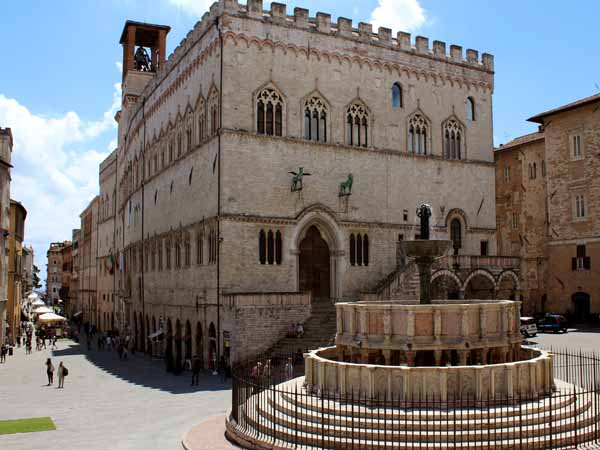
Discover Bettona, Assisi and Perugia as hilltop towns, art, olive oil and chocolate reveal the heart of Umbria’s timeless charm. Starting from $998 per person.
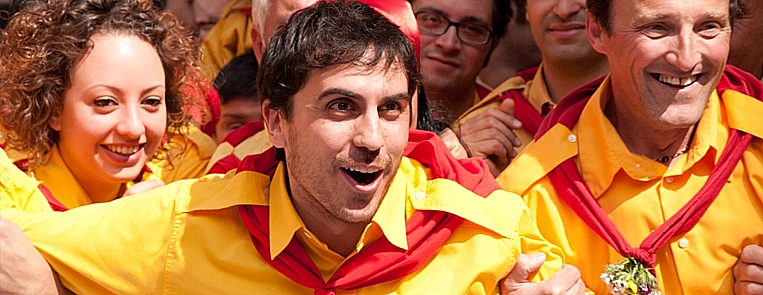
This short tour is dedicated to discovering the rustic beauty of this marvelous region full of cultural and natural richness waiting to be explored.
Perugia is famous for torta al testo flatbread filled with sausage and greens, hand-rolled strangozzi and umbricelli pasta with black truffle, spit-roasted porchetta, the cured meats of the Umbrian norcineria tradition, and above all its chocolate, celebrated each October at the Eurochocolate festival.
Torta al testo is Perugia’s beloved flatbread, named for the flat stone or iron disc it is cooked on, split warm and filled with local sausage, bitter greens, prosciutto, or soft cheese. It descends from Umbria’s ancient farmhouse kitchens, and Trips 2 Italy arranges hands-on sessions where travelers cook it on the testo themselves.
Essentially yes. The prized black winter truffle peaks from late autumn into early spring, and summer varieties keep Umbrian kitchens supplied in the warm months, shaved over pasta and folded into eggs at everyday prices of generosity rare elsewhere in Italy. We arrange truffle hunts with local hunters and their dogs, followed by lunches built on the morning’s find.
Pour the local classics: Montefalco Sagrantino for a powerful native red, Torgiano’s celebrated Riserva reds from minutes outside the city, Montefalco Rosso for the daily table, and Grechetto or Trasimeno whites with lighter dishes. Trips 2 Italy arranges private tastings at family estates where the winemaker leads the cellar visit.
Yes. A confectionery workshop founded here in 1907 grew into one of the world’s famous chocolate houses, the beloved hazelnut chocolate with its love notes was invented here in the 1920s, and each October the Eurochocolate festival fills the historic center. Workshops with master chocolatiers make the tradition a hands-on experience.
Absolutely. We design complete Umbrian food and wine journeys from Perugia: truffle hunts, farmhouse cooking sessions, chocolate workshops, olive mill visits during the November harvest, and estate tastings in Torgiano and Montefalco, all sequenced with private drivers and composed entirely around your tastes.