Sicily Travel Guide

HOME » POPULAR ITALIAN DESTINATIONS » ITALIAN TRAVEL GUIDES BY REGION » SICILY TRAVEL GUIDE

Sicily Travel Guide        Culture        History        Food and Wine        Things to Do        Plan My Trip

About this guide: This Sicily travel guide was written by the Italian-born travel specialists at Trips 2 Italy, a custom tour operator that has designed hand-crafted Italian vacations since 2003. Every recommendation below reflects the same first-hand knowledge our team draws on when we build a private Sicily itinerary around a traveler’s interests, dates, and pace. Read it for your research, then let us translate it into a trip designed entirely around you.

What Makes Sicily Unlike Anywhere Else in Italy?

Sicily is the Mediterranean’s great crossroads, an island where Greek temples stand more complete than in Greece, Norman cathedrals glow with Byzantine gold, and Arab flavors still season the daily table. Every civilization that shaped the Mediterranean landed here, built here, and left something behind, layering three thousand years of history onto a single island that remains proudly, unmistakably itself.

The scale of what survives astonishes first-time visitors. The Valley of the Temples at Agrigento preserves one of the finest ensembles of Greek architecture in existence, Taormina’s ancient theater frames Mount Etna through its broken scaena, and Palermo’s Palatine Chapel wraps visitors in twelfth-century mosaics that have never dimmed. Around these landmarks flows an island life of markets, festivals, and fishing harbors that never performs for anyone.

Sicily rewards travelers who come with curiosity: lovers of antiquity tracing the Greek and Roman centuries, food travelers following the island’s celebrated street food and pastry traditions, and couples drawn to coastal towns where the evening passeggiata still ends in a piazza. Our specialists have designed all of these journeys many times, and this guide distills what two decades of planning Sicilian itineraries has taught us.

Use it to shape your thinking, then let us shape the trip. Every Sicily vacation we design is composed from what you tell us, hand selected experience by experience, never assembled from a predefined package.

What Is the Geography and Climate of Sicily?

Sicily is the largest island in the Mediterranean, nearly 10,000 square miles of mountain, coast, and cultivated interior separated from the Italian mainland by the narrow Strait of Messina. Three seas meet at its shores: the Tyrrhenian along the north coast of Palermo and Cefalu, the Ionian along the east from Messina to Syracuse, and the open Mediterranean washing the southern beaches below Agrigento.

Mount Etna dominates the east, the tallest active volcano in Europe at roughly 11,000 feet, a UNESCO World Heritage Site whose dark slopes carry vineyards, orchards, and forests up toward the summit craters. The interior rolls through wheat country and hill towns, the north keeps the wilder Madonie and Nebrodi mountains, and smaller archipelagos, the volcanic Aeolian Islands foremost among them, scatter off the coasts like satellites.

The climate is generously Mediterranean: long, hot, dry summers, mild winters when citrus ripens across the island, and springs that arrive early and stay long. Almond blossom can open in February, wildflowers carpet the temple sites in March and April, and the sea stays warm for swimming well into October. Few places in Europe offer so wide a travel season, and each part of it shows the island in a different light.

These geographies sit closer together than travelers expect. A single day can begin among Etna’s black terraces and end with a swim on the Ionian coast, and the drive from Palermo’s markets to the lonely temple of Segesta takes under an hour. When we design a Sicilian route, we treat the island’s variety as its greatest asset, pairing each city base with the countryside and coastline around it so that mountains, ruins, vineyards, and beaches take their turns without a wasted mile.

When Is the Best Time of Year to Visit Sicily?

Spring and autumn are the connoisseur’s seasons. From March through May the island is green in a way summer visitors never see, temperatures suit long days among ruins and hill towns, and Easter fills towns like Trapani and Enna with processions that have run for centuries. September and October answer with the grape harvest on Etna and across the west, warm seas, and golden light on the baroque stone of the southeast.

Summer belongs to the coast and the festival calendar: open-air performances in Taormina’s ancient theater, Palermo’s celebration of Santa Rosalia in July, and long beach days from Mondello to the Aeolian Islands. It is hot, particularly inland, which is why we build summer itineraries around coastal bases, morning sightseeing, and unhurried afternoons. Winter offers the island at its calmest, with mild days, empty temples, citrus season, and Catania’s enormous festival of Sant’Agata each February.

When we plan a Sicilian itinerary, your dates become an instrument. We time temple visits to the soft hours, align wine country days with the working year, and reserve festival experiences months ahead. The season you travel should shape the trip you take, and designing that alignment is precisely our work.

Two practical notes shape our planning. The island’s marquee sites are open-air, so in the warm months we schedule temples and archaeological parks for mornings and late afternoons, saving the middle hours for palaces, museums, and long lunches. And because Sicily’s festivals move entire cities, we always check your dates against the calendar before fixing the route, sometimes to place you at the heart of a celebration, sometimes to route you gracefully around one.

How Many Days Should I Spend in Sicily?

Sicily is a country-sized destination, and it deserves a week at minimum. A first meaningful visit wants seven to ten days, usually composed as two bases: one in the west for Palermo, Monreale, and the Greek sites of Segesta and Agrigento, and one in the east for Taormina, Mount Etna, Syracuse, and the baroque towns of the Val di Noto. Trying to see the island from a single base spends the trip in transit.

With ten days to two weeks, Sicily opens generously: the salt pans and medieval hill town of Erice in the far west, the mosaics of the Villa Romana del Casale in the interior, fishing villages like Marzamemi in the southeast, and a leisurely pace that leaves room for the market mornings and long lunches that are the island’s true luxury. An Aeolian Islands extension adds a different Sicily entirely.

Because every Trips 2 Italy itinerary is built by hand, we weigh your interests against the island’s distances and give Sicily the space it deserves rather than the space a standard package allows. The most common note we receive from returning travelers is that they wish they had given the island more days, and we plan accordingly from the start.

For travelers with less than a week, we design honestly: an eastern itinerary of Taormina, Etna, Syracuse, and the Val di Noto, or a western one of Palermo, Monreale, Cefalu, and Agrigento, each complete in itself and each a reason to return. What we counsel against is the sprint that touches both coasts in five days, a route that spends its hours on the road and its evenings recovering from them.

Which Cities and Towns Should Anchor Your Sicilian Itinerary?

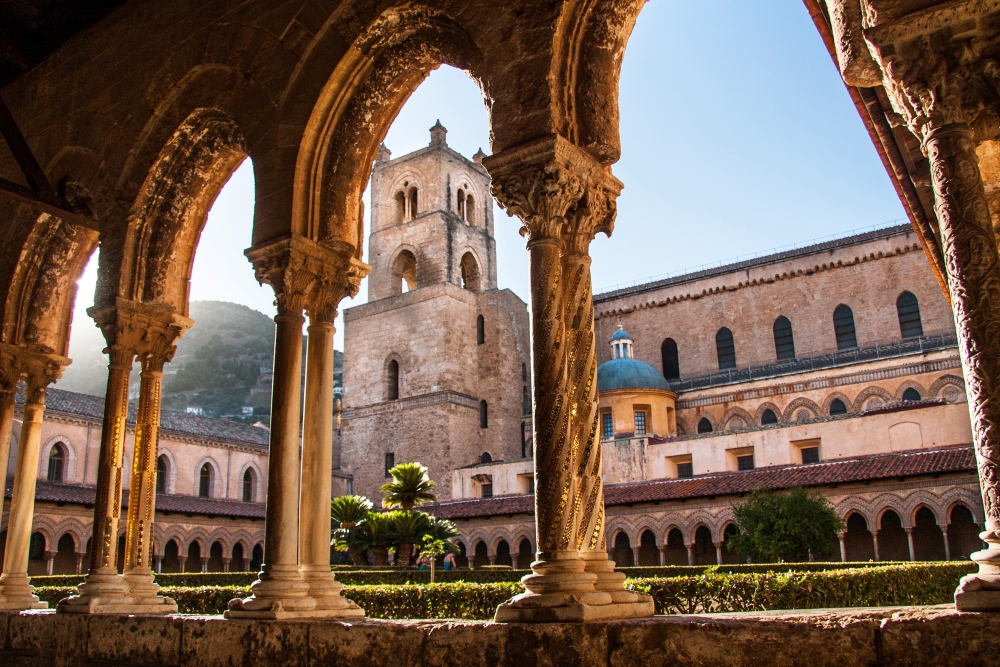
Palermo anchors the west, a capital of layered splendor where Arab-Norman palaces and golden mosaics stand minutes from some of the most vivid street markets in Europe. Its cathedral, the Palatine Chapel, and the mosaic mountain-town of Monreale above the city form one of Italy’s great artistic ensembles, and its opera house, the Teatro Massimo, is the largest in the country.

The east answers with Taormina, the elegant terrace town suspended between its Greek theater and the sea, and Syracuse, once the mightiest Greek city in the world, whose island heart of Ortigia is among the most beautiful urban spaces in Italy. Catania, rebuilt in dark lava stone beneath Etna, brings baroque energy and a celebrated fish market, while Cefalu compresses a Norman cathedral, a golden beach, and a fishing harbor into one postcard town.

Then comes the baroque southeast: Noto, rebuilt after the 1693 earthquake as a honey-colored stage set, Ragusa cascading over its two hills, Modica with its deep gorge and celebrated chocolate, and Scicli tucked into its ravine. Agrigento and its Valley of the Temples crown the south coast. The art of a Sicilian itinerary is selection and sequence, and composing that route around your interests is exactly what we do.

How Do You Get Around Sicily?

Sicily’s treasures are scattered across a large island, and how you move between them shapes the whole trip. For most itineraries we arrange private drivers who know the roads between temple sites, hill towns, and wine estates, turning transfer days into scenic drives with exactly the right stops: a viewpoint over the Scala dei Turchi, a granita pause in a village bar, an unplanned photograph among the olive groves.

Within the historic centers, everything worth seeing is reached on foot. Palermo’s markets and palaces, Ortigia’s lanes, Taormina’s corso, and Noto’s grand boulevard were all built for walking, and we sequence each day so the car delivers you to the edge of the old town and the city takes over from there. For the Aeolian Islands, we arrange hydrofoil connections and private boats so the archipelago feels effortless.

Every transfer in a Trips 2 Italy itinerary is arranged in advance and supported around the clock, from the moment you land in Palermo or Catania to the morning you depart. On an island this size, thoughtful logistics are not a detail. They are the difference between seeing Sicily and being carried through it.

Arrivals and departures deserve the same care. Sicily is served by two principal international airports, Palermo in the west and Catania in the east, and we routinely design routes that land at one and depart from the other, so the itinerary flows across the island without retracing itself. Ferries and hydrofoils extend the trip to the smaller islands, and where a crossing saves hours, we build it in seamlessly.

How Do We Weave Sicily Into a Complete Italian Itinerary?

Sicily rewards travelers who treat it as a destination in its own right, a full week or more, rather than an add-on. It pairs naturally with Rome, a short flight away, for a journey that sets the classical world beside the baroque south, and with the Amalfi Coast or Puglia for travelers composing a southern Italian arc. Many of our returning guests, having seen the north on earlier trips, now give Sicily an entire vacation.

The occasion shapes the composition. For a honeymoon, we balance Taormina’s terraces and coastal evenings as part of an Italian honeymoon built around the two of you. For travelers who plan around the table, the island’s markets, pastry traditions, and volcanic vineyards can carry an entire wine and culinary journey. And for those composing something larger, Sicily becomes a movement in a custom trip to Italy designed entirely from what you tell us.

This guide is one of five we have written on the island. Continue with our Sicily culture guide, Sicily history guide, Sicily food and wine guide, and Sicily things to do guide, or widen the lens with our complete Italy travel guide.

Ready to Begin Planning Your Sicily Vacation?

Sicily deserves more than a template. Since 2003, Trips 2 Italy has designed private Italian vacations one traveler at a time, hand selecting every experience based on what you tell us rather than fitting you into a predefined package. Our Italian-born team plans Sicily with the knowledge of people who call Italy home, from the Greek temples of Agrigento to the vineyards climbing Mount Etna, and we remain at your side throughout your trip with 24/7 assistance. Tell us how you imagine Sicily, and we will craft the itinerary that matches it.

Explore Our Sicily Vacation Itineraries

Frequently Asked Questions About Traveling to Sicily

Spring and autumn are ideal: March through May brings wildflowers, comfortable temperatures for the temple sites, and Easter processions, while September and October offer the grape harvest, warm seas, and golden light. Summer suits beach and festival travelers, and winter shows the island mild, quiet, and fragrant with citrus. The specialists at Trips 2 Italy align your dates with what the island does best in that season.

Seven to ten days allows a meaningful first visit, usually split between a western base for Palermo and Agrigento and an eastern base for Taormina, Etna, and Syracuse. Two weeks opens the salt pans of the west, the interior mosaics, and the Aeolian Islands. Because we build every itinerary by hand, the right length depends on your interests and pace.

Sicily is the largest island in the Mediterranean, and most itineraries work best with two or three thoughtfully chosen bases rather than one. A western base and an eastern base keep daily drives short and let each region unfold at walking pace. We sequence the bases so the island builds logically from one chapter to the next.

We recommend a private driver rather than self-driving. Sicilian distances are longer than they look, city driving is demanding, and a driver turns transfer days into scenic drives with well-chosen stops while every wine tasting can be enjoyed. Trips 2 Italy arranges every transfer in advance, supported around the clock.

They are different islands in spirit. The west holds Palermo’s Arab-Norman splendor, the great markets, Segesta, Erice, and the salt pans; the east holds Taormina, Mount Etna, Syracuse, and the baroque towns of the Val di Noto. A first full visit should include both, and we compose the balance around what draws you most.

Wonderfully so. Taormina’s terraces above the Ionian Sea, private boat days along the coast, candlelit dinners in baroque towns, and vineyard evenings on Etna’s slopes make the island one of Italy’s most romantic settings. Trips 2 Italy designs Sicilian honeymoons around the couple, hand selecting every experience from what you tell us.