Sicily History Guide

HOME » POPULAR ITALIAN DESTINATIONS » ITALIAN TRAVEL GUIDES BY REGION » SICILY TRAVEL GUIDE » SICILY HISTORY GUIDE

Sicily Travel Guide        Culture        History        Food and Wine        Things to Do        Plan My Trip

About this guide: This guide to the history of Sicily was written by the Italian-born travel specialists at Trips 2 Italy, a custom tour operator that has designed hand-crafted Italian vacations since 2003. Every recommendation below reflects the same first-hand knowledge our team draws on when we build a private Sicily itinerary around a traveler’s interests, dates, and pace. Read it for your research, then let us translate it into a trip designed entirely around you.

How Did Sicily's Story Begin?

Long before the Greeks arrived, Sicily belonged to three native peoples: the Sicani in the center, the Elymians in the west, and the Sicels in the east, who gave the island its name. Phoenician traders planted harbors at Palermo and on the western islets, tying Sicily into a Mediterranean network that stretched to the Levant, and the island’s position at the center of that sea determined its fate for the next three thousand years.

Greek colonization began in 734 BC with Naxos on the east coast, followed within a year by Syracuse, and within a few generations the island’s eastern and southern shores gleamed with Greek cities: Catania, Gela, Akragas, Selinus, Messina. Sicily became the richest part of the Greek world beyond Greece itself, so prosperous that the cities of the island could raise temples larger than most in the motherland.

The deep past remains wonderfully tangible. The Elymian hill sanctuary of Segesta preserves a Doric temple standing alone in open country, among the most hauntingly sited buildings in Europe, and the western salt lagoons still frame the Phoenician island town of Mozia. Walking these places with a guide who can people them again is one of the most atmospheric historical experiences in Italy.

What Was Greek Sicily Like at Its Height?

For three centuries, Sicily stood at the center of the Greek world. Syracuse grew into the largest city of the Greeks, a power that defeated Athens’ greatest armada in 413 BC in one of antiquity’s decisive campaigns, and its court drew poets and philosophers, Plato among them. Akragas, modern Agrigento, raised the ridge of temples that still crowns its valley, described by the poet Pindar as the most beautiful city of mortals.

The achievements were not only military. Syracuse produced Archimedes, the greatest scientist of antiquity, who died when Rome finally took the city in 212 BC. Sicilian Greeks built theaters that still hold audiences at Syracuse and Segesta, minted coins collectors regard as the finest ever struck, and farmed a countryside so fertile that the island became a byword for abundance.

That world is unusually visible today. The Valley of the Temples preserves the Temple of Concordia, one of the best-preserved Doric temples in existence, alongside its ruined siblings, and the archaeological park of Syracuse keeps the great theater, the quarries that imprisoned Athenian captives, and the cave called the Ear of Dionysius. We sequence these sites with expert storytellers so the Greek centuries build into a narrative rather than a checklist of stones.

Greek Sicily was also a world of outsized personalities: tyrants like Gelon and Hieron whose victories were sung by Pindar, a Syracusan court where Aeschylus premiered his plays, and cities that fought one another as fiercely as any foreign foe. Their rivalries, alliances, and betrayals read like a rehearsal for Renaissance Italy, and a good storyteller turns these ruins into a theater of characters, which is why we choose guides for narrative gift as much as scholarship.

How Did Rome Shape Sicily?

Sicily was the prize of the First Punic War, and in 241 BC it became Rome’s first province, the experiment on which the empire’s provincial system was modeled. For the next six centuries the island served as Rome’s granary, its wheat fields feeding the capital, its harbors busy with the grain fleets, and its interior organized into the great estates that would shape Sicilian landholding for two thousand years.

Roman Sicily’s most spectacular survival lies in the interior near Piazza Armerina. The Villa Romana del Casale, a hunting villa of the early fourth century, preserves the richest ensemble of Roman floor mosaics in the world: chariot races, African beasts driven aboard ships for the arena, mythological scenes, and the famous athletic girls exercising in costumes that startle every visitor. It is a UNESCO World Heritage Site and one of the island’s essential half days.

The Roman centuries also carried Sicily into the Christian era, leaving catacombs beneath Syracuse second only to Rome’s and the memory of early martyrs, Agatha of Catania and Lucy of Syracuse, whose festivals still stop their cities. When the Western empire fell, the island passed to Byzantium, keeping its Greek tongue and its place at the center of the Mediterranean world.

What Did the Arabs and Normans Leave Behind?

Arab rule, beginning in the ninth century, transformed the island. Palermo became one of the great cities of the Islamic world, celebrated for its hundreds of mosques, gardens, and markets, and the new rulers revolutionized agriculture with citrus, sugarcane, rice, pistachios, and irrigation systems whose vocabulary survives in Sicilian dialect. Much of what the world now considers essentially Sicilian, from lemon groves to granita’s ancestry, entered the island in these centuries.

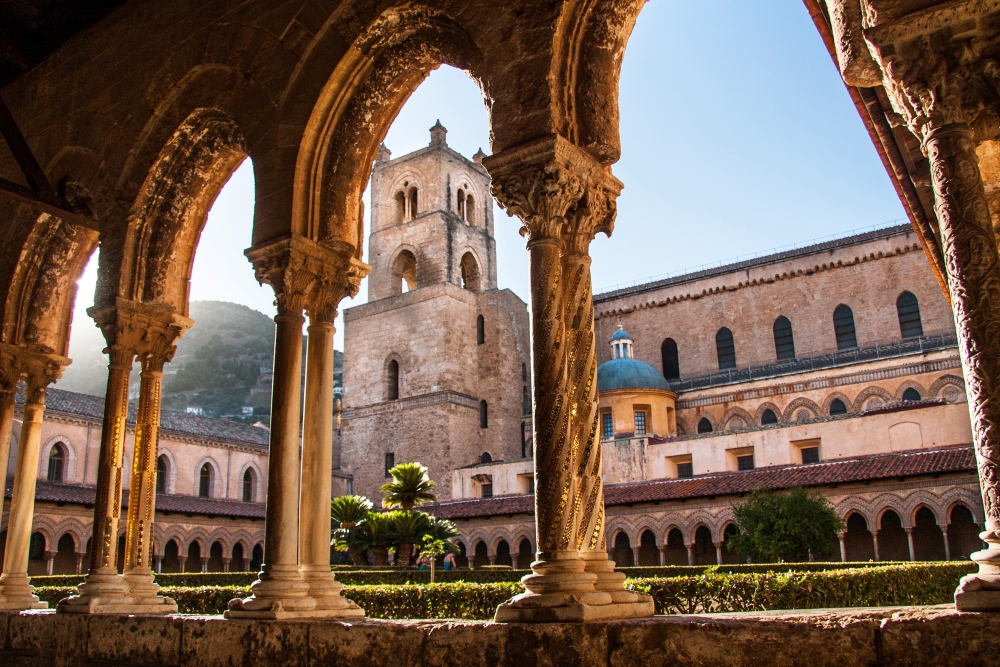
The Norman conquest, completed by 1091, produced one of history’s most remarkable kingdoms. Roger II, crowned in 1130, ruled a court where Greek, Arab, and Latin officials worked side by side, and the art of his age fused their traditions: Byzantine mosaics, Arab ceilings and geometry, and Norman architecture joined in the Palatine Chapel, the cathedrals of Cefalu and Monreale, and the domed red churches of Palermo, an ensemble UNESCO recognizes as unique in the world.

The line culminated in Frederick II, Holy Roman Emperor and King of Sicily, the stupor mundi or wonder of the world, whose thirteenth-century court in Palermo produced the first school of poetry in the Italian language, a generation before Dante. Sicily can fairly claim to be the cradle of Italian literature, and walking the Norman palaces with a historian who can conjure that court is among the island’s great experiences.

How Did the Baroque Southeast Rise From Catastrophe?

On January 11, 1693, one of the most powerful earthquakes in Italian history destroyed the cities of southeastern Sicily. Entire towns, Noto and Ragusa and Modica among them, were leveled in minutes, with tens of thousands lost. What followed was one of the most extraordinary acts of urban reinvention Europe has seen: the shattered towns rebuilt themselves, some on new sites, all in the exuberant late baroque style that has defined the region ever since.

Noto was redrawn from nothing as an ideal city of honey-colored limestone, its boulevard rising through churches and palaces composed like theater. Ragusa split in two, the aristocracy rebuilding old Ibla on its ridge while a new upper town rose beside it, and Modica stacked its churches up the walls of its gorge. Eight towns of the Val di Noto are inscribed together as a UNESCO World Heritage Site for the audacity and coherence of their rebirth.

The baroque southeast is best experienced slowly: facades that change character with the angle of the sun, balconies riding on carved monsters and musicians, and evening light that turns whole streets to gold. We design Val di Noto days around that rhythm, with local experts who read the stagecraft of the rebuilding, unhurried lunches, and time to simply be in the towns.

The rebuilding also reveals the society that carried it out: aristocrats competing facade by facade, church and city councils debating entirely new street plans, and master builders like Rosario Gagliardi of Noto, whose churches ride their staircases like ships on a wave. Guided well, the Val di Noto becomes a lesson in how a civilization answers catastrophe, which is why we pair these towns with storytellers rather than mere transportation.

How Did Sicily Become Part of Modern Italy?

After the medieval kingdom, Sicily passed through five centuries of rule from elsewhere: Angevin French, expelled in the bloody uprising of 1282 known as the Sicilian Vespers, then Aragonese and Spanish crowns, and finally the Bourbons of Naples, under whom the island formed half of the Kingdom of the Two Sicilies. The long viceregal centuries built palaces and processions but concentrated land and power, and the island’s peasantry endured hardships that would later drive one of history’s great emigrations.

Modern Italy began, in a real sense, in Sicily. In May 1860, Giuseppe Garibaldi landed at Marsala with his thousand red-shirted volunteers, took the island in a lightning campaign, and carried the momentum that unified the peninsula within the year. The decades that followed brought both integration and disappointment, and millions of Sicilians sailed for the Americas, carrying the island’s names, foods, and loyalties across the world.

The twentieth century brought the Allied landings of 1943, when Sicily became the first piece of occupied Europe to be retaken, and in 1946 the island received the special autonomous status it holds within the Italian Republic to this day. Modern Sicily has invested deeply in its inheritance, and its story, told on the ground, makes every ruin and palace legible.

Emigration gave the island a second geography. Between 1880 and 1920, millions of Sicilians crossed to the Americas, and their descendants return today as travelers seeking grandparents’ villages, parish records, and family tables. Heritage journeys are among the most moving itineraries we design, and our Italian-born team handles the research and the local introductions that turn a surname into a homecoming.

Which Places Bring Sicilian History to Life Today?

The island is its own museum, and the great sites divide naturally by era. For the Greeks: the Valley of the Temples at Agrigento, the theater and quarries of Syracuse, and the lonely temple of Segesta. For Rome: the mosaics of the Villa Romana del Casale. For the Arab-Norman golden age: the Palatine Chapel, Monreale, and Cefalu. For the baroque rebirth: Noto, Ragusa, Modica, and Scicli, with Catania’s lava-stone grandeur alongside.

The museums complete the story. Palermo’s archaeological museum holds the sculpted metopes of Selinunte, Syracuse’s museum is among the finest archaeological collections in Europe, and Agrigento’s museum sets the temple builders’ world in context. Palazzo dei Normanni in Palermo, still a working seat of government, lets travelers stand in the very rooms where Roger II’s kingdom was administered.

Timing transforms these places. The Valley of the Temples opens for evening visits in summer, when the stones hold the day’s gold light; the Villa Romana’s mosaics are best before the midday arrivals; and Palermo’s chapels reward the first quiet hour of the morning. We build history days around these windows, because the same monument met at the right hour becomes a different experience.

Sequence matters as much as selection. We compose history-focused itineraries so the eras build chronologically where the traveler’s interests allow, from Segesta’s silent temple to Noto’s baroque stage, with historians chosen for their narrative gift. These journeys form part of our cultural tours of Italy, and travelers consistently tell us the storytelling, more than any single site, is what made Sicily’s three thousand years feel like one story.

Ready to Begin Planning Your Sicily Vacation?

Sicily deserves more than a template. Since 2003, Trips 2 Italy has designed private Italian vacations one traveler at a time, hand selecting every experience based on what you tell us rather than fitting you into a predefined package. Our Italian-born team plans Sicily with the knowledge of people who call Italy home, from the Greek temples of Agrigento to the vineyards climbing Mount Etna, and we remain at your side throughout your trip with 24/7 assistance. Tell us how you imagine Sicily, and we will craft the itinerary that matches it.

Explore Our Sicily Vacation Itineraries

Frequently Asked Questions About the History of Sicily

Sicily was among the richest parts of the ancient Greek world, colonized from 734 BC, and its cities raised temples on a scale that rivaled and sometimes exceeded Greece itself. The soft limestone and the island’s later history left ensembles like the Valley of the Temples at Agrigento and Segesta’s lone Doric temple remarkably intact.

The Valley of the Temples is the archaeological park of ancient Akragas at Agrigento, a ridge carrying a procession of Doric temples that includes the Temple of Concordia, one of the best-preserved Greek temples in existence. It is a UNESCO World Heritage Site, and Trips 2 Italy arranges visits with expert guides timed for the soft morning or golden evening hours.

Norman knights conquered Sicily from its Arab rulers in the eleventh century, and their kings, above all Roger II, created a brilliantly multicultural kingdom where Greek, Arab, and Latin traditions fused. Their legacy is the Arab-Norman ensemble of Palermo, Cefalu, and Monreale, whose golden mosaics are among the supreme artworks of the Middle Ages.

A catastrophic earthquake leveled the cities of southeastern Sicily in January 1693, destroying Noto, Ragusa, Modica, and their neighbors. The towns rebuilt in flamboyant late baroque style, and eight of them are now inscribed together as the UNESCO-listed late baroque towns of the Val di Noto, one of Europe’s most remarkable urban rebirths.

The essential Roman site is the Villa Romana del Casale near Piazza Armerina, whose fourth-century floor mosaics, from chariot races to the famous athletic girls, are the finest in the world. Syracuse adds a Roman amphitheater and vast catacombs, and museum collections across the island fill in six centuries of Roman rule.

Sequence and storytelling. Trips 2 Italy composes history-focused itineraries so the eras build in order, pairs each site with guides chosen for narrative gift rather than recitation, and balances ruins with markets, tables, and coastal evenings so the past arrives as a living story woven through the trip.