Trieste Travel Guide

HOME » POPULAR ITALIAN DESTINATIONS » TRIESTE TRAVEL GUIDE

Trieste Travel Guide        Culture        History        Food and Wine        Things to Do        Plan My Trip

About this guide: This Trieste travel guide was written by the Italian-born travel specialists at Trips 2 Italy, a custom tour operator that has designed hand-crafted Italian vacations since 2003. Every recommendation below reflects the same first-hand knowledge our team draws on when we build a private Trieste itinerary around a traveler’s interests, dates, and pace. Read it for your research, then let us translate it into a trip designed entirely around you.

What Makes Trieste One of Italy's Most Distinctive Cities?

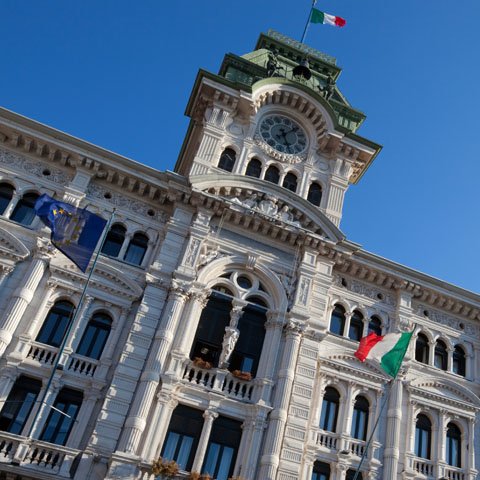
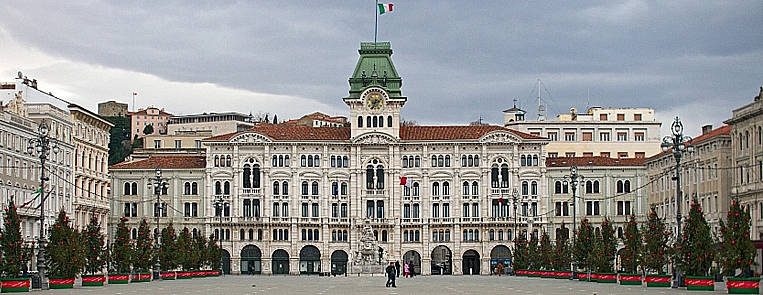
Trieste opens onto the Adriatic like no other city in Italy. Its centerpiece, Piazza Unita d’Italia, is the largest sea-facing square in Europe, a grand rectangle of Habsburg-era palaces with one entire side left open to the water. Stand there at dusk, with the lamps coming on and the gulf turning violet, and you understand immediately that this is an Italian city with a Central European soul, shaped by emperors in Vienna as much as by the sea at its feet.

The city occupies the easternmost corner of the Friuli Venezia Giulia region, pressed onto a narrow shelf of coastline between the Adriatic and the limestone heights of the Carso plateau, with Slovenia beginning just beyond the last suburbs. For nearly two centuries it served as the great seaport of the Austro-Hungarian Empire, and that inheritance survives in its neoclassical avenues, its grand cafes, and a cosmopolitan temperament unlike anywhere else in the country.

Trieste is also a city of writers and of coffee. James Joyce lived here for over a decade, Italo Svevo and Umberto Saba called it home, and Rilke composed his Duino Elegies on the cliffs just up the coast. The port still handles a significant share of the coffee entering the Mediterranean, and the historic cafes where the literary circle once argued remain in daily use, chandeliers and all.

Our specialists have designed Trieste itineraries for travelers drawn by literature, by Habsburg history, by wine cellars carved into the Carso, and by the simple pleasure of a great port city that receives visitors graciously. This guide distills that experience, and every trip we build from it is composed by hand around what you tell us.

What Is the Geography and Setting of Trieste?

Trieste sits at the head of its own gulf, at the northeastern crown of the Adriatic, on a strip of coast so slender that the city has nowhere to grow but upward. Behind the waterfront, streets climb quickly into hills, and above them rises the Carso, the limestone karst plateau that gave the geological term to the world, a landscape of sinkholes, caves, and wind-sculpted oaks stretching into Slovenia.

That geography produces striking contrasts within a twenty-minute drive. The white castle of Miramare gleams on its promontory above a protected marine reserve, the cliffs of Duino drop sheer to the sea along the Rilke path, and the Val Rosandra cuts a wild limestone gorge just behind the city. Beneath the plateau lies the Grotta Gigante, one of the largest show caves on earth, its single chamber tall enough to hold a cathedral.

The climate is Mediterranean at the shore and more continental on the heights, with warm summers made for the long bathing season along the Barcola promenade. Trieste’s most famous weather is the Bora, the northeasterly wind that funnels down from the plateau in dramatic gusts, scouring the sky to a rare clarity. Locals speak of it with affection, and the railings along certain streets, installed for windy days, are part of the city’s folklore.

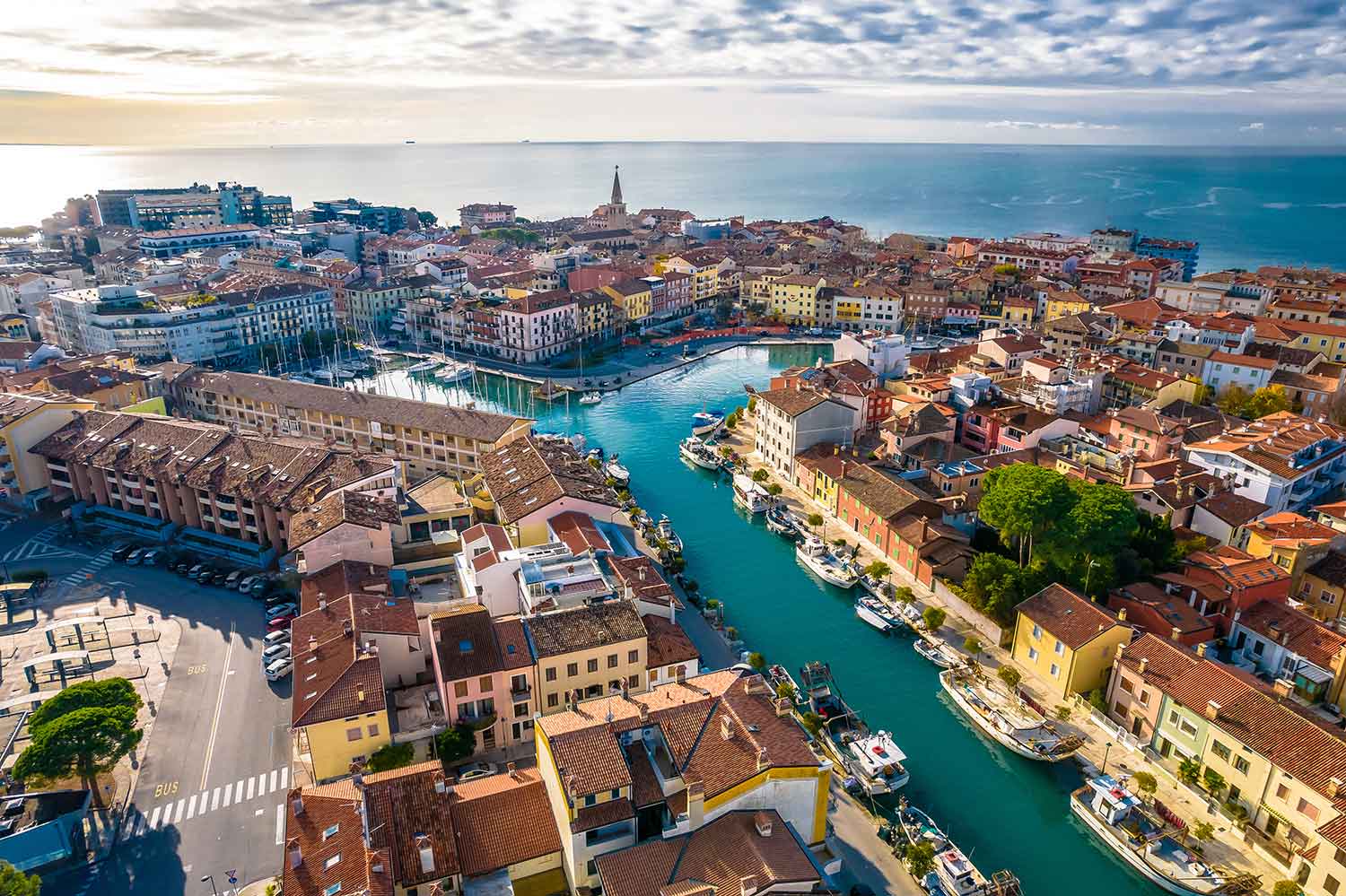
The setting also explains the city’s role. Trieste has always been the point where Central Europe reaches the sea, the natural harbor of Vienna, Prague, and Budapest, and its coastline reflects that history in miniature: the fishing harbor of Muggia with its Venetian air to the south, the working port and the grand urban seafront in the center, and the villa-dotted riviera running north past Barcola and Miramare to the cliffs of Duino. Understanding this geography is the first step in planning the city well, and it is where every itinerary we design begins.

When Is the Best Time of Year to Visit Trieste?

October brings the city’s signature spectacle. On the second Sunday of the month the Barcolana regatta fills the gulf with thousands of sailboats, one of the largest gatherings of sail on the planet, and the whole waterfront becomes a festival. The surrounding weeks offer mild days, the first osmize of the season opening on the Carso, and the autumn light that photographers prize on the great square.

Late spring and summer belong to the sea. From May into September the Barcola promenade fills with swimmers, the gardens of Miramare are at their fullest, and evenings stretch long over the water. April and May are ideal for walking the Rilke path and the karst trails, when the plateau is green and the sumac has not yet turned its famous autumn red.

Winter has its own character: the historic cafes at their most atmospheric, the opera season at the Teatro Verdi in full voice, and occasionally the Bora sweeping the streets clear and polishing the sky. When we plan your itinerary, your dates become an instrument. We align a Carso wine afternoon, a Miramare morning, or a Barcolana week with what the city is actually doing, and we tell you honestly what your chosen season will feel like.

How Many Days Should I Spend in Trieste?

Two full days cover the essential city in comfort: Piazza Unita and the waterfront, the Canal Grande and the Borgo Teresiano, San Giusto hill with its cathedral and castle, the Roman theatre, and unhurried hours in the cafes that define the local rhythm. Trieste’s center is compact, and its pleasures reward a measured pace rather than a checklist.

A third day transforms the visit. Morning at Miramare Castle, an afternoon on the Carso tasting Terrano and Vitovska in a family cellar, or the clifftop walk from Sistiana to Duino Castle each add a dimension the city alone cannot supply. A fourth day opens the Roman mosaics of Aquileia or the vineyards around Gorizia, both within easy reach.

Trieste also serves beautifully as a base of four or five nights for exploring Friuli Venezia Giulia as a whole, with the region’s wine country, mountain foothills, and coastal lagoons all accessible. Because every Trips 2 Italy itinerary is designed by hand, we weigh Trieste against the other chapters of your Italian journey and give it the nights that serve the whole trip best.

The city particularly suits travelers who prefer depth to haste. Its pleasures are cumulative rather than monumental: the second morning in a cafe means being greeted as a regular, the second evening on the square reveals details the first one missed, and the pace of the place rewards those who settle in. For that reason we rarely recommend Trieste as a rushed stop between trains; given proper nights, it repays them more generously than almost any city its size in Italy.

Which Areas of Trieste Should You Know?

The Borgo Teresiano is the elegant heart, the grid of neoclassical streets that Empress Maria Theresa laid out in the eighteenth century over former salt pans. Its centerpiece is the Canal Grande, a short canal dug in the 1750s so merchant ships could unload in the middle of the city, now lined with cafe terraces and closed by the columned facade of the church of Sant’Antonio Taumaturgo, with the blue domes of the Serbian Orthodox church of San Spiridione rising beside it.

The Citta Vecchia, the old town, climbs from the great square toward San Giusto hill in a tangle of medieval lanes threaded around Roman remains, including the Arch of Riccardo, a city gate from the first century BC standing casually in a small piazza. At the top, the cathedral and castle of San Giusto share the hilltop with the ruins of the Roman forum and one of the finest panoramas on the Adriatic.

Along the water, the Molo Audace pier stretches into the gulf for the evening passeggiata, and northward the seafront road leads past the grand facades of the old shipping companies toward Barcola, the beloved local bathing promenade, and finally to Miramare on its point. Where you stay shapes the trip, and matching the quarter to the traveler is one of the first decisions we make together.

For most travelers we recommend sleeping within a short stroll of Piazza Unita, where the evening square becomes an extension of your sitting room and the cafes are at your door before breakfast. Couples celebrating an occasion often prefer rooms facing the water, where the gulf performs its long sunsets, while travelers planning several Carso and coastal days sometimes favor the quieter streets near the canal. These are exactly the judgments our specialists weigh when they compose a Trieste itinerary around your interests and pace.

How Do You Get Around Trieste?

On foot, for nearly everything central. The waterfront, the Borgo Teresiano, and the old town form a walkable whole, and the climb to San Giusto hill is short enough to take slowly, with coffee as the reward in either direction. Trieste is a city of boulevards and seafront promenades, made for walking in the grand Central European manner.

For everything beyond the center, we arrange private drivers and transfers. Miramare, the Grotta Gigante, the osmize of the Carso, and the Duino cliffs all sit a short drive away, and a driver turns a wine afternoon on the plateau into pure pleasure, since every glass of Terrano can be enjoyed while the karst roads become scenery. Excursions to Aquileia, Gorizia, or across the open border into Slovenia work the same way.

Arrivals are equally straightforward. Trieste has its own airport at Ronchi dei Legionari, about half an hour from the center, and Venice’s airport sits within comfortable reach for travelers combining the two cities, with direct rail service linking Trieste to Venice in around two hours. Every arrival, departure, and excursion in a Trips 2 Italy itinerary is arranged in advance and supported around the clock, so the first impression of your trip is a quiet car and a knowledgeable welcome.

How Do We Weave Trieste Into a Complete Italian Itinerary?

Trieste rewards travelers who have seen Italy’s famous stages and want a chapter with a different accent. Venice lies about two hours west by rail, which makes the pairing natural: the lagoon’s spectacle first, then the spacious Habsburg calm of the gulf. Within its own region, Trieste combines beautifully with the vineyards of the Collio, the mosaics of Aquileia, and the border town of Gorizia, and it opens easily into Slovenia for travelers curious to cross.

The occasion shapes the composition. Trieste’s grand cafes, sea views, and castle gardens make it a distinctive movement in an Italian honeymoon, while its osmize, seafood, and karst cellars anchor a wine and culinary journey through Italy’s most surprising food frontier. For those composing something larger, it becomes a chapter in a custom trip to Italy designed entirely from what you tell us.

This guide is one of five we have written on the city. Continue with our Trieste culture guide, Trieste history guide, Trieste food and wine guide, and Trieste things to do guide, or widen the lens with our Friuli Venezia Giulia travel guide to see the region around the city.

Ready to Begin Planning Your Trieste Vacation?

Trieste deserves more than a template. Since 2003, Trips 2 Italy has designed private Italian vacations one traveler at a time, hand selecting every experience based on what you tell us rather than fitting you into a predefined package. Our Italian-born team plans Trieste with the knowledge of people who call Italy home, from the great sea-facing square to the wine cellars of the Carso plateau, and we remain at your side throughout your trip with 24/7 assistance. Tell us how you imagine Trieste, and we will craft the itinerary that matches it.

Explore Our Trieste Vacation Itineraries

Frequently Asked Questions About Traveling to Trieste

Late spring through October is the classic window, with warm sea days along the Barcola promenade in summer and the spectacular Barcolana regatta filling the gulf on the second Sunday of October. Winter offers the historic cafes and opera season at their most atmospheric. The specialists at Trips 2 Italy align your dates with what the city does best in that season.

Two full days cover the historic center comfortably, including Piazza Unita d’Italia, the Canal Grande, and San Giusto hill. A third day adds Miramare Castle and a wine afternoon on the Carso plateau, and a fourth opens Aquileia or the Collio vineyards. Trieste also works beautifully as a multi-night base for Friuli Venezia Giulia.

Very much so. Trieste offers the largest sea-facing square in Europe, a fairy-tale castle at Miramare, a celebrated literary and cafe heritage, Roman ruins in the city center, and a wine and food culture found nowhere else in Italy. It rewards travelers seeking an Italian city with a genuinely different character.

About two hours by direct train or a similar time by road, which makes the two cities a natural pairing. Many of our travelers follow several days in Venice with the calmer, more spacious rhythm of Trieste, and we arrange every transfer and connection in advance so the journey between them is seamless.

No. The center is best explored on foot, and for Miramare, the Carso plateau, the Grotta Gigante, and the Duino cliffs we arrange private drivers, which lets every osmiza visit and wine tasting be enjoyed while the karst roads become scenery rather than navigation.

Yes. We build October itineraries around the Barcolana regatta, including well-placed viewpoints and gulf experiences, and we arrange Miramare Castle visits with expert guides who bring the story of Maximilian and Charlotte to life. Both are planned in advance as part of a custom itinerary designed around your dates.