Piedmont Travel Guide

HOME » POPULAR ITALIAN DESTINATIONS » ITALIAN TRAVEL GUIDES BY REGION » PIEDMONT TRAVEL GUIDE

Piedmont Travel Guide        Culture        History        Food and Wine        Things to Do        Plan My Trip

About this guide: This Piedmont travel guide was written by the Italian-born travel specialists at Trips 2 Italy, a custom tour operator that has designed hand-crafted Italian vacations since 2003. Every recommendation below reflects the same first-hand knowledge our team draws on when we build a private Piedmont itinerary around a traveler’s interests, dates, and pace. Read it for your research, then let us translate it into a trip designed entirely around you.

What Makes Piedmont Italy's Most Quietly Rewarding Region?

Piedmont means, quite literally, at the foot of the mountains, and the name explains everything about the region’s character. The Alps rise on three sides in a vast white amphitheater, and beneath them unrolls a countryside of vineyard ridges, hazelnut groves, rice plains, and castle-crowned hill towns that many travelers still discover with the astonishment of a secret kept in plain sight.

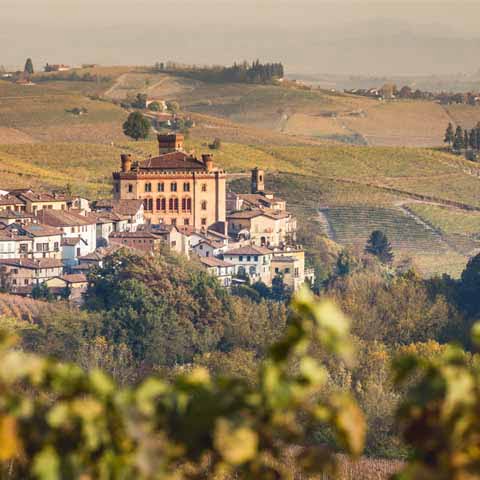
This is a region of refined, understated pleasures rather than loud ones. Turin carries the elegance of the royal House of Savoy in its arcaded boulevards and gilded cafes. The Langhe, Roero, and Monferrato hills, protected together as a UNESCO World Heritage vineyard landscape, produce Barolo and Barbaresco, two of the most admired red wines on earth. Alba yields the white truffle that draws connoisseurs across oceans every autumn, and Lake Maggiore scatters the Borromean Islands across its blue like a Baroque daydream.

Piedmont is also where modern Italy took shape. The Risorgimento was engineered here, Turin served as united Italy’s first capital, and the Slow Food movement was born in the small town of Bra, giving the world a philosophy the region had quietly practiced for centuries.

Our specialists have planned journeys through these hills for two decades, and this guide distills what that experience has taught us. Read it for your research, then let us compose a Piedmont itinerary hand selected around your interests, your dates, and your pace.

What Is the Geography and Climate of Piedmont?

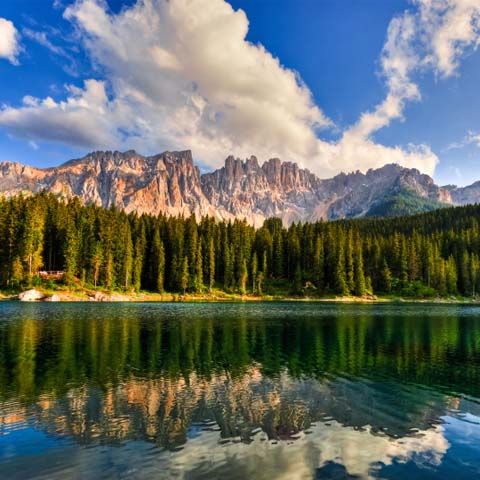
Piedmont is Italy’s second largest region, nearly 9,800 square miles held in the embrace of the Alps. Monviso, the pyramid peak that inspired a famous film studio logo and gives rise to the river Po, anchors the southwest, Gran Paradiso guards the northwest, and Monte Rosa closes the horizon toward Switzerland. From these heights the land steps down through alpine valleys and orchard foothills to the great plain of the Po, Italy’s longest river, which is born here and gathers the region’s waters as it sets off eastward.

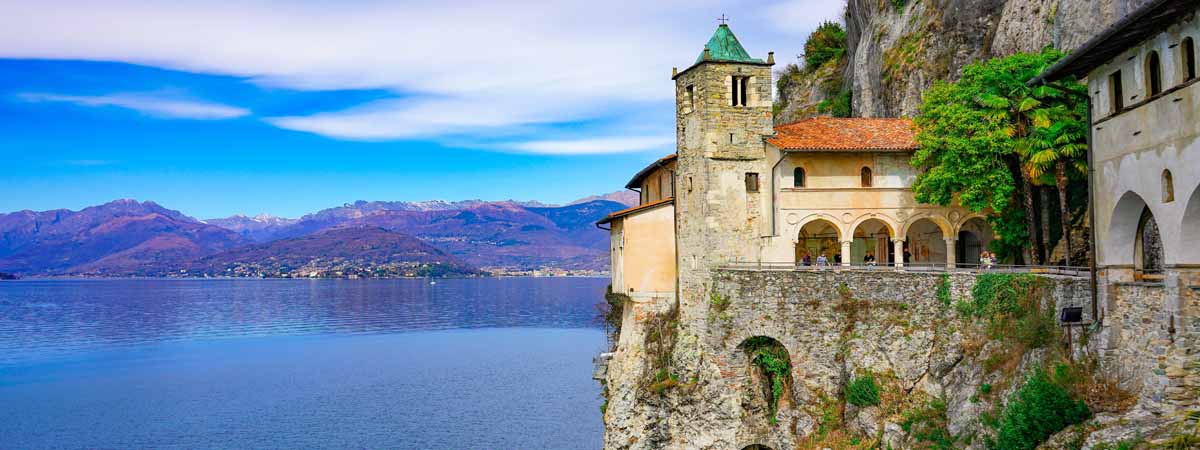
South of the Po rise the hills that made Piedmont famous at the table: the Langhe and Roero around Alba, and the Monferrato around Asti and Casale Monferrato, their slopes combed with Nebbiolo, Barbera, and Moscato vines. To the north, the plain around Vercelli and Novara floods each spring into Europe’s most important rice landscape, a shimmering checkerboard the Piedmontese call a sea of squares. On the northeastern edge, Lake Maggiore and little Lake Orta bring a Mediterranean softness of camellias and lemon trees to the foot of the mountains.

The climate is continental, moderated by altitude and water. Summers on the plain are warm and lively, winters bring reliable snow to the high valleys and a contemplative hush to the cities, and spring and autumn are long, luminous seasons that flatter both the vineyards and the lakes. Fog drifting through the autumn hills is not a flaw here but part of the region’s poetry, and the truffles beneath the oaks depend on it.

When Is the Best Time of Year to Visit Piedmont?

Autumn is Piedmont’s signature season, and for many travelers it is the finest few weeks anywhere in Italy. From late September the Nebbiolo harvest fills the Langhe with purposeful energy, the vineyards turn amber and rust, and from October into early December Alba celebrates its International White Truffle Fair while the fog that truffle hunters bless settles into the valleys. Cellars, kitchens, and hill towns all perform at their peak.

Spring answers with wisteria on castle walls, gardens waking on the Borromean Islands, and comfortable weather for exploring Turin’s museums and arcades. Summer belongs to the lakes and the high Alps, when Stresa’s waterfront glows and mountain valleys such as those of Gran Paradiso National Park open their trails. Winter offers serious skiing in resorts like Sestriere, host of Olympic competition in 2006, and gives Turin’s cafes, chocolate shops, and galleries their most atmospheric hours.

The shoulder weeks deserve a special word. Late May and June bring long evenings, flooded rice paddies mirroring the sky around Vercelli, and the first warmth on the lake terraces, while early September offers summer’s ease with the harvest’s anticipation already in the air. Travelers with flexible dates often find these windows give them the region’s beauty and its calm in the same trip.

When we design a Piedmont itinerary, your dates become an instrument. We time wine country days to what the cellars are actually doing, secure truffle season tables and hunts months ahead, and sequence lake, city, and hill so each arrives in its best light. Every season shows a different Piedmont, and aligning the trip to the calendar is precisely our work.

How Many Days Should I Spend in Piedmont?

A first meaningful encounter with Piedmont wants five to seven days: two for Turin’s museums, palaces, and cafes, three for the Langhe and its wine towns based somewhere among the vines, and a final day or two for Lake Maggiore or the quieter Monferrato. That rhythm, royal city and rural ridge in alternation, is the region’s essential experience and leaves travelers already planning a return.

A longer stay deepens everything. A second week opens Lake Orta’s monastic calm, the rice country around Vercelli, the alpine valleys and the Sacra di San Michele, and slower days built around a single cellar, a market morning, or a long lunch that becomes the day’s entire agenda. Piedmont rewards patience more than almost any Italian region, because its pleasures are layered rather than displayed.

A useful way to think about the count is by appetite rather than by checklist. Two days serve Turin’s museums and cafes; each wine district you want to know properly, Langhe or Monferrato, deserves two more; the lakes ask for at least one unhurried day; and the mountains reward whatever you can spare. Add a margin for the unplanned hour in a piazza, which in Piedmont is often the hour travelers remember longest.

Because every Trips 2 Italy itinerary is built by hand, we weigh your interests and the other destinations in your Italian journey, then give Piedmont the space it deserves rather than the space a standard package allows. For food and wine travelers in particular, we often counsel more days here than first instinct suggests.

Which Cities and Areas Should Anchor Your Piedmont Itinerary?

Turin anchors everything. Italy’s first capital is a city of porticoed boulevards, royal residences, the Egyptian Museum with the most important collection of its kind outside Cairo, and the Mole Antonelliana rising over the skyline like an exclamation point. Its historic cafes, marble-and-mirror rooms pouring bicerin and vermouth, are monuments in their own right.

South of the city, Alba is the elegant small capital of the Langhe, ringed by the wine villages of Barolo and Barbaresco and alive each autumn with the truffle fair. Asti keeps proud medieval towers and stages its September Palio, among the oldest horse races in Italy, while the Monferrato rolls north toward Casale Monferrato, a dignified old capital on the Po with one of Europe’s most beautiful synagogues.

North again, Vercelli presides over the rice plain that fills Italy’s risotto pots, its medieval basilica of Sant’Andrea an early Gothic landmark. And on the region’s northeastern shore, Lake Maggiore arranges Stresa, the Borromean Islands, and their terraced palace gardens into one of northern Italy’s most gracious resort landscapes. The art of a Piedmont itinerary is selection and sequence, and choosing which of these anchors fit your tastes is the first conversation we have with every traveler.

How Do You Get Around Piedmont?

Piedmont’s pleasures are distributed across hills, plains, and lakeshores, and how you move between them shapes the whole trip. For the Langhe, Roero, and Monferrato, we arrange private drivers who know the ridge roads, the panoramic castles worth an unscheduled pause, and the family cellars where an afternoon tasting lengthens into a memory. In wine country a driver is transformative: every glass can be enjoyed, and the switchback lanes become scenery rather than navigation.

Turin connects swiftly by rail, under an hour from Milan on the fast line and well linked to Genoa and the coast, and the city itself is a walker’s pleasure, its twelve miles of arcades sheltering you from sun and rain alike. Lake Maggiore is best savored from the water, so we arrange private boats to the Borromean Islands and along the quiet western shore, timed to the gardens’ gentlest hours.

The rice plain and the Monferrato ask for the same unhurried approach: farm roads between flooded paddies near Vercelli, and lanes threading the vine-covered waves between Asti and Casale Monferrato, are precisely the kind of driving best left to someone who knows them. Within the hill towns themselves, everything worth seeing is reached on foot, which is exactly how these places were designed to be experienced.

Every transfer in a Trips 2 Italy itinerary is arranged in advance and supported around the clock, from the moment you land, usually in Turin or Milan, to the morning you depart. In a region whose finest addresses hide at the ends of small roads, thoughtful logistics are the difference between seeing Piedmont and being carried through it.

How Do We Weave Piedmont Into a Complete Italian Itinerary?

Piedmont composes beautifully with its neighbors. Milan is under an hour east, the Ligurian coast and the Cinque Terre lie just over the southern hills, and the Valle d’Aosta’s high Alps rise directly north, which lets us set Piedmont’s unhurried rhythm between brighter, busier movements of an Italian journey. Many of our most successful itineraries pair a Langhe harvest week with the coast, or Turin’s museums with the lakes.

The occasion shapes the composition. For travelers who plan around the table, Piedmont can carry an entire wine and culinary journey, from truffle hunts to Barolo cellars. For a milestone celebration, we fold vineyard evenings and island gardens into an Italian honeymoon built around the two of you. And for those composing something larger, Piedmont becomes a movement in a custom trip to Italy designed entirely from what you tell us.

This guide is one of five we have written on the region. Continue with our Piedmont culture guide, Piedmont history guide, Piedmont food and wine guide, and Piedmont things to do guide, or widen the lens with our complete Italy travel guide.

Ready to Begin Planning Your Piedmont Vacation?

Piedmont deserves more than a template. Since 2003, Trips 2 Italy has designed private Italian vacations one traveler at a time, hand selecting every experience based on what you tell us rather than fitting you into a predefined package. Our Italian-born team plans Piedmont with the knowledge of people who call Italy home, from Turin’s royal arcades to the vineyard ridges of the Langhe and the gardens of Lake Maggiore, and we remain at your side throughout your trip with 24/7 assistance. Tell us how you imagine Piedmont, and we will craft the itinerary that matches it.

Explore Our Piedmont Vacation Itineraries

Frequently Asked Questions About Traveling to Piedmont

Autumn is the region’s signature season, when the Nebbiolo harvest colors the Langhe and Alba’s white truffle fair runs from October into early December. Spring flatters Turin and the lake gardens, summer opens the Alps and Lake Maggiore, and winter brings skiing and the city’s cafe culture at its most atmospheric. The specialists at Trips 2 Italy align your dates with what the region does best in that season.

Five to seven days allows a meaningful first visit: two in Turin, three in the Langhe wine country, and a day or two at Lake Maggiore or in the Monferrato. A second week opens Lake Orta, the Vercelli rice plain, and the alpine valleys. Because we build every itinerary by hand, the right length depends on your interests and the rest of your Italian journey.

It is one of the world’s great wine destinations. Barolo and Barbaresco, both from the Nebbiolo grape, lead a family that includes Barbera d’Asti, Dolcetto, Roero Arneis, Gavi, and Moscato d’Asti, all grown in a UNESCO-listed vineyard landscape. Trips 2 Italy arranges private tastings with producers we know personally, from historic estates to small family cellars.

The wine hills are best experienced with a private driver, which lets every tasting be enjoyed while the ridge roads become scenery rather than navigation. Turin is a walking city well connected by rail, and Lake Maggiore is best explored by private boat. We arrange every transfer in advance so the logistics disappear into the trip.

Turin’s royal Savoy heritage and grand cafes, the Barolo and Barbaresco wine country of the Langhe, the white truffles of Alba, the Borromean Islands of Lake Maggiore, and a food culture so deep that the Slow Food movement was founded here, in the town of Bra. The region rewards travelers who value substance over spectacle.

Piedmont pairs beautifully with the classic first journey rather than replacing it. Many travelers combine Milan or the Ligurian coast with a Langhe wine interlude, or add Turin and the lakes to a northern itinerary. It shines brightest for returning visitors and for food and wine travelers, and we sequence it so its quiet elegance lands exactly where the journey needs it.