Rome Travel Guide

HOME » POPULAR ITALIAN DESTINATIONS » ROME TRAVEL GUIDE

Rome Travel Guide        Culture        History        Food and Wine        Things to Do        Plan My Trip

About this guide: This Rome travel guide was written by the Italian-born travel specialists at Trips 2 Italy, a custom tour operator that has designed hand-crafted Italian vacations since 2003. Every recommendation below reflects the same first-hand knowledge our team draws on when we build a private Rome itinerary around a traveler’s interests, dates, and pace. Read it for your research, then let us translate it into a trip designed entirely around you.

What Makes Rome an Extraordinary Destination?

Rome is the only city on earth where twenty-eight centuries remain visible at once. A single morning’s walk can pass a temple raised by Hadrian, a basilica founded by Constantine, a fountain carved by Bernini, and a coffee bar that has pulled espresso for four generations, all within a few hundred yards of each other. The capital of Italy and the heart of the Lazio region, Rome is not a museum of its past. It is a living city that happens to be built inside the greatest open-air collection of art and architecture in existence.

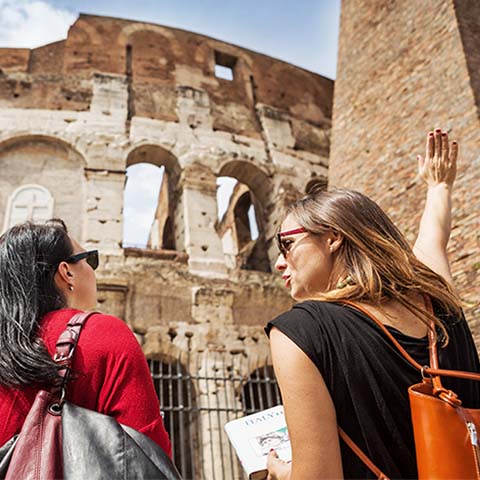
The scale of what Rome holds is difficult to overstate. The Colosseum and the Roman Forum preserve the stage of the ancient world’s most powerful empire. The Vatican gathers Michelangelo’s Sistine Chapel ceiling, Raphael’s frescoed rooms, and the largest church in Christendom inside the world’s smallest sovereign state. Between them spread the piazzas, fountains, and churches of the Baroque, a citywide theater of marble and water that still performs every hour of the day.

Yet the Rome travelers remember most is often the one between the monuments: the golden light on ochre walls in the late afternoon, the clatter of a market winding down, dinner stretching past midnight in a lane in Trastevere. Romans call their home the Eternal City with a shrug, because living among miracles is simply their daily routine, and joining that routine for a week is one of travel’s great pleasures.

Our specialists have designed Roman itineraries for more than two decades, for first-time visitors, returning devotees, honeymooners, and families spanning three generations. This guide distills what that experience has taught us. Read it for orientation, then let us compose the version of Rome that belongs to you, hand selected experience by experience rather than assembled from a predefined package.

What Is the Geography and Climate of Rome?

Rome rises on the famous seven hills along the Tiber river, roughly fifteen miles inland from the Tyrrhenian Sea, in the center of the Lazio region. The historic core is remarkably compact: the Capitoline, Palatine, and Aventine hills frame the ancient city, while the Renaissance and Baroque center fills the bend of the Tiber opposite Trastevere and the Vatican. Beyond the Aurelian Walls, the city opens toward the Alban Hills to the southeast and the beaches of the coast to the west, both close enough for an easy day’s excursion.

The climate is classic Mediterranean. Summers are hot and dry, with July and August afternoons regularly passing ninety degrees Fahrenheit, softened in the evening by the ponentino, the westerly sea breeze Romans greet like an old friend. Winters are mild and often bright, with roses still blooming in December, while spring and autumn deliver the long, luminous days that flatter every travertine facade in the city.

Rome is also, surprisingly, one of Europe’s greenest capitals. The gardens of Villa Borghese spread above the Spanish Steps with museums, lake, and pine-shaded avenues, Villa Doria Pamphili rolls out the city’s largest park west of Trastevere, and the Appia Antica archaeological park preserves open countryside, complete with sheep, inside the city limits. These green spaces are where Romans actually spend their Sundays, and they belong in any itinerary longer than a few days.

Geography shapes the traveler’s experience more than most visitors expect. The center’s distances are walkable but the terrain rolls constantly, cobblestones are universal, and the difference between a July midday at the Forum and an October morning there is the difference between endurance and delight. When we design a Roman itinerary, the city’s geography and season are the first instruments we tune, sequencing neighborhoods and sights so the city unfolds at a civilized pace.

When Is the Best Time of Year to Visit Rome?

Spring and autumn are Rome at its finest. From April through early June the city enjoys warm days, long evenings, and gardens in bloom, with the Spanish Steps dressed in azaleas and the umbrella pines at their most photogenic. October and November answer with golden light, comfortable walking temperatures, and the new season’s artichokes and porcini arriving in the kitchens, a combination many of our returning travelers now request by name.

Winter is the connoisseur’s secret. From November through February the great sites breathe freely, the Sistine Chapel can be contemplated rather than negotiated, and the city’s trattorias turn to the hearty side of the Roman kitchen. December adds nativity scenes and holiday lights, and January’s sales fill the elegant streets around Via dei Condotti. Summer, for its part, rewards travelers who plan around it: early mornings at the monuments, unhurried afternoons, and the festival energy of open-air cinema, concerts, and opera under the stars.

The city’s calendar deserves a voice in your dates as well. Holy Week brings the papal liturgies and their crowds, April 21 celebrates Rome’s legendary birthday with processions at the Circus Maximus, June opens the outdoor opera season at the Baths of Caracalla, and autumn fills the museums with major exhibitions. Any of these can become the centerpiece of a trip when the itinerary is built around it rather than surprised by it.

The honest answer is that Rome has no wrong season, only different arrangements. Our specialists time each itinerary to what the city is actually doing during your dates, reserving early entries in the warm months, aligning museum days with the calendar of exhibitions and papal audiences, and building each day’s rhythm around the hours when Rome is at its most generous.

How Many Days Should I Spend in Rome?

Three full days is the minimum for a meaningful first encounter: one for ancient Rome, from the Colosseum through the Forum and the Capitoline; one for the Vatican’s museums and basilica; and one for the living city of piazzas, fountains, markets, and neighborhoods. That framework covers the essentials, but it covers them at a march, and Rome punishes marching more than any city in Italy.

Five days transforms the experience. The extra time opens the Borghese Gallery, the churches where Caravaggio’s canvases still hang above their original altars, the Aventine and Testaccio, an evening in Trastevere taken slowly, and the breathing room that lets serendipity do its work. A full week adds day trips to Ostia Antica or Tivoli and the luxury of returning to a favorite piazza simply because you loved it the first time.

Because every Trips 2 Italy itinerary is built by hand, we weigh Rome against the rest of your Italian journey rather than applying a formula. Some travelers give Rome four days inside a two-week sweep of the country; others settle in for a week and let the city reveal itself layer by layer. Tell us how you travel, and we will give Rome the space it deserves in your particular story.

Which Neighborhoods Should You Know Before Visiting Rome?

Rome is a city of villages, and knowing them changes everything. Monti, the oldest rione, tucks vintage shops, wine bars, and ivy-hung lanes between the Colosseum and Santa Maria Maggiore, a favorite of Romans who want the center without its formality. Across the river, Prati’s orderly nineteenth-century boulevards beside the Vatican offer elegant shopping and some of the city’s most beloved food shops, while Trastevere, the storied quarter across the Tiber, remains the postcard of Roman evenings, its cobbled lanes filling nightly with conversation.

The Aventine hill offers a different Rome altogether: quiet gardens, early Christian basilicas, the celebrated keyhole view of St. Peter’s dome framed by hedges, and the orange garden’s panorama over the Tiber. At its foot, Testaccio remains the city’s most authentically Roman quarter, built around a market that still feeds its neighborhood and a culinary tradition that shaped the entire Roman kitchen. The Jewish Ghetto, home to one of Europe’s oldest Jewish communities, folds two thousand years of memory and one of the city’s great food traditions into a few unforgettable blocks.

Where you stay and where you wander shape the trip as much as what you visit. We match travelers to neighborhoods deliberately, choosing the quarter whose character fits yours, then design walking routes that connect the famous sights through the streets that make Rome feel like a discovery rather than a checklist.

How Do You Get Around Rome?

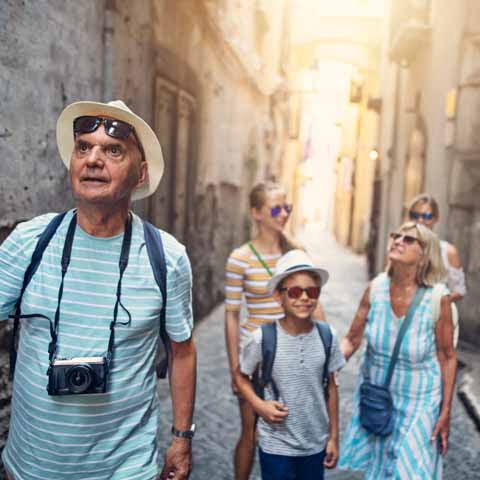
Rome’s historic center is best experienced on foot, exactly as it was designed to be. Most of the great sights cluster within a walkable core, and the walk itself, past fountains, courtyards, and church facades, is half the reward. The city’s cobblestones and hills do ask for comfortable shoes and a sensible daily plan, which is why we sequence each day’s route so the distances fall naturally rather than accumulate.

For everything beyond walking range, we arrange private drivers and transfers so the logistics disappear into the trip: the airport arrival, the evening return from a distant dinner, the day trip into the hills. A private car transforms days that mix the center with the Appian Way, Tivoli, or the coast, and our drivers know the timing of the city’s traffic the way its cooks know the market. Two metro lines usefully connect the railway station with the Vatican and the Colosseum, but the deeper city belongs to walkers and to those with a driver waiting.

Just as important as movement is timing. We arrange skip-the-line and early entries at the sites where crowds gather, reserve the timed slots that venues like the Borghese Gallery require, and plan each day so you arrive at the right monument at its best hour. In Rome, when you go matters as much as where, and orchestrating that is precisely our work.

How Do We Weave Rome Into a Complete Italian Itinerary?

Rome is Italy’s great crossroads. High-speed rail places Florence about ninety minutes away and Naples barely more than an hour, with Venice under four hours, so the classic first journey through Italy naturally pivots here. The city also anchors the south: the Amalfi Coast, Pompeii, and Capri are within easy reach, and Rome’s two international airports make it the most natural beginning or end for almost any Italian vacation.

The occasion shapes the composition. For couples, we set Rome’s evening theater of fountains and candlelit lanes inside an Italian honeymoon designed around the two of you. For travelers who plan around the table, the Roman kitchen and the wine hills of Lazio can open a full wine and culinary journey. And for those composing something larger, Rome becomes the opening movement of a custom trip to Italy built entirely from what you tell us.

This guide is one of five we have written on the city. Continue with our Rome culture guide, Rome history guide, Rome food and wine guide, and Rome things to do guide, or widen the lens with our Lazio travel guide to the region around the capital.

Ready to Begin Planning Your Rome Vacation?

Rome deserves more than a template. Since 2003, Trips 2 Italy has designed private Italian vacations one traveler at a time, hand selecting every experience based on what you tell us rather than fitting you into a predefined package. Our Italian-born team plans Rome with the knowledge of people who call Italy home, from the galleries of the Vatican to the trattorias of Trastevere, and we remain at your side throughout your trip with 24/7 assistance. Tell us how you imagine Rome, and we will craft the itinerary that matches it.

Explore Our Rome Vacation Itineraries

Frequently Asked Questions About Traveling to Rome

Spring and autumn offer the finest combination of weather and atmosphere, with April through early June and October through November the most rewarding windows. Winter brings quiet museums and mild, often sunny days, while summer rewards early mornings and open-air evenings. The specialists at Trips 2 Italy time each itinerary to what the city does best during your dates.

Three full days covers the essentials of ancient Rome, the Vatican, and the historic center, but five days transforms the experience, adding the Borghese Gallery, the quieter neighborhoods, and unhurried evenings. A week allows day trips to Ostia Antica or Tivoli. The right length depends on your pace and the rest of your Italian journey.

The historic center is wonderfully walkable, with most major sights clustered within a compact core connected by beautiful streets. The terrain is hilly and cobbled, so comfortable shoes and a well-sequenced daily route matter. For longer distances, day trips, and evening returns, we arrange private drivers so the logistics never intrude on the experience.

Each quarter offers a different Rome: Monti for character near the ancient sites, Prati for elegance beside the Vatican, Trastevere for atmospheric evenings, and the area around the Pantheon for waking up inside the postcard. Trips 2 Italy matches travelers to neighborhoods based on how they like to live, then builds the itinerary around that home base.

Easily, and they enrich any stay of five days or more. Ostia Antica offers a remarkably preserved ancient port city under an hour away, Tivoli holds the fountains of Villa d’Este and the ruins of Hadrian’s Villa, and the Castelli Romani hill towns pair views with wine. We arrange each excursion with a private driver and guide.

Rome is one of the world’s most romantic cities: evening walks past floodlit fountains, candlelit dinners in cobbled lanes, private after-hours visits where access allows, and sunset views from the hills. We design Roman honeymoons around the couple, hand selecting every experience from what you tell us about how you imagine it.