A Taste of Tuscany Tour | Vacation Packages for 2025 – 2026
Experience Monteriggioni, Siena and Chianti as you savor Tuscan wines, cook local cuisine and explore medieval towns in Italy’s countryside. Starting from $1,944 per person.
HOME » POPULAR ITALIAN DESTINATIONS » MONTALCINO TRAVEL GUIDE » MONTALCINO CULTURE GUIDE
About this guide: This guide to the culture of Montalcino was written by the Italian-born travel specialists at Trips 2 Italy, a custom tour operator that has designed hand-crafted Italian vacations since 2003. Every recommendation below reflects the same first-hand knowledge our team draws on when we build a private Montalcino itinerary around a traveler’s interests, dates, and pace. Read it for your research, then let us translate it into a trip designed entirely around you.
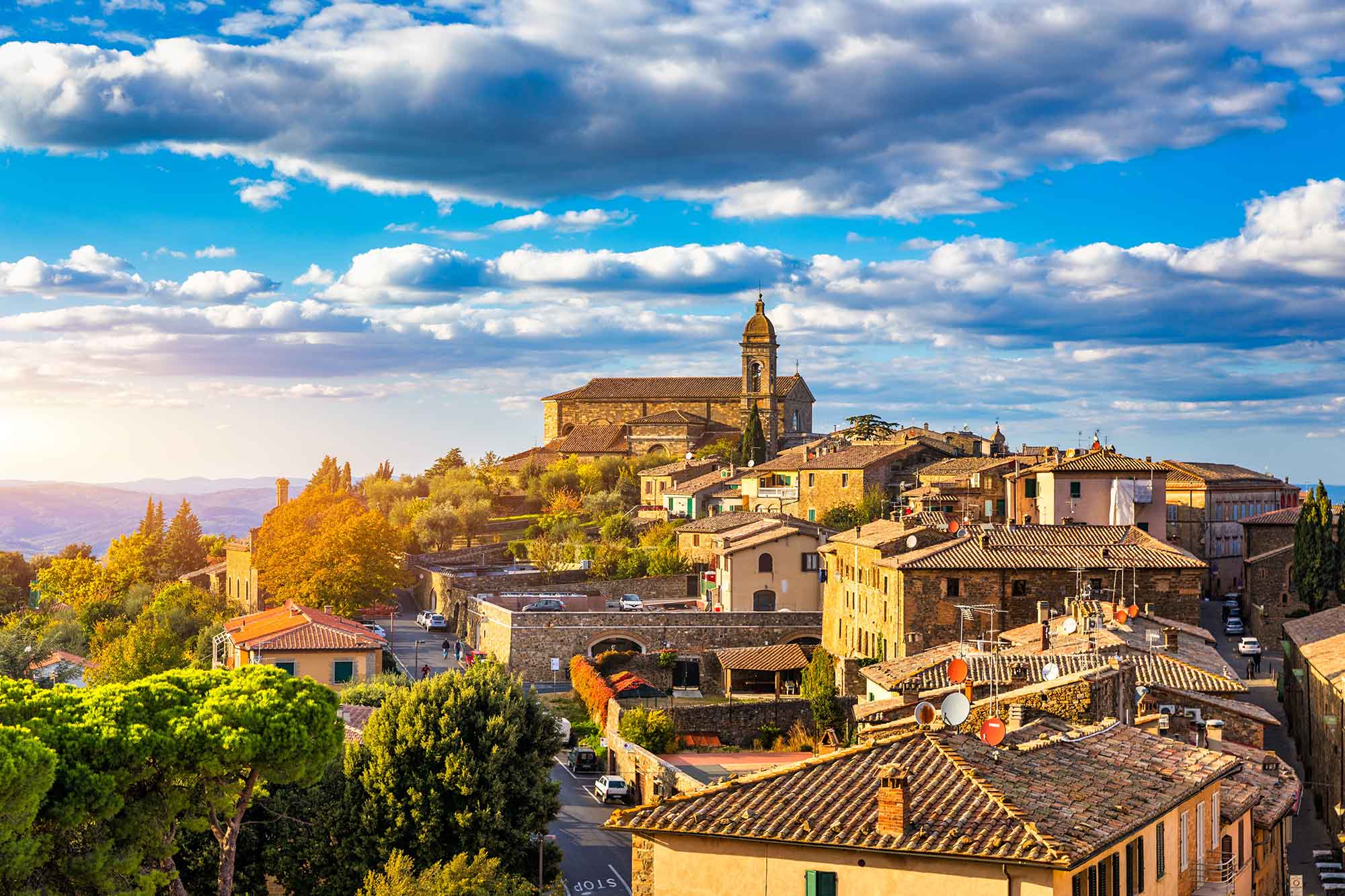
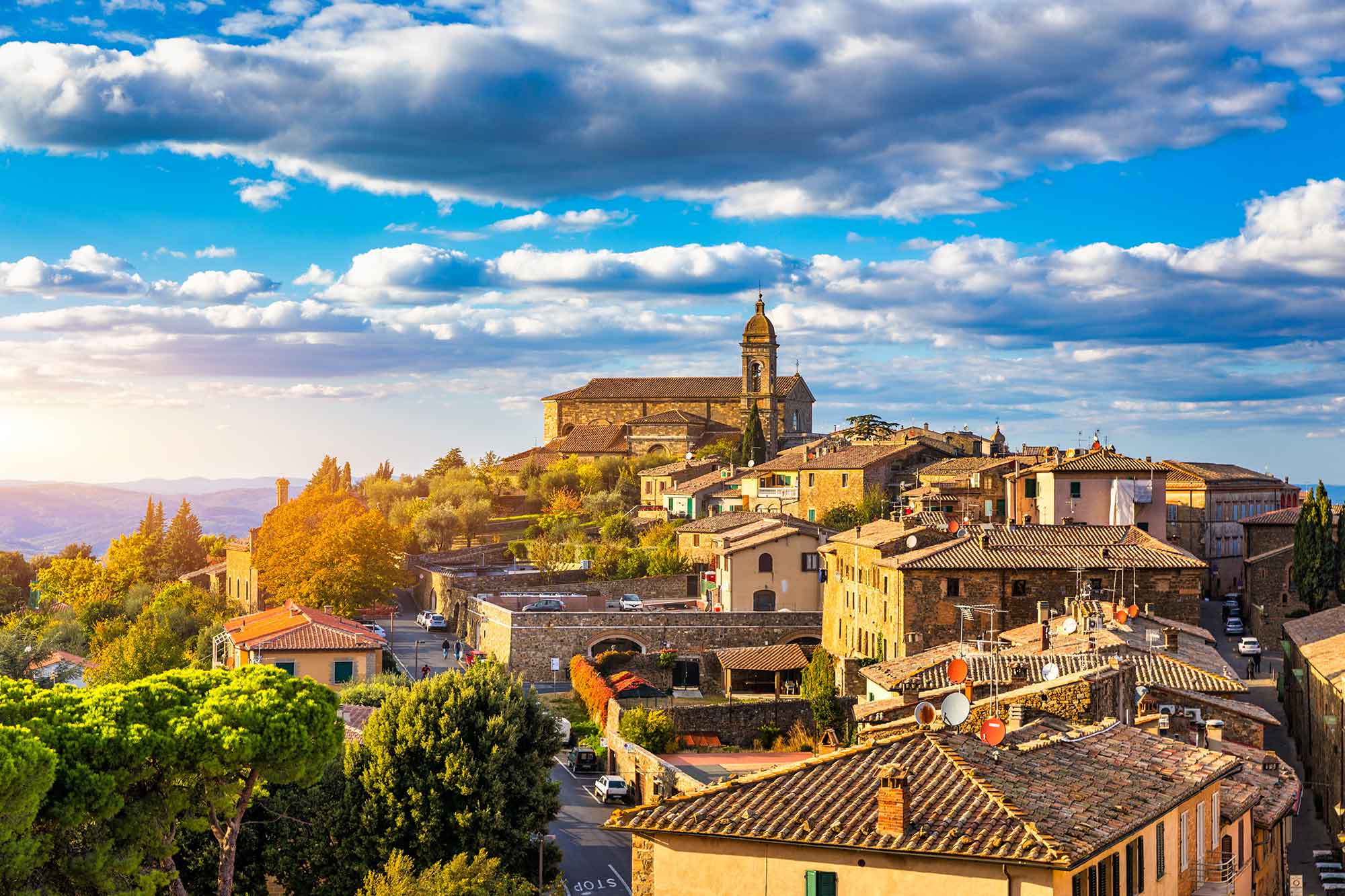
Montalcino’s culture is agrarian aristocracy: a small Tuscan hill town whose farming traditions rose, within living memory, to the summit of world wine, without surrendering the habits of a tight-knit rural community. The same families greet each other across the Piazza del Popolo as they have for generations, the four historic quarters still compete at the archery butts twice a year, and the agricultural calendar, from pruning to harvest to the pressing of new oil, remains the town’s true clock.
Sienese identity runs deep beneath the vines. Montalcino sheltered the last free government of the Republic of Siena from 1555 to 1559, and Siena has never forgotten it: in the historical procession that precedes each Palio, the banner of the Republic of Siena in Montalcino is carried in the place of honor. That memory of loyalty and independence still colors how the town sees itself, proud, self-sufficient, and quietly certain that history owes it a debt.
What makes the culture so rewarding for travelers is its scale. Montalcino is small enough that its traditions are participated in rather than performed, and a visitor who stays a night or two, walks the evening passeggiata, and lingers over a glass in the piazza is absorbed into the rhythm almost immediately. Our itineraries are designed to place travelers inside that rhythm, not merely in front of it.
Layered beneath the wine and the festivals lies the older culture of the southern Sienese hills: Romanesque parish churches among the fields, confraternities that still maintain their chapels, beekeeping and shepherding traditions that predate every famous label, and a dialect that keeps its own words, including pinci for the town’s beloved hand-rolled pasta. These threads surface constantly for travelers who know where to look, and pointing them out is one of the quiet pleasures of planning this town.
In Montalcino, wine is not an industry attached to a town; it is the town’s autobiography. The transformation of a remote and, in the mid twentieth century, notably poor hill community into the home of one of the world’s most collected wines happened within two generations, and everyone here knows the story personally: the family estates that bet everything on Sangiovese, the first export successes, and the moment in 1980 when Brunello di Montalcino became the first wine in Italy granted DOCG status.
The culture that grew from that story is one of patience and precision. Brunello law requires years of aging before release, which means every producer works for a future they must trust rather than see, and that long horizon shapes the local character: measured, exacting, and deeply attached to particular slopes and exposures. Conversations in Montalcino turn on vintages the way conversations elsewhere turn on years of birth, and the annual presentation of the new releases each winter is a civic event as much as a commercial one.
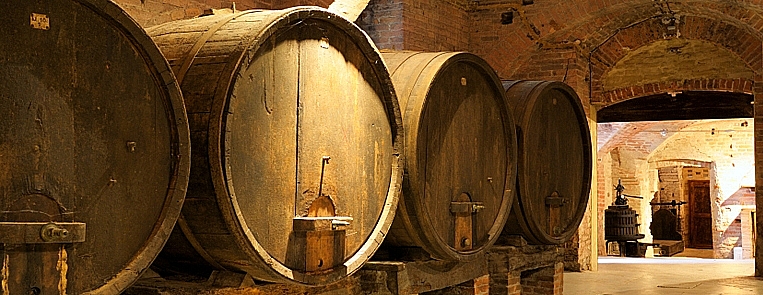
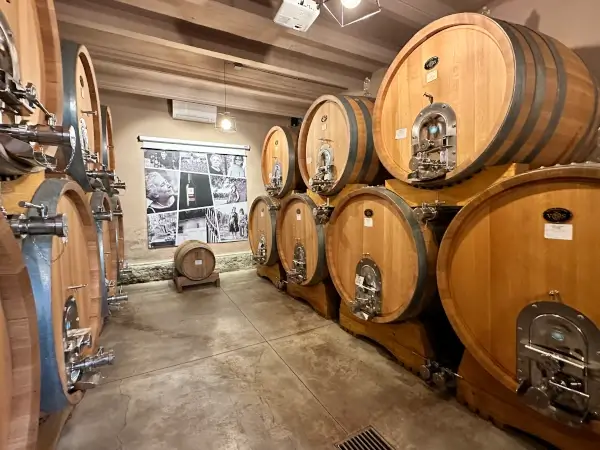
For travelers, this means wine here is cultural immersion rather than consumption. A cellar visit becomes a family history told among barrels, a walk through the vineyards becomes a lesson in reading the landscape, and a harvest lunch becomes a seat at the town’s defining ritual. We arrange these encounters through relationships built over two decades, choosing estates where the person pouring is the person whose name the story carries.
Ten kilometers south of the town, in a fold of olive groves below the village of Castelnuovo dell’Abate, stands the abbey of Sant’Antimo, one of the purest Romanesque churches in Italy. Legend credits its founding to Charlemagne in 781, giving thanks for the end of a plague among his army, and the present church, begun in the early twelfth century, rises in pale travertine and luminous alabaster-veined stone that seems to hold the afternoon light inside its walls.
The interior is a lesson in Romanesque grace: a tall nave lifted on carved capitals, an ambulatory with radiating chapels in the French manner, and details, including a celebrated capital of Daniel in the lions’ den, that reward unhurried looking. For centuries the abbey stood at the heart of a vast monastic territory, and its isolation preserved it; there is no town around it, only fields, olive trees, and the hill of Montalcino on the horizon.
Religious communities based at Sant’Antimo have long kept the tradition of singing the offices in Gregorian chant, and hearing plainsong rise through that stone interior is among the most quietly overwhelming experiences in Tuscany. We time visits so travelers can attend a sung office when schedules allow, pair the abbey with a walk through the surrounding groves, and engage guides who unfold its architecture and its thousand years of history in a way no plaque can.
For a town of five thousand people, Montalcino keeps an astonishing festival calendar. July brings Jazz and Wine, a summer series that seats international musicians inside the fortress walls, where audiences listen under the stars with a glass of the town’s wine in hand. It is an improbable and perfect pairing, world-class music in a medieval stronghold surrounded by the vineyards that fund the whole affair.
September belongs to honey. Montalcino is one of Italy’s historic honey capitals, its woods and pastures yielding acacia, chestnut, arbutus, and wildflower honeys of remarkable character, and the Settimana del Miele, the national honey week held each September, gathers beekeepers from across the country into the town. Tastings, markets, and competitions fill the squares, and the town’s shops carry the results all year round.
The deep winter adds the presentation of the new Brunello vintages, when the wine world converges on the town, and summer and autumn bring the archery tournaments of the four quarters. We fold these dates into itineraries as part of our entertainment and festival experiences in Italy, arranging seats, tastings, and access in advance so a festival becomes the centerpiece of a trip rather than a lucky accident.
On the last weekend of October, Montalcino stages its most beloved celebration, the Sagra del Tordo. The town divides into its four historic quarters, Borghetto, Pianello, Ruga, and Travaglio, each with its own colors, headquarters, and fierce loyalties, and their archers compete in a costumed tournament on the grounds below the fortress. Processions in fourteenth-century dress wind through the streets, drummers and flag bearers fill the piazzas, and the whole town eats together at long tables.
The festival’s roots lie in the hunting traditions of the Sienese hills, when the autumn thrush hunt marked the turn of the agricultural year, and the modern revival has carried the ritual forward with complete seriousness: the quarters train their archers year round, and victory is argued about all winter. A second tournament, the Apertura delle Cacce, opens the hunting season each August with the same pageantry in miniature.
For travelers, the Sagra is Montalcino with its heart on its sleeve, a genuine community festival that happens to welcome guests rather than a production staged for them. We arrange the details that make it effortless: well-placed viewing for the tournament, seats at the quarter banquets where visitors are received warmly, and guides who can explain the rivalries, the costumes, and the centuries behind ninety seconds of arrow flight.
Daily life in Montalcino follows the double rhythm of a farming town and a wine capital. Mornings begin early in the bars around the Piazza del Popolo, where growers, cellar workers, and shopkeepers take espresso standing before scattering to the vineyards and the shops. The historic caffe on the main square, founded in 1888, has served as the town’s parlor for over a century, its marble tables hosting deals, debates, and courtships in equal measure.
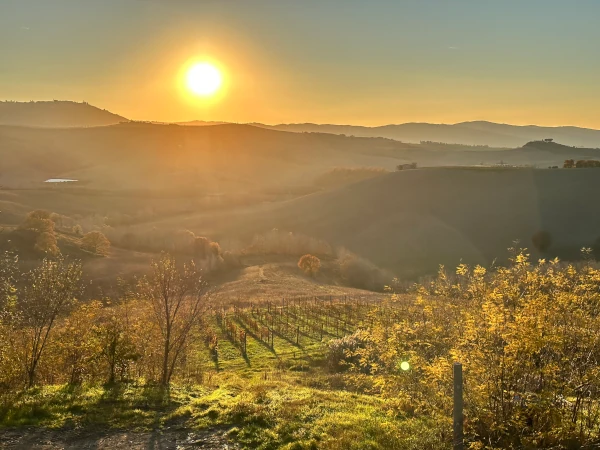
The day still bends to the land. In pruning season the hillsides fill with quiet, methodical figures among the rows; at harvest the whole territory mobilizes and the cellars work into the night; in November attention turns to the olive presses and the new oil. Even the town’s celebrated wine shops keep agricultural hours in spirit, unhurried and conversational, treating a tasting as a form of hospitality rather than a transaction.
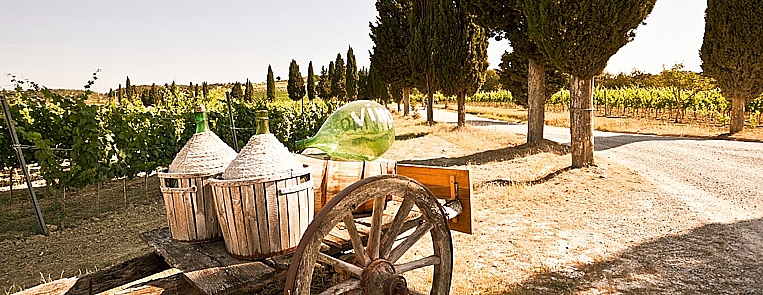
Evening brings the passeggiata along the main street from the fortress gardens to the belvedere, the hour when the town belongs entirely to itself. Travelers who join it, gelato or glass in hand, watching the light drain out of the Val d’Orcia below the walls, understand Montalcino better in thirty minutes than a hurried day visit ever allows. It is precisely why our itineraries argue so consistently for an overnight stay.
Montalcino’s culture is welcoming but not self-promoting; its best rooms open through relationships rather than tickets. A cellar tasting becomes a different experience when the winemaker’s family tells its own story among the barrels. The Sagra del Tordo becomes unforgettable from a seat inside a quarter’s banquet hall. Sant’Antimo becomes overwhelming when you arrive as the chant begins rather than as a tour bus empties.
Because our team is Italian-born and has worked these hills since 2003, we compose Montalcino from the inside: estate visits with the families themselves, beekeepers who open their honey houses, artisans and cooks who host travelers at their own tables, and festival access arranged through people we know by name. These experiences anchor many of our Italian cultural tours, and none of them is selected from a catalog; each is arranged for the traveler in front of us.
That method matters more in a small town than anywhere else, because in Montalcino the difference between observing and belonging is a single introduction. Travelers who come for the wine consistently leave talking about the people, and it is our privilege, after two decades of friendships here, to be the ones who make the introductions.
Montalcino deserves more than a template. Since 2003, Trips 2 Italy has designed private Italian vacations one traveler at a time, hand selecting every experience based on what you tell us rather than fitting you into a predefined package. Our Italian-born team plans Montalcino with the knowledge of people who call Italy home, from the Brunello cellars beneath the vineyards to the cypress roads of the Val d’Orcia, and we remain at your side throughout your trip with 24/7 assistance. Tell us how you imagine Montalcino, and we will craft the itinerary that matches it.

Experience Monteriggioni, Siena and Chianti as you savor Tuscan wines, cook local cuisine and explore medieval towns in Italy’s countryside. Starting from $1,944 per person.

The prestigious Brunello wine is the focus of this private driving tour, as you're escorted to the best wineries in the region, for tastings and tours.

Taste the world renowned wine Brunello and enjoy the unparalleled sight of the Tuscan countryside as we tour the wineries of Montalcino.
Montalcino is known for a wine culture of extraordinary depth centered on Brunello, for the Gregorian chant tradition of Sant’Antimo abbey, for the Sagra del Tordo archery festival contested by its four historic quarters, for the national honey week each September, and for its proud identity as the last refuge of the Republic of Siena. It is rural Tuscan culture at its most concentrated.
The abbey has long traditions of sung offices, and services with Gregorian chant are held on varying schedules through the year. Hearing plainsong rise through the twelfth-century nave is one of Tuscany’s most moving experiences. Trips 2 Italy checks current schedules when building your itinerary and times the visit so you experience the abbey at its best.
The Sagra del Tordo, held the last weekend of October, is Montalcino’s great autumn festival: an archery tournament between the four historic quarters, Borghetto, Pianello, Ruga, and Travaglio, with processions in medieval costume, drummers, flag bearers, and communal feasting below the fortress. A smaller tournament, the Apertura delle Cacce, takes place each August.
Each July the fortress courtyard becomes an open-air stage where international jazz musicians perform on summer evenings, with the town’s celebrated wines poured alongside. The pairing of world-class music, medieval walls, and Brunello has made it one of southern Tuscany’s most distinctive cultural events, and we arrange tickets and evening logistics for travelers visiting in season.
The woods and pastures around Montalcino have supported beekeeping for centuries, producing acacia, chestnut, arbutus, and wildflower honeys of unusual character, and the town hosts the Settimana del Miele, Italy’s national honey week, every September. Honey shops and producer tastings operate year round, and we include visits with local beekeepers in many food-focused itineraries.
Yes, through history. Montalcino sheltered the exiled Republic of Siena from 1555 to 1559 after Siena fell to Florence, and the city has never forgotten the loyalty: the banner of the Republic of Siena in Montalcino is carried in the place of honor in the historical procession before each Palio. Trips 2 Italy pairs Montalcino with Siena so travelers experience both halves of that story.