
A Taste of Tuscany Tour | Vacation Packages for 2025 – 2026
Experience Monteriggioni, Siena and Chianti as you savor Tuscan wines, cook local cuisine and explore medieval towns in Italy’s countryside. Starting from $1,944 per person.
HOME » POPULAR ITALIAN DESTINATIONS » MONTALCINO TRAVEL GUIDE » MONTALCINO FOOD AND WINE GUIDE
Montalcino Travel Guide Culture History Food and Wine Things to Do Plan My Trip
About this guide: This guide to the food and wine of Montalcino was written by the Italian-born travel specialists at Trips 2 Italy, a custom tour operator that has designed hand-crafted Italian vacations since 2003. Every recommendation below reflects the same first-hand knowledge our team draws on when we build a private Montalcino itinerary around a traveler’s interests, dates, and pace. Read it for your research, then let us translate it into a trip designed entirely around you.
Montalcino’s table is southern Tuscany distilled: the resourceful farmhouse cooking of the Sienese hills, built on bread, olive oil, game, and vegetables, and elevated by the presence of one of the world’s great wines at its side. This was sharecropping country within living memory, and the kitchen keeps that inheritance proudly, favoring long-simmered sauces, wood fire, and dishes designed to honor ingredients rather than disguise them.
The territory supplies nearly everything. The woods give wild boar, hare, porcini, and, around San Giovanni d’Asso in the town’s own comune, white truffles; the pastures give pecorino from flocks that graze within sight of Pienza; the groves give a peppery, emphatic olive oil; and the hives give honeys that have made the town famous among Italian gourmets for generations. Menus here read like a map of the surrounding hills.
What distinguishes Montalcino from other food towns is the gravitational pull of Brunello. A wine of such structure demands cooking with an answering depth, and the local repertoire evolved to provide it, rich ragus, braised meats, aged cheeses, so that table and cellar developed together like two halves of a single tradition. Eating well here is not a sideline to wine touring; it is the other half of the same education.
Begin with pici, the thick, hand-rolled noodle of the Sienese hills, known in Montalcino’s own dialect as pinci. Rolled from little more than flour and water, they carry the region’s signature sauces: all’aglione, with garlic and tomato, briciole, with toasted breadcrumbs from the frugal past, or a slow ragu of wild boar that may be the single most representative plate in the territory. A bowl of boar-sauced pici with a glass of Rosso is Montalcino on one table.
The antipasti and mains keep faith with the hills. Crostini with chicken liver pate open the meal as they have for centuries, salumi from the Cinta Senese, the ancient black-and-white belted pig of the Sienese countryside raised semi-wild in the oak woods, bring a depth of flavor that industrial pork never approaches, and the fire supplies grilled and braised meats, including beef raised in the valleys below. Autumn adds porcini and, in November, white truffles from the crete around San Giovanni d’Asso.
The close of the meal belongs to the land as well: pecorino in every stage of age, often paired with the town’s honeys, and rustic sweets in the Sienese tradition, almond biscuits made for dipping in dessert wine. None of it is elaborate, and that is the point. This is a cuisine of perfect ingredients handled with respect, and it rewards travelers who order what the season and the hills are offering that week.
Brunello di Montalcino is Sangiovese carried to its highest expression: a single grape, a single territory, and a set of rules as demanding as any in world wine. The law requires pure Sangiovese, grown only within the commune’s boundaries, and patience above all; Brunello may not be released until years after the harvest, with a minimum of two years in oak casks and further months in bottle, while the Riserva waits longer still. The result is a wine of extraordinary structure, perfume, and longevity, capable of aging for decades.
The distinction is historical as well as sensory. In 1980, Brunello di Montalcino became the first wine in Italy granted DOCG status, the highest tier of Italian wine law, a recognition of the standard the town’s growers had set for a century, ever since Clemente Santi and his grandson Ferruccio Biondi Santi first isolated the local Sangiovese clone and bottled the wines that created the category in the late nineteenth century.
Terroir explains the rest. The hill’s dry, luminous climate, sheltered by Monte Amiata, and its mosaic of altitudes, soils, and exposures let Sangiovese ripen slowly and completely, so the wine holds power and elegance in the same glass. Tasting Brunello in the place that shaped it, ideally across several estates and vintages in a single unhurried day, is one of the defining experiences of wine travel in Italy, and it is one we compose with particular care.
Rosso di Montalcino is Brunello’s younger sibling and the town’s everyday genius: the same pure Sangiovese from the same territory, released after a single year, so it pours bright, fresh, and full of fruit while its elder ages in the cellar. Locals drink it with weeknight pici and lunchtime salumi, and travelers quickly learn to love it as the wine that lets you taste the hill without waiting a decade. Comparing a producer’s Rosso and Brunello side by side is one of the most instructive tastings in Tuscany.
The territory holds gentler surprises as well. Moscadello di Montalcino, a sweet white from Moscato grapes, was the hill’s celebrated wine for centuries before Brunello existed, praised by Renaissance courts and travelers, and a handful of growers keep the tradition alive; a chilled glass beside almond biscuits is a taste of the town’s earlier fame. The Sant’Antimo appellation, named for the abbey, gathers the territory’s other varieties and styles under its own rules.
Around the wines stands a complete culture of the table: enotecas in the town walls where hundreds of labels can be compared, the winter presentation of new vintages that draws the wine world to the fortress, and cellar kitchens where estate lunches turn tastings into afternoons. However deep a traveler wishes to go, from first introduction to collector’s pilgrimage, the territory can match it.
Long before Brunello conquered the world’s cellars, Montalcino was famous among Italians for its honey. The territory’s unusual botanical range, from holm oak and chestnut woods to Mediterranean scrub and flowering pasture, gives its beekeepers a palette few places can rival: delicate acacia, dark and tannic chestnut, herb-scented wildflower blends, and the rare, faintly bitter corbezzolo honey drawn from the arbutus, prized by connoisseurs as one of Italy’s great single-flower honeys.
The tradition has its own festival. Every September the Settimana del Miele, the national honey week, fills the town with beekeepers, tastings, and markets from across Italy, a gathering that has made this small hill town the informal capital of Italian honey for decades. Year round, the town’s shops shelve honeys the way its enotecas shelve vintages, labeled by flower, wood, and season.
We build honey into culinary itineraries the way we build in wine: at the source. A visit with a local beekeeper, tasting straight from the honey house with the hives humming in the scrub beyond, pairs beautifully with an afternoon of pecorino and Brunello, and it shows travelers a side of Montalcino most visitors never suspect. It is also, families tell us, one of the days their children talk about longest.
Honey also runs through the local kitchen: drizzled over young and aged pecorino as the classic close of a meal, folded into rustic sweets, and glazing roasted meats in the hands of inventive cooks. Tasting the same chestnut honey at the beekeeper’s table in the morning and over cheese at dinner is the kind of full-circle detail our culinary itineraries are built from.
Brunello country is a working countryside, not a tasting strip. Estates range from centuries-old farms whose cellars sit beneath medieval stone to modern wineries of quiet architectural ambition, scattered across slopes, woods, and gravel roads in every direction from the town. Visits are by arrangement, unhurried, and personal: a walk in the vines to understand exposure and altitude, the cool dark of the barrel cellar, and then the tasting, often with the family or winemaker pouring.
The choice and sequence of estates is where expertise shows. The hill’s different quadrants yield recognizably different wines, and a well-composed day contrasts them deliberately, perhaps a historic cellar in the morning, a small family property for a long lunch, and a contemporary estate as the afternoon light lowers. We hold these relationships personally, built over two decades of bringing travelers here, and we match each estate to the traveler’s palate and curiosity rather than to any list.
A private driver completes the day, turning wine roads into scenery and letting every glass be enjoyed without a thought. For travelers who time it well, harvest season adds the drama of the vendemmia, crews in the rows and presses running, and late October adds new oil at the frantoio. These are the days our guests describe for years, and they are composed, not booked.
A Trips 2 Italy culinary itinerary in Montalcino begins with how you love food and wine, not with a standard circuit. For some travelers that means depth: vertical tastings with a single estate, cellar conversations about clones and casks, and the winter vintage presentations. For others it means breadth: market mornings, a hands-on pici lesson in a farmhouse kitchen where lunch is the homework, a beekeeper’s honey house, and a truffle hunt in the crete when autumn allows.
Because our team is Italian-born and has worked these hills since 2003, the settings are genuine rather than staged: family estates, working kitchens, shepherds’ dairies, and festival tables at the Sagra del Tordo or honey week for travelers whose dates align. We sequence each day so the food and the wine explain each other, and we reserve the fine dining evenings, of which the territory has several of true distinction, for the nights when they will land best.
Every journey is composed around your dates and the agricultural calendar, from spring lamb and pecorino to the vendemmia to November’s truffles and new oil, as part of our wine tasting and food tours in Italy. Tell us how you imagine eating and drinking in Brunello country, and we will build the days, the tables, and the cellars around exactly that.
Montalcino deserves more than a template. Since 2003, Trips 2 Italy has designed private Italian vacations one traveler at a time, hand selecting every experience based on what you tell us rather than fitting you into a predefined package. Our Italian-born team plans Montalcino with the knowledge of people who call Italy home, from the Brunello cellars beneath the vineyards to the cypress roads of the Val d’Orcia, and we remain at your side throughout your trip with 24/7 assistance. Tell us how you imagine Montalcino, and we will craft the itinerary that matches it.
Experience Monteriggioni, Siena and Chianti as you savor Tuscan wines, cook local cuisine and explore medieval towns in Italy’s countryside. Starting from $1,944 per person.
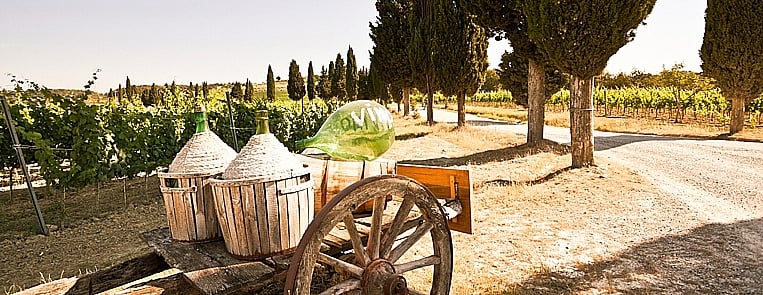
The prestigious Brunello wine is the focus of this private driving tour, as you're escorted to the best wineries in the region, for tastings and tours.
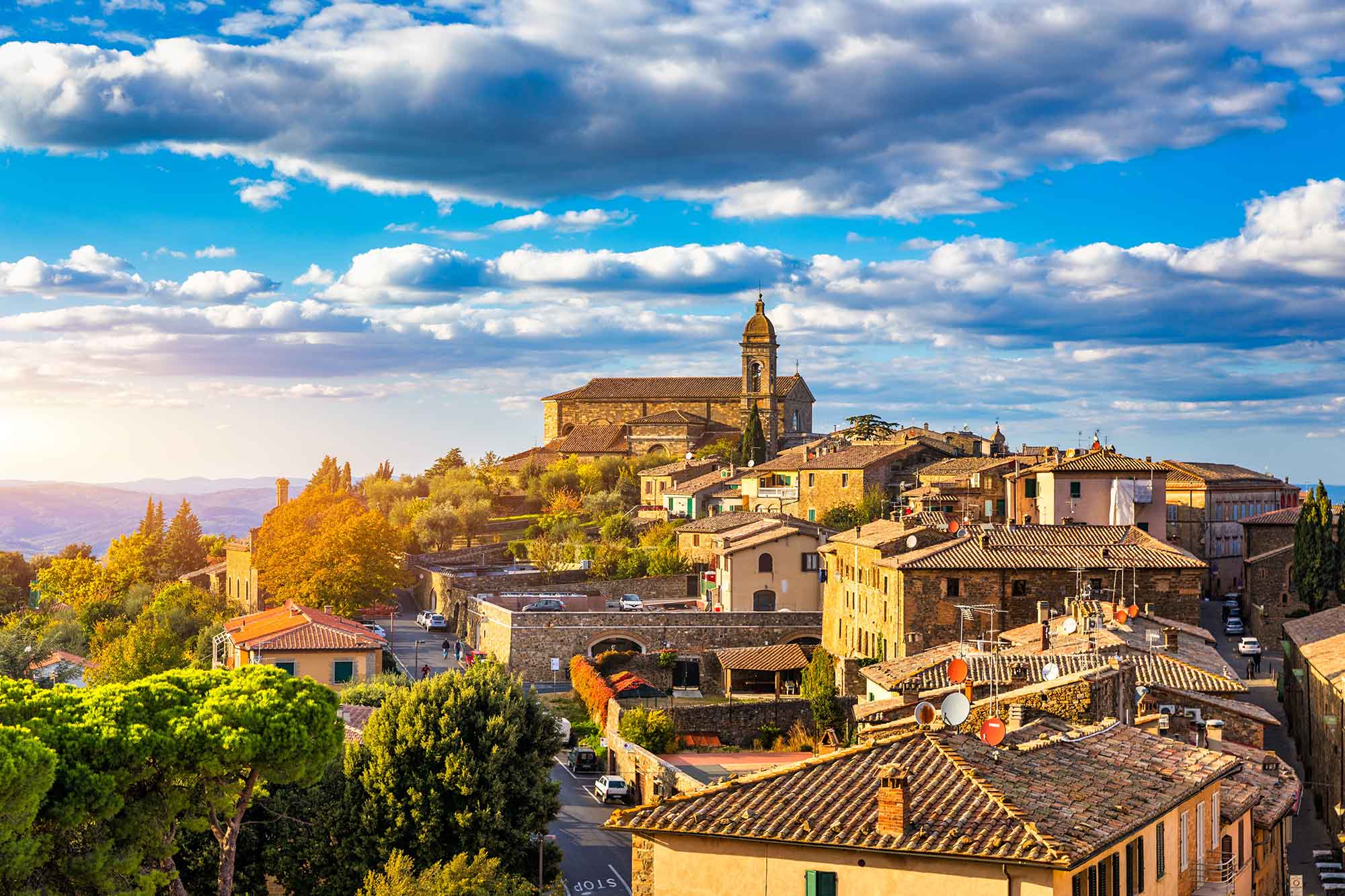
Taste the world renowned wine Brunello and enjoy the unparalleled sight of the Tuscan countryside as we tour the wineries of Montalcino.
Montalcino is the home of Brunello di Montalcino, a pure Sangiovese red that in 1980 became the first wine in Italy granted DOCG status. Aged for years before release, including a minimum of two years in oak, it ranks among the world’s most celebrated and age-worthy wines. The territory also produces Rosso di Montalcino, sweet Moscadello, and the Sant’Antimo appellation.
Both are pure Sangiovese from the same territory, but Brunello must age for years before release while Rosso is released young, typically the year after harvest. Rosso pours brighter and fruitier and suits everyday tables, while Brunello offers the depth, structure, and longevity that made the town famous. Tasting the two side by side at a single estate is one of the most instructive experiences in Tuscan wine.
Yes, by arrangement, and it is the heart of any visit. Estates receive guests personally for vineyard walks, cellar visits, and tastings, often with the family or winemaker. Trips 2 Italy composes wine days from relationships built over two decades, matching estates to your palate and providing a private driver so every glass can be enjoyed freely.
Pici pasta, called pinci locally, with wild boar ragu or garlic sauce, crostini with chicken liver pate, salumi from the Cinta Senese pig, grilled and braised meats, pecorino cheese, porcini, white truffles from San Giovanni d’Asso in autumn, and the town’s celebrated honeys. It is the farmhouse cooking of the Sienese hills, built to stand beside one of the world’s great red wines.
The vendemmia generally runs from mid September into October, varying with the vintage. It is a magnificent time to visit: harvest crews in the rows, cellars in full work, and the vineyards turning copper and gold across the Val d’Orcia. We time harvest-season itineraries so travelers experience working estates at their most alive, with lunches and tastings arranged around the picking.
The Settimana del Miele, held each September, is Italy’s national honey gathering, drawing beekeepers from across the country to Montalcino for tastings, markets, and competitions. The town’s woods and pastures yield acacia, chestnut, wildflower, and rare corbezzolo honeys, and Trips 2 Italy arranges visits with local beekeepers year round as part of food-focused itineraries.