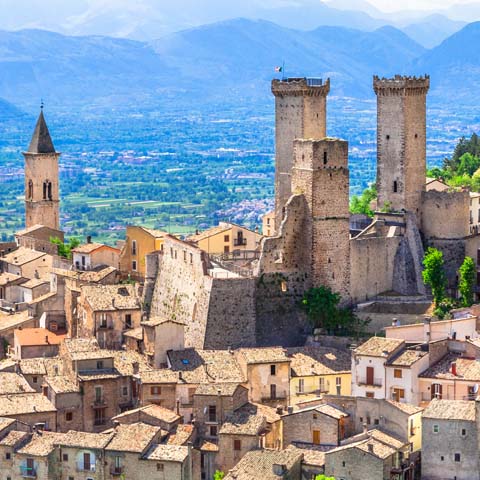
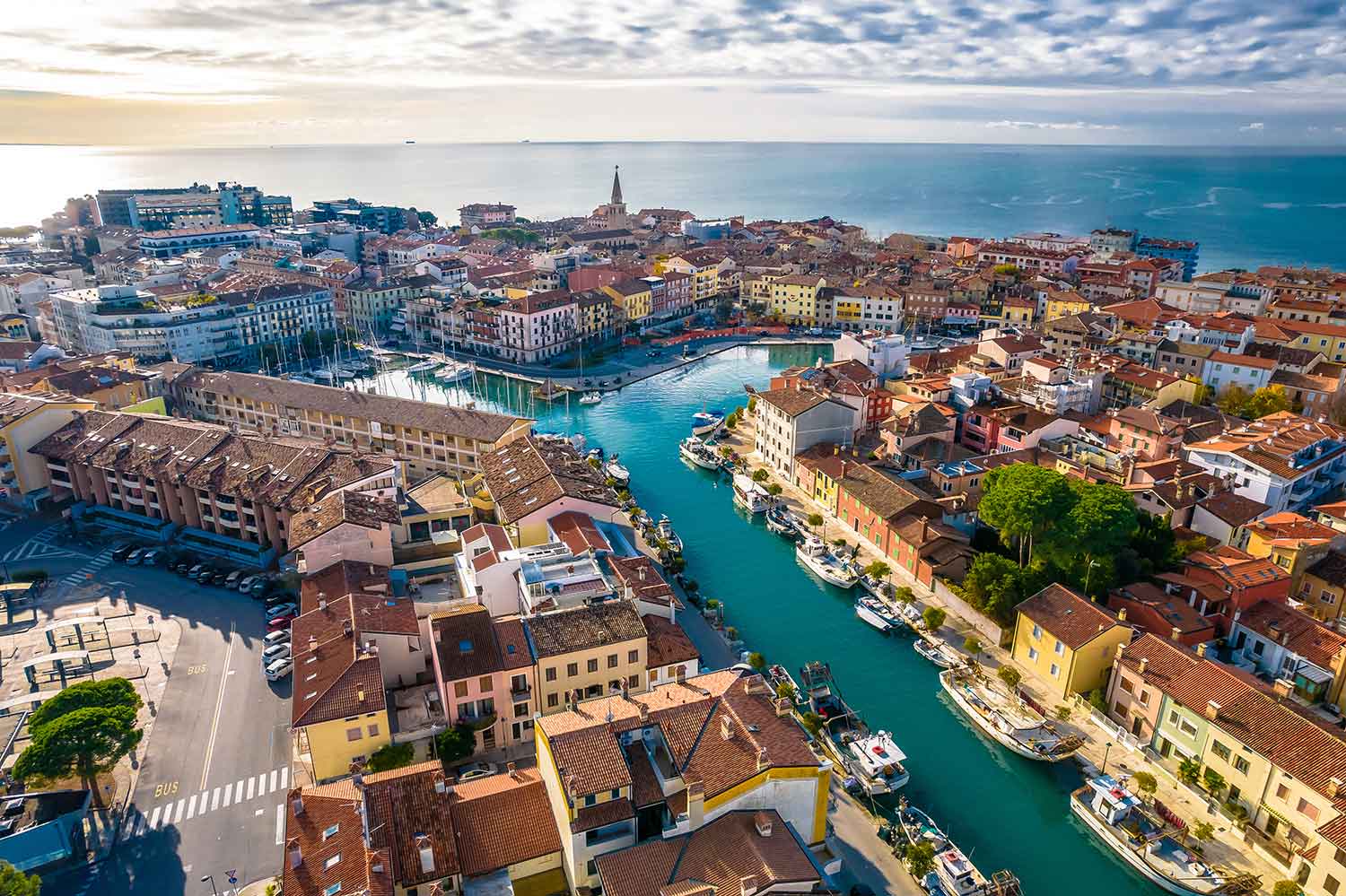
In its simplest terms, Italy’s geography is defined first by hills, then by mountains, and lastly by plains. Often called the stivale, or boot, Italy shares its borders with four European countries – France, Switzerland, Austria, and Slovenia. The other three sides of the country are bordered by the waters of the Mediterranean Sea. Its varied geography and identity as a peninsula allows for a wide array of activities and landscape views to be had throughout the country. From snowcapped mountains, to sandy beaches, to rolling countryside, Italy offers a little bit of everything.
Coastal locales are a big draw for many in Italy. Two major islands off the coast – Sicily and Sardinia – belong to Italy, as well as more than 15 archipelagos all throughout the Mediterranean, most notably the Aeolian Islands, the Tuscan Archipelago, and the Archipelago Campano. The coasts of Italy are washed by the Tyrrhenian Sea, the Ionian Sea, and the Adriatic Sea, making it a fantastic destination for sea lovers and those wanting a coastal experience.
For those interested in mountainous views and seeking a place for Italy ski trips, the Italian Alps are unparalleled. Located along Italy’s Northern borders, this section of the Alps offers fantastic views, ski resorts, and the tallest mountain in all of Europe, Mont Blanc located in Aosta Valley. In addition, Italy is home to the Apennine Mountains. These are the “spine” of Italy, as they run along the length of the country’s peninsula.
With abundant mountains come valleys and rivers that run through them. In Italy, there are three main rivers, including the Arno, the Tiber, and the Po – the longest river in Italy. In addition to rivers, Italy has three main lakes that are popular attractions. They are Lake Garda, Italy’s largest lake, Lake Como, the deepest lake in Italy, and Lake Maggiore, which is home to the famous Borromee Islands.
The climate in Italy is typical of the Mediterranean – temperate, with little humidity, and generally warm temperatures except for hot summers. Throughout winter, temperatures in the Northern part of the country (closer to the Alps) can be cold, however the sea that surrounds Italy helps keep the temperatures mild to moderate. The country is also home to two micro climates – glacial in the very highly elevated areas in the Northern Alps, and subtropical in the South around areas such as Sardinia, Sicily, and Calabria, where the country’s borders are closer to Africa.