Flavors of Langhe Tour | Vacation Packages for 2025 – 2026
Experience Piedmont’s Langhe region as you savor world-class wines, explore hilltop villages and discover castles in Italy’s gourmet heartland. Starting from $1,448 per person.
Alba Travel Guide Culture History Food and Wine Things to Do Plan My Trip
About this guide: This Alba travel guide was written by the Italian-born travel specialists at Trips 2 Italy, a custom tour operator that has designed hand-crafted Italian vacations since 2003. Every recommendation below reflects the same first-hand knowledge our team draws on when we build a private Alba itinerary around a traveler’s interests, dates, and pace. Read it for your research, then let us translate it into a trip designed entirely around you.
Alba is the beating heart of the Langhe, the vineyard hills of southern Piedmont that produce two of the world’s most celebrated red wines and the rarest ingredient in Italian cooking. Every October the town becomes the global capital of the white truffle, when hunters emerge from the surrounding woods with treasures worth more per ounce than nearly anything else on an Italian table, and the International Alba White Truffle Fair fills the medieval center with an aroma travelers remember for the rest of their lives.
Yet Alba is far more than a single famous ingredient. This is a working market town of red brick towers and Roman foundations, ringed by the villages of Barolo and Barbaresco, crowned by hazelnut groves that gave the world gianduja chocolate, and set within a vineyard landscape so remarkable that UNESCO protects it as a World Heritage Site. Food and wine are not attractions here. They are the town’s entire way of seeing the world.
Alba’s other great gift is its scale. The historic center can be crossed on foot in fifteen unhurried minutes, the great wine villages sit within a short drive, and the pace of life follows the vineyard calendar rather than the tour bus schedule. For travelers who measure a destination by its table and its landscape, few places in Italy repay attention so generously.
Our specialists have planned Alba itineraries for truffle devotees, wine collectors, honeymooners, and families for more than two decades. This guide distills what that experience has taught us. Use it to shape your thinking, then let us shape the trip, hand selecting every experience from what you tell us rather than fitting you into a predefined package.
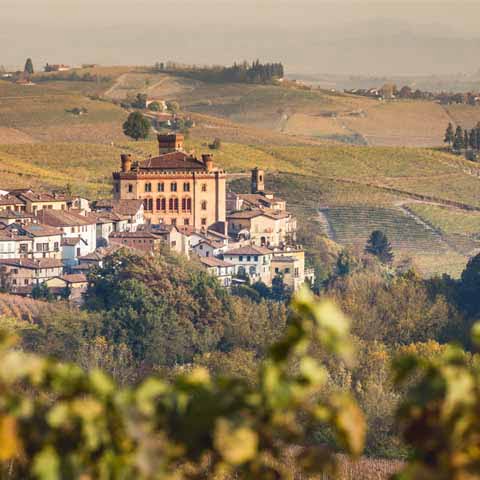
Alba sits in the province of Cuneo in southern Piedmont, on the banks of the Tanaro river about an hour southeast of Turin. The town occupies the seam between two celebrated hill districts: the Langhe rising to its south and east, home of Barolo and Barbaresco, and the Roero across the river to the north, a wilder country of sandy cliffs, orchards, and the elegant white wine Roero Arneis.
The landscape is one of Italy’s most composed. Vineyard rows contour every slope, hilltop villages crown the ridges with castles and bell towers, and hazelnut groves fill the higher ground toward the Alta Langa. In 2014 UNESCO inscribed the Vineyard Landscape of Piedmont, spanning the Langhe, Roero, and Monferrato, as a World Heritage Site, recognizing centuries of continuous winegrowing culture shaped by human hands.
The climate follows a continental rhythm softened by the hills. Summers are warm and bright, winters bring fog to the valleys and occasionally snow to the ridges, and spring and autumn deliver the region’s finest light. Autumn is the season the Langhe was made for, when the Nebbiolo harvest gives way to truffle season and the vineyards turn gold and copper in a display that rivals any foliage landscape in Europe.
Three distinct territories meet within sight of Alba’s towers. The lower Langhe holds the great wine crus of Barolo and Barbaresco, the Alta Langa climbs south into higher, wilder hills of hazelnut groves and pasture, and the Roero across the river adds its dramatic sandstone cliffs, the Rocche, above orchards and Arneis vineyards. On clear days the whole composition is framed by the snow line of the Alps on the western horizon, with the pyramid of Monviso presiding, a backdrop that makes even a routine drive between cellars feel ceremonial.
Autumn is Alba’s magnificent high season. From early October into early December, the International Alba White Truffle Fair fills the weekends with the truffle market, cooking demonstrations, and the perfume of Tuber magnatum, while the surrounding hills complete the grape harvest and turn extravagant colors. The first Sunday of October adds the Donkey Palio and its medieval pageant. Travelers who want this season should plan far ahead, and it is precisely the season we most often build itineraries around.
The other seasons hold quieter rewards. Spring brings wildflowers between the vine rows, comfortable walking weather, and Vinum, the town’s wine festival, when the great vintages pour along the main street. Summer offers long golden evenings, open-air dining, and vineyards in full leaf, with the higher Alta Langa staying fresh even in the warm months.
Winter belongs to connoisseurs. The white truffle season runs into December, black truffles and hearty braises carry the table through the cold months, and the fog that wraps the vineyards gave Nebbiolo its name. Cellar doors are unhurried, and tastings stretch long. When we plan an Alba itinerary, your dates become an instrument: we align the trip with the truffle calendar, the harvest, and the festival schedule so the season itself becomes part of the design.
The town itself rewards a full day: a morning among the towers, the cathedral, and the shops of Via Vittorio Emanuele II, an unhurried Piedmontese lunch, and an afternoon in the underground Roman city or the civic museum. But nobody comes to Alba only for Alba. The reason to stay is the countryside around it, and that is where the days multiply.
Three nights is the sensible minimum. It allows a day for the town and truffle experiences, a day among the Barolo villages, and a day for Barbaresco and the Roero, each anchored by a long lunch or a cellar visit. Wine-focused travelers and autumn visitors routinely stay five nights or more, layering in a truffle hunt, a cooking class, and slow drives through the UNESCO hills.
Alba also serves beautifully as the countryside chapter of a larger Piedmont journey, pairing naturally with Turin’s museums and cafes or the lakes to the north. Because every Trips 2 Italy itinerary is built by hand, we weigh your interests and the rest of your Italian journey, then give Alba the space it deserves rather than the space a standard package allows.
Medieval chroniclers called Alba the city of a hundred towers, and though far fewer survive, the red brick towers that remain still preside over Piazza Risorgimento and the lanes of the old center, giving the skyline its distinctive medieval silhouette. Beside them rises the Cathedral of San Lorenzo, a Romanesque and Gothic church in warm brick whose bell tower has watched over the market square for centuries.
The town’s spine is Via Vittorio Emanuele II, known to everyone as Via Maestra, which runs from the cathedral square through the heart of the old town. It is one of Italy’s great small-town streets, lined with pastry shops perfumed by hazelnut and chocolate, wine merchants stacked with Barolo and Barbaresco, and, in autumn, truffle dealers weighing their treasures on brass scales. The Saturday market, held since the Middle Ages, still fills the piazzas with produce from the surrounding farms.
Beneath the streets lies another town entirely: Roman Alba Pompeia, whose theater, temple foundations, and mosaics are revealed on guided underground routes. Above ground, Gothic San Domenico hosts exhibitions beneath its frescoed vaults. What ties it all together is atmosphere. Alba is prosperous, proud, and genuinely lived in, a town where the evening passeggiata matters and where the intimate scale is not a limitation but the entire charm.
Alba also carries a quiet literary distinction. This is the town of Beppe Fenoglio, one of the great Italian novelists of the twentieth century, whose stories of partisans and hill farmers made the Langhe a permanent landscape of Italian literature, and the study center dedicated to him keeps his memory active in the center. Between the bookshops, the exhibitions at San Domenico, and the Ferrero Foundation’s acclaimed art shows, the truffle capital proves unexpectedly rich in things of the mind.
Alba lies about an hour by road from Turin and roughly two hours from Milan, and the transfer is part of the pleasure as the flatlands give way to vineyard hills. We arrange private transfers from either city’s airports and rail stations, timed to your arrival, so the journey into wine country begins the moment you land rather than after a day of logistics.
Within the Langhe, a private driver is the difference between visiting wine country and truly experiencing it. The great villages, La Morra, Barolo, Serralunga d’Alba, Barbaresco, Neive, sit on separate hilltops connected by narrow ridge roads, and a driver who knows them turns the day into a moving panorama while every tasting can be enjoyed without a second thought. Our drivers know the viewpoints worth an unscheduled stop and the back roads the navigation apps never suggest.
The town itself asks nothing more than comfortable shoes. Everything within the old center sits a few minutes’ walk from everything else, which is exactly how a market town of this vintage was designed to be experienced. Every transfer in a Trips 2 Italy itinerary is arranged in advance and supported around the clock, so the only decision left to you is where to linger.
Pacing matters as much as transport. The Langhe rewards mornings that begin without hurry, single-focus days rather than checklists, and itineraries that leave room for the unplanned: the roadside belvedere, the village cafe, the cellar that invites you to stay another half hour. We build Alba days with that breathing room deliberately, because in this landscape the spaces between the appointments are frequently where the trip’s best memories happen.
Alba anchors the countryside chapter of any northern Italian journey. It pairs most naturally with Turin, under an hour away, whose royal palaces and Egyptian Museum balance the Langhe’s rural pleasures, and with the Italian lakes a comfortable drive beyond. Travelers continuing toward the coast reach the Ligurian riviera through the mountains in about two hours, which makes Alba a natural bridge between Piedmont and the sea.
The occasion shapes the composition. For travelers who plan around the table, Alba can anchor an entire wine and culinary journey through Piedmont, from truffle hunts to cellar lunches. For those composing something larger, it becomes a movement in a custom trip to Italy designed entirely from what you tell us, sequenced so the Langhe’s slow rhythm lands exactly where your journey needs it.
This guide is one of five we have written on Alba. Continue with our Alba culture guide, Alba history guide, Alba food and wine guide, and Alba things to do guide, or widen the lens with our complete Piedmont travel guide.
Alba deserves more than a template. Since 2003, Trips 2 Italy has designed private Italian vacations one traveler at a time, hand selecting every experience based on what you tell us rather than fitting you into a predefined package. Our Italian-born team plans Alba with the knowledge of people who call Italy home, from the truffle stalls of the old town to the Barolo and Barbaresco villages in the hills around it, and we remain at your side throughout your trip with 24/7 assistance. Tell us how you imagine Alba, and we will craft the itinerary that matches it.
Experience Piedmont’s Langhe region as you savor world-class wines, explore hilltop villages and discover castles in Italy’s gourmet heartland. Starting from $1,448 per person.
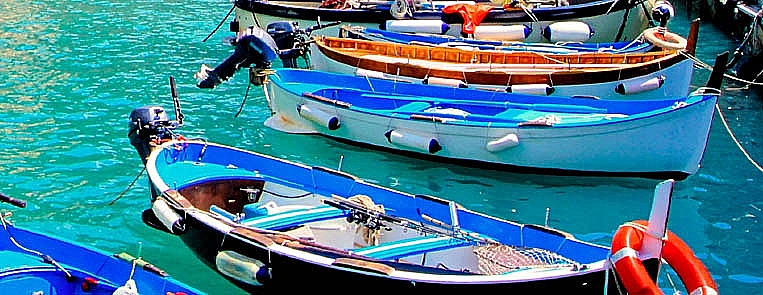
Discover the breathtaking sights of the Italian Riviera and venture through the Italian Alps surrounding Aosta Valley and Piedmont.
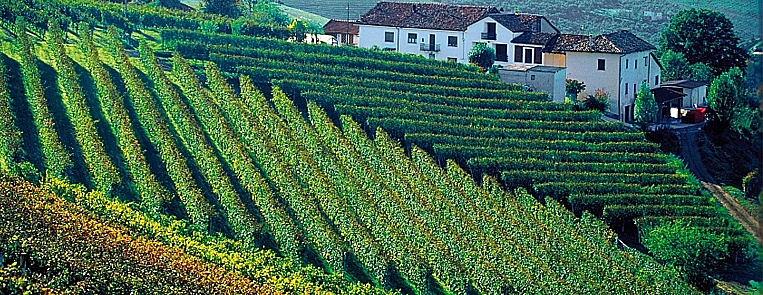
Langhe is a land to taste slowly day by day through its great wines, impressive castles and unforgettable dishes. You will dream to be back there again.
Autumn is the celebrated season, when the International Alba White Truffle Fair runs from early October into early December and the vineyards turn gold after the harvest. Spring brings the Vinum wine festival and ideal walking weather, summer offers long evenings among the vines, and winter rewards wine lovers with unhurried cellars. The specialists at Trips 2 Italy align your dates with the truffle and harvest calendar so the season works for you.
Plan on three nights at minimum: one day for the town itself and two for the Barolo and Barbaresco wine country around it. Travelers visiting during truffle season or building a wine-focused trip often stay five nights, adding a truffle hunt, a cooking class, and slow days through the UNESCO vineyard landscape.
Alba is the natural base. The Barolo villages lie minutes to the southwest, Barbaresco minutes to the northeast, and the Roero just across the Tanaro river, so every major cellar and hilltop village sits within a short scenic drive. The town itself adds excellent dining, truffle shops, and an atmospheric medieval center to return to each evening.
The old town is entirely walkable, but the wine country around it is best experienced with a private driver, which lets every tasting be enjoyed and turns the ridge roads into scenery rather than navigation. Trips 2 Italy arranges private transfers from Turin and Milan and full-day drivers throughout the Langhe as part of every Alba itinerary.
The International Alba White Truffle Fair traditionally runs on weekends from early October into early December, filling the town with the truffle market, tastings, and cultural events. The first Sunday of October also brings the Donkey Palio and its medieval pageant. Accommodations and experiences book far ahead in this season, so early planning matters.
Absolutely. The wine country is beautiful in every season, spring brings festivals and green hills, summer offers warm evenings among the vineyards, and the cellars of Barolo and Barbaresco welcome visitors year round. The truffle fair is the crescendo, but the Langhe’s table and landscape reward travelers in any month.