
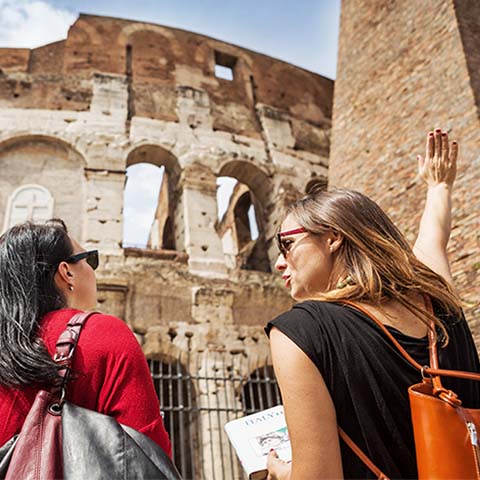
Rome, Venice and Florence Your Way 8 Days / 7 Nights
See Italy’s three iconic cities your way on an 8-day guided journey. Explore the Colosseum, the Vatican, and Florence’s cathedrals, then glide through Venice by gondola. Private driver, premium
HOME » POPULAR ITALIAN DESTINATIONS » FLORENCE TRAVEL GUIDE » FLORENCE CULTURE GUIDE
About this guide: This guide to the culture of Florence was written by the Italian-born travel specialists at Trips 2 Italy, a custom tour operator that has designed hand-crafted Italian vacations since 2003. Every recommendation below reflects the same first-hand knowledge our team draws on when we build a private Florence itinerary around a traveler’s interests, dates, and pace. Read it for your research, then let us translate it into a trip designed entirely around you.
Florentine culture rests on a claim few cities can make: this is where the Renaissance began, where the modern way of seeing, building, and thinking about human possibility took shape. The Italian language itself grew from the Tuscan of Dante, Petrarch, and Boccaccio, all of them formed by Florence, and the city’s conviction that commerce, craft, and beauty belong together still organizes its daily life.
That conviction has deep roots in the surrounding Tuscany region, whose wool, silver, and wine built the fortunes that paid for the art. Florence was never a court city ornamenting a king; it was a republic of bankers and guildsmen who competed in patronage the way other cities competed in war, and the masterpieces they commissioned were public arguments about excellence.
The result, for travelers, is a culture that is dense but never remote. The Uffizi’s corridors, the artisan workshops of the Oltrarno, the neighborhood rivalries of the Calcio Storico, and the morning theater of the markets are all chapters of one continuous story, and the itineraries we design are built to let travelers read it whole rather than in fragments.
Florentines themselves carry the inheritance lightly, with a dry wit and a famously exacting standard for everything from a leather binding to a plate of ribollita. Meeting that standard, and the people who keep it, is the real cultural experience of the city.
The story of Western art pivots in Florence. Giotto broke Byzantine stillness into human drama around 1300, Masaccio gave painting true perspective in the Brancacci Chapel a century later, and then came the flood: Botticelli, Leonardo da Vinci, Michelangelo, and Raphael’s Florentine years, all within a few generations. The Uffizi gathers this revolution into one building, from Botticelli’s Birth of Venus and Primavera to Leonardo’s Annunciation, in rooms that were themselves designed by Vasari for the Medici.
Beyond the Uffizi, the city keeps a constellation of quieter masterworks. Fra Angelico frescoed the monks’ cells at San Marco with images meant for prayer rather than display, the Bargello holds Donatello’s David and the sculpture that taught Michelangelo, and the Brancacci Chapel across the river preserves the frescoes on which every Renaissance painter educated his eye.
The difference between seeing this art and understanding it is the storyteller. We pair travelers with art historians who unfold the revolution painting by painting, arrange timed and early-hours access at the great galleries, and sequence the encounters so the story builds from Giotto to Michelangelo. For serious enthusiasts, we can compose an entire Florence itinerary around a single thread: one artist, one rivalry, one decisive decade.
One practical note serves every art lover: the great Florentine galleries reward early planning, since the finest hours, the special-access visits, and the best storytellers are reserved well ahead. Build the art first and the itinerary around it, which is exactly the order in which we compose an art-focused Florence journey.
Florence’s skyline is a single architectural argument, and Brunelleschi’s dome is its conclusion. Raised between 1420 and 1436 over the crossing of Santa Maria del Fiore without wooden centering, using herringbone brickwork and a double shell no one had attempted before, it announced the Renaissance as loudly as any painting and remains the largest masonry dome in the world. Around it stand Giotto’s marble bell tower and the Baptistery of San Giovanni, whose gilded east doors Michelangelo called the Gates of Paradise.
The city’s palaces tell the civic side of the story. The fortress-like Palazzo Vecchio asserts the medieval republic, the Palazzo Medici Riccardi shows a banking family learning to build like princes, and the Pitti Palace across the river shows what happened when they became grand dukes. Between them run streets of golden stone whose proportions, loggias, and courtyards taught Europe its architectural manners for four centuries.
Architecture-focused days are among our favorite Florence itineraries to design. We arrange specialists who read these buildings fluently, climbs through the dome’s double shell for travelers who want to touch the audacity directly, and visits that connect the buildings to the workshops, quarries, and mathematics behind them. In Florence, even the stones have authorship, and knowing the authors changes the walk.
Two quieter buildings complete the architectural education. Alberti’s marble facade for Santa Maria Novella translated classical proportion into a language every later architect borrowed, and San Miniato al Monte, the green-and-white Romanesque church above the city, shows what Florentine geometry could do three centuries before the Renaissance named it. Both reward the short detour, and both are stops our architecture specialists insist on.
No family in European history shaped a city’s culture more completely. The Medici were bankers who understood that patronage was power, and from Cosimo the Elder’s rise in 1434 through Lorenzo the Magnificent’s golden circle, they funded Brunelleschi, Donatello, Botticelli, and the young Michelangelo, who studied sculpture in their garden as a teenager. Their offices became the Uffizi; their collections became its treasure.
The family’s cultural legacy was sealed by its last member. In 1737, Anna Maria Luisa de’ Medici bound the entire dynastic collection to Florence forever through the Family Pact, decreeing that none of it could ever leave the city. Every traveler who stands before the Birth of Venus is a beneficiary of that single act of foresight, arguably the most consequential gift in the history of art.
Walking the Medici story in sequence, from the family palace through San Lorenzo and the Uffizi to the Pitti Palace and Boboli Gardens, turns Florence from a collection of monuments into the most consequential family drama in European history. Our historian guides structure Florence days around exactly that narrative, and it is the approach we most often recommend for a first visit.
Cross the Ponte Vecchio and Florence becomes a workshop. The Oltrarno quarters of Santo Spirito and San Frediano still house gilders, bookbinders, mosaicists, silversmiths, and picture framers practicing crafts the Renaissance guilds would recognize, often at benches inherited through generations. The goldsmiths themselves have worked on the Ponte Vecchio since 1593, when Grand Duke Ferdinando I evicted the butchers in favor of a more fragrant trade.
Leather is the city’s signature craft, taught nowhere more visibly than in the workshops around Santa Croce, where hides are still cut, stitched, and finished by hand. Paper marbling, another Florentine specialty, swirls its patterns in studios that supply collectors worldwide, and the Opificio delle Pietre Dure tradition of inlaying semiprecious stone, born in the Medici court workshops, survives in both museum and practice.
This is where our insider access matters most. We arrange studio visits with master artisans who do not advertise, demonstrations at the working bench, and hands-on sessions where travelers learn the first gestures of a craft from people who have practiced it for decades. Anyone can shop for Florentine leather or marbled paper. Watching it made, in the room where it happens, is a different experience entirely.
The Ponte Vecchio itself is the craft tradition’s most visible stage, its little shops still hung over the river on their medieval brackets, glittering with the goldsmiths’ work that replaced the butchers’ stalls four centuries ago. Browsing it at morning opening, before the day’s crowds arrive, remains one of the city’s small perfect rituals.
The Florentine calendar keeps its oldest appointments. On Easter Sunday the Scoppio del Carro fills the cathedral square, when a tower-shaped cart packed with fireworks is ignited by a mechanical dove launched from the high altar, a ritual with roots in the Crusades. In June the Calcio Storico takes over Piazza Santa Croce, as the city’s four historic quarters fight costumed sixteenth-century football matches culminating on June 24, the feast of San Giovanni, Florence’s patron saint, when fireworks rise over the Arno.
Music runs equally deep. The Maggio Musicale Fiorentino, founded in 1933, is one of Europe’s oldest performing arts festivals, filling late spring with opera, concerts, and dance, and churches across the city host performances in the acoustics they were built for. Autumn and winter add antique fairs, the olive harvest festivals of the surrounding hills, and Christmas markets in Piazza Santa Croce.
Experiencing these traditions well is a matter of timing and placement, and that is our craft. We fold performances and festivals into itineraries as part of our entertainment and festival experiences in Italy, securing seats and vantage points far enough ahead that the calendar becomes a reason to travel rather than a lucky accident.
Florentine daily life follows rhythms a traveler can join within a day. Mornings belong to the markets, the Mercato Centrale in San Lorenzo and Sant’Ambrogio to the east, and to espresso taken standing amid conversation. The day is organized around a serious lunch, the late afternoon brings the passeggiata through the center’s marble-paved streets, and evening gathers everyone toward the aperitivo hour, when the piazzas of Santo Spirito and Santa Croce become the city’s living rooms.
Neighborhood identity remains vivid. Florentines still define themselves by their quarter, the rivalries of the Calcio Storico are genuine, and loyalty to a particular market stall, a particular trattoria, and a particular gelateria is treated as a matter of personal honor. The city rewards travelers who adopt these loyalties quickly and defend them at dinner.
The deepest cultural experiences here come from stepping inside these rhythms rather than observing them: a market morning with a cook who shops it daily, an afternoon at an artisan’s bench, an evening passeggiata that ends among neighbors rather than crowds. Our Italian cultural tours are composed of exactly these hours, arranged through relationships our Italian-born team has built since 2003.
Language is the city’s quietest cultural export. The Florentine tongue of Dante became Italian itself, and the Accademia della Crusca, founded here in 1583 and still working, remains the world’s oldest linguistic academy, guarding the language the way the Uffizi guards the paintings. Florentines are aware of this inheritance and, when complimented on it, entirely unsurprised.
Florence deserves more than a template. Since 2003, Trips 2 Italy has designed private Italian vacations one traveler at a time, hand selecting every experience based on what you tell us rather than fitting you into a predefined package. Our Italian-born team plans Florence with the knowledge of people who call Italy home, from the corridors of the Uffizi to the Chianti hills at the city’s doorstep, and we remain at your side throughout your trip with 24/7 assistance. Tell us how you imagine Florence, and we will craft the itinerary that matches it.
See Italy’s three iconic cities your way on an 8-day guided journey. Explore the Colosseum, the Vatican, and Florence’s cathedrals, then glide through Venice by gondola. Private driver, premium
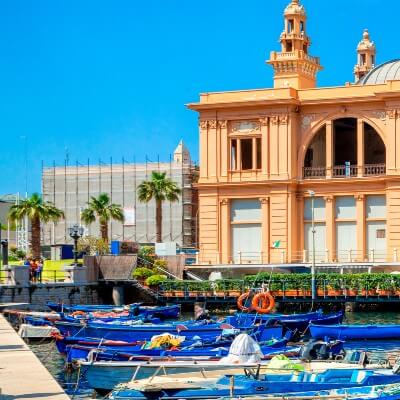
A romantic 12-day journey through southern Italy featuring charming towns, candlelit piazzas, ancient wonders, and breezy seaside escapes from Lecce to Bari, with experiences designed for unforgettable moments together. Starting from $7,844 per person
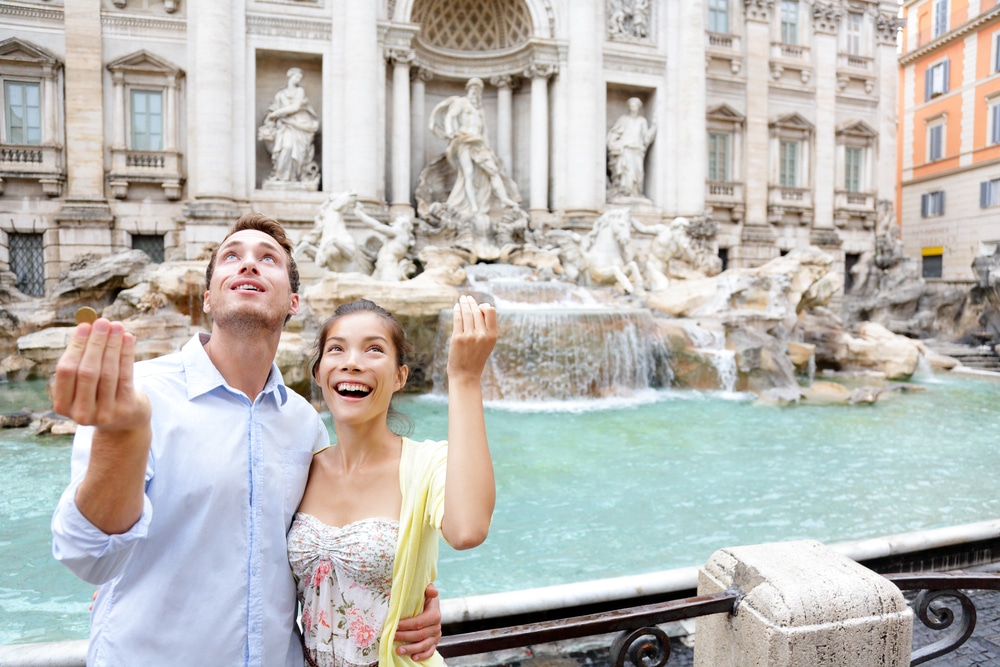
Embark on an unforgettable 11-day honeymoon through northern Italy, where each destination reveals a new chapter of romance and discovery. From Venice’s enchanting canals and timeless artistry, to the
Florence is the birthplace of the Renaissance and the cradle of the Italian language. It is celebrated for the Uffizi and the David, Brunelleschi’s dome, the Medici legacy that shaped European patronage, the living artisan traditions of the Oltrarno, and festivals like the Calcio Storico and the Scoppio del Carro that keep the city’s medieval calendar alive.
A Florentine banking family who ruled the city for three centuries and became the greatest art patrons in European history, funding Brunelleschi, Donatello, Botticelli, and Michelangelo. Their offices became the Uffizi, and in 1737 the last Medici heir bound the entire collection to Florence forever, which is why the masterpieces are still there for travelers to see.
Yes, and it is one of the city’s richest experiences. Trips 2 Italy arranges visits with master leather workers, gilders, bookbinders, and paper marblers in the Oltrarno, often in studios that do not advertise, including hands-on sessions where the artisan teaches the first gestures of the craft. These arrangements come from relationships built over two decades.
A costumed sixteenth-century football tournament fought each June in Piazza Santa Croce between Florence’s four historic quarters, equal parts sport, pageant, and neighborhood pride, with the final played on June 24, the feast of the city’s patron saint. Seats are limited and the surrounding celebrations are worth planning around, which is exactly the kind of arrangement we secure in advance.
The Bargello for Donatello and early Michelangelo, San Marco for Fra Angelico’s frescoed cells, the Brancacci Chapel for Masaccio, the Medici Chapels for Michelangelo’s tomb sculptures, and the Palatine Gallery in the Pitti Palace for Raphael and Titian. We sequence art itineraries so the famous and the quiet illuminate each other.
Wonderfully so. Dome climbs, artisan demonstrations, market mornings, gelato-paced walks, and the pageantry of the festival calendar hold every generation’s attention, and we compose family itineraries so art and history arrive as adventure rather than obligation. Florence has been teaching visitors to love beauty for five centuries, and it is very good with beginners.