
Amalfi Coast Travel Guide

HOME » POPULAR ITALIAN DESTINATIONS » AMALFI COAST TRAVEL GUIDE

Amalfi Coast Travel Guide        Culture        History        Food and Wine        Things to Do        Plan My Trip

About this guide: This Amalfi Coast travel guide was written by the Italian-born travel specialists at Trips 2 Italy, a custom tour operator that has designed hand-crafted Italian vacations since 2003. Every recommendation below reflects the same first-hand knowledge our team draws on when we build a private Amalfi Coast itinerary around a traveler’s interests, dates, and pace. Read it for your research, then let us translate it into a trip designed entirely around you.

What Makes the Amalfi Coast One of the World's Most Celebrated Shorelines?

The Amalfi Coast is the meeting of mountain and Mediterranean at its most theatrical. Along roughly thirty miles of the Sorrentine Peninsula’s southern face, the Lattari Mountains fall almost vertically into the Tyrrhenian Sea, and thirteen towns and villages cling to the cliffs between them, stacked in pastel tiers above tiny harbors. UNESCO inscribed the entire coastline as a World Heritage cultural landscape in 1997, recognizing what travelers have felt for two centuries: this stretch of Campania is one of the most beautiful places human beings have ever settled.

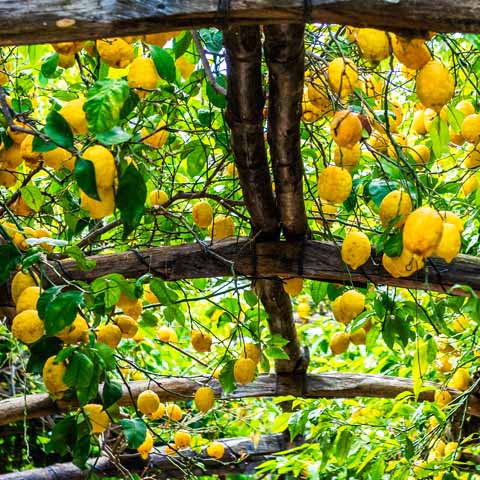
What separates the Amalfi Coast from other beautiful shorelines is the depth beneath the postcard. Amalfi itself was Italy’s first great maritime republic, trading with Byzantium and the Arab world while most of Europe looked inward. Ravello’s villas hosted Wagner and half the artistic aristocracy of the nineteenth and twentieth centuries. The lemon terraces that perfume the cliffs are a thousand-year-old agricultural system still worked by hand, and the ceramics of Vietri sul Mare color rooftops and kitchens across the coast.

It is also a destination where the difference between a well-planned trip and a poorly planned one is unusually large. The coast road is narrow, the towns are vertical, the great sights reward precise timing, and the finest experiences, from private boat days to terrace dinners, are secured by arrangement. Our specialists have planned Amalfi Coast journeys for more than two decades, and this guide distills what that experience has taught us.

Use it to shape your thinking, then let us shape the trip. Every Amalfi Coast vacation we design is composed from what you tell us, hand selected experience by experience, never assembled from a predefined package.

What Is the Geography and Climate of the Amalfi Coast?

The coast runs along the southern edge of the Sorrentine Peninsula, from Positano in the west to Vietri sul Mare in the east, where it meets the outskirts of Salerno. Behind the shoreline rise the Monti Lattari, limestone peaks that climb past four thousand feet within sight of the sea, wrapped in chestnut woods, wild rosemary, and the terraced lemon gardens that define the landscape. The famous coastal road, the Strada Statale 163, threads the cliffs between them, carved out under Bourbon rule in the mid nineteenth century.

Each town occupies its own fold in the mountains. Positano spills down a single ravine to its beach, Amalfi and Atrani share neighboring valleys at sea level, and Ravello sits apart on a mountain shelf more than a thousand feet above the water, gazing along the coastline. Between and above them, villages like Praiano, Furore, Conca dei Marini, Scala, and Tramonti keep quieter rhythms among the terraces, while Minori, Maiori, Cetara, and Vietri sul Mare line the gentler eastern shore.

The climate is mild Mediterranean, softened further by the mountains at the coast’s back. Summers are hot, sun-filled, and dry, tempered by sea breezes; winters are gentle, green, and quiet, when the lemon groves are netted against hail and the towns return to themselves. Spring and autumn are long and generous here, with swimming often comfortable from May into October, and the light in those seasons is the reason painters and photographers have never left the coast alone.

When Is the Best Time of Year to Visit the Amalfi Coast?

The shoulder seasons are the connoisseur’s answer. From mid April through early June the coast is in flower, the sea is warming, the hiking paths are at their finest, and the towns move at a civilized pace. September and October answer with warm seas, golden light, the wine harvest on the Tramonti and Furore terraces, and evenings that stretch long past sunset. These are the weeks we recommend first to travelers who want the coast at its most gracious.

High summer has its own logic: this is the season of long beach club afternoons, festivals, and the full theatrical life of Positano and Amalfi, and travelers who love that energy will find no better stage. July and August ask for more careful planning, which is where our work matters most, from early starts on the water to dinner reservations secured well ahead. Winter is the coast’s secret: many houses close, but Ravello in clear December light, with the coast nearly to yourself, is an experience of real beauty.

When we plan an Amalfi Coast itinerary, your dates become an instrument. We time boat days to the calmest morning seas, walks to the coolest hours, and town visits to the moments when the lanes are quietest. The season you travel should shape the trip you take, and designing that alignment is precisely our work as a custom tour operator.

How Many Days Should You Spend on the Amalfi Coast?

A first meaningful encounter wants four to five nights. That allows unhurried time in Positano, Amalfi, and Ravello, a full day on the water, a walk in the mountains or through the lemon terraces, and at least one evening with nothing planned but a terrace and the sunset. The coast punishes day-trip haste more than almost anywhere in Italy, because its greatest pleasure is not any single sight but the rhythm of life between them.

A full week opens the deeper coast: the fishing village of Cetara and the ceramics town of Vietri sul Mare in the east, the vineyards of Tramonti in the hills, the Path of the Gods walked at leisure rather than checked off, and a second boat day reaching Capri or the quieter coves. Many of our travelers pair the coast with Naples, Pompeii, or Capri as part of a longer southern journey, and the coast serves beautifully as the restful movement after the intensity of the cities.

Because every Trips 2 Italy itinerary is built by hand, we weigh your interests and the other destinations in your Italian journey, then give the coast the space it deserves. Travelers celebrating an anniversary may want six slow nights in one perfect base; a family tracing history across Campania may want four, threaded between Pompeii and Naples. There is no standard answer, which is exactly why we do not plan with standard packages.

Which Towns Should Anchor Your Amalfi Coast Itinerary?

Positano is the coast’s icon, a near-vertical cascade of rose, ochre, and white houses folding down to a beach framed by the majolica dome of Santa Maria Assunta. It is a town made for wandering slowly downhill: boutique lanes born of the moda Positano fashion tradition, stairways that keep revealing new angles of the same impossible view, and a waterfront that turns golden in the late afternoon. John Steinbeck wrote in 1953 that Positano bites deep, and the sentence has never needed revision.

Amalfi, the coast’s namesake, carries its history in plain sight. The Cathedral of Saint Andrew rises above the main piazza on a staircase of sixty two steps, its striped Arab-Norman facade and eleventh-century bronze doors from Constantinople recalling the centuries when this small harbor was a maritime power. Behind the piazza, the Valle dei Mulini climbs past the old paper mills, and the town’s museums keep the republic’s memory. Neighboring Atrani, a two-minute drive away, is the coast in miniature and one of its best-kept secrets.

Ravello is the coast’s balcony and its most aristocratic address, a garden town suspended above the sea where Villa Rufolo and Villa Cimbrone hold two of the most famous panoramas in Italy. Between and beyond the famous three, the villages each keep a distinct character: Praiano for sunsets and quiet elegance, Conca dei Marini for its fjord-side beauty and the Emerald Grotto, Minori and Maiori for pastry and long seafronts, Cetara for anchovies and working boats, and Vietri sul Mare for the ceramic workshops that color the whole coast.

The art of an Amalfi Coast itinerary is choosing the right base and the right sequence. Where you sleep shapes everything here, from morning light to evening logistics, and matching the town to the traveler is one of the first decisions we make together.

How Do You Get Around the Amalfi Coast?

The coast road is one of the most scenic drives on earth and one of the least relaxing to navigate yourself. It is narrow, serpentine, and busy in season, with parking scarce in every town. This is why we build Amalfi Coast itineraries around private drivers who know every bend, viewpoint, and shortcut of the Statale 163. With a driver handling the road, the corniche becomes what it should be: a rolling belvedere between towns, with stops timed for the views rather than the traffic.

The sea is the coast’s other highway, and often its better one. We arrange private boat transfers and full charter days that turn simple logistics into the trip’s highlight, reading the coastline from the water as sailors have for a thousand years. Within the towns themselves, everything moves on foot, up and down stairways that are part of the experience; we plan routes and bases with your comfort in mind, because a hundred steps before breakfast delights some travelers and defeats others.

Every transfer in a Trips 2 Italy itinerary is arranged in advance and supported around the clock, from your arrival in Naples or Salerno to the morning you depart. On a coastline this vertical and this celebrated, thoughtful logistics are not a detail. They are the difference between experiencing the Amalfi Coast and merely surviving its roads.

How Do We Weave the Amalfi Coast Into a Complete Italian Itinerary?

The coast anchors southern Italy naturally. Naples and its museums sit just over an hour away, Pompeii and Herculaneum lie en route from the north, Capri is a short sail from any coastal harbor, and the Greek temples of Paestum wait an easy drive south. The classic southern journey pairs the archaeological intensity of the Bay of Naples with the coast’s slow rhythm, and we sequence the two so the Amalfi Coast arrives exactly when the trip needs to exhale.

The occasion shapes the composition. For couples, the coast is Italy’s most requested romantic setting, and we build it into an Italian honeymoon of private boat days, garden dinners, and terrace mornings. For travelers who plan around the table, the lemon groves, vineyard terraces, and fishing harbors can carry a full wine and culinary journey. And for those composing something larger, from Rome or Florence southward, the coast becomes a movement in a custom trip to Italy designed entirely from what you tell us.

This guide is one of five we have written on the coast. Continue with our Amalfi Coast culture guide, Amalfi Coast history guide, Amalfi Coast food and wine guide, and Amalfi Coast things to do guide, or widen the lens with our Campania travel guide.

Ready to Begin Planning Your Amalfi Coast Vacation?

The Amalfi Coast deserves more than a template. Since 2003, Trips 2 Italy has designed private Italian vacations one traveler at a time, hand selecting every experience based on what you tell us rather than fitting you into a predefined package. Our Italian-born team plans the Amalfi Coast with the knowledge of people who call Italy home, from the cliff stairways of Positano to the garden terraces of Ravello, and we remain at your side throughout your trip with 24/7 assistance. Tell us how you imagine the Amalfi Coast, and we will craft the itinerary that matches it.

Explore Our Amalfi Coast Vacation Itineraries

Frequently Asked Questions About Traveling to the Amalfi Coast

Late April through early June and September through October offer the coast at its finest: warm seas, long golden evenings, ideal walking weather, and towns moving at a gracious pace. High summer brings the full festival energy of Positano and Amalfi, and winter offers real solitude and beauty, especially in Ravello. The specialists at Trips 2 Italy align your dates with what the coast does best in each season.

Four to five nights allow a meaningful first visit: time in Positano, Amalfi, and Ravello, a private boat day, a walk through the lemon terraces or along the Path of the Gods, and unhurried evenings. A full week opens the quieter villages, the Tramonti vineyards, and a day trip to Capri or Paestum. The right length depends on your pace and the rest of your Italian journey.

Each base shapes a different trip. Positano offers glamour, boutiques, and the coast’s most famous views; Amalfi offers history, a central position, and level walking near the harbor; Ravello offers gardens, music, cooler air, and majestic panoramas above the sea. Matching the base to the traveler is one of the first decisions we make when designing an itinerary, and it is worth making carefully.

We advise against it. The coast road is narrow and demanding, and parking is scarce in every town. We arrange private drivers who know every bend of the Statale 163, along with boat transfers that turn travel between towns into one of the trip’s pleasures. Every transfer in a Trips 2 Italy itinerary is arranged in advance and supported around the clock.

It is among the most romantic destinations in the world: private boat days along the cliffs, candlelit dinners above the sea, the gardens of Ravello, and mornings that begin with espresso and an endless blue horizon. We design Amalfi Coast honeymoons around each couple, hand selecting every experience from what you tell us about how you imagine it.

Atrani preserves the coast at its most intimate, Praiano offers famous sunsets, Conca dei Marini holds the Emerald Grotto, Cetara keeps a working anchovy fleet and a celebrated fishing tradition, Minori and Maiori reward pastry lovers and walkers, and Vietri sul Mare is the home of the coast’s ceramic art. A well-designed itinerary threads several of these into days that most visitors never experience.