Best of Italy’s Lake District and Dolomites Semi Escorted Tour
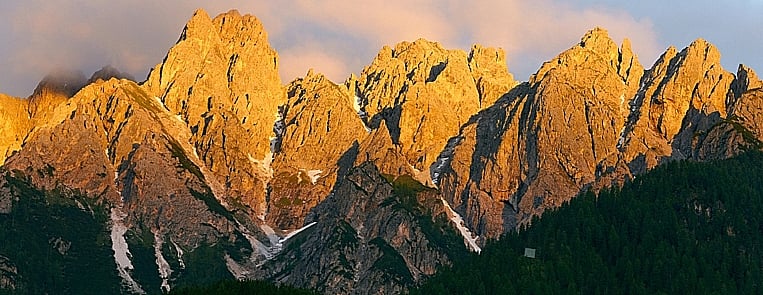
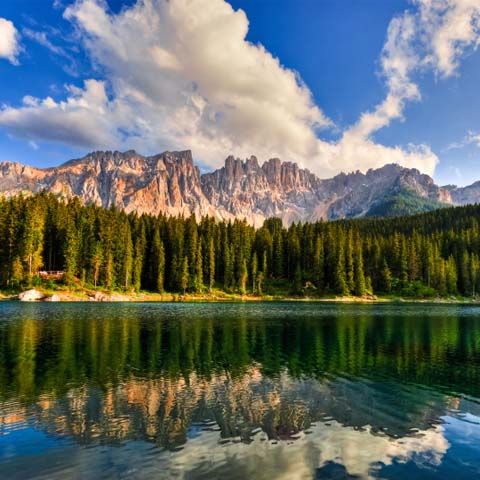
The majesty of the Italian Alps, charming Villas and picturesque sights, are all breathtaking landscapes on this enchanting tour along Italy’s northern Lakes and Alps.
Trento Travel Guide Culture History Food and Wine Things to Do Plan My Trip
About this guide: This Trento travel guide was written by the Italian-born travel specialists at Trips 2 Italy, a custom tour operator that has designed hand-crafted Italian vacations since 2003. Every recommendation below reflects the same first-hand knowledge our team draws on when we build a private Trento itinerary around a traveler’s interests, dates, and pace. Read it for your research, then let us translate it into a trip designed entirely around you.
Trento is the city where the Italian Renaissance walked into the Alps and decided to stay. As the capital of the Trentino Alto Adige region, it gathers frescoed palace facades, a Romanesque cathedral that hosted one of the most consequential church councils in European history, and a castle of prince-bishops beneath slopes that rise toward the Brenta Dolomites. The mix of Italian elegance and alpine setting is unlike anywhere else in the country.
The city’s credentials are remarkable for its size. The Council of Trent, which met here from 1545 to 1563, reshaped the Catholic world and put this valley city at the center of European affairs. The Castello del Buonconsiglio preserves one of the finest medieval fresco cycles in Italy, the MUSE science museum by Renzo Piano gives the city a striking contemporary landmark, and an entire Roman town, Tridentum, lies preserved beneath the modern streets.
Around the monuments spreads a city that lives exceptionally well. University students fill the arcades and wine bars, the aperitivo hour sparkles with Trentodoc, the mountain sparkling wine raised in the surrounding hills, and Monte Bondone rises directly above the rooftops as the city’s own ski mountain. Lake Garda’s northern shore lies under an hour south, and the Dolomites stand within easy reach in nearly every direction.
Our specialists have designed journeys through this corner of Italy since 2003, and this guide distills what we have learned. Use it to shape your thinking, then let us shape the trip itself, hand selecting every experience from what you tell us rather than assembling a predefined package.
Trento sits at about 630 feet above sea level in the Adige valley, the broad corridor that carries travelers between Verona and the Brenner Pass. The river runs along the city’s western edge beneath the rocky hill of Doss Trento, while vine-covered slopes climb on every side toward high plateaus: Monte Bondone to the southwest, the Paganella group to the northwest, and the Valsugana opening eastward toward its lakes.
The valley position gives Trento a gentler climate than its alpine surroundings suggest. Summers are warm and long enough to ripen Chardonnay and Pinot Nero on slopes rising past 2,000 feet, the source of the city’s celebrated sparkling wines, while autumn arrives crisp and golden through the vineyards. Winters are cold and often bright, with snow reliably covering the ski slopes of Monte Bondone even when the city streets remain clear.
For travelers, the vertical geography is the point. In a single day you can walk Roman ruins beneath the streets, taste wine in hillside cellars, and stand among alpine meadows at 5,000 feet, all without a long transfer. When we design a Trento itinerary, we use that compression deliberately, pairing city mornings with mountain or lake afternoons so each day holds two entirely different landscapes.
Water shapes the map as much as rock. The Valsugana opens east toward the swimmable lakes of Caldonazzo and Levico, the Valle dei Laghi strings a necklace of small lakes toward Garda, and each afternoon in the warm months the Ora, the reliable breeze that rises off Lake Garda, funnels up the valley to freshen the vineyards and fill the sails at Torbole. It is a geography that keeps every direction from the city interesting.
Late November through early January belongs to the Christmas market, one of Italy’s most atmospheric, when wooden chalets fill Piazza Fiera beneath the medieval walls and Piazza Cesare Battisti glows with lights, mulled wine, and mountain crafts. Winter also puts Monte Bondone’s ski runs twenty minutes from the city and Madonna di Campiglio’s celebrated slopes within a scenic drive.
Autumn is the connoisseur’s season, when the grape harvest animates the Trentodoc vineyards, the forests turn gold, and the table fills with mushrooms, game, and new wine. Spring brings apple blossom to the surrounding valleys and comfortable walking weather to the frescoed streets, while June opens the Feste Vigiliane, the city’s exuberant festival for its patron saint Vigilius, with processions and river races.
Summer offers long alpine days: hiking on the Paganella plateau, swimming and sailing at Riva del Garda, and evening passeggiate through piazzas that stay lively late. When we plan your dates, the calendar becomes an instrument. We reserve Christmas market stays months ahead, align wine country days with the harvest, and time Dolomite excursions for the clearest light, so the season you choose delivers exactly what it does best.
Two full days cover the essential city at a civilized pace: a morning in Piazza Duomo with the cathedral and the Neptune fountain, an afternoon at the Castello del Buonconsiglio with the Cycle of the Months frescoes, a descent into the underground Roman city, and a half day at the MUSE with an evening among the wine bars of the historic center. Trento is compact, walkable, and generous to unhurried attention.
Its deeper value, though, is as a base. Add a day for the Trentodoc cellars in the hills and the vineyards of the Piana Rotaliana, a day for Rovereto’s great modern art museum and the peace bell above it, a day for Riva del Garda on the lake’s dramatic northern shore, and another for Madonna di Campiglio and the Brenta Dolomites, and the city anchors a full week without a single wasted transfer.
Because every Trips 2 Italy itinerary is built by hand, we weigh Trento against the rest of your Italian journey, your pace, and your interests, then give it the days it deserves. For wine travelers and mountain lovers, that is usually more days than they first expected, and rarely fewer than three.
A useful rule from two decades of planning: give Trento one more night than the sightseeing strictly requires. The city’s pleasures live in the margins of the day, the passeggiata under the frescoes, the aperitivo glass of Trentodoc as the light turns, the market at opening hour, and travelers who pass through on a single night consistently tell us afterward that they wished they had stayed longer.
Piazza Duomo is the city’s masterpiece, a square that many travelers rank among the most beautiful in northern Italy. The Cathedral of San Vigilio rises along its southern side in Lombard Romanesque stone, the baroque Neptune fountain plays at its center, and the Case Cazuffi-Rella close the northern edge with facades entirely covered in sixteenth century frescoes. From here, Via Belenzani runs north between painted Renaissance palaces, the reason Trento is called the painted city.
A few minutes east stands the Castello del Buonconsiglio, residence of the prince-bishops who ruled Trento for nearly eight centuries. It is really several buildings in one: a medieval castle, a refined Renaissance palace, and the Torre Aquila, whose Cycle of the Months frescoes portray aristocratic and peasant life around the year 1400 in astonishing detail.
Along the Adige, the MUSE science museum unfolds under Renzo Piano’s glass and steel peaks beside the Renaissance villa of Palazzo delle Albere, while beneath Piazza Cesare Battisti the underground archaeological space preserves the streets, walls, and mosaics of Roman Tridentum. Across the river rises Doss Trento, crowned by the mausoleum of Cesare Battisti and sweeping views over the valley. We sequence these quarters so the city unfolds as a story rather than a scatter of sights.
The historic center is entirely walkable, closed largely to traffic, and best experienced on foot beneath its arcades and frescoed facades. For altitude, the Sardagna cable car climbs from the riverbank to a balcony village 2,000 feet above the rooftops in a few minutes, the quickest way to understand the city’s dramatic setting between rock walls and vineyards.
For everything beyond the center, we arrange private drivers who know these valleys intimately: the sparkling wine cellars in the hills, the Piana Rotaliana vineyards, the road over Monte Bondone, and the lakeside drive to Riva del Garda. A driver transforms wine country in particular, letting every tasting be enjoyed while the mountain roads become scenery rather than navigation.
Arrivals are equally simple in our hands. Trento sits on the main rail line between Verona and the Brenner Pass, about an hour north of Verona, and we arrange private transfers from Verona, Venice, Milan, or Munich airports, timed to your flights and supported around the clock. In a landscape this vertical, thoughtful logistics are the difference between seeing the mountains and being carried into them.
Two smaller railways add charm for travelers who enjoy the journey itself: the Trento-Male line winds northwest through apple country toward the Val di Sole and the approaches to the Brenta Dolomites, while the Valsugana line follows the lakes east toward Bassano and the Venetian plain. We fold these scenic stretches into itineraries where they serve the day, and keep a driver at hand where they do not.
Trento connects beautifully to the classic Italian journey. Verona lies about an hour south by rail, placing Venice, Lake Garda, and Milan all within easy reach, and the Brenner corridor links the city north through Bolzano toward Innsbruck and Munich for travelers beginning or ending beyond the Alps. It works equally well as the alpine chapter of a grand tour or as the heart of a dedicated mountain and wine journey.
The occasion shapes the composition. For couples, we pair frescoed piazzas, cellar tastings, and Dolomite panoramas into an Italian honeymoon with genuine character. For travelers with children, castles, cable cars, and a science museum built for curious minds make Trento a natural highlight of a family vacation to Italy. And for those composing something larger, the city becomes a movement in a custom trip to Italy designed entirely from what you tell us.
This guide is one of five we have written on the city. Continue with our Trento culture guide, Trento history guide, Trento food and wine guide, and Trento things to do guide, or widen the lens with our Trentino Alto Adige travel guide to see the region around the capital.
Trento deserves more than a template. Since 2003, Trips 2 Italy has designed private Italian vacations one traveler at a time, hand selecting every experience based on what you tell us rather than fitting you into a predefined package. Our Italian-born team plans Trento with the knowledge of people who call Italy home, from the frescoed facades of Piazza Duomo to the Trentodoc cellars in the hills and the Brenta Dolomites beyond, and we remain at your side throughout your trip with 24/7 assistance. Tell us how you imagine Trento, and we will craft the itinerary that matches it.

The majesty of the Italian Alps, charming Villas and picturesque sights, are all breathtaking landscapes on this enchanting tour along Italy’s northern Lakes and Alps.

Breathtaking landscapes and enchanting Alpine villages surround the scenery in this fantastic tour along the majestic peaks of the Dolomites.
Trento is best known for the Council of Trent, the church council that met here from 1545 to 1563 and reshaped Catholic Europe, and for the Castello del Buonconsiglio with its celebrated Cycle of the Months frescoes. Travelers also come for Piazza Duomo with its Neptune fountain and frescoed facades, the MUSE science museum by Renzo Piano, Trentodoc sparkling wine, and the city’s setting beneath the Dolomites.
Late November through early January for the Christmas market, September and October for the grape harvest in the Trentodoc vineyards, June for the Feste Vigiliane, and summer for hiking and Lake Garda days from a warm valley base. The specialists at Trips 2 Italy align your dates with what the city and its mountains do best in each season.
Two days cover the essential city, including Piazza Duomo, the Buonconsiglio castle, the underground Roman city, and the MUSE. Trento truly shines as a base, however, and three to five days allow the sparkling wine cellars, Rovereto, Riva del Garda, and a full day in the Brenta Dolomites without changing hotels.
Yes. Riva del Garda, on the lake’s dramatic northern shore, lies roughly forty five minutes south of the city, where cliffs drop straight into the water and lakeside promenades fill with life. We arrange private drivers so a Garda day combines Riva, the castle town of Arco, and the windsurfing shores of Torbole without any logistics falling to you.
Easily. Monte Bondone rises directly above the city as its own ski and hiking mountain, the Paganella plateau with Lake Molveno sits about forty minutes away, and Madonna di Campiglio beneath the Brenta Dolomites is within a ninety minute scenic drive. Trips 2 Italy arranges drivers, mountain guides, and cable car itineraries so a Dolomite day unfolds effortlessly.
Travelers who make the stop consistently describe it as one of their trip’s discoveries. Trento offers a genuinely beautiful historic center, museums and frescoes of national importance, exceptional food and sparkling wine, and mountains on the doorstep, all at an unhurried pace. It rewards travelers who want Italy’s quality without the crowds of its most famous stops.