Best of Italy’s Lake District and Dolomites Semi Escorted Tour
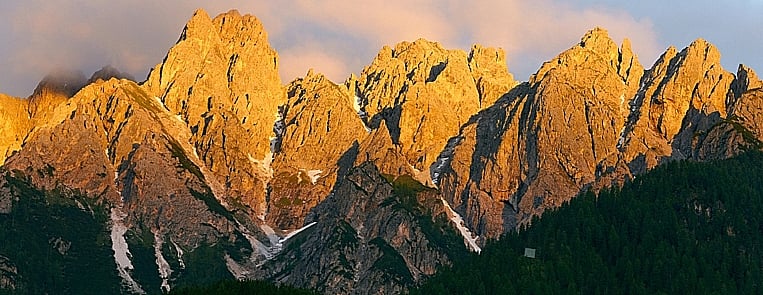
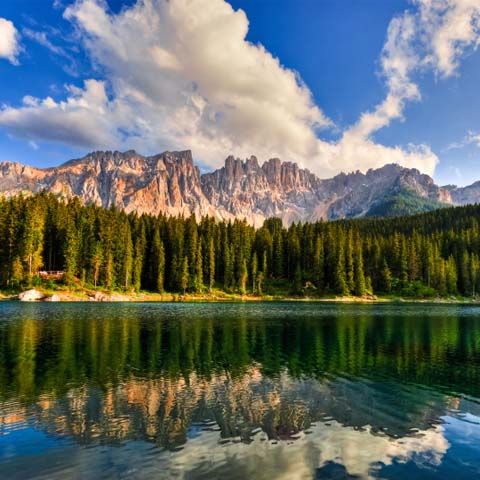
The majesty of the Italian Alps, charming Villas and picturesque sights, are all breathtaking landscapes on this enchanting tour along Italy’s northern Lakes and Alps.
HOME » POPULAR ITALIAN DESTINATIONS » TRENTO TRAVEL GUIDE » TRENTO THINGS TO DO GUIDE
Trento Travel Guide Culture History Food and Wine Things to Do Plan My Trip
About this guide: This guide to things to do in Trento was written by the Italian-born travel specialists at Trips 2 Italy, a custom tour operator that has designed hand-crafted Italian vacations since 2003. Every recommendation below reflects the same first-hand knowledge our team draws on when we build a private Trento itinerary around a traveler’s interests, dates, and pace. Read it for your research, then let us translate it into a trip designed entirely around you.
Piazza Duomo first. The square gathers the Cathedral of San Vigilio, the baroque Neptune fountain, the medieval Civic Tower, and the frescoed Case Cazuffi-Rella into one of northern Italy’s most beautiful urban rooms, the ceremonial heart of the Trentino Alto Adige region‘s capital. Take it slowly: coffee at a cafe table, the cathedral’s Romanesque interior where the Council of Trent convened, and the excavated early Christian basilica beneath the nave.
From the square, Via Belenzani leads north between painted Renaissance palaces to the church of Santa Maria Maggiore, where much of the Council’s working debate unfolded, and onward through arcaded streets to the Castello del Buonconsiglio, the castle of the prince-bishops and the city’s other essential half day.
This is a city where timing and knowledge multiply the experience. We arrange guides who read the frescoed facades fluently, book the castle and tower visits that require reservation, and sequence the walking so the piazzas are at their liveliest when you arrive and their quietest when you want them to yourself. Trento’s center is compact; seen well, it is inexhaustible.
Leave room for the details that make the walk memorable: the stone lions guarding the cathedral porch, the wheel of fortune rose window above the nave, the merchants’ arcades along Via Suffragio, and the sudden views of vineyard slopes that close nearly every street. Trento is a city best seen at the pace of a resident with a good story, which is exactly the company we provide.
The Buonconsiglio is several centuries under one roof: the medieval Castelvecchio, the frescoed Renaissance apartments of the Magno Palazzo, baroque halls, and gardens tucked inside the old city walls. As the seat of the prince-bishops for nearly eight hundred years, it was palace, fortress, and government at once, and it remains the region’s great museum.
Its treasure is the Torre Aquila, reached along the ramparts, where the Cycle of the Months frescoes painted around 1400 unfold the medieval year month by month: snowball fights and hunts, haymaking and harvest, lords at leisure and peasants at work, all rendered with a documentary tenderness unique in European art. Access is limited and timed, which is exactly the kind of arrangement we handle before you travel.
Give the castle an unhurried morning with a specialist guide and it becomes the key to everything else in the city: the painted facades make sense as courtiers’ echoes of the bishops’ splendor, the cathedral as the stage the castle’s masters offered Europe, and the Battisti memorial in the ditch as the modern chapter of a very long story.
The MUSE is the rare science museum that justifies a journey. Renzo Piano shaped its glass and steel roofline to echo the peaks around the city, and inside, six floors descend from glacier and high mountain ecosystems through alpine forests to a tropical greenhouse, with a whale of a central void hung with soaring skeletons and suspended specimens. Children adore it; so, reliably, do their grandparents.
A few minutes away, the city performs its best conjuring trick. Stairs beside Piazza Cesare Battisti descend into the SASS, the underground archaeological space where Roman Tridentum lies preserved: paved streets grooved by cart wheels, mosaic floors, workshops, and city walls, all beneath the everyday piazza. The contrast between the two museums, one gleaming and new, one two thousand years underfoot, is Trento in miniature.
We often pair them in a single day with a long lunch between, a rhythm that suits families especially well. Add the Diocesan Museum for the Council of Trent’s story or Palazzo delle Albere beside the MUSE, and the city’s museum day stands with those of far larger capitals, without a single queue if it is arranged properly, and arranging it properly is our work.
For travelers with deeper curiosity, Le Gallerie di Piedicastello extend the museum day into the mountain itself: two decommissioned highway tunnels beneath Doss Trento converted into exhibition spaces on the region’s modern history, a short walk from the Battisti mausoleum above. Few cities of this size offer such a range, from Roman pavement to Renaissance frescoes to a museum inside a mountain, within twenty minutes on foot.
Monte Bondone is the city’s own mountain, rising directly above the rooftops to over 6,000 feet. In winter its ski area gives Trento the rare distinction of slopes twenty minutes from a Renaissance piazza; in summer its Viote plateau opens into flowered meadows, an alpine botanical garden among Europe’s oldest, and ridge walks with the Brenta Dolomites filling the horizon.
The quickest taste of altitude leaves from the riverbank: the Sardagna cable car climbs the valley wall in minutes to a balcony village with the whole city mapped below, an ideal hour for travelers short on time. Further afield, the Paganella plateau pairs the resort villages of Andalo and Fai with Lake Molveno, often ranked among Italy’s most beautiful alpine lakes, about forty minutes from the city, and its summit panorama sweeps from the Brenta’s towers across the whole Adige valley.
For the full spectacle, we arrange days to Madonna di Campiglio and the Brenta Dolomites, the wild western wing of the UNESCO World Heritage peaks, where cable cars lift travelers to granite and dolomite amphitheaters without a step of climbing. Hiking, e-biking, via ferrata with certified guides, and winter skiing all fold into itineraries as part of our active trips in Italy, matched carefully to ability and appetite.
Emphatically yes. Lake Garda’s northern shore lies about forty five minutes south of the city, and it is the lake at its most dramatic: cliffs dropping straight into deep blue water, palms and olive trees flourishing beneath alpine rock, and the elegant lakefront of Riva del Garda curving beneath the Rocca fortress and the medieval Torre Apponale.
The corner rewards a composed day. Riva pairs naturally with Torbole, whose steady winds have made it one of Europe’s sailing and windsurfing capitals, and with Arco, the castle town whose ruined fortress crowns a crag above lemon gardens and one of the continent’s most celebrated rock climbing scenes. Between them run lakeside promenades and cycling paths with constant theater on the water.
The road south adds its own rewards. The Valle dei Laghi route passes Castel Toblino, a fairy tale castle rising from its own small lake amid vineyards that produce the rare Vino Santo, one of the most photographed corners of the province and a natural pause for a tasting or a lakeside walk on the way to Garda.
We arrange these days with a private driver so the lakeside hours stay unhurried: a morning walk in Riva, a long lakefront lunch, a boat excursion or a gentle e-bike stretch in the afternoon, and the mountain road home as the light turns gold. For travelers combining mountains and Mediterranean atmosphere in one itinerary, Trento and the upper lake are a nearly perfect pairing.
Rovereto, twenty minutes south by rail or road, packs two remarkable sights into a graceful small city. The MART, Mario Botta’s museum of modern and contemporary art beneath its great glass dome, holds one of Italy’s finest collections of Futurism and twentieth century art, while on the hill above, the Campana dei Caduti, a vast bell cast from the melted cannons of the First World War, tolls a hundred strokes for peace every evening at dusk.
North of the city, the wine road through the Piana Rotaliana visits the Teroldego vineyards and village cellars, while the Val di Cembra climbs through some of Europe’s steepest terraced vineyards. Eastward, the Valsugana opens to the swimmable lakes of Caldonazzo and Levico with their belle epoque spa town, and the high Lavarone and Folgaria plateaus carry Great War forts and beech forests.
Castle lovers have their own itinerary. Castel Thun in the Val di Non preserves the furnished world of one of the region’s great noble families room by room, Castel Beseno spreads across its hilltop above the Vallagarina as the largest fortified complex in the region, and both belong to the Buonconsiglio’s museum network, so a single well-planned day can pair a princely interior with battlements and valley views.
An hour north, Bolzano offers a different world entirely, South Tyrolean and German-speaking, with Otzi the Iceman in its archaeology museum, a comparison of the region’s two souls that fascinates travelers. The art of the day trip is restraint: one destination, properly done, with the driving handled and the day shaped around your pace. That judgment is precisely what we bring to every itinerary we compose.
Trento’s evenings begin with the passeggiata, when Via Belenzani and Piazza Duomo fill with the whole city walking nowhere in particular, and flow naturally into the aperitivo hour, a glass of Trentodoc under the arcades as the facades catch the last light. Dinner follows in candlelit osterie and vaulted cellars, and on summer nights the piazzas stay convivial late.
The quieter pleasures reward travelers who linger. Climb to Doss Trento at sunset for the mausoleum’s sweeping valley views, walk the riverside paths along the Adige, or ride the Sardagna cable car in the evening when the city lights come on below. In December, the Christmas market gives the evenings a glow of their own, with mulled wine and craft chalets beneath the medieval walls of Piazza Fiera.
Our itineraries deliberately alternate the celebrated with the quiet, because the alternation is what keeps a trip feeling like discovery: the Buonconsiglio in the morning, a hillside cellar in the afternoon, an evening with no plan but the passeggiata. The travelers who fall hardest for Trento are almost always the ones whose itineraries gave them one day nobody they know has ever taken.
Trento deserves more than a template. Since 2003, Trips 2 Italy has designed private Italian vacations one traveler at a time, hand selecting every experience based on what you tell us rather than fitting you into a predefined package. Our Italian-born team plans Trento with the knowledge of people who call Italy home, from the frescoed facades of Piazza Duomo to the Trentodoc cellars in the hills and the Brenta Dolomites beyond, and we remain at your side throughout your trip with 24/7 assistance. Tell us how you imagine Trento, and we will craft the itinerary that matches it.

The majesty of the Italian Alps, charming Villas and picturesque sights, are all breathtaking landscapes on this enchanting tour along Italy’s northern Lakes and Alps.

Breathtaking landscapes and enchanting Alpine villages surround the scenery in this fantastic tour along the majestic peaks of the Dolomites.
Piazza Duomo and the Castello del Buonconsiglio together form the essential first day: the cathedral square where the Council of Trent met, and the prince-bishops’ castle with the Cycle of the Months frescoes in the Torre Aquila. Trips 2 Italy arranges the timed tower entries and specialist guides that turn both from beautiful sights into unforgettable stories.
It is one of the best family museums in Italy. Renzo Piano’s building descends from glacier exhibits through alpine forests to a tropical greenhouse, with hands-on discovery spaces throughout. We compose family days that pair the MUSE with the underground Roman city and a cable car ride, so science, history, and mountains all arrive as adventure.
Yes. Monte Bondone’s ski area rises directly above the city, about twenty minutes from the center, and the famous slopes of Madonna di Campiglio in the Brenta Dolomites are within a scenic ninety minute drive, with the Paganella ski plateau closer still. We arrange winter itineraries that combine city culture with genuine Dolomite skiing from a single base.
Riva del Garda, on the lake’s spectacular northern shore, lies roughly forty five minutes south of the city. A day there combines the lakefront and fortress of Riva, the windsurfing shores of Torbole, and the castle town of Arco, and we arrange it with a private driver so the lakeside hours stay entirely unhurried.
Very much so. Twenty minutes away, Rovereto offers the MART, one of Italy’s leading modern art museums with a celebrated Futurism collection, and the Campana dei Caduti, the great peace bell cast from First World War cannons that tolls each evening at dusk. Together they make one of the region’s most moving and rewarding half days.
The Christmas market transforms the city from late November to early January, filling Piazza Fiera beneath the medieval walls and Piazza Cesare Battisti with craft chalets, mulled wine, and mountain sweets, while Monte Bondone opens its ski season twenty minutes away. Market season accommodation should be reserved months ahead, which is exactly the planning Trips 2 Italy handles.