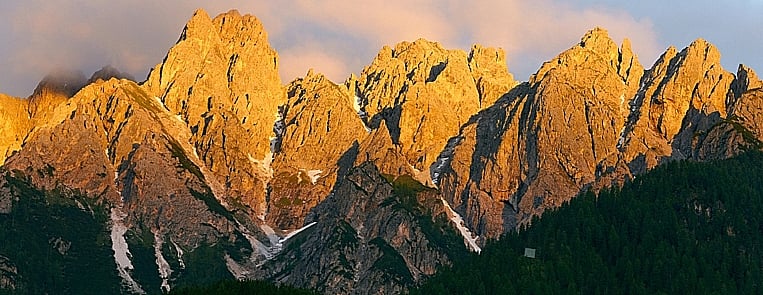
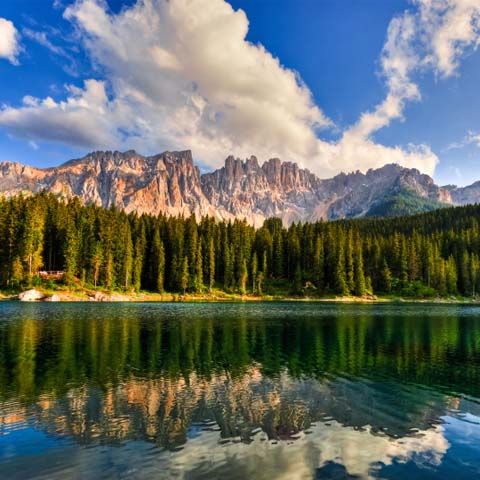
Best of Italy’s Lake District and Dolomites Semi Escorted Tour
The majesty of the Italian Alps, charming Villas and picturesque sights, are all breathtaking landscapes on this enchanting tour along Italy’s northern Lakes and Alps.
HOME » POPULAR ITALIAN DESTINATIONS » TRENTO TRAVEL GUIDE » TRENTO FOOD AND WINE GUIDE
Trento Travel Guide Culture History Food and Wine Things to Do Plan My Trip
About this guide: This guide to the food and wine of Trento was written by the Italian-born travel specialists at Trips 2 Italy, a custom tour operator that has designed hand-crafted Italian vacations since 2003. Every recommendation below reflects the same first-hand knowledge our team draws on when we build a private Trento itinerary around a traveler’s interests, dates, and pace. Read it for your research, then let us translate it into a trip designed entirely around you.
Trento eats the way it has lived for centuries: Italian at heart, alpine in character. The kitchen of the Trentino Alto Adige region‘s southern half is built on polenta, bread dumplings, cured meats, mountain cheese, and lake and river fish, seasoned with the thrift and precision of valleys where nothing was wasted and winter was long. It shares a border with the Austrian-inflected cooking of South Tyrol, yet remains distinctly its own dialect.
The foundation is the maso, the mountain farmstead, and its calendar. Cabbage became sauerkraut for the cellar, bread ends became dumplings, beef was salted and spiced into carne salada, and pork was smoked gently into speck. What began as necessity is now identity, defended by producers who treat a barrel of cabbage or a wheel of cheese with a winemaker’s seriousness.
Eating in Trento rewards a little fluency, and we provide it. Every culinary itinerary we design comes with guidance on what to order where and why: the osterie where canederli are made by hand at lunchtime, the cellars where the house pour is the family’s own Teroldego, and the mountain huts where the polenta is cut with a string. The menu here is a map of specific valleys, and reading it is half the pleasure.
Begin with canederli, the great bread dumplings of the Alps, studded with speck or cheese and served either in clear broth or with melted butter, comfort engineered over centuries of mountain winters. Their leaner cousins, strangolapreti, the priest stranglers of spinach and bread, come dressed simply in butter and sage and taste of the kitchen gardens above the city.
Carne salada is Trento’s most distinctive plate: lean beef cured with salt, garlic, juniper, and mountain herbs, sliced thin and served raw like a carpaccio with oil and lemon, or seared briefly and paired with borlotti beans. Born in the Alto Garda valleys south of the city, it appears on tables from humble osterie to fine dining rooms, each with its own cure.
Around these anchors gathers the mountain repertoire: golden tortel di patate, the crisp potato fritter of the valleys, eaten with cured meats and soft cheese; polenta from local corn carrying stews, mushrooms, or game; lake fish from Garda and trout from alpine streams; and in autumn, porcini and chestnuts from the forests. The through-line is seasonality without compromise, which is why we time culinary itineraries to the calendar as deliberately as to the map.
The salumi board tells its own valley stories. Alongside speck come the luganega, the fresh and aged sausages of the Trentino kitchen, and the mortandela of the Val di Non, a smoked, hand-shaped pork specialty guarded by its valley with real pride. Ordering the mixed board with a basket of dark bread and a glass of Teroldego is the fastest education in the local larder we know.
Trento’s signature pour is not a red or a white but a sparkle. Trentodoc is mountain sparkling wine made by the classic method of second fermentation in the bottle, from Chardonnay and Pinot Nero grown on slopes that climb from the valley floor toward 3,000 feet. The alpine nights keep the acidity taut, the long lees aging builds depth, and the result stands comparison with the most celebrated sparkling wines anywhere.
The tradition began in 1902, when Giulio Ferrari, convinced his mountains could rival Champagne, planted Chardonnay in the hills around the city. His conviction built one of Italy’s legendary wine houses and inspired dozens more, and today several score of producers, from historic cellars in the city itself to small family estates in the surrounding valleys, bottle under the Trentodoc name.
Tasting it at the source is one of the great experiences we arrange in Trento. Cellar visits descend into tunnels stacked with millions of slowly maturing bottles, tastings move from fresh non-vintage cuvees to long-aged riservas, and the conversation is often with the family itself. With a private driver handling the hillside roads, an afternoon among the Trentodoc cellars becomes pure pleasure, and it converts more travelers into collectors than any experience we offer here.
Locals will also teach you how to drink it: not as a toast reserved for occasions, but as the city’s table wine for the whole meal, from a crisp young cuvee with carne salada to a long-aged riserva standing up to canederli and mountain cheese. Adopting that habit for a week is one of the quiet pleasures of a Trento itinerary, and one of the hardest to give back at home.
The valleys around Trento hold a family of native grapes worth the journey on their own. Teroldego, the pride of the Piana Rotaliana just north of the city, produces a dark, velvety red that locals call the prince of Trentino wines. Marzemino, grown in the Vallagarina to the south, earned immortality when Mozart praised it by name in Don Giovanni, and remains a supple, cherry-scented companion to the local table.
The whites answer with alpine freshness: Nosiola, the region’s native white, crisp and nutty from the Valle dei Laghi, and Muller-Thurgau raised at altitude in the Val di Cembra’s steep terraced vineyards. Nosiola also performs the region’s quietest miracle, Vino Santo Trentino, a golden dessert wine pressed from grapes dried on racks through the winter and aged for years, produced in tiny quantities and poured like a family secret.
After dinner comes grappa, which these valleys distill with particular finesse; tastings at family distilleries pair beautifully with a cellar day. We compose wine itineraries that move from Teroldego vineyards to Trentodoc tunnels to a Vino Santo vertical in a single unhurried day, with every pour explained by the people who made it and every road handled by your driver.
Trento’s aperitivo hour is the city’s daily ceremony. As the passeggiata winds down, the bars around Piazza Duomo and along the arcaded streets fill with glasses of Trentodoc, plates of speck and local cheese, and conversation that carries on well past the first pour. Joining it is the fastest way to feel like a resident rather than a visitor.
Mornings belong to the markets. The weekly market spreads through the center with mountain cheeses, orchard fruit, and cured meats alongside everything else a provincial capital trades, and Palazzo Roccabruna, the province’s house of flavors, stages tastings and showcases of Trentino products in a Renaissance palace. In autumn the surrounding villages add harvest festivals, and the Christmas market fills Piazza Fiera with vin brule, strudel, and mountain sweets from late November.
For travelers who want to go deeper, we arrange market mornings with local cooks who shop them daily, followed by hands-on sessions in farmhouse kitchens where the basket becomes lunch: canederli rolled by hand, tortel di patate crisped in the pan, strudel folded the family way. Cooking what you chose that morning, with the valley outside the window, is the version of a cooking class we insist on.
Trentino is Italy’s orchard. The Val di Non and the valleys around Trento grow a remarkable share of the nation’s apples, and the fruit appears everywhere: in the strudel served with afternoon coffee, in fritters at the markets, in juices pressed at the farm, and in the zelten, the dense Christmas cake of dried fruit and nuts that every family bakes to its own jealously guarded proportions.
The cheese cellar is equally serious. Trentingrana, the mountain answer to the great grating cheeses, anchors the table, while alpine dairies age Puzzone di Moena, a washed-rind cheese of glorious pungency, and Vezzena from the high pastures east of the city. Paired with local honey, rye bread, and a glass of Nosiola, they make the simplest fine meal in the region.
The valleys add their smaller treasures: raspberries, blueberries, and currants from the Valsugana’s berry farms, mountain honeys that change character with every flowering meadow, and juices and preserves that fill the farm shops along every road we drive. Visiting a producer at work, whether a dairy at morning milking or a berry farm in high summer, turns the region’s table from a menu into a landscape.
Dining rooms in and around Trento carry all of this from rustic to refined. Mountain huts serve polenta and roasted meats to hikers, historic osterie in the painted center plate carne salada beside candlelit stone, and a constellation of ambitious kitchens reimagines the alpine larder with contemporary craft, including tasting menus that pour Trentodoc from aperitif to dessert. We reserve the rooms suited to each evening of an itinerary, grand or humble, because in Trento both extremes are done superbly.
A Trips 2 Italy culinary itinerary begins with how you love food, not with a fixed menu of activities. For some travelers that means the cellar: vertical tastings with Trentodoc producers, Teroldego estates in the Piana Rotaliana, and a Vino Santo tasting in the Valle dei Laghi. For others it means the kitchen, the market, the alpine dairy at milking time, or the autumn forest with a mushroom guide.
Because our team is Italian-born and has worked these valleys since 2003, the settings are authentic rather than staged: family cellars that receive visitors by introduction, farmhouse kitchens rather than classrooms, mountain tables where the cheese was made a hundred yards away. Anyone can taste sparkling wine in Trento. Tasting it in the tunnel where it slept for a decade, with the winemaker pouring, is a different experience entirely.
Every culinary journey is composed around your dates and the season’s calendar, from spring asparagus to the harvest to the Christmas market’s sweets, as part of our wine tasting and food tours in Italy. Tell us how you imagine eating in Trento, and we will build the days around the table.
Trento deserves more than a template. Since 2003, Trips 2 Italy has designed private Italian vacations one traveler at a time, hand selecting every experience based on what you tell us rather than fitting you into a predefined package. Our Italian-born team plans Trento with the knowledge of people who call Italy home, from the frescoed facades of Piazza Duomo to the Trentodoc cellars in the hills and the Brenta Dolomites beyond, and we remain at your side throughout your trip with 24/7 assistance. Tell us how you imagine Trento, and we will craft the itinerary that matches it.

The majesty of the Italian Alps, charming Villas and picturesque sights, are all breathtaking landscapes on this enchanting tour along Italy’s northern Lakes and Alps.

Breathtaking landscapes and enchanting Alpine villages surround the scenery in this fantastic tour along the majestic peaks of the Dolomites.
Trento is known for canederli bread dumplings, carne salada cured beef served raw or seared with beans, strangolapreti spinach dumplings, tortel di patate potato fritters, polenta, speck, and mountain cheeses like Trentingrana and Puzzone di Moena, with apple strudel and zelten among the sweets. The cooking is alpine Italian, seasonal, and fiercely local.
Trentodoc is the mountain sparkling wine of Trento, made by the classic method of second fermentation in the bottle from Chardonnay and Pinot Nero grown on alpine slopes. The tradition began with Giulio Ferrari in 1902, and today dozens of houses produce it. Trips 2 Italy arranges cellar visits and tastings with producers we know personally, from historic city cellars to small family estates.
Carne salada is Trento’s signature cured beef, salted with garlic, juniper, and mountain herbs for weeks, then sliced thin and served raw with oil and lemon or briefly seared with borlotti beans. Born in the valleys between Trento and Lake Garda, it appears everywhere from rustic osterie to fine dining rooms.
Teroldego Rotaliano, the dark and velvety local red from just north of the city, Marzemino, the supple red praised in Mozart’s Don Giovanni, crisp native Nosiola, altitude-grown Muller-Thurgau from the Val di Cembra, and the rare Vino Santo Trentino dessert wine. We design tasting days that cover the whole family with the producers themselves.
Yes, and the setting makes the experience. Trips 2 Italy arranges market mornings with local cooks followed by hands-on sessions in farmhouse and estate kitchens, rolling canederli, crisping tortel di patate, and folding strudel the family way, with lunch as the homework. Private, personal, and rooted in real Trentino home cooking rather than a staged classroom.
September and October bring the grape harvest and the mushroom and chestnut season, spring offers asparagus and alpine cheese at its freshest, and late November through early January adds the Christmas market with vin brule and mountain sweets. Cellars welcome visitors year round, so every season sets a rewarding table.