Things To Do in Urbino

HOME » POPULAR ITALIAN DESTINATIONS » URBINO TRAVEL GUIDE » URBINO THINGS TO DO GUIDE

Urbino Travel Guide        Culture        History        Food and Wine        Things to Do        Plan My Trip

About this guide: This guide to things to do in Urbino was written by the Italian-born travel specialists at Trips 2 Italy, a custom tour operator that has designed hand-crafted Italian vacations since 2003. Every recommendation below reflects the same first-hand knowledge our team draws on when we build a private Urbino itinerary around a traveler’s interests, dates, and pace. Read it for your research, then let us translate it into a trip designed entirely around you.

What Belongs at the Top of Every Urbino Itinerary?

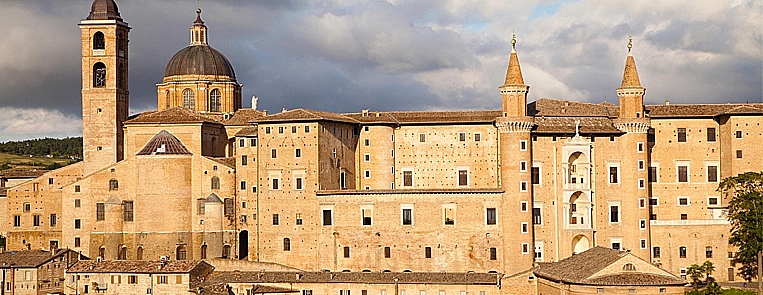
The Palazzo Ducale first, and without hurry. Federico da Montefeltro’s palace rewards half a day: the arcaded courtyard and grand staircase, the ducal apartments hung with the Galleria Nazionale delle Marche’s masterpieces, Piero della Francesca’s Flagellation and Senigallia Madonna, Raphael’s La Muta, and the Ideal City panel among them, and above all the studiolo, the little study whose intarsia illusions repay every minute spent inside them. The underground kitchens, baths, and stables complete the machine beneath the elegance.

Set within the Marche region‘s most rewarding hill town, the palace concentrates so much in one building that pacing decides everything. We arrange visits with art historians who unfold the rooms in narrative order, timed for the quiet hours so the Flagellation receives contemplation rather than a glance over shoulders.

Afterward, let the city itself take over: the cathedral with Federico Barocci’s altarpieces, Piazza della Repubblica’s cafe theater, and the first of the belvederes where the Montefeltro hills roll out exactly as Piero painted them. Urbino’s essential list is short, which is precisely its luxury: everything can be seen well rather than merely seen.

Pacing is the secret the checklists miss. The palace rewards a return visit, an hour with the masterpieces in the morning and a slow second pass in the late afternoon when the courtyard fills with slanting light, and the city between visits supplies exactly the right intermission of crescia, coffee, and lanes. We build Urbino days with that rhythm deliberately, because the difference between seeing the studiolo and remembering it forever is usually twenty unhurried minutes.

What Is It Like to Visit Raphael's Birthplace and the Oratories?

Raphael’s birthplace on Via Raffaello is an experience of intimacy rather than spectacle. The house where the painter was born in 1483 preserves his father Giovanni Santi’s workshop world: family rooms, the courtyard with the stone mortar where pigments were ground, and a tender early Madonna fresco attributed to the teenager who would become European painting’s most graceful hand. Kept by the Accademia Raffaello since 1873, it remains one of Italy’s most affecting artist shrines.

Downhill, two small oratories hold disproportionate treasure. The Oratorio di San Giovanni Battista blazes with the Salimbeni brothers’ frescoes of 1416, a Crucifixion and scenes from the Baptist’s life crowded with knights, dogs, and gossiping onlookers in the vivid style of International Gothic, and the neighboring Oratorio di San Giuseppe shelters Federico Brandani’s life-size stucco Nativity, a marvel of sixteenth-century modeling.

These smaller rooms are where a specialist earns their keep, reading fresco cycles that reward slow looking and connecting the oratories’ confraternity world to the court above. We sequence them with the palace so the city’s art unfolds chronologically, and we time them for the hours when travelers often have the frescoes entirely to themselves.

Where Are the Best Views and Walks in Urbino?

The essential viewpoint is the Fortezza Albornoz, the fourteenth-century fortress whose grassy park frames the classic postcard: the Palazzo Ducale’s twin torricini, the cathedral dome, and the tiled city stacked against the Montefeltro hills. Come twice if you can, in morning light and again as sunset turns the brick to embers and the swifts take over the sky.

The walks compose themselves. Via Raffaello climbs past the painter’s house to his monument on Pian del Monte, the circuit inside the sixteenth-century bastioned walls strings together belvederes and quiet lanes, and the descent through the mercatale, the old market terrace below the palace, reveals Francesco di Giorgio’s helicoidal ramp, the spiral passage that once carried the court between city and valley.

Photographers should plan around the light. Morning sun models the palace facade and the eastern valleys, late afternoon turns the whole city amber, and the blue hour from the Albornoz park, when the monuments glow against the darkening hills, produces the image most travelers frame at home. In winter, a dusting of snow on the torricini creates the rarest picture of all.

Beyond the gates, footpaths drop through olive groves and rise onto ridge roads with the city always recomposing itself behind you, the same views that fill Renaissance backgrounds. We build walking itineraries matched to appetite and knees alike, from gentle wall circuits to half-day hill routes, each ending where Urbino’s walks should: at a cafe table in the piazza or a farmhouse lunch among the hills.

Where Do You Find the Quieter Side of Urbino?

Urbino is already Italy’s quieter side, but it keeps still gentler corners. The university’s botanical garden, founded in 1809, tucks terraces of medicinal plants and old trees behind a lane near San Francesco, the Albani diocesan museum beside the cathedral holds the treasures of Pope Clement XI’s hometown church, and the church of San Bernardino, a short walk outside the walls, pairs the dukes’ serene mausoleum with the finest distant view of the palace.

The city’s rhythms open to anyone who adopts them. Mid-afternoon, when the lanes empty and the light angles through the brick, is the wanderer’s hour; early evening belongs to the passeggiata and an aperitivo among students debating philosophy exactly where courtiers once debated grace. Even in high summer, a turn off any main lane finds silence within thirty steps.

Evenings deserve their own planning. An aperitivo at a lane-corner cafe as the swifts wheel over the rooftops, a concert in a Renaissance courtyard when the summer calendar allows, and a slow dinner of crescia, casciotta, and Bianchello behind medieval walls compose the kind of night that no larger city can imitate. We reserve the tables and time the walks so the evening arrives as effortlessly as the day.

The surrounding Montefeltro multiplies the quiet. Stone villages, upland pastures, and fortified crags like Sassocorvaro, with its Renaissance fortress shaped like a tortoise, receive few visitors in any season, and a slow day threading them with a private driver, a farm lunch at its center, is many travelers’ favorite memory of the region. Quiet, here, is not an absence but the region’s actual character, and we design itineraries that let travelers inhabit it.

What Outdoor and Active Experiences Surround Urbino?

The Montefeltro is made to be moved through. Cyclists ride the ridge roads and the Metauro valley, with e-bikes opening the famous hills to every fitness level, walkers follow paths between fortress villages and along the old pilgrim and salt routes, and riders explore Apennine foothills on horseback from farms in the surrounding valleys. The rewards are constant: fortress silhouettes on the skyline, hawks over the wheat, and villages where the bar in the square still doubles as the town’s living archive. Every route, whatever its length, earns its lunch.

Half an hour south, the Furlo Gorge cuts a dramatic limestone canyon beside the Roman tunnel that Vespasian drove through the rock in 76 AD, its reserve laced with walking trails and golden eagles overhead, and beyond it rise Monte Nerone and Monte Catria for serious hiking, with the wildflower high plains and cross-country trails of the Apennines in their seasons. September adds the spectacle of hand-built kites over Urbino’s hills during the Festa dell’Aquilone.

We fold these days into itineraries as part of our active trips in Italy, matched carefully to ability and appetite, with routes, gear, and local guides arranged in advance. Active Urbino pairs naturally with its rewards: the ride ends at the estate tasting, the walk ends in the piazza, and the hike ends at a truffle lunch.

What Day Trips Pair Well With Urbino?

The castles come first. Gradara, forty minutes north, is the storybook walled village whose castle claims the tragic lovers Paolo and Francesca of Dante’s Inferno, its ramparts and rooms unusually complete, and San Leo, on its sheer crag in the upper Montefeltro, pairs a Romanesque parish church and cathedral with the vertiginous fortress where the adventurer Cagliostro ended his days. Each distills the region’s history into a single unforgettable silhouette.

Pesaro, the coastal capital half an hour east, adds Rossini’s birthplace, a UNESCO Creative City of Music whose summer Rossini Opera Festival draws the opera world, along with Adriatic beaches and a seafood lunch by the water. Urbania, the old Casteldurante, keeps the duchy’s majolica tradition alive in family workshops, and Acqualagna and the Furlo Gorge combine truffles with Roman engineering in a single valley.

Farther reaches extend the map for travelers with an extra day. The karst cathedral of the Frasassi Caves, one of Europe’s great show cave systems, lies about an hour and a quarter south, the mosaics of Ravenna glow an easy morning’s drive north, and the mountain republic of San Marino stacks its towers within an hour of the city. Each pairs naturally with a scenic route through the Montefeltro’s castles.

The art of the day trip is composition: one anchor, an unhurried lunch, and a return through back-road scenery rather than the fastest route. With a private driver and our sequencing, each excursion becomes a complete story, and travelers return to Urbino in time for the evening light on the torricini, which no day trip should ever cost you.

How Do We Compose Your Days in Urbino?

We begin with what you tell us. Art lovers receive the palace and oratories in narrative order with historians who repopulate the rooms; food lovers receive griddles, dairies, cellars, and truffle woods; families receive kite hills, castle ramparts, and hands-on workshops that turn the Renaissance into an adventure; and couples receive the evening belvederes, the quiet hill roads, and tables lit for two.

Then we handle everything that makes it effortless: timed and early access where it matters, guides chosen for their storytelling, drivers who know which ridge road saves the view for the last bend, and reservations from farmhouse lunches to festival vantage points. Urbino has no logistics worth your attention on vacation, and with our arrangements it has none at all. Throughout your trip, our team remains reachable around the clock, so even the smallest question finds an answer while you stay entirely inside the experience.

However you imagine it, Urbino becomes a movement in a larger Italian composition, a custom trip to Italy built entirely from your interests, dates, and pace, or a highlight of a family vacation to Italy that gives every generation its day. Since 2003 we have designed these journeys one traveler at a time, and the city of the ideal court deserves nothing less than an ideal itinerary.

Ready to Begin Planning Your Urbino Vacation?

Urbino deserves more than a template. Since 2003, Trips 2 Italy has designed private Italian vacations one traveler at a time, hand selecting every experience based on what you tell us rather than fitting you into a predefined package. Our Italian-born team plans Urbino with the knowledge of people who call Italy home, from the twin towers of the Palazzo Ducale to the quiet hill roads of the Montefeltro, and we remain at your side throughout your trip with 24/7 assistance. Tell us how you imagine Urbino, and we will craft the itinerary that matches it.

Explore Our Urbino Vacation Itineraries

Frequently Asked Questions About Things to Do in Urbino

The Palazzo Ducale and the Galleria Nazionale delle Marche inside it, including Piero della Francesca’s Flagellation, Raphael’s La Muta, the Ideal City panel, and Federico’s intarsia studiolo. It rewards half a day with an expert guide, which is why Trips 2 Italy arranges art historians and quiet-hour timing as the foundation of every Urbino itinerary.

The park of the Fortezza Albornoz frames the classic panorama of the Palazzo Ducale’s twin towers, the cathedral dome, and the tiled city against the Montefeltro hills. It is best in early morning and again at sunset, and the view from the church of San Bernardino outside the walls is its equal from the opposite side.

Gradara’s castle of Paolo and Francesca, the cliff-top fortress of San Leo, Pesaro with Rossini’s birthplace and Adriatic beaches, the majolica workshops of Urbania, and truffle country around Acqualagna with the Furlo Gorge all lie within about forty five minutes. Trips 2 Italy composes each as a complete day with a private driver, an anchor sight, and an unhurried lunch.

Wonderfully so. Castle ramparts at Gradara and San Leo, the kite festival hills, hands-on crescia and ceramic workshops, and a compact walkable center make the Renaissance feel like an adventure rather than a lesson. We compose family itineraries so art, castles, and gelato arrive in the right proportions for every generation.

Plan on two to three unhurried hours for the ducal apartments, the Galleria Nazionale delle Marche’s masterpieces, the studiolo, and the underground service floors, and longer for serious art lovers. Visiting with a specialist transforms the experience, turning rooms and paintings into the connected story of Federico’s court.

Easily. Pesaro’s beaches and Rossini heritage lie about thirty five kilometers east, the Conero Riviera’s dramatic coves sit farther down the coast, and many travelers pair a hill-country stay in Urbino with seaside days for a complete Marche experience. We arrange the transfers and sequence so both worlds arrive at their best.