Urbino Food and Wine Guide

HOME » POPULAR ITALIAN DESTINATIONS » URBINO TRAVEL GUIDE » URBINO FOOD AND WINE GUIDE

Urbino Travel Guide        Culture        History        Food and Wine        Things to Do        Plan My Trip

About this guide: This guide to the food and wine of Urbino was written by the Italian-born travel specialists at Trips 2 Italy, a custom tour operator that has designed hand-crafted Italian vacations since 2003. Every recommendation below reflects the same first-hand knowledge our team draws on when we build a private Urbino itinerary around a traveler’s interests, dates, and pace. Read it for your research, then let us translate it into a trip designed entirely around you.

What Defines the Cuisine of Urbino and the Montefeltro?

Urbino eats like the hill country it crowns. The cuisine of the Montefeltro is a farm kitchen refined by a ducal court: bread and flatbreads from Apennine wheat, cheeses from mixed flocks on high pastures, pork cured in mountain air, game and wild herbs from the oak woods, and truffles from the valleys below. It is inland cooking, hearty and precise, with the Adriatic’s seafood only half an hour away when the table wants it.

Like everywhere in the Marche region, the philosophy is sourcing before technique. Dishes carry few ingredients and no hiding places, which is why families argue happily over which farm’s casciotta and which griddle’s crescia set the standard. The university’s students keep the food honest and generous, and the surrounding farms keep it seasonal in the strictest sense.

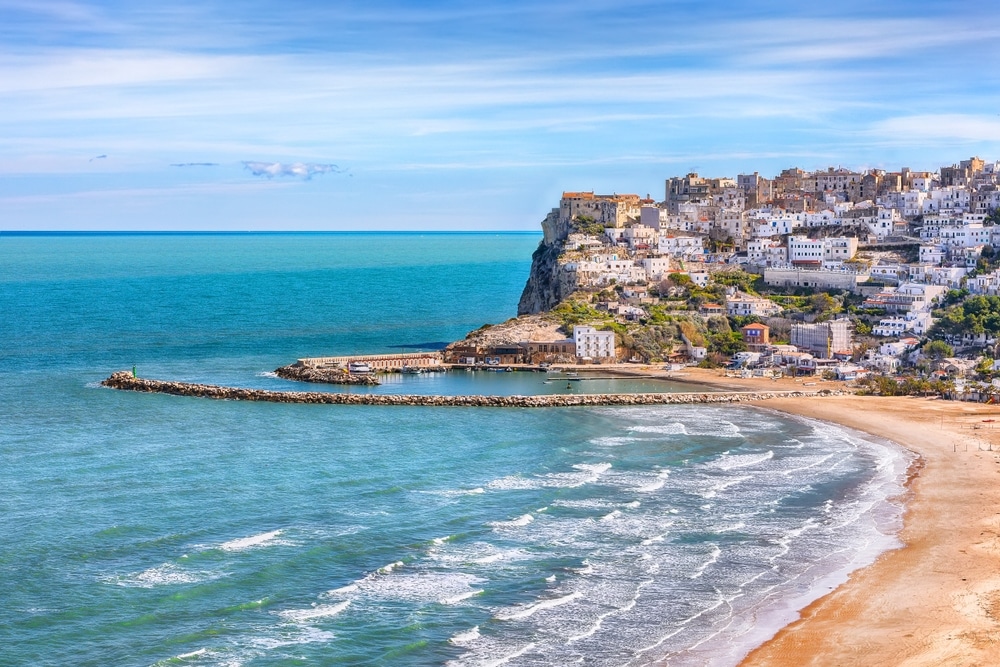
The coast completes the picture. Half an hour east, Pesaro and the Adriatic ports set the inland kitchen against brodetto, the fishermen’s stew that every harbor prepares its own way, and platters of fried and grilled seafood taken by the water. Many of our travelers alternate the two worlds daily, hill-country lunches and seaside dinners, which is one of the Marche’s most delicious luxuries.

For traveling food lovers this is thrilling territory precisely because it remains a local conversation. Menus in Urbino read like a map of the hills, and eating well here is a matter of knowing which kitchen honors which tradition. That fluency is what we provide: every culinary itinerary we design comes with guidance on what to order where and why, so the region’s quiet masterpieces reveal themselves at the table.

What Is Crescia Sfogliata and Why Do Locals Treasure It?

Urbino’s signature is a flatbread with aristocratic manners. Crescia sfogliata is made from a rich dough of flour, eggs, and lard seasoned with black pepper, rolled thin, coiled, rested, and rolled again so it cooks on the griddle into delicate, savory layers, closer in spirit to a pastry than to ordinary bread. Documents trace flatbreads of this family to the Renaissance city, and locals will tell you the layering technique is the difference between Urbino’s crescia and every neighboring cousin.

The classic service is folded around prosciutto, salsiccia, wild greens sauteed with garlic, or slices of casciotta cheese, eaten hot from the griddle at a marble counter or carried into the piazza. Filled and griddled, it becomes the crostolo of the surrounding villages, and every family that makes it holds opinions about thickness, pepper, and resting time that approach theology.

We build crescia into itineraries the way it deserves: as a ritual rather than a snack. That can mean a griddle-side demonstration with a cook who learned from her grandmother, a tasting that sets Urbino’s sfogliata beside the flatbreads of Romagna and the coast, or a hands-on session where travelers roll and coil the dough themselves. Few foods teach a territory faster, and none makes a better mid-morning in the lanes below the palace.

Why Was Casciotta d'Urbino Michelangelo's Favorite Cheese?

Casciotta d’Urbino is the cheese with the most illustrious admirer in Italian history. A soft, gentle wheel blending mostly sheep’s milk with a share of cow’s milk, it has been made in these hills since at least the Renaissance, and Michelangelo Buonarroti loved it so dearly that he took over farmland near Urbania, through his Urbino-born assistant Francesco Amatori, in part to keep himself supplied. Letters and property records preserve the story, and the region has never stopped telling it.

The cheese earned European protected designation of origin status, its rules binding it to the province’s pastures and its short aging keeping it moist, milky, and delicately sweet, a character locals describe as the taste of spring grass. It is eaten young, with crescia, with fava beans in season, with the first pears of autumn, or simply with honey from the same hills.

We arrange visits to farms and dairies where casciotta is still turned by hand, tastings that set it among the pecorini of the Apennines to show what makes it singular, and market mornings where the cheese counter becomes a history lesson. Tasting Michelangelo’s cheese within sight of the palace built by Federico’s masons is the kind of detail that turns a meal into a story travelers retell for years.

Which Classic Dishes Fill the Montefeltro Table?

Begin with the pastas. Vincisgrassi, the Marche’s baroque answer to lasagna, layers sheets of egg pasta with a rich ragu of meats and chicken livers, besciamella, and in fine kitchens a drift of truffle, while passatelli, golden strands of bread, egg, and parmigiano pressed through an iron, arrive in capon broth as the region’s great comfort dish. Hand-rolled tagliatelle carry ragus of duck, rabbit, or wild boar from the surrounding woods.

The main courses speak of farmyard and forest. Rabbit and porchetta-style roasts perfumed with wild fennel, guinea fowl and pigeon from the courtyard tradition, grilled lamb from Apennine flocks, and game in the colder months anchor the menus, with Prosciutto di Carpegna, the sweet mountain-cured ham of the upper Montefeltro, opening meals alongside local salumi and crescia.

The cheese board deserves its own chapter. Beyond casciotta, the Montefeltro’s borderlands age pecorino in underground pits to produce formaggio di fossa, a pungent, complex cheese unearthed each autumn around Talamello and Sant’Agata Feltria, and the market counters fill it out with fresh ricotta, aged pecorini, and honeys from the Apennine meadows. A guided tasting that walks this range, mild to mighty, is one of the most enjoyable hours we arrange in the region.

Above all, this is truffle country. Acqualagna, half an hour south of Urbino, ranks among Italy’s great truffle capitals, celebrating the prized white truffle with its famous autumn fair and supplying tartufo in every season from its surrounding valleys. We arrange truffle hunts with a trifolau and his dog followed by lunches built around the morning’s find, and in October and November they become the gastronomic centerpiece of any Urbino itinerary.

Which Wines Accompany the Table in Urbino?

The local glass is white and bright. Bianchello del Metauro, grown on the hills along the river valley below Urbino from the biancame grape, is the historic wine of the territory, crisp, floral, and made for crescia, casciotta, and the first courses of the inland kitchen. Legend even credits the wine with a role in history, claiming Hasdrubal’s army lingered over it before the Romans struck at the Metaurus in 207 BC.

The reds come from the same amphitheater of hills. Colli Pesaresi Sangiovese gives the province its everyday and its serious reds, bridging Romagna’s Sangiovese country just to the north, and a short drive into the wider Marche opens the cellars of Verdicchio, one of Italy’s greatest white grapes, along with Rosso Conero and Lacrima di Morro d’Alba for travelers who want the full regional range.

The Montefeltro also keeps a beloved curiosity: vino di visciole, an ancient dessert wine infused with wild sour cherries, poured with pastries and aged cheeses at the meal’s end. We compose wine days around family estates in the Metauro hills and beyond, visits with the winemaker rather than a script, and a private driver so every tasting can be enjoyed while the hill roads stay scenery rather than navigation.

What Sweets and Rituals Complete a Meal in Urbino?

The sweets are a farm calendar in pastry form. Autumn brings bostrengo, the dense rice cake enriched with dried fruit, nuts, and honey that used up the harvest’s abundance, and chestnut desserts from the Apennine woods. Carnival scatters fried crostoli and castagnole through the cafes, Easter brings sweet cheese-laced breads, and summer ends with ciambellone, the ring cake that accompanies every family Sunday, often dipped in visciole wine.

The rituals matter as much as the recipes. Morning espresso taken standing amid students and professors, the aperitivo hour that gathers the piazza before dinner, the long Sunday lunch that empties the lanes and fills the farmhouses, and the passeggiata that closes every evening give the city’s eating its architecture. Meals here keep court manners in one respect: they refuse to be hurried.

The festival calendar keeps the table public. Acqualagna’s white truffle fair crowns the autumn, villages across the Montefeltro hold sagre for everything from crescia to chestnuts to the new wine, and harvest season fills the farm courtyards with long shared tables. These small feasts are among the best windows into local life a traveler can find, and we time itineraries so the right one falls inside your dates.

Fine dining flourishes quietly in and around the city, from refined rooms reinterpreting the Montefeltro’s ingredients to countryside tables where the tasting menu is simply what the farm produced this week, and we reserve the rooms suited to each evening of an itinerary. Grand or humble, the table of Urbino rewards travelers who accept its unhurried terms completely.

How Do We Craft Culinary Journeys Through Urbino and the Marche?

A Trips 2 Italy culinary itinerary begins with how you love food, not with a fixed menu of activities. For some travelers that means hands-on: a market morning in the lanes, then a farmhouse kitchen session rolling crescia and hand-cutting tagliatelle where lunch is the homework. For others it means the hunt, following truffle dogs through the oak woods near Acqualagna, or the cellar, tasting Bianchello and Sangiovese with the families who grow them.

Because our team is Italian-born and has worked these regions since 2003, the settings are authentic rather than staged: working dairies where casciotta is turned by hand, mountain villages where prosciutto ages in Apennine air, family estates in the Metauro hills, and the sagre and food festivals that fill the Montefeltro calendar from spring through truffle season. Nothing on these days is selected from a catalog; each is arranged through relationships, for you.

The pairing with the rest of the Marche multiplies the pleasure. A culinary week can move from Urbino’s flatbreads and truffles to Verdicchio cellars, Adriatic seafood on the Conero, and the fried olives of Ascoli Piceno in the south, a progression that tastes like the whole region in order. We design that arc so each day builds on the last rather than repeating it.

Every culinary journey is composed around your dates and the season’s actual offerings, from spring’s fava and fresh cheeses to the vendemmia and the white truffle weeks of autumn, as part of our wine tasting and food tours in Italy. Tell us how you imagine eating in Urbino, and we will build the days around the table.

Ready to Begin Planning Your Urbino Vacation?

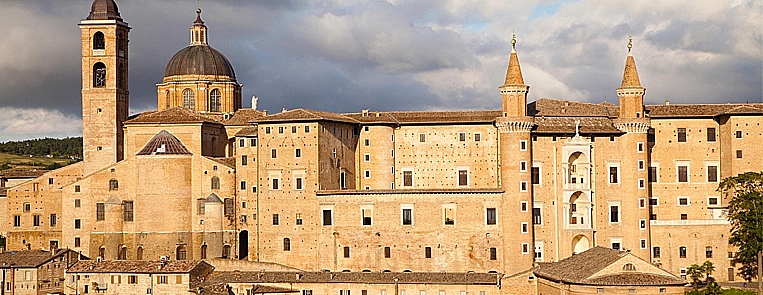
Urbino deserves more than a template. Since 2003, Trips 2 Italy has designed private Italian vacations one traveler at a time, hand selecting every experience based on what you tell us rather than fitting you into a predefined package. Our Italian-born team plans Urbino with the knowledge of people who call Italy home, from the twin towers of the Palazzo Ducale to the quiet hill roads of the Montefeltro, and we remain at your side throughout your trip with 24/7 assistance. Tell us how you imagine Urbino, and we will craft the itinerary that matches it.

Explore Our Urbino Vacation Itineraries

Frequently Asked Questions About Food and Wine in Urbino

Urbino is celebrated for crescia sfogliata, its layered griddled flatbread served with prosciutto, wild greens, and local cheese, and for casciotta d’Urbino, the soft mixed-milk cheese Michelangelo famously loved. The wider table features vincisgrassi, passatelli in broth, Carpegna prosciutto, game from the Apennine woods, and truffles from nearby Acqualagna.

Casciotta d’Urbino is a protected designation cheese blending mostly sheep’s milk with cow’s milk into a soft, delicate, briefly aged wheel with a sweet, grassy character. Documents record that Michelangelo prized it so highly he took over farmland near Urbania to secure his supply. It is classically eaten young with crescia flatbread, fava beans, or honey.

Yes. Acqualagna, about half an hour south of Urbino, is one of Italy’s great truffle capitals, with prized white truffles in October and November and black varieties through much of the year. Trips 2 Italy arranges private hunts with a trifolau and his dog followed by truffle-focused lunches, a signature experience of autumn itineraries.

Begin with Bianchello del Metauro, the crisp white of the river valley below the city, and the Sangiovese reds of the Colli Pesaresi. The wider Marche adds Verdicchio, one of Italy’s finest white grapes, and Rosso Conero, while vino di visciole, a wild sour cherry dessert wine of the Montefeltro, closes meals memorably. We arrange tastings with family producers throughout these hills.

Crescia sfogliata is Urbino’s layered flatbread, made from an egg and lard dough seasoned with black pepper, rolled and coiled to create flaky layers, then cooked on a griddle. Served hot and folded around prosciutto, sausage, wild greens, or casciotta cheese, it is the city’s essential taste and dates in spirit to the Renaissance court.

Yes, and the setting makes the experience. We arrange hands-on sessions in farmhouse and family kitchens where travelers learn crescia sfogliata, hand-cut pasta, and the dishes of the Montefeltro, often beginning with a market visit and ending with a long lunch of the morning’s work. Private, personal, and rooted in real home cooking rather than a staged classroom.