
Flavors of Marche Tour 2025 – 2026
Discover the Marche countryside as hands-on cooking, local wines and charming villages create an authentic Italian culinary escape. Starting from $938 per person.
HOME » POPULAR ITALIAN DESTINATIONS » ASCOLI PICENO TRAVEL GUIDE » ASCOLI PICENO HISTORY GUIDE
About this guide: This guide to the history of Ascoli Piceno was written by the Italian-born travel specialists at Trips 2 Italy, a custom tour operator that has designed hand-crafted Italian vacations since 2003. Every recommendation below reflects the same first-hand knowledge our team draws on when we build a private Ascoli Piceno itinerary around a traveler’s interests, dates, and pace. Read it for your research, then let us translate it into a trip designed entirely around you.
Ascoli’s story begins with a woodpecker. Legend holds that the Piceni, the Italic people who settled this land in the Iron Age, followed a sacred woodpecker, the picchio, on a ritual spring migration from the Sabine hills to the Adriatic slope, and took their very name from the bird. The woodpecker remains the emblem of the Marche to this day, a two and a half thousand year old logo still in official use.
History confirms what legend embroiders. From around the ninth century BC the Piceni built a prosperous culture across what is now the Marche region, trading amber and bronze across the Adriatic and burying their dead with warrior gear and ornament of striking sophistication. Asculum, commanding the Tronto valley route between the mountains and the sea, grew into their principal city, already ancient when Rome began to press northward.
That pre-Roman pedigree matters for how the city carries itself. Ascoli was never a colonial foundation; it was a capital that negotiated with Rome as an equal, allied with it, and ultimately defied it. The city’s museums preserve the Piceni’s bronzes, weapons, and ornaments, and walking their collections with a good storyteller sets the stage for everything the streets outside will tell.
The land itself keeps the memory. The name Piceno still attaches to the province, the wines, and the olives; the woodpecker still spreads its wings on the regional emblem; and the ridge-top villages around the city sit on settlement sites the Piceni chose three millennia ago. Few corners of Italy carry an ancient identity so continuously into the present, and travelers who begin their visit with this deep layer find that everything afterward, from Roman gate to Renaissance square, reads as chapters of one unbroken book.
Rome arrived along the salt road. The Via Salaria, which carried Adriatic salt across the Apennines to the capital, made Asculum a strategic prize, and after the Picene wars of the third century BC the city entered Rome’s orbit as a federated ally. It kept its pride, and in 91 BC that pride ignited history: the killing of a Roman envoy at Asculum touched off the Social War, the great revolt of Rome’s Italian allies demanding citizenship.
The reckoning was severe. Pompeius Strabo, father of Pompey the Great, besieged and took the city in 89 BC, and the war’s end brought Roman citizenship to the Italians and full Roman identity to Asculum. The city was rebuilt on the grid that still underlies its streets, and its engineers left monuments that remain in daily use: the twin-arched Porta Gemina gate, the ruins of the Roman theater beneath the hill, and above all the majestic single-arch bridge over the Tronto at Solesta, still crossed on foot after two thousand years.
Few small cities let travelers touch Rome so directly. The Solesta bridge vaults the river in one span of cut travertine, among the boldest surviving arches of the Augustan age, and the legend-wrapped Ponte di Cecco spans the Castellano gorge below the medieval fortress. We pair these stones with guides who can people them again, turning an afternoon’s walk into a journey down twenty centuries.
The Middle Ages gave Ascoli its skyline. As a proud commune, the city filled with the tower houses of rival noble families, each raising its stone shaft higher as a statement of power, until chroniclers counted towers by the hundred and the city bristled like a stone forest. Medieval sources speak of some two hundred at the height of the fever, an astonishing number for a city of Ascoli’s size.
Politics pruned them. In the mid thirteenth century, in the age of Frederick II’s wars with the communes, scores of towers were lowered or toppled, and later centuries quarried others into palaces and bell towers. Yet dozens survive, whole or truncated, threaded through the old town: the slender Torre degli Ercolani, tallest of the noble towers, stands beside the Romanesque Palazzetto Longobardo, and the twin bell towers of the city’s churches carry the vertical habit into the sacred skyline.
Learning to spot the hidden towers is one of Ascoli’s best games. Once the eye is trained, truncated shafts reveal themselves everywhere, embedded in palace corners, capped as dovecotes, or serving as stair cores behind Renaissance facades, and a guided walk through the old quarters becomes an exercise in reading a medieval city beneath its later dress. It is detective work in travertine, and it delights travelers of every age.
The medieval city also produced its most haunting son. Cecco d’Ascoli, poet, physician, and astrologer, taught at Bologna and was burned at the stake in Florence in 1327 for his unorthodox science, and the city has never stopped honoring him. Legend credits him with raising the Ponte di Cecco over the Castellano in a single night with the devil as his mason, a story every Ascolano can still tell.
The Renaissance reached Ascoli as a project of civic beautification. In the decades around 1500 the city wrapped its medieval market square in the harmonious porticoes that made Piazza del Popolo one of Italy’s most admired public spaces, crowned the Palazzo dei Capitani with a monumental portal, and gave the church of San Francesco its graceful Loggia dei Mercanti, where the cloth merchants traded under carved arcades.
Painting kept pace with stone. Carlo Crivelli delivered his great polyptych to the cathedral in 1473, his followers spread the gilded style through the city’s churches, and Cola dell’Amatrice, the region’s homegrown painter-architect, gave the Duomo its dignified facade in the sixteenth century. The city that emerged from this century of refinement is essentially the one travelers walk today, medieval bones dressed in Renaissance grace.
Through these centuries Ascoli lived within the Papal States, governed from Rome yet fiercely attached to its own statutes and rituals. The Quintana joust codified in the fourteenth-century laws, the guild processions, and the offering of candles to Sant’Emidio, the patron who is still invoked against earthquakes, all took the forms that the modern city’s great summer pageant now revives with scholarly care.
The modern era arrived with Italy itself. In 1860 the Marche passed by plebiscite from papal rule into the new Kingdom of Italy, and Ascoli became a provincial capital, adding stately theaters, cafes, and promenades to its ancient fabric. The travertine industry, paper mills along the Castellano, and the surrounding farmland carried the economy, while the city’s Art Nouveau cafe rooms and its anisetta distilling tradition gave the new bourgeois age its flavors.
The twentieth century tested the city. The Second World War brought occupation and loss, including the destruction of the ancient Ponte di Cecco by retreating forces in 1944, and the hills above the city, around Colle San Marco, saw partisan resistance honored today by a monumental memorial. The postwar decades rebuilt with unusual respect: the Roman bridge at Solesta was restored, the Ponte di Cecco was raised again true to its form, and the historic center escaped the disfigurement that scarred so many Italian cities.
Recent decades have confirmed Ascoli’s vocation as one of central Italy’s best-kept historic cities. Industry settled in the valley below, the university brought students into the old palaces, and the travertine center, cared for by restorers and carvers working the same local stone as their Roman predecessors, remains a living organism rather than a museum piece.
The revival of the Quintana in 1955 crowned this modern chapter. What might have become a nostalgic costume parade was rebuilt instead as serious civic scholarship, with statutes, dress, and ceremony reconstructed from the city’s own archives, and it gave postwar Ascoli a way to carry its medieval identity proudly into the present. The joust’s summer thunder is, in its way, the sound of a city refusing to let its history become the past.
Start where the centuries stack visibly. Piazza Arringo carries the city’s whole biography in one space: the cathedral raised over Roman foundations and dressed by the Renaissance, Crivelli’s polyptych glowing in its chapel, the twelfth-century baptistery beside it, and the frescoed halls of the Palazzo dell’Arengo holding the civic collections. Ten minutes away, Piazza del Popolo shows what the Renaissance made of a medieval forum.
Then walk the perimeter of time. The Porta Gemina still opens the line of the Via Salaria into the city, the Roman theater sleeps in the grass below the Annunziata hill, the Solesta bridge carries its third millennium of footsteps over the Tronto, and the rebuilt Ponte di Cecco spans the Castellano beneath Forte Malatesta, the sixteenth-century fortress designed by Antonio da Sangallo the Younger that now hosts exhibitions inside its star-shaped walls.
The medieval quarters between these landmarks preserve tower houses, Romanesque churches, and lanes narrow enough to touch both walls, a fabric that makes Ascoli one of Italy’s most rewarding cities for historically minded travelers. We compose history-focused days with expert guides as part of our cultural tours of Italy, sequencing the sites so three thousand years arrive as a story rather than a shuffle.
Preservation in Ascoli is a civic instinct before it is a policy. The city’s identity is bound to its stone, and the workshops that carve and restore travertine, some run by families generations deep in the trade, are treated as custodians of the common patrimony. Restoration of facades, portals, and carved inscriptions proceeds continuously, using stone from the same beds the Romans opened.
The intangible heritage is guarded just as seriously. The Quintana’s costumes are researched against period sources and woven and embroidered locally, the sestieri maintain their stables, archives, and training grounds year round, and the olive all’ascolana and the Ascolana Tenera olive it depends on are protected by official designation, with growers, kitchens, and festivals sustaining the tradition together.
For travelers, this culture of care means an unusually intact encounter with the past, and we build itineraries that meet its custodians directly: restorers at work on a carved facade, costume makers preparing the summer pageant, families who have distilled anisetta or cured olives for a century. History in Ascoli is a working enterprise, and meeting the people who keep it running is one of the city’s quiet privileges.
Ascoli Piceno deserves more than a template. Since 2003, Trips 2 Italy has designed private Italian vacations one traveler at a time, hand selecting every experience based on what you tell us rather than fitting you into a predefined package. Our Italian-born team plans Ascoli Piceno with the knowledge of people who call Italy home, from the travertine elegance of Piazza del Popolo to the vineyards of the Ascoli hills, and we remain at your side throughout your trip with 24/7 assistance. Tell us how you imagine Ascoli Piceno, and we will craft the itinerary that matches it.
Discover the Marche countryside as hands-on cooking, local wines and charming villages create an authentic Italian culinary escape. Starting from $938 per person.
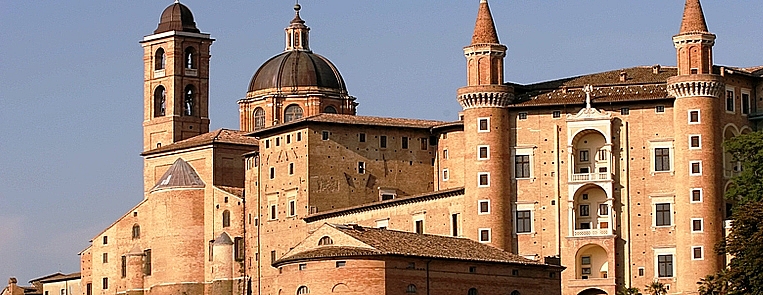
This short tour reach the most suggestive places of the Marche country-side and the flavors of the traditional local recipes.
Ascoli was the principal city of the Piceni, the Italic people who settled the region in the Iron Age and who, according to legend, followed a sacred woodpecker to their new homeland. The city was already ancient and important when it entered Rome’s orbit in the third century BC, and it has been continuously inhabited ever since.
Asculum, as Rome knew it, commanded the Via Salaria salt road and famously ignited the Social War in 91 BC, the revolt that ultimately won Roman citizenship for Italy’s allied peoples. The city was besieged and taken by Pompeius Strabo in 89 BC, then rebuilt as a fully Roman city whose grid, gate, theater, and magnificent single-arch bridge at Solesta survive today.
In the Middle Ages Ascoli’s rival noble families raised stone tower houses by the score, and chroniclers described a skyline of a hundred or more towers. Many were lowered in the thirteenth century or absorbed into later buildings, but dozens survive whole or truncated, including the tall Torre degli Ercolani, giving the city one of Italy’s most evocative medieval profiles.
Cecco d’Ascoli was a medieval poet, physician, and astrologer born near the city, who taught at Bologna and was burned at the stake in Florence in 1327 for his unorthodox teachings. Local legend claims he built the Ponte di Cecco over the Castellano river in a single night with the devil’s help, and the rebuilt bridge still carries his name.
Piazza Arringo with the cathedral, Crivelli’s polyptych, and the baptistery, Piazza del Popolo with the Palazzo dei Capitani, the Roman Porta Gemina and Solesta bridge, the Ponte di Cecco beneath Forte Malatesta, and the medieval towers and lanes of the old quarters. Trips 2 Italy sequences these into guided history days that unfold chronologically, with expert storytellers who bring each era to life.
The city endured occupation and the destruction of the ancient Ponte di Cecco in 1944, while the plateau of Colle San Marco above the city became a center of partisan resistance honored by a memorial today. Postwar restoration rebuilt the bridge faithfully, and the historic center survives as one of central Italy’s most intact travertine cityscapes, which Trips 2 Italy explores with guides who carry the full story from antiquity to the present.