
Flavors of Marche Tour 2025 – 2026
Discover the Marche countryside as hands-on cooking, local wines and charming villages create an authentic Italian culinary escape. Starting from $938 per person.
HOME » POPULAR ITALIAN DESTINATIONS » ASCOLI PICENO TRAVEL GUIDE » ASCOLI PICENO THINGS TO DO GUIDE
Ascoli Piceno Travel Guide Culture History Food and Wine Things to Do Plan My Trip
About this guide: This guide to things to do in Ascoli Piceno was written by the Italian-born travel specialists at Trips 2 Italy, a custom tour operator that has designed hand-crafted Italian vacations since 2003. Every recommendation below reflects the same first-hand knowledge our team draws on when we build a private Ascoli Piceno itinerary around a traveler’s interests, dates, and pace. Read it for your research, then let us translate it into a trip designed entirely around you.
Piazza del Popolo first, and not briefly. The square that anchors the city, and arguably the whole southern Marche region, deserves to be experienced at three different hours: morning, when the porticoes fill with espresso drinkers and the travertine is pale ivory; dusk, when the stone turns gold and the aperitivo hour begins; and night, when the lamps polish the paving into a mirror.
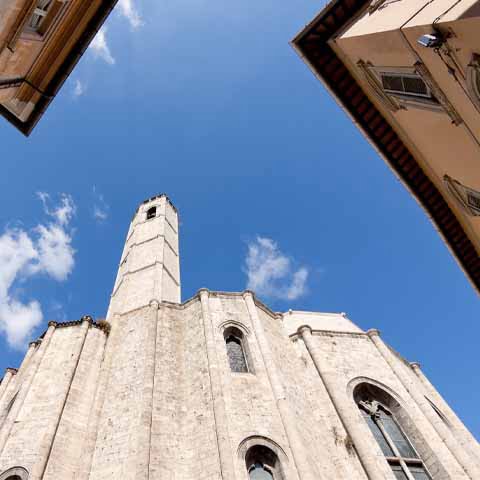
Around the square gather its protagonists: the Palazzo dei Capitani del Popolo with its battlemented tower and monumental portal, the great Gothic church of San Francesco whose flank forms one whole side of the piazza, and the Loggia dei Mercanti where cloth merchants once measured their bolts against a carved standard. A table at one of the historic cafes, an anisetta in hand, completes the initiation.
Give the square a role in every day of your stay rather than a single visit. It is the city’s crossroads, which makes it the natural opening and closing bracket for each itinerary we design: monuments and museums in between, but morning coffee and evening return always under the porticoes. Travelers consistently report that this repetition, watching one great square live through its hours, becomes the deepest memory of the city.
This is also where thoughtful planning shows its worth. We arrange private guides who unfold the square’s five centuries stone by stone, time visits to the palaces and churches around their opening rhythms, and reserve the experiences, from tower climbs to cafe tables at the golden hour, that turn a beautiful square into the memory travelers carry home.
Piazza Arringo is the city’s treasury. The Cathedral of Sant’Emidio presides over the long square, its chapel holding Carlo Crivelli’s 1473 polyptych, one of the great gold-ground masterpieces of the fifteenth century, still glowing in the church it was painted for. Beside the Duomo stands the octagonal Baptistery of San Giovanni, a jewel of twelfth-century Romanesque architecture ranked among Italy’s finest.
The square’s palaces hold the collections. The Pinacoteca Civica in the Palazzo dell’Arengo hangs Crivelli, his school, and centuries of painting in frescoed state rooms, while the archaeological museum across the square gathers the bronzes and ornaments of the ancient Piceni, the people who gave the city and the region their name. Few provincial squares in Italy concentrate so much art within a hundred paces.
The crypt of the cathedral adds the city’s patron: Sant’Emidio, invoked for centuries as protector against earthquakes, rests beneath the altar in a space of quiet power. We compose art-focused mornings here with historians who bring Crivelli’s world alive, timed for the quiet hours when the polyptych can be contemplated rather than glimpsed.
What travelers remember most is the intimacy. In Ascoli the masterpieces are met at conversational distance, in the very buildings they were made for, with time and quiet to study every gilded detail. For collectors and serious enthusiasts we extend the morning into the Crivelli trail through the surrounding hill towns, where his altarpieces wait in village churches that see a handful of visitors a day, one of Italian art travel’s most rewarding quiet pilgrimages.
Begin at the Porta Gemina, the twin-arched Roman gate where the Via Salaria entered the city, and let the grid of the Roman streets carry you east. The ruins of the Roman theater lie just inside the walls, and across the old town the Ponte di Solesta vaults the Tronto in a single travertine arch that has carried footsteps since the age of Augustus, one of the boldest surviving bridges of the Roman world.
The medieval city answers on every side. The Torre degli Ercolani rises beside the Romanesque Palazzetto Longobardo as the tallest survivor of the city of a hundred towers, the churches of Santi Vincenzo e Anastasio and San Pietro Martire hold down their quiet squares, and the lanes the Ascolani call rue thread the old quarters, some narrow enough to touch both walls with outstretched hands.
Close the walk at the Castellano gorge, where the rebuilt Ponte di Cecco, named for the poet-astrologer legend says raised it in a single night, spans the river beneath Forte Malatesta, the star-shaped sixteenth-century fortress by Antonio da Sangallo the Younger. Our private walking days sequence these monuments with expert guides so that twenty centuries unfold in a single unhurried afternoon.
For two summer weekends, Ascoli becomes the fifteenth century. The Giostra della Quintana, rooted in the city’s 1377 statutes and revived with scholarly devotion, sends armored knights of the six sestieri galloping a figure-eight course at full stretch, lances aimed at the shield of the Moor, while the crowd roars for its neighborhood. The evening edition runs in July under floodlights; the great joust owns the first Sunday of August.
The tournament is only the finale. The days around it fill with drummers and trumpeters in the streets, flag throwers spinning silk against the travertine, solemn oath-taking ceremonies, and the great historical procession, some fifteen hundred Ascolani in meticulously made period dress moving through a city that needs no set dressing. It is among the most complete historical pageants in Italy, and the setting makes it unforgettable.
Experiencing it well requires arrangements made months ahead, and that is our craft: grandstand seats with clear sightlines, tables for the festive dinners, and encounters with costume makers, riders, and sestiere families that turn spectacle into acquaintance. For travelers whose dates fall outside the summer, we arrange visits with the pageant’s artisans so the Quintana’s world opens in any season.
Cross the Roman bridge at Solesta and look back: the old town rises above the Tronto in a wall of towers and rooftops, and the riverside path below offers the city’s loveliest unhurried hour. The quarters on this northern edge keep a village hush, with washhouses, tower houses, and small Romanesque churches that most visitors never reach.
Above the city, the wooded plateau of Colle San Marco spreads oak forest, picnic meadows, and long views over the rooftops to the distant Adriatic, with the hermitage of San Marco clinging to the cliffs below. Ascolani climb there for Sunday air; travelers who join them see how the city breathes. In the center, the cloister of San Francesco and the smaller squares behind Piazza Arringo offer green and shaded pauses between monuments.
For a different register of quiet, the surrounding countryside begins within minutes of the walls. The lower Sibillini foothills hide hermitages, abbeys, and grottoes reachable by short walks, the Castellano valley climbs toward waterfalls and swimming holes the locals keep half secret, and the ridge roads through the vineyards reward slow drives with village bars where a traveler is an event.
The quietest pleasure is simply the evening. When the day visitors thin, the passeggiata claims the squares, the cafe tables fill with conversation, and the travertine city performs its nightly transformation under the lamps. We design Ascoli stays with these hours protected, because a city this beautiful should never be experienced only at noon.
The Sibillini Mountains rise within an hour, a national park of high meadows, wolf-haunted beech forests, and summits crowned by Monte Vettore at nearly 2,500 meters. The plateaus of Castelluccio famously stripe with wildflowers in late June and early July, one of Italy’s great natural spectacles, and villages like Montemonaco and Montefortino guard the legend of the Sibyl’s cave that gave the range its name, a medieval tale of an oracle in the mountain that once drew knights and scholars from across Europe. We arrange mountain days with drivers and guides who know every switchback and viewpoint, from gentle meadow walks to full hiking days for experienced walkers.
Offida, half an hour east, deserves its own excursion: a walled hill town where women still work merletto a tombolo bobbin lace on their doorsteps, where the church of Santa Maria della Rocca stands theatrical on its cliff spur, and where the cellars of the Offida DOCG pour Pecorino and Passerina. Pair it with a vineyard lunch and the day composes itself.
The wider ring of hill villages rewards travelers with more days to spend: Acquaviva Picena with its Renaissance fortress and long views to the sea, Ripatransone perched on its ridge with a famously narrow alley the locals show off with a smile, and the string of walled towns along the vineyard ridges between mountains and coast. Each is small, genuine, and welcoming, and together they map the civilization of the Piceno hills.
Eastward lies the Adriatic: San Benedetto del Tronto and its palm-lined Riviera for seafood by the water, reachable in half an hour. Westward, the Salaria corridor leads toward the wild country of the Laga and, for ambitious travelers, onward to Rome itself. We fold these excursions into active trips in Italy for walkers and cyclists, or into gentler touring days, always matched to your pace.
We begin with what you tell us. Art lovers receive Crivelli mornings and travertine architecture walks; food travelers get market mornings, fry shop tastings, and cellar afternoons in the Offida hills; active travelers get Sibillini trails and riverside cycling; families get tower legends, flag throwers, and paper cones of hot stuffed olives that convert every generation. Ascoli is small enough to know deeply, and that is exactly how we plan it.
Sequence and rhythm are the craft. We alternate the celebrated with the quiet, weave the countryside between the monuments, and protect the evening hours in the squares, because they are the city’s finest exhibit. For many travelers, Ascoli becomes the discovery chapter of a custom trip to Italy, the place their friends have never heard of and never stop hearing about.
Every detail is arranged before you arrive and supported around the clock while you travel: private guides, drivers for the mountain and wine roads, reserved tables and timed visits, and the festival seats that require a year’s foresight. Whether Ascoli fills two days or anchors a week, including a family vacation to Italy with three generations at the table, we compose it entirely around you.
Ascoli Piceno deserves more than a template. Since 2003, Trips 2 Italy has designed private Italian vacations one traveler at a time, hand selecting every experience based on what you tell us rather than fitting you into a predefined package. Our Italian-born team plans Ascoli Piceno with the knowledge of people who call Italy home, from the travertine elegance of Piazza del Popolo to the vineyards of the Ascoli hills, and we remain at your side throughout your trip with 24/7 assistance. Tell us how you imagine Ascoli Piceno, and we will craft the itinerary that matches it.
Discover the Marche countryside as hands-on cooking, local wines and charming villages create an authentic Italian culinary escape. Starting from $938 per person.
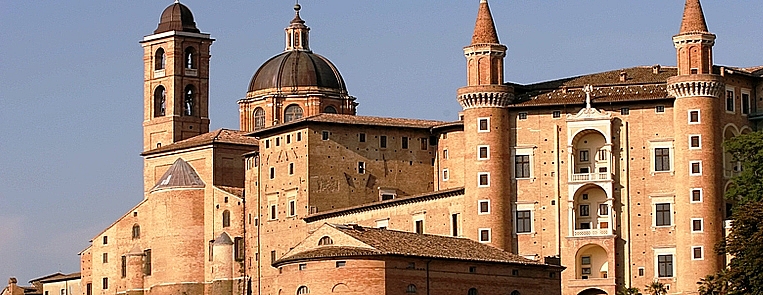
This short tour reach the most suggestive places of the Marche country-side and the flavors of the traditional local recipes.
Linger in Piazza del Popolo at morning and dusk, see Crivelli’s polyptych in the Cathedral of Sant’Emidio and the collections on Piazza Arringo, walk the Roman Porta Gemina and the single-arch Solesta bridge, climb through the medieval lanes and towers, taste olive all’ascolana and anisetta in the historic cafes, and, in summer, experience the Quintana joust.
Yes. The Quintana runs on an evening in July and the first Sunday of August, with processions, flag throwing, and neighborhood festivities surrounding each joust. Grandstand seats and the best experiences sell out far in advance, so Trips 2 Italy secures seating, festive dinners, and behind-the-scenes encounters months ahead for travelers planning around it.
The Sibillini Mountains national park, with the famous wildflower bloom of Castelluccio in early summer, lies within an hour; the lace and wine town of Offida is thirty minutes away; and the Adriatic beaches and seafood tables of San Benedetto del Tronto are half an hour east. Trips 2 Italy arranges each with private drivers and local guides.
Wonderfully so. The city is compact, safe, and theatrical, with towers and bridge legends, flag throwers in summer, paper cones of fried olives, and mountains and beaches within easy reach. We compose family itineraries so history arrives as adventure, with rhythms matched to every generation traveling.
The essential city, both great squares, the cathedral and galleries, the Roman gate and bridges, and the medieval quarters, fills two unhurried days. Adding the Sibillini Mountains, Offida, and the coast rewards a third and fourth day, and travelers who stay longer consistently call Ascoli the discovery of their Italian journey.
Very. The historic center is compact and largely level along its old Roman grid, and nearly everything worth seeing lies within a fifteen minute walk. For the mountains, wine country, and coast, Trips 2 Italy arranges private drivers, so the city stays a walking pleasure while the countryside remains within easy reach.