
Flavors of Marche Tour 2025 – 2026
Discover the Marche countryside as hands-on cooking, local wines and charming villages create an authentic Italian culinary escape. Starting from $938 per person.
HOME » POPULAR ITALIAN DESTINATIONS » ASCOLI PICENO TRAVEL GUIDE » ASCOLI PICENO CULTURE GUIDE
About this guide: This guide to the culture of Ascoli Piceno was written by the Italian-born travel specialists at Trips 2 Italy, a custom tour operator that has designed hand-crafted Italian vacations since 2003. Every recommendation below reflects the same first-hand knowledge our team draws on when we build a private Ascoli Piceno itinerary around a traveler’s interests, dates, and pace. Read it for your research, then let us translate it into a trip designed entirely around you.
Ascoli’s culture rests on an identity older than Rome. This was the capital of the Piceni, the Italic people who gave their name to the whole territory and, in time, to the southern Marche region. That deep-rooted independence still colors the city’s character: Ascolani are proud, courteous, and quietly convinced, with some justification, that their squares, their olives, and their way of life need no comparison with anywhere else.
The second foundation is stone. For more than two thousand years the city has quarried, carved, and built with its own travertine, and the material shaped not only the architecture but the civic temperament, a culture of permanence, craftsmanship, and measured pride. Palaces, churches, towers, and even humble doorways share the same warm ivory surface, carved with mottoes and emblems that turn the streets into an open-air library.
The third is ritual. Ascoli organizes its year around the Quintana and its evenings around the passeggiata and the cafe, where the anise-scented anisetta liqueur has been the local toast for a century and a half. Culture here is not an exhibit but a schedule, lived daily in the squares, and the itineraries we design are built to place travelers inside that life rather than in front of it.
What binds these threads is scale. Ascoli is small enough that culture remains personal: the carver knows the restorer, the lacemaker knows the costume maker, the cafe owner knows which table the poet preferred. For travelers, that intimacy means the city’s culture can actually be entered, one introduction at a time, rather than merely viewed, and a well-designed itinerary is essentially a sequence of the right introductions.
The city’s defining painter arrived from Venice. Carlo Crivelli, one of the most distinctive masters of the fifteenth century, settled in the Marche and produced for Ascoli’s cathedral the magnificent polyptych of 1473, a gold-ground constellation of saints around the Virgin, rendered with the jeweled precision and expressive intensity that made him unlike any other painter of his age. It remains in the chapel it was made for, a rare privilege in Italy.
Around Crivelli gathered a school. His follower Pietro Alemanno carried the style through the city’s churches, and in the next generation Cola dell’Amatrice, painter and architect at once, gave the cathedral its severe Renaissance facade and left altarpieces across the region. The Pinacoteca Civica in the Palazzo dell’Arengo gathers this inheritance into one of the most rewarding civic collections in central Italy, hung in frescoed halls above Piazza Arringo.
What distinguishes art in Ascoli is intimacy. There are no lines and no barriers of glass and noise, only quiet rooms where masterpieces can be studied at arm’s length. We pair travelers with art historians who unfold Crivelli’s world panel by panel, arrange visits timed to the quietest hours, and for devoted enthusiasts compose whole itineraries tracing the painter’s trail through the hill towns of the southern Marche.
Ascoli is among the most architecturally coherent cities in Italy because it is essentially carved from a single material. The local travertine, deposited over millennia by the mineral-rich waters of the region, was quarried from Roman times onward and used for everything: bridges, city gates, cathedrals, tower houses, palace facades, and the paving underfoot. The result is a city that changes color with the day, ivory at noon, honey at sunset, pewter by lamplight.
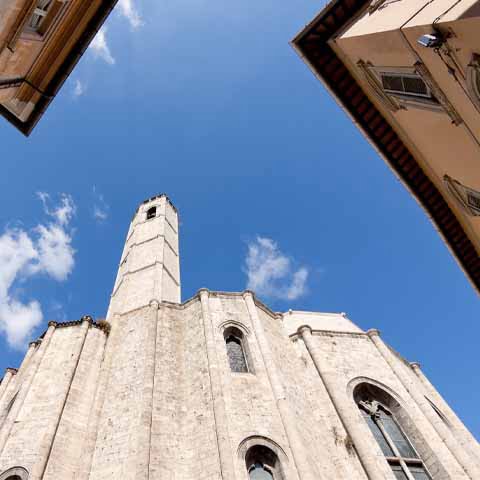
The styles read like geological strata. Roman engineering survives in the Porta Gemina and the great single-arch bridge over the Tronto; the Romanesque age left a remarkable family of churches, from the severe beauty of Santi Vincenzo e Anastasio to the baptistery on Piazza Arringo; the Middle Ages raised the tower houses; and the Renaissance composed Piazza del Popolo, wrapping the medieval square in harmonious porticoes and crowning the Palazzo dei Capitani with its great portal.
Details repay slow looking. Hundreds of carved lintels across the old town bear Latin mottoes, family emblems, and pious inscriptions, a habit that has earned Ascoli the nickname of the written city. Our architecture-focused walks pair travelers with specialists who read these facades fluently, from Roman stones reused in medieval walls to the humanist wit carved above workshop doors.
The Giostra della Quintana is Ascoli’s great civic rite, a historical joust rooted in the city’s fourteenth-century statutes and revived in 1955 with a seriousness that has never slackened. Twice each summer, on an evening in July and the first Sunday of August, armored riders representing the city’s six sestieri gallop a figure-eight course against the clock, lances leveled at the shield of a Moorish warrior effigy.
The joust is the climax of something larger. Ahead of each race, a procession of some fifteen hundred participants in meticulously researched fifteenth-century dress fills the travertine streets: magistrates and noblewomen, crossbowmen and musicians, and the flag throwers whose choreographed displays are an art form of their own. The costumes, many woven and embroidered in the city itself, make the cortege one of the finest historical pageants in Italy.
The six sestieri, Piazzarola, Porta Maggiore, Porta Romana, Porta Solesta, Porta Tufilla, and Sant’Emidio, divide the city the way Siena’s contrade divide theirs, each with its colors, its headquarters, and its jealously kept honor roll of victories. Belonging is inherited, and on joust days the neighborhoods empty into the streets behind their knights.
For the sestieri, the Quintana is identity. Neighborhood loyalty runs deep, victory banquets are legendary, and preparation continues all year in stables and sewing rooms travelers never see. We arrange Quintana experiences from well-placed grandstand seats to encounters with the pageant’s protagonists, and because demand concentrates on a handful of summer days, we secure the arrangements months ahead.
Travertine remains a living craft. The quarries and workshops of the Ascoli area still cut and carve the stone that built the city, and master carvers continue to restore facades, cut new portals, and sculpt in the material their ancestors worked for two millennia. Watching a carver raise a crisp letter or a curling acanthus leaf from the stone explains the city’s fabric better than any lecture, and we arrange workshop visits where the craft can be seen close at hand.
Half an hour away, the hill town of Offida guards one of Italy’s great textile traditions: merletto a tombolo, bobbin lace worked on cylindrical cushions with a blur of wooden bobbins. Women still work their pillows on doorsteps in fine weather, a small museum traces five centuries of the art, and the finest pieces, veils and flounces of astonishing delicacy, are treasured as heirlooms. Demonstrations with the town’s lacemakers are among the most memorable encounters we arrange in the region.
Around these headline crafts gathers a wider artisan economy: coppersmiths and ceramicists in the old quarters, the embroiderers and armorers who serve the Quintana, and the family distilleries that keep the anisetta tradition alive. Our insider access turns these from shop windows into conversations, because meeting the hands that make a thing, in the room where it is made, is the deepest form of souvenir.
Piazza del Popolo has been called the city’s drawing room for good reason: it functions as one. Morning espresso under the porticoes, the midday exchange of news, the evening aperitivo as the travertine turns gold, and the night passeggiata that fills the square with slow circulating conversation, all follow a choreography every Ascolano learns in childhood. To sit at a cafe table here is to watch a small city perform its daily self.
The cafe tradition has its own flavor, literally. Ascoli is the home of anisetta, the silky anise liqueur distilled from locally grown green anise since the mid nineteenth century, and the classic ritual pairs it with coffee or serves it as a contemplative glass in the historic cafe rooms of the square, some of them jewels of Art Nouveau decoration. The scent of anise drifting under the porticoes is as much a signature of the city as its stone.
Daily life keeps the agricultural year close. Market mornings fill the streets with produce from the Tronto valley, autumn brings mushrooms, chestnuts, and new wine down from the hills, and the fry shops hand out paper cones of hot olive all’ascolana that perfume whole lanes. Travelers who give these rhythms a day, shopping the market with a local cook or lingering through a full evening passeggiata, understand Ascoli in a way no monument can teach.
We design stays that honor these hours rather than schedule over them. A cafe table reserved for the golden moment when the square changes color, a market morning beside a cook who knows every stall by name, an evening with no plan except the passeggiata: these are deliberately composed parts of our itineraries, because in Ascoli the daily rituals are not the pause between experiences. They are the experience.
A city this authentic opens best through its people. A gallery morning becomes a different experience beside an art historian who has spent a career with Crivelli; the Quintana becomes unforgettable from seats among the sestieri faithful rather than at the edges; a lace demonstration in Offida becomes a friendship when the introduction is personal. These are the arrangements we have spent more than two decades earning across the Marche.
Because our team is Italian-born, we plan Ascoli from the inside: workshop doors that open on request, cafe tables reserved for the golden hour, village festivals that never reach guidebooks, and the mountain and vineyard excursions that show the culture’s roots in the land. We compose these encounters into Italian cultural tours built entirely around your interests, never from a predefined list.
Timing is the final craft. The Quintana weekends, the lace and harvest festivals, the winter rituals of the cafes each transform the city they touch, and we build itineraries so that the calendar becomes a reason to travel rather than an accident, weaving in the region’s entertainment and festival experiences where they serve the trip. Tell us what draws you, and we will design the cultural journey that matches it.
Ascoli Piceno deserves more than a template. Since 2003, Trips 2 Italy has designed private Italian vacations one traveler at a time, hand selecting every experience based on what you tell us rather than fitting you into a predefined package. Our Italian-born team plans Ascoli Piceno with the knowledge of people who call Italy home, from the travertine elegance of Piazza del Popolo to the vineyards of the Ascoli hills, and we remain at your side throughout your trip with 24/7 assistance. Tell us how you imagine Ascoli Piceno, and we will craft the itinerary that matches it.
Discover the Marche countryside as hands-on cooking, local wines and charming villages create an authentic Italian culinary escape. Starting from $938 per person.
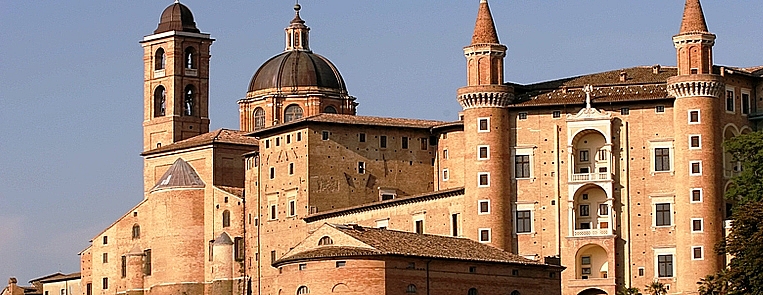
This short tour reach the most suggestive places of the Marche country-side and the flavors of the traditional local recipes.
Ascoli Piceno is known for its travertine architecture and carved inscriptions, the Renaissance harmony of Piazza del Popolo, the paintings of Carlo Crivelli in its cathedral and civic gallery, the Quintana historical joust with its fifteenth-century pageantry, the anisetta cafe ritual, and living craft traditions from stone carving to the bobbin lace of nearby Offida.
Carlo Crivelli was a Venetian-born fifteenth-century master who settled in the Marche and became its defining painter. His 1473 polyptych still stands in the chapel of Ascoli’s Cathedral of Sant’Emidio, and the Pinacoteca Civica on Piazza Arringo holds further works by Crivelli and his school. Trips 2 Italy arranges visits with art historians who bring his gilded, intensely expressive world to life.
The Giostra della Quintana runs twice each summer: an evening edition in July and the principal joust on the first Sunday of August, each preceded by a procession of some fifteen hundred participants in fifteenth-century costume. Grandstand seats and the best experiences require planning months ahead, which Trips 2 Italy handles for travelers building a trip around it.
Anisetta is Ascoli Piceno’s signature liqueur, a smooth, clear spirit distilled from green anise grown in the surrounding hills since the mid nineteenth century. The classic ritual pairs it with espresso or serves it neat in the historic cafes of Piazza del Popolo, and tasting it under the porticoes is one of the city’s essential experiences.
Travertine carving continues in local workshops, where masters still cut portals, inscriptions, and sculpture from the city’s native stone, and the nearby town of Offida preserves the art of merletto a tombolo, bobbin lace worked by hand as it has been for five centuries. Visits and demonstrations with these artisans are among the region’s most memorable cultural encounters.
Exceptionally so. The city remains genuinely lived in, with a daily rhythm of markets, passeggiata, and cafe rituals unfolding in some of Italy’s most beautiful public spaces. Travelers who want culture as living experience rather than exhibition find Ascoli deeply rewarding, especially with the local introductions a custom itinerary provides.