

Milan Rome and Perugia Cultural Travel Package
Discover vibrant Milan, the rolling hills of Umbria, and timeless Rome, where art, history, and culinary delights come together to create unforgettable memories for every traveler. Starting from $6,862
HOME » POPULAR ITALIAN DESTINATIONS » ORVIETO TRAVEL GUIDE » ORVIETO CULTURE GUIDE
About this guide: This guide to the culture of Orvieto was written by the Italian-born travel specialists at Trips 2 Italy, a custom tour operator that has designed hand-crafted Italian vacations since 2003. Every recommendation below reflects the same first-hand knowledge our team draws on when we build a private Orvieto itinerary around a traveler’s interests, dates, and pace. Read it for your research, then let us translate it into a trip designed entirely around you.
Orvieto’s culture is layered like its rock. At the bottom lies the Etruscan city of Velzna, one of the most sacred centers of that civilization; above it, the medieval commune that sheltered popes and raised one of the most beautiful cathedrals in Christendom; and on the surface, a living Umbrian town of artisans, winemakers, and musicians. Few places in Umbria or anywhere in Italy carry so many complete civilizations in so small a compass.
The cathedral square is the town’s cultural heart, but the culture itself runs underground as literally as anywhere in Europe. The caves beneath the streets held Etruscan wells and medieval olive presses, dovecotes and wine cellars, and that vertical intimacy between daily life and deep time gives Orvieto its particular character: a town that has always lived with, and inside, its own past.
Orvieto is also, by temperament, unhurried. It was in Orvieto in 1999 that the Cittaslow movement was founded, the international network of slow cities born from the slow food philosophy, committed to local craft, seasonal food, and a humane pace of life. The commitment is visible daily on the Corso, where the evening passeggiata still sets the town’s clock.
Our cultural itineraries are designed to open each of these layers with the right key: an art historian in the San Brizio chapel, a cave guide in the underground, a winemaker in a tufa cellar, and time built in to simply sit on the piazza and let the town happen around you.
In the right transept of the Duomo, the Cappella di San Brizio holds one of the most influential fresco cycles ever painted. Fra Angelico began the vaults in 1447 with his assistant Benozzo Gozzoli, completing two celestial sections before being recalled to Rome. Half a century later, in 1499, the cathedral authorities engaged Luca Signorelli of Cortona to finish the chapel, and over the following five years he covered its walls with a vision of the end of the world.
The cycle sweeps from the Preaching of the Antichrist through the Doomsday panels to the Resurrection of the Flesh and the fates of the damned and the elect. Signorelli’s great innovation was the human body itself: muscular figures climbing from the earth, twisting demons, souls rendered with an anatomical daring no painter had attempted at such scale. His skeletal dead pulling themselves from the ground remain among the most startling images of the Renaissance.
Michelangelo studied these walls, and the debt is visible to any traveler who has stood in the Sistine Chapel: the heroic nudes, the muscular angels, the sheer physicality of judgment. Giorgio Vasari recorded the connection in the sixteenth century, and art historians have traced it ever since. To see the San Brizio chapel is to watch the High Renaissance being invented on the wall of an Umbrian cathedral.
Frescoes of this density reward expert company, and this is where our arrangements matter. We pair travelers with art historians who unfold the cycle scene by scene, from Signorelli’s self-portrait beside Fra Angelico in the Antichrist panel to the portraits of Dante among the poets below, and we time the visit for the quietest hours so the chapel can be experienced as its painters intended.
The facade of the Duomo is often called the most beautiful in Italy, and the claim survives the visit. Begun after 1290 and shaped from 1310 by the Sienese architect and sculptor Lorenzo Maitani, it rises as a screen of golden mosaics, rose marble, bronze, and carved travertine, its gables and pinnacles designed to blaze in the afternoon sun. Travelers who arrive through the shadowed lane from the Corso describe the first sight of it as a physical shock.
Its greatest treasures repay a slow reading. Maitani’s marble reliefs on the four lower piers carry the story of humanity from Creation to Last Judgment in carving of astonishing delicacy, vines and figures flowing across the stone like drawing. Above them, the bronze symbols of the evangelists, the great rose window by the Florentine master Andrea Orcagna, and the mosaic fields, renewed over the centuries, complete a facade that took some three hundred years to finish.
Behind the screen, the body of the church is banded in pale travertine and blue-grey basalt, the striped Romanesque-Gothic mass anchoring the square, and the interior’s luminous simplicity makes the two frescoed chapels burn all the brighter. The Cappella del Corporale, opposite San Brizio, holds the relic of the Miracle of Bolsena in a jeweled reliquary by Ugolino di Vieri that mirrors the facade itself in miniature.
We arrange visits with the rhythm the building asks: the facade in changing light, morning and late afternoon; the reliefs read close up with a specialist; the museum of the cathedral works in the papal palaces alongside; and unhurried time inside. The Duomo is not a stop on a list; it is a full movement of any Orvieto day we design.
Orvieto’s greatest feast is rooted in a single miraculous event. In 1263, at Bolsena on the lake below, a Bohemian priest troubled by doubts about the Eucharist saw blood seep from the consecrated host onto the corporal, the altar linen, during Mass. The relic was carried to Orvieto, where Pope Urban IV was then residing, and in 1264 the pope instituted the feast of Corpus Christi for the universal church, with the office famously composed by Thomas Aquinas, who was teaching in Orvieto at the time.
The stained corporal has remained in the city ever since, kept in the Cappella del Corporale of the Duomo within Ugolino di Vieri’s magnificent enameled reliquary of 1338. The cathedral itself was raised in the decades after the miracle, and Orvietans will tell you, with justice, that their Duomo is in a real sense the shrine of Corpus Christi itself.
Each June, on the feast day, the relic is carried through the town in one of Italy’s great processions: hundreds of participants in meticulously researched medieval costume, drummers, flag bearers, nobles, and guildsmen of the historical cortege, winding from the Duomo through the length of the historic center over carpets of flowers. The days around it fill with pageantry, crossbow salutes, and neighborhood feasts.
Experiencing the feast well requires planning, because the town fills and the best vantage points are limited. We arrange Corpus Christi itineraries months ahead, with rooms on the rock and positions along the route, as part of our entertainment and festival experiences in Italy. For travelers who love living tradition, few events in central Italy match it.
Since 1993, Orvieto has closed the year with Umbria Jazz Winter, the year-end edition of Italy’s most celebrated jazz festival. For five days between the end of December and New Year, the town becomes a single instrument: concerts fill the nineteenth-century Teatro Mancinelli, the halls of the Palazzo del Popolo, the museum spaces, and the restaurants, with music running from morning to deep night.
The setting is what makes it unrepeatable. Audiences move between venues through lamplit medieval lanes, jazz spills from cellar doorways carved in tufa, and the festival traditionally culminates with a New Year celebration in the piazza and a gospel Mass in the Duomo itself, voices rising beneath the frescoes. International headliners share the days with the finest Italian players, and the scale stays intimate enough that the musicians are part of the town for a week.
For travelers, Umbria Jazz Winter solves the riddle of Italy at year’s end: a destination that is genuinely alive in the depths of winter, festive without crowds on a summer scale, and gastronomically at its peak, with truffles and new oil on every table. We compose year-end itineraries around the festival, with concert seats, rooms on the rock, and long winter lunches built into the days, and pair Orvieto with Rome for a New Year journey of uncommon character.
Orvieto was one of the great ceramic towns of medieval Italy. Its potters shaped the green and manganese-brown maiolica that archaeologists found by the thousands in the town’s own wells and caves, and that medieval repertoire, roosters and vines, heraldic beasts and geometric borders, is still produced in workshops along the lanes today. Watching a ceramicist pull a medieval pattern onto a fresh glaze connects the shop window directly to the museum case.
The town’s other signature craft is its lace, the merletto di Orvieto, born at the turn of the twentieth century when a local workshop movement adapted Irish crochet lace into a distinctly Orvietan art, its patterns drawn from the vines and figures of Maitani’s cathedral reliefs. Pieces of astonishing fineness were made for exhibitions across Europe, and a small number of hands keep the tradition alive; authentic examples are among the most meaningful things a traveler can bring home from Umbria.
Woodworkers, goldsmiths, and restorers complete the artisan map, many of them working in studios cut directly into the tufa, and the town’s slow-city ethos keeps their doors open to genuinely curious visitors. Meeting the makers is one of the pleasures we most enjoy arranging: a lace demonstration, an hour at the potter’s wheel, a workshop visit where the craftsman explains why the cathedral is his pattern book. These encounters are arranged through relationships our Italian-born team has built over two decades, and they are what travelers remember longest.
Beneath the monuments, Orvieto lives the classic rhythm of small-town Umbria. Mornings belong to the espresso bar and the market on Piazza del Popolo, where farmers from the valley sell vegetables, pecorino, and porchetta beneath the medieval palace; midday to a serious lunch and the quiet hours that follow; and early evening to the passeggiata, when the whole town seems to drift along Corso Cavour from the Torre del Moro to the piazzas and back.
The agricultural year sets the deeper calendar. The vendemmia in September and October pulls families into the Classico vineyards below the rock, November brings the olive harvest and the year’s new oil, and winter brings truffles down from the oak woods. Even the caves take part: many families still keep a cellar in the tufa beneath their houses, cool and constant, as their ancestors did centuries ago.
For travelers, the reward of engaging this daily life is a town that feels inhabited rather than performed. A market morning with a local cook, an evening concert in a medieval hall, an hour with a lacemaker or a potter: these are the encounters our Italian cultural tours are composed of, and in a town of Orvieto’s scale they are never more than a few steps apart.
Orvieto deserves more than a template. Since 2003, Trips 2 Italy has designed private Italian vacations one traveler at a time, hand selecting every experience based on what you tell us rather than fitting you into a predefined package. Our Italian-born team plans Orvieto with the knowledge of people who call Italy home, from the golden facade of the Duomo to the wine cellars carved deep into the volcanic tufa, and we remain at your side throughout your trip with 24/7 assistance. Tell us how you imagine Orvieto, and we will craft the itinerary that matches it.
Discover vibrant Milan, the rolling hills of Umbria, and timeless Rome, where art, history, and culinary delights come together to create unforgettable memories for every traveler. Starting from $6,862
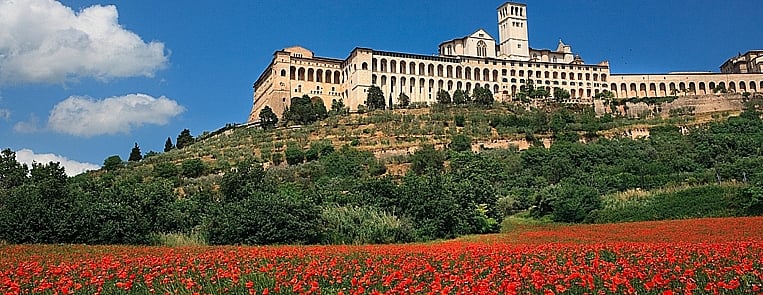
Enjoy the charming Umbria, from the Medieval and Majestic Orvieto to the peaceful Assisi. See the places where St. Francis of Assisi lived.
Orvieto is celebrated for its Duomo, whose golden facade by Lorenzo Maitani and Last Judgement frescoes by Luca Signorelli rank among the summits of Italian art, for the feast of Corpus Christi instituted here in 1264 after the Miracle of Bolsena, for Umbria Jazz Winter at year’s end, and for craft traditions in ceramics and lace that reach back to the Middle Ages.
Fra Angelico began the chapel’s vaults in 1447 with Benozzo Gozzoli, and Luca Signorelli completed the cycle between 1499 and 1504 with his Last Judgement, including the celebrated Resurrection of the Flesh. Michelangelo studied Signorelli’s muscular figures before painting the Sistine Chapel, and Trips 2 Italy pairs travelers with art historians who unfold the cycle scene by scene.
In 1263 a priest celebrating Mass at Bolsena saw blood seep from the consecrated host onto the altar linen, resolving his doubts about the Eucharist. The stained corporal was carried to Orvieto, where Pope Urban IV resided, and in 1264 he instituted the feast of Corpus Christi for the whole church. The relic is kept in the Duomo’s Cappella del Corporale and carried in procession each June.
Umbria Jazz Winter runs for five days between the end of December and New Year, filling the Teatro Mancinelli, the Palazzo del Popolo, and venues across the town with international and Italian jazz, and traditionally closing with a New Year celebration and a gospel Mass in the Duomo. Trips 2 Italy arranges year-end itineraries with concert seats and rooms on the rock reserved well ahead.
Orvieto’s workshops continue two signature traditions: maiolica ceramics in the green and brown medieval style recovered from the town’s own wells and caves, and the merletto di Orvieto, a fine lace whose patterns derive from the carved vines of the cathedral facade. Artisan studios along the lanes welcome visitors, and meeting the makers is easily arranged.
Cittaslow, the international network of slow cities, was founded in Orvieto in 1999, extending the slow food philosophy to town life itself: local craft, seasonal food, and a humane pace. Orvieto remains a standard-bearer of the movement, and travelers feel it daily in the market, the workshops, and the evening passeggiata along Corso Cavour.