
Milan Rome and Perugia Cultural Travel Package
Discover vibrant Milan, the rolling hills of Umbria, and timeless Rome, where art, history, and culinary delights come together to create unforgettable memories for every traveler. Starting from $6,862
HOME » POPULAR ITALIAN DESTINATIONS » PERUGIA TRAVEL GUIDE » PERUGIA CULTURE GUIDE
About this guide: This guide to the culture of Perugia was written by the Italian-born travel specialists at Trips 2 Italy, a custom tour operator that has designed hand-crafted Italian vacations since 2003. Every recommendation below reflects the same first-hand knowledge our team draws on when we build a private Perugia itinerary around a traveler’s interests, dates, and pace. Read it for your research, then let us translate it into a trip designed entirely around you.
Perugia’s culture is the product of a city that has been a capital for most of three millennia. As the leading city of Umbria, it gathered the region’s art, its learning, and its ambitions onto one hilltop, and the layers never stopped accumulating: Etruscan gates beneath medieval towers, Renaissance frescoes above Gothic halls, jazz drifting through papal-era courtyards every July.
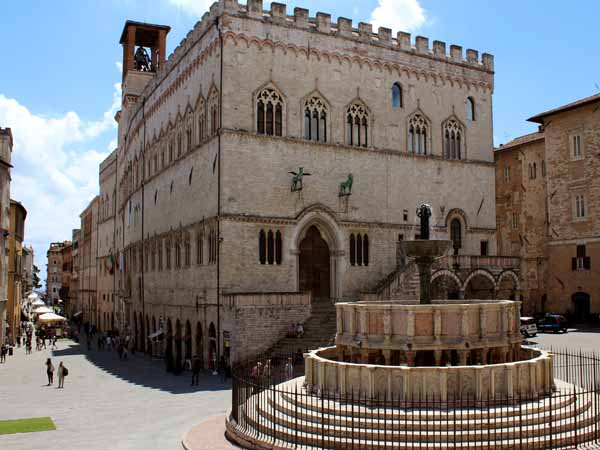
Two forces shaped the Perugian character. The first is civic pride of an almost theatrical intensity, expressed in the Palazzo dei Priori, the Fontana Maggiore, and a history of defending its independence against every comer, popes included. The second is openness: a university founded in 1308 and the University for Foreigners founded in the 1920s have kept the city young, multilingual, and curious for centuries.
What travelers feel first, though, is that the culture is lived rather than curated. The evening passeggiata still fills Corso Vannucci, the chocolate houses still perfume the autumn air, and the great medieval squares still host concerts, festivals, and conversation. Our cultural itineraries are designed to place you inside that life, not behind a rope looking at it.
There is also a distinct Perugian temperament worth knowing before you arrive: reserved at first meeting, fiercely loyal to the city, and quietly delighted when a visitor shows genuine curiosity. Conversations open over a coffee at the bar or a glass of Torgiano red, and the guides and artisans we work with embody that character. Travelers who meet the city through its people, which is how we design every cultural day here, come away describing Perugia as a friendship rather than a stop.
The Galleria Nazionale dell’Umbria, housed on the upper floors of the Palazzo dei Priori, holds one of Italy’s great regional collections, and walking it is a lesson in how the Umbrian school found its voice. Gold-ground masterpieces by Duccio, Fra Angelico, and Piero della Francesca lead toward the painters the region produced itself, above all Pietro Vannucci, called Perugino, and Bernardino di Betto, called Pinturicchio, born in Perugia around 1454.
Perugino is the city’s defining artist, so beloved that the main street bears his family name. His serene Madonnas, balanced compositions, and luminous Umbrian landscapes made him one of the most sought-after painters in Italy at the turn of the sixteenth century, summoned to fresco the Sistine Chapel walls and entrusted with training a young apprentice from Urbino named Raphael, who absorbed his master’s grace and carried it to Rome.
Seeing this art where it was painted changes how you understand it. We pair travelers with art historians who unfold the collection room by room, arrange unhurried visits timed for quiet hours, and extend the thread beyond the gallery to the altarpieces and frescoed chapels scattered through the churches of the city and the hill towns around it.
Pinturicchio deserves his own pilgrimage. Perugia’s most decorative son painted jewel-toned chapels and apartments across central Italy, and his native city keeps luminous panels in the Galleria Nazionale that show where that style began. Following the two painters through Umbria, from Perugia’s gallery to the frescoed churches of the surrounding towns, makes one of the most satisfying art itineraries in Italy, and one far quieter than its Tuscan equivalents.
Halfway along the Palazzo dei Priori, a modest doorway opens into one of the most complete Renaissance interiors in Italy. The Collegio del Cambio was the seat of the money changers’ guild, and between 1498 and 1500 the guild commissioned Perugino to fresco its audience hall, a room where commerce, classical philosophy, and Christian faith share the walls in perfect Renaissance confidence.
The program is astonishing in its ambition: prophets and sibyls, cardinal virtues enthroned above famous men of antiquity, and a nativity and transfiguration, all rendered in Perugino’s gentle light, with the painter’s own self-portrait observing from a painted pilaster. Many scholars believe the young Raphael assisted his master here, and visitors who know the pupil’s Roman works will recognize the seed of them in these walls.
The Cambio rewards slow looking, and it is small enough that timing matters. We fold it into private walking mornings with guides who read its iconography fluently, pairing it with the Sala dei Notari and the gallery upstairs so the Palazzo dei Priori unfolds as a single story of civic art. It is the kind of room that turns travelers into Renaissance enthusiasts for life.
Since 1973, Umbria Jazz has made Perugia one of the music world’s summer capitals. For ten days each July, the historic center becomes a constellation of stages, from free concerts in the piazzas and gardens to headline evenings that have hosted the greatest names in jazz and beyond. The city gives itself to the festival completely, and experiencing it from the right seats, with the right evenings chosen, is a planning art of its own.
Autumn brings Eurochocolate, when the capital of Italian chocolate celebrates its signature craft with tastings, demonstrations, and installations along the Corso. Between the two anchors runs a year of civic tradition, from sacred music in the basilicas to historical processions and neighborhood festivals that rarely reach international guidebooks but reveal the city’s living folklore.
We track this calendar year-round and build itineraries so a festival becomes the centerpiece of a trip rather than a lucky accident, securing performances, vantage points, and lodging well ahead as part of our entertainment and festival experiences in Italy. For music lovers, a July visit planned around Umbria Jazz ranks among the most joyful weeks Italy offers.
Sacred tradition keeps its own calendar here as well. Perugia’s patronal feasts still fill the cathedral and the streets around it, and the city’s medieval confraternities maintain oratories whose painted interiors open for those who know to ask. These quieter observances, woven between the famous festivals, are where travelers feel the continuity of Perugian life most directly, and our guides know exactly when and where to find them.
Perugia is Italy’s chocolate city, a title it has held since a small confectionery workshop founded here in 1907 grew into one of the most famous chocolate houses in the world. In the 1920s the city gave Italy its most beloved chocolate, a dome of gianduia and hazelnut wrapped around a love note, and the romance of that invention still colors how Perugians talk about their sweetest industry.
The tradition is anything but a museum piece. Master chocolatiers work throughout the historic center, artisan shops temper and mold their creations in view of the street, and the historic cafes serve a winter hot chocolate thick enough to justify the hilltop climb on its own. Every October, Eurochocolate turns the whole city into a celebration of the craft.
For travelers, chocolate becomes a doorway into Perugian culture. We arrange hands-on workshops where chocolatiers teach tempering and molding, private tastings that trace cocoa from bean to praline, and visits that pair the story of the city’s chocolate dynasties with the places where it happened. It is a cultural experience disguised as an indulgence, and families in particular remember it for years.
The craft also connects to a larger Perugian story about enterprise and taste. The chocolate industry grew alongside the city’s textile and fashion traditions, led in part by remarkable women entrepreneurs of the early twentieth century, and together they gave modern Perugia its reputation for refined making. A walking conversation about that history, cup of thick hot chocolate in hand, is one of the more delightful hours we design in the city.
Perugia has been a university city for more than seven centuries. The University of Perugia received its charter in 1308, making it one of Europe’s oldest, and its faculties still occupy palaces and cloisters across the center. Learning is not an institution here so much as an atmosphere, and the city’s bookshops, lecture halls, and cafe debates carry it into daily life.
The University for Foreigners, founded in the 1920s to teach Italian language and culture to the world, doubled that character. Students arrive from every continent to study Italian in a city small enough to absorb them into its rhythms, and their presence keeps Perugia cosmopolitan in a way few hill towns can claim. On any evening along the Corso you will hear a dozen languages circulating beneath the medieval stone.
This blend of ancient setting and youthful energy is why Perugia never feels embalmed. Aperitivo hour hums, concerts find full houses, and the artisan and food scenes stay inventive. Travelers who want their history animated rather than preserved find the city’s university soul one of its most attractive qualities, and we design walking days that let you feel it.
The academic heritage also opens doors for curious travelers. Historic lecture halls, botanical collections, and libraries with centuries of manuscripts sit behind facades most visitors pass without a glance, and where access allows, we arrange visits that bring this seven-century story of learning to life alongside the city’s art and food.
Perugia is generous to every visitor, but its richest rooms open through relationships. A morning in the Galleria Nazionale becomes a different experience beside an art historian who knows which five paintings matter to you. The Collegio del Cambio becomes unforgettable when its iconography is unfolded panel by panel. A chocolate workshop becomes personal when the chocolatier sets the ladle in your hand.
Because our team is Italian-born and has worked these connections since 2003, we plan the city from the inside: private guides who grew up with its stories, artisan studios and kitchens that do not advertise, festival access secured months ahead, and the quiet corners of the Tiber valley viewpoints at the hours when they belong to locals. These arrangements anchor the Italian cultural tours we design across Umbria.
Nothing we compose comes from a list of options. Every cultural day in a Trips 2 Italy itinerary is built from what you tell us about your interests, your pace, and your curiosity, then arranged through people we know by name. That method is the difference between visiting Perugia’s culture and briefly sharing its life, and the second is what our travelers remember.
Perugia deserves more than a template. Since 2003, Trips 2 Italy has designed private Italian vacations one traveler at a time, hand selecting every experience based on what you tell us rather than fitting you into a predefined package. Our Italian-born team plans Perugia with the knowledge of people who call Italy home, from the carved basins of the Fontana Maggiore to the underground streets beneath the Rocca Paolina and the chocolate workshops the city is famous for, and we remain at your side throughout your trip with 24/7 assistance. Tell us how you imagine Perugia, and we will craft the itinerary that matches it.
Discover vibrant Milan, the rolling hills of Umbria, and timeless Rome, where art, history, and culinary delights come together to create unforgettable memories for every traveler. Starting from $6,862
Discover Bettona, Assisi and Perugia as hilltop towns, art, olive oil and chocolate reveal the heart of Umbria’s timeless charm. Starting from $998 per person.
This short tour is dedicated to discovering the rustic beauty of this marvelous region full of cultural and natural richness waiting to be explored.
Perugia is celebrated as the home of the Umbrian school of painting led by Perugino, whose masterpieces fill the Galleria Nazionale dell’Umbria and the frescoed Collegio del Cambio. It is equally famous for the Umbria Jazz festival each July, the Eurochocolate festival each October, its seven-century university tradition, and the elegant evening passeggiata along Corso Vannucci.
Pietro Vannucci, called Perugino, was the leading painter of the Umbrian school and one of the most sought-after artists in Italy around 1500. He frescoed walls of the Sistine Chapel, painted the Collegio del Cambio in Perugia, and trained the young Raphael. Corso Vannucci, the city’s main street, carries his name.
Umbria Jazz fills Perugia for roughly ten days each July, with free piazza concerts and headline performances across the historic center, a tradition running since 1973. Tickets and lodging for the best evenings sell out far ahead, so Trips 2 Italy secures performances and well-placed accommodations months in advance for travelers planning around the festival.
It is the Renaissance audience hall of Perugia’s money changers’ guild, frescoed by Perugino between 1498 and 1500 inside the Palazzo dei Priori. The cycle blends classical philosophers, sibyls, and sacred scenes in one of Italy’s most complete Renaissance interiors, and many scholars believe the young Raphael assisted his master on it.
Yes, and it is one of the city’s signature pleasures. Trips 2 Italy arranges hands-on workshops with master chocolatiers, private tastings that trace the craft from bean to praline, and October itineraries built around the Eurochocolate festival. The experiences suit couples and families alike and pair beautifully with the city’s historic cafes.
The University for Foreigners has drawn students from around the world since the 1920s to study Italian language and culture, joining a home university chartered in 1308. Their presence keeps the medieval city youthful and multilingual, which is why its cafes, concerts, and evening streets hum with an energy few hill towns possess.