
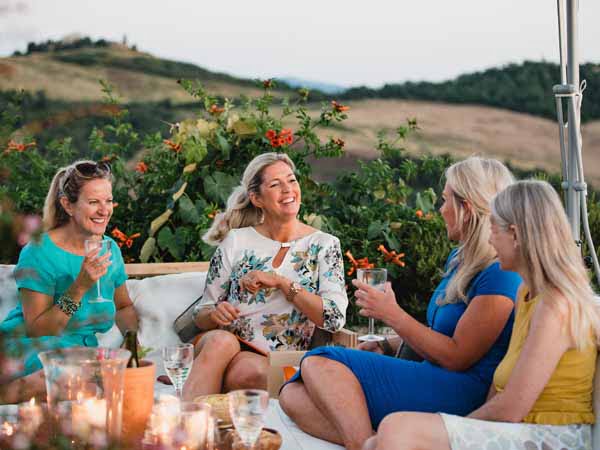
A Taste of Tuscany Tour | Vacation Packages for 2025 – 2026
Experience Monteriggioni, Siena and Chianti as you savor Tuscan wines, cook local cuisine and explore medieval towns in Italy’s countryside. Starting from $1,944 per person.
Montalcino Travel Guide Culture History Food and Wine Things to Do Plan My Trip
About this guide: This Montalcino travel guide was written by the Italian-born travel specialists at Trips 2 Italy, a custom tour operator that has designed hand-crafted Italian vacations since 2003. Every recommendation below reflects the same first-hand knowledge our team draws on when we build a private Montalcino itinerary around a traveler’s interests, dates, and pace. Read it for your research, then let us translate it into a trip designed entirely around you.
Montalcino crowns a high hill in southern Tuscany, a walled medieval town of stone lanes, watchtowers, and panoramic terraces that gave its name to one of the greatest red wines on earth. Brunello di Montalcino made this small community of winegrowers famous on every serious wine list in the world, yet the town that produces it remains remarkably intact: a fortress at the top, a graceful main piazza at the center, and vineyards falling away in every direction below the walls.
The setting multiplies the appeal. Montalcino stands at the western edge of the Val d’Orcia, the harmonious valley of cypress avenues, wheat fields, and hilltop farms that UNESCO protects as a World Heritage cultural landscape, and its ridgetop position delivers views that reach from the towers of Siena’s countryside to the wooded cone of Monte Amiata. Ten kilometers south, the Romanesque abbey of Sant’Antimo rises alone among olive groves, one of the most beautiful churches in rural Italy.
History gives the town its gravity. Montalcino was the final refuge of the Republic of Siena, holding out against Florence and its allies from 1555 to 1559 after the mother city fell, and the fortress that sheltered those last republicans still anchors the skyline. Wine, landscape, and memory are woven together here more tightly than almost anywhere in Italy, and this guide distills what two decades of planning Montalcino stays has taught our specialists about experiencing all three.
Montalcino sits in the province of Siena, roughly forty kilometers south of that city and about two hours from Florence by road, perched at 567 meters above the valleys of the Orcia, Ombrone, and Asso rivers. The town takes its name from the holm oak, the evergreen that still darkens the hill’s upper slopes, and its territory ranges from cool wooded heights down to sun-baked vineyard terraces, a variety of elevations and exposures that winemakers prize as much as photographers do.
The surrounding countryside is the Val d’Orcia at its most complete. Gravel roads lined with cypresses climb to stone farmhouses, chapels stand alone on ridgelines, and the seasons repaint the whole valley: green wheat and wildflowers in spring, gold stubble in summer, the deep russet of Sangiovese vines in autumn, and low silver light in winter. UNESCO inscribed the valley in 2004 precisely because centuries of careful farming turned it into a designed landscape, an image of good governance painted in fields.
The climate is Mediterranean with a hilltop temper: hot, dry, bright summers cooled by evening breezes on the ridge, long mild autumns that carry the harvest, and crisp winters when woodsmoke drifts over the walls. The dry, ventilated air is one of the secrets of Brunello, helping Sangiovese ripen slowly and completely, and it makes Montalcino a comfortable base even in the warmest weeks of the year.
Since 2017 the comune has also included San Giovanni d’Asso to the northeast, which folds the sculpted clay hills of the Crete Senesi and one of Tuscany’s finest white truffle territories inside Montalcino’s own boundaries. Few travelers realize that a single municipality now runs from Brunello’s vineyards to truffle woods and lunar clay ridges, a range of landscapes we use to give even a short stay remarkable variety.
Autumn leads the calendar. From mid September into October the vendemmia fills the hillsides with harvest crews and the cellars with the smell of fermenting Sangiovese, while the vineyards turn copper and gold across the Val d’Orcia. Late October adds the Sagra del Tordo, the town’s beloved archery festival, when the four historic quarters compete in medieval costume below the fortress and long tables fill with grilled meats and local wine.
Each season carries its own event. July brings the Jazz and Wine festival, when international musicians play summer evenings inside the fortress walls with a glass of Brunello never far away. September is honey season, celebrated with the Settimana del Miele, the national honey week that gathers beekeepers from across Italy in one of the country’s great honey towns. Spring covers the valley in wildflowers and offers ideal walking weather, and winter brings truffle markets nearby, quiet cellars, and unhurried tastings with the people who make the wine.
When we design a Montalcino itinerary, the calendar becomes a planning instrument. We time estate visits to what the vineyards are actually doing, secure festival experiences and harvest lunches well in advance, and set aside the luminous early and late hours for the Val d’Orcia’s photogenic roads. The right week in Montalcino is different for a wine collector, a photographer, and a honeymooning couple, and matching it to the traveler is exactly our work.
Two to three days is the sweet spot for a first visit. A full day belongs to the town itself and its wine: the fortress ramparts, the main piazza, the museums, and unhurried tastings in historic cellars. A second day belongs to the countryside, pairing the abbey of Sant’Antimo with estate visits among the vineyards, and a third opens the wider Val d’Orcia, from Pienza’s Renaissance streets to the steaming thermal pool of Bagno Vignoni.
Montalcino also excels as a base for a longer stay. Within forty five minutes lie Siena, Montepulciano, San Quirico d’Orcia, the truffle country around San Giovanni d’Asso, and the chestnut forests of Monte Amiata, which means a week based near the town never repeats itself. Travelers who settle into a countryside property here consistently tell us the slow evenings, when day visitors leave and the valley turns gold, were the hours they remember longest.
Because every Trips 2 Italy itinerary is composed by hand, we weigh Montalcino against the rest of your Italian journey rather than assigning it a standard allotment. For a wine-focused trip it can anchor several nights; within a broader Tuscan circuit it may be a rich day and evening. Either way, we build in the unscheduled hour on the walls at sunset that no packaged tour ever includes.
The fortress commands the hilltop. Built in 1361, immediately after the town passed definitively under Sienese rule, its pentagonal walls and corner towers incorporate even older structures, and its ramparts are open to visitors: the walk around them delivers a full circle of Val d’Orcia views reaching to Monte Amiata. The courtyard that once mustered soldiers now hosts concerts and festivals, a fair summary of the town’s journey from garrison to good living.
Below the fortress, the town unfolds along a spine of medieval streets to the Piazza del Popolo, where the slender tower of the thirteenth-century Palazzo dei Priori presides over a nineteenth-century caffe founded in 1888, the same year Brunello’s modern story began. The neoclassical Duomo of San Salvatore, rebuilt in the early nineteenth century over a far older church, crowns the upper town, and the sanctuary of the Madonna del Soccorso opens onto a broad belvedere.
The Musei di Montalcino, gathered in a former convent beside the church of Sant’Agostino, hold a collection that surprises nearly every visitor: luminous gold-ground panels of the Sienese school, polychrome wooden sculptures, glazed della Robbia terracottas, and archaeological finds reaching back to the Etruscans. It is a museum of real quality in a town of five thousand people, and it explains at a glance how deep this small place’s history runs.
Montalcino is countryside Italy, and it rewards travelers who arrive with their logistics already composed. The town has no rail station of its own; it is reached by road through the vineyards, about forty minutes from Siena and two hours from Florence, and the final approach, climbing through Sangiovese rows toward the walls and the fortress, is one of the finest arrivals in Tuscany. We arrange private transfers from Florence, Rome, Siena, and the region’s rail hubs so the journey itself becomes part of the experience.
Once there, the town is entirely walkable, though unmistakably vertical: lanes climb steeply from gate to fortress, which is part of the charm and worth knowing when we match accommodations to each traveler’s pace. The wine country beyond the walls is a different matter. Estates are scattered across kilometers of gravel roads, and a private driver transforms those distances into pleasure, letting every tasting be enjoyed while the cypress avenues and ridge roads become scenery rather than navigation.
Our itineraries sequence the geography so it never fights the clock: town landmarks and cellars grouped on foot, estate visits and Sant’Antimo arranged by car in logical arcs, and day trips to Pienza, Montepulciano, or Siena timed against the light and the crowds. Every transfer is confirmed in advance and supported around the clock, which in deep countryside is the difference between a seamless stay and a stressful one.
Montalcino sits naturally at the slow heart of a Tuscan journey. It pairs seamlessly with Siena, forty kilometers north, whose history it completes, and with the Val d’Orcia towns of Pienza and San Quirico d’Orcia at its doorstep, while Florence, Rome, and the Umbrian hill towns all sit within easy reach for the chapters before and after. We often position Montalcino between the intensity of the great art cities, where its unhurried rhythm restores travelers for what comes next.
The occasion shapes the composition. For couples, candlelit estate dinners and sunrise hot air balloon flights over the valley make the town a natural highlight of an Italian honeymoon. For travelers who plan around the table, Brunello country can anchor an entire wine and culinary journey through Tuscany. And for those composing something larger, Montalcino becomes a slow movement within a custom trip to Italy designed entirely from what you tell us.
This guide is one of five we have written on the town. Continue with our Montalcino culture guide, Montalcino history guide, Montalcino food and wine guide, and Montalcino things to do guide, or step back to the whole region with our Tuscany travel guide.
Montalcino deserves more than a template. Since 2003, Trips 2 Italy has designed private Italian vacations one traveler at a time, hand selecting every experience based on what you tell us rather than fitting you into a predefined package. Our Italian-born team plans Montalcino with the knowledge of people who call Italy home, from the Brunello cellars beneath the vineyards to the cypress roads of the Val d’Orcia, and we remain at your side throughout your trip with 24/7 assistance. Tell us how you imagine Montalcino, and we will craft the itinerary that matches it.
Experience Monteriggioni, Siena and Chianti as you savor Tuscan wines, cook local cuisine and explore medieval towns in Italy’s countryside. Starting from $1,944 per person.
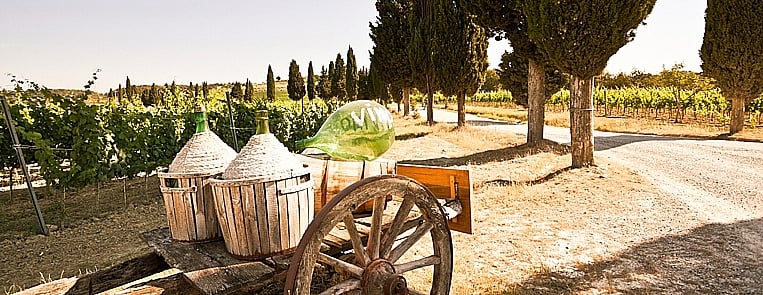
The prestigious Brunello wine is the focus of this private driving tour, as you're escorted to the best wineries in the region, for tastings and tours.
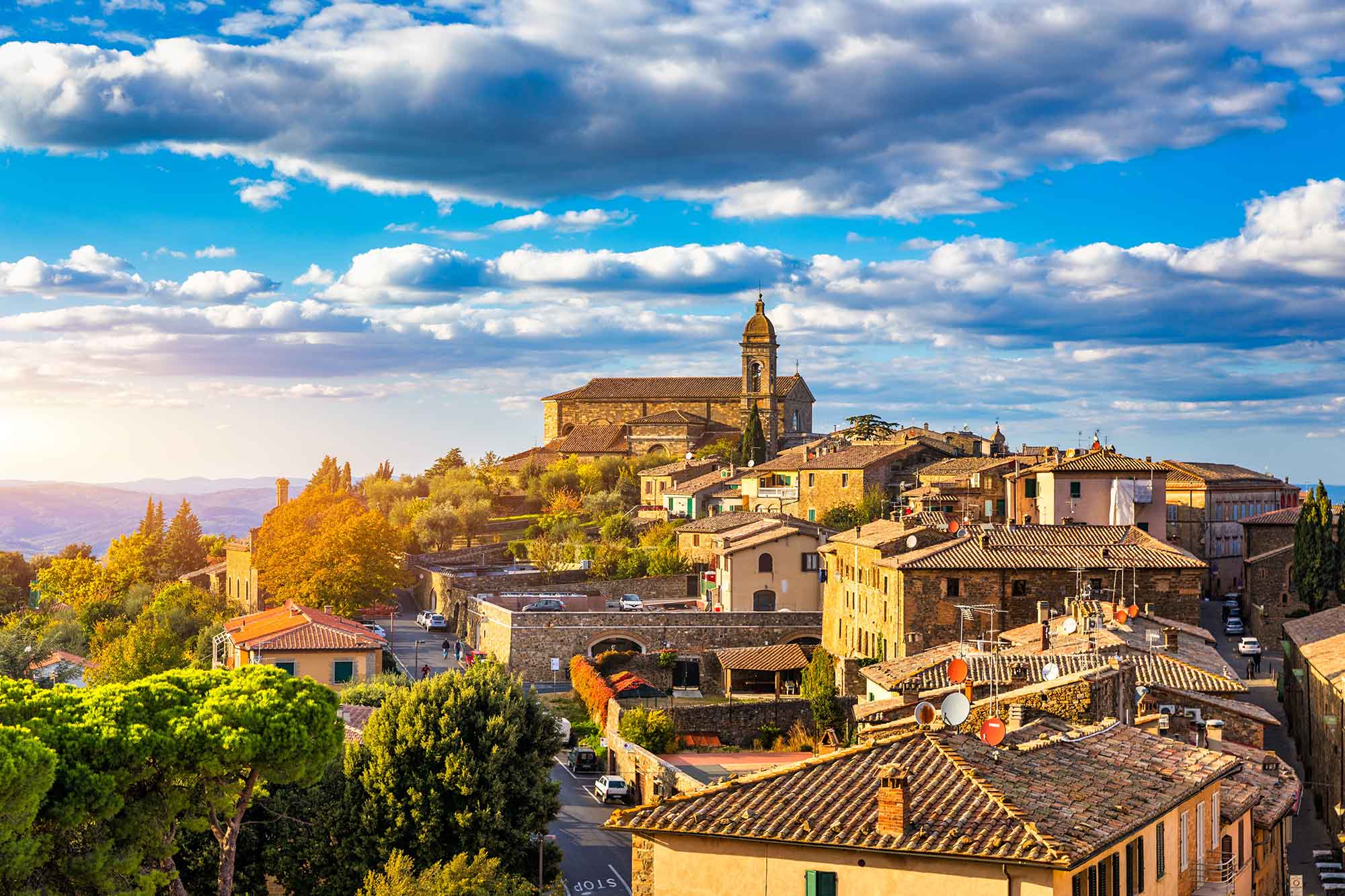
Taste the world renowned wine Brunello and enjoy the unparalleled sight of the Tuscan countryside as we tour the wineries of Montalcino.
Montalcino is world famous as the home of Brunello di Montalcino, the first Italian wine to receive DOCG status, and for its remarkably preserved medieval hilltop setting: a 14th-century fortress, the Piazza del Popolo, and views across the UNESCO-listed Val d’Orcia. It is also known for the Romanesque abbey of Sant’Antimo, a centuries-old honey tradition, and its role as the last stronghold of the Republic of Siena.
Montalcino lies about forty kilometers south of Siena, roughly a forty minute drive, and about two hours by road from Florence. There is no rail station in the town itself, so most travelers arrive by car through the vineyards. Trips 2 Italy arranges private transfers from Florence, Rome, Siena, and regional rail hubs so the journey unfolds smoothly.
Two to three days suits a first visit: one for the town, its fortress, and its cellars, one for Sant’Antimo abbey and estate visits in the countryside, and one for the Val d’Orcia towns of Pienza, San Quirico d’Orcia, and Bagno Vignoni. Wine-focused travelers happily base themselves here for longer, and we shape the length around your interests and the rest of your Italian journey.
September and October bring the grape harvest, golden vineyards, and the Sagra del Tordo archery festival, while July offers the Jazz and Wine festival inside the fortress and September adds the national honey week. Spring delivers wildflowers and ideal walking weather, and winter means quiet cellars and nearby truffle markets. Trips 2 Italy times each itinerary to what the town and its vineyards are doing in your travel window.
The town itself is compact and walkable, but the wine estates, Sant’Antimo abbey, and the Val d’Orcia are scattered across countryside roads, so a private driver is the most rewarding way to experience them. Every tasting can then be enjoyed freely while the cypress-lined roads become scenery. We arrange drivers who know the estates, the viewpoints, and the back roads personally.
Absolutely. The fortress ramparts, the Sienese paintings of the town museums, the Gregorian-chant tradition of Sant’Antimo abbey, the honey shops, and the Val d’Orcia’s most beautiful drives and walks all stand entirely on their own. Wine made Montalcino famous, but landscape, history, and small-town Tuscan life are what many travelers remember most.