
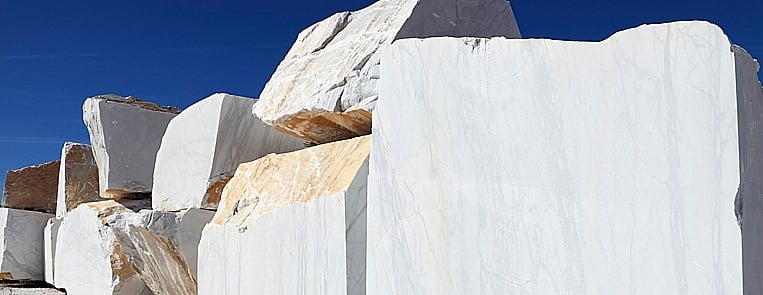
Private Tour Excursion to Lucca & the famous Marble Quarries of Carrara
Medieval art and its creation are highlighted on this interesting driving tour. We'll visit lovely Lucca and the quarries of Carrara, provider of marble for Michelangelo.
HOME » POPULAR ITALIAN DESTINATIONS » LUCCA TRAVEL GUIDE » LUCCA THINGS TO DO GUIDE
Lucca Travel Guide Culture History Food and Wine Things to Do Plan My Trip
About this guide: This guide to things to do in Lucca was written by the Italian-born travel specialists at Trips 2 Italy, a custom tour operator that has designed hand-crafted Italian vacations since 2003. Every recommendation below reflects the same first-hand knowledge our team draws on when we build a private Lucca itinerary around a traveler’s interests, dates, and pace. Read it for your research, then let us translate it into a trip designed entirely around you.
Four experiences define a first encounter with Lucca. Walk or cycle the complete circuit of the Renaissance walls, the city’s crowning glory and one of the great urban promenades of Europe. Stand in the oval of Piazza dell’Anfiteatro, where medieval houses trace a Roman amphitheater. Climb the Guinigi Tower to its rooftop garden of oaks. And step into the Duomo di San Martino to meet the Volto Santo and the tomb of Ilaria del Carretto, two of the most storied works of art in the Tuscany region.
Around that essential quartet spreads the city’s supporting cast: the theatrical arcaded facade of San Michele in Foro on the old forum, the golden mosaic of San Frediano, the elegant shopfronts of Via Fillungo, and the amphitheater lanes where every turn frames another photograph. Lucca’s genius is concentration; all of it lies within a flat, walkable half mile.
A well-made first day flows naturally: the walls by bicycle in the morning cool, the cathedral and San Michele before lunch, an unhurried meal in a courtyard, the Guinigi climb as the afternoon light warms, and an aperitivo in the amphitheater square before an evening recital. Nothing in that day requires a vehicle, a queue, or a raised voice, which is precisely the point of Lucca.
Timing shapes everything. The walls belong to residents in the early morning and to golden light before dinner, the piazzas breathe again after day visitors leave, and the churches reward the quiet hours. We sequence Lucca days around those rhythms, with guides who turn monuments into stories, so travelers meet the city at its best rather than its busiest.
The wall-top promenade is Lucca’s signature experience: a complete, unbroken loop of just over two and a half miles atop the Renaissance ramparts, shaded by avenues of plane trees, with the city’s towers and rooftops on one side and the Apuan Alps floating on the horizon of the other. It is a park, a viewpoint, and a time machine at once, and it asks to be traveled slowly.
By bicycle, the circuit becomes pure pleasure. The ride is flat, safe, and utterly scenic, passing bastions, gates, and gardens, and pausing wherever a view or a cafe below suggests itself. Families ride it with children, couples time it to sunset, and repeat visitors discover it is different at every hour. We arrange quality bicycles, and guided rides that pair the loop with the lanes and piazzas below.
Each season redraws the promenade. Spring floods the avenues with new green and the moat gardens with blossom, summer evenings turn the ramparts into the city’s open-air salon, autumn sets the plane trees alight above golden light on the mountains, and winter mornings wrap the bastions in mist that makes the towers float. Repeat the circuit on different days of a stay and it never repeats itself.
The walls also anchor Lucca’s place in active Italy. The city is a beloved base for cycling the surrounding hills and the Serchio valley, and walkers can join stretches of the Via Francigena pilgrim route that made the city rich. We fold rides and walks into itineraries as part of our active trips in Italy, matched carefully to ability and appetite.
The Duomo di San Martino leads: behind its carved Romanesque facade wait the Volto Santo in its marble tempietto and Jacopo della Quercia’s tomb of Ilaria del Carretto, a sculpture travelers cross Italy to see. San Michele in Foro answers with its astonishing tiered facade, and San Frediano with its Byzantine-style golden mosaic and the venerated remains of Santa Zita, the city’s beloved patron of domestic workers.
The museums keep the city’s story. The Puccini Museum in the composer’s birth house preserves manuscripts and the piano on which he worked. The national museums in Villa Guinigi and Palazzo Mansi hold Lucca’s art, textiles, and furnished palace rooms, tracing the silk republic’s taste across centuries, while the cathedral’s museum guards the treasury that pilgrimage built.
Beneath the church of San Giovanni e Reparata, an archaeological descent opens Roman houses, baths, and the city’s earliest cathedral in stacked layers, one of the most vivid small sites in Tuscany. Above ground, the Teatro del Giglio, the historic opera house where Rossini saw triumphant premieres, still anchors the city’s performing season on Piazza Napoleone, and its gilded horseshoe interior rewards a visit whether or not the curtain rises.
Lucca’s collections are intimate rather than overwhelming, which is their charm: an hour in each leaves room for the city itself. We pair them with specialists who bring the Volto Santo’s legends, the Guinigi fortunes, and Puccini’s Lucca to life, and we schedule visits for the quiet hours when these rooms are at their most eloquent.
Climb the Guinigi Tower in the late afternoon, when the light warms the brick and the rooftop oaks cast their improbable shade, and the whole city resolves into a map below: the amphitheater’s oval, the hundred bell towers, the green ring of the walls, the mountains beyond. The nearby Torre delle Ore, the medieval clock tower, offers the counterpoint view with its centuries-old mechanism still ticking.
Hear Puccini in his own city. Nearly every evening, the church of San Giovanni fills with his arias sung a few steps from the font where he was baptized, and in summer the Festival Puccini stages full productions in the open air at Torre del Lago beside Lake Massaciuccoli. Between them, wander the baroque garden of Palazzo Pfanner, whose statuary and lemon trees compose one of the city’s most photographed corners beneath the walls.
Then give an afternoon to Lucca’s gentler rituals: coffee on Via Fillungo, the antiques market around the cathedral on its monthly weekend, an aperitivo in the amphitheater square as the swifts circle, and the evening passeggiata that carries the whole city along with it. These unticketed hours are where Lucca wins travelers for life, and we build itineraries that protect them.
Lucca is already Tuscany’s calmest famous city, but it keeps quieter registers still. The botanical garden in the walls’ southeast corner shelters centuries-old trees and a lily pond beneath a bastion, the lanes east of the amphitheater stay residential and hushed, and the smaller churches, San Cristoforo, Santa Maria Forisportam, and their kin, offer Romanesque beauty with no audience at all.
The walls themselves turn secret at the edges of the day: at first light they belong to joggers, dog walkers, and mist on the mountains, and after dark the lamplit avenues over the gates are as romantic a walk as Italy offers. Even in high season, a traveler who steps two streets off Via Fillungo dines among Lucchesi.
Just outside the circuit, the nineteenth-century aqueduct strides across the plain toward the hills, villas and gardens dot the slopes above the city, and hamlet churches in the first folds of the mountains reward an unhurried drive. Our itineraries deliberately alternate the celebrated with the quiet, because the alternation is what keeps a trip feeling like discovery.
The Garfagnana is the great excursion: the green valley of the Serchio climbing between the Apuan Alps and the Apennines, scattered with stone villages, chestnut forests, and fortress towns like Barga and Castelnuovo. On the way stands the Ponte della Maddalena at Borgo a Mozzano, the medieval Devil’s Bridge, whose impossibly steep arch has generated legends since pilgrims first crossed it a thousand years ago.
Pisa waits half an hour south, its Field of Miracles gleaming, and pairs naturally with Lucca in a single unhurried day. The Versilia coast and the belle epoque seafront of Viareggio lie thirty minutes west, the marble quarries above Carrara make a dramatic mountain excursion, and in summer, an opera evening at Torre del Lago combines lake, sunset, and Puccini in one unforgettable outing.
Two gentler excursions suit travelers with children or a taste for gardens. Collodi, birthplace village of Pinocchio’s creator, pairs its storybook park with the spectacular terraced baroque gardens of Villa Garzoni climbing the hillside beside it, and the wine village of Montecarlo crowns its hill twenty minutes from the walls with cellars, views, and an old fortress. Either fills a golden half day between city mornings.
Florence itself is a comfortable day away, though many travelers prefer Lucca as the calm base and Florence as the excursion rather than the reverse. With a private driver, each of these days unfolds without a wasted minute, and as part of a custom trip to Italy we sequence them so the mountains, the coast, and the cities each arrive exactly when the itinerary wants them.
Lucca’s evenings begin on the walls, where residents and travelers alike drift up for the sunset circuit as the Apuan Alps turn violet, and continue in the piazzas below with an aperitivo as the amphitheater’s oval fills with easy conversation. The passeggiata along Via Fillungo is the city’s nightly theater, unchanged in spirit for generations.
Music defines the night here as in few small cities anywhere. The nightly Puccini recitals at San Giovanni, seasonal concerts in churches and the conservatory, the Lucca Summer Festival’s headline acts each July, and the lakeside opera at Torre del Lago in season mean a traveler can end nearly every Lucca evening with performance. We reserve the right seats and pair each concert with a dinner suited to it.
For families, evenings mean gelato on the piazzas, tower silhouettes, and safe, traffic-free lanes where children can roam ahead; Lucca is among the most effortless cities in Italy to enjoy with several generations, a regular centerpiece of the family vacations to Italy we design. However you shape the night, the city’s scale means the walk home is short, lamplit, and beautiful.
Lucca deserves more than a template. Since 2003, Trips 2 Italy has designed private Italian vacations one traveler at a time, hand selecting every experience based on what you tell us rather than fitting you into a predefined package. Our Italian-born team plans Lucca with the knowledge of people who call Italy home, from the tree-lined walls to the opera evenings of Puccini’s own city, and we remain at your side throughout your trip with 24/7 assistance. Tell us how you imagine Lucca, and we will craft the itinerary that matches it.
Medieval art and its creation are highlighted on this interesting driving tour. We'll visit lovely Lucca and the quarries of Carrara, provider of marble for Michelangelo.
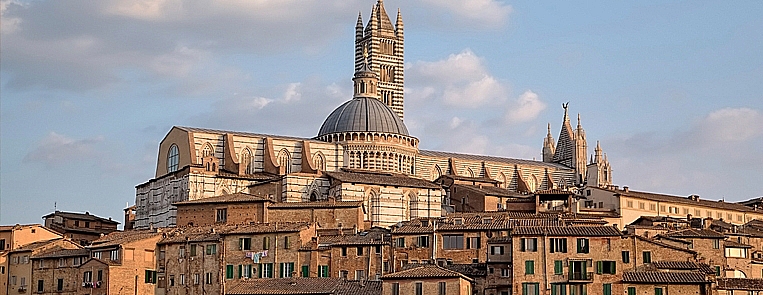
Venture on a fascinating itinerary through historic Florence and the exhilarating Tuscan countryside for a unique experience filled with art, history and traditional Tuscan fare.
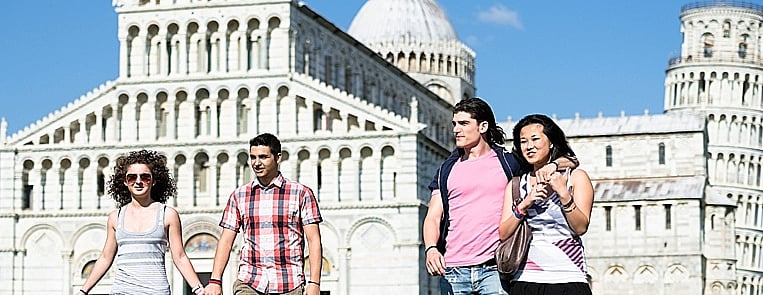
See the marvels of the medieval world, as you enjoy this private driving tour of Lucca and Pisa, home of the Leaning Tower.
Walk or cycle the complete circuit of the Renaissance walls. The tree-lined promenade atop the intact ramparts circles the city for just over two and a half miles, with rooftop and mountain views the whole way, and it is the experience that defines Lucca. Pair it with the Guinigi Tower climb and Piazza dell’Anfiteatro for the essential first day.
Cycling is the city’s signature pleasure, and the flat historic center and wall-top loop make it effortless for every age. Trips 2 Italy arranges quality bicycles and guided rides, from a gentle sunset circuit of the ramparts to countryside routes into the olive hills and the Serchio valley.
Yes. The fourteenth-century tower of Lucca’s silk merchant dynasty is crowned with a rooftop garden of holm oaks, and the climb ends beneath their branches with the entire walled city, its bell towers, and the Apuan Alps spread below. Late afternoon offers the finest light.
The Garfagnana valley with the medieval Devil’s Bridge at Borgo a Mozzano, Pisa’s Field of Miracles half an hour south, the Versilia coast, the marble country above Carrara, and summer opera at Torre del Lago all lie within easy reach. Trips 2 Italy arranges each with a private driver so the day unfolds without logistics.
Puccini’s arias are performed essentially every evening in the church of San Giovanni, steps from his birthplace, and each summer the Festival Puccini stages his operas in the open-air lakeside theater at Torre del Lago nearby. We reserve seats in advance and pair performances with dinners suited to the evening.
Wonderfully. The traffic-free lanes, the wall-top park made for bicycles, tower climbs, gelato-paced evenings, and easy day trips to mountains and beaches keep every generation engaged, and the city’s compact, safe scale makes it one of the most relaxing stops in Italy for travelers with children or grandchildren.