
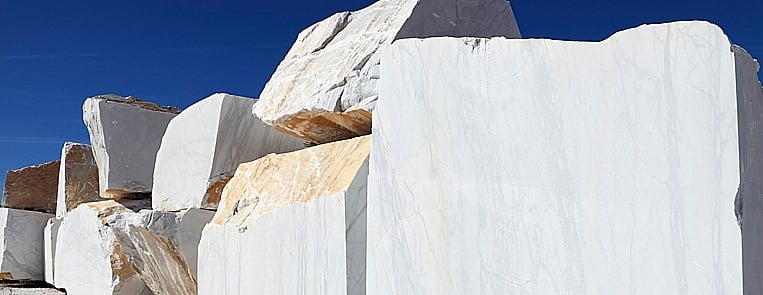
Private Tour Excursion to Lucca & the famous Marble Quarries of Carrara
Medieval art and its creation are highlighted on this interesting driving tour. We'll visit lovely Lucca and the quarries of Carrara, provider of marble for Michelangelo.
HOME » POPULAR ITALIAN DESTINATIONS » LUCCA TRAVEL GUIDE » LUCCA HISTORY GUIDE
About this guide: This guide to the history of Lucca was written by the Italian-born travel specialists at Trips 2 Italy, a custom tour operator that has designed hand-crafted Italian vacations since 2003. Every recommendation below reflects the same first-hand knowledge our team draws on when we build a private Lucca itinerary around a traveler’s interests, dates, and pace. Read it for your research, then let us translate it into a trip designed entirely around you.
Lucca began where the mountains meet the plain. Ligurian and Etruscan peoples settled the marshy basin of the Serchio river, and the name itself is thought to derive from an ancient word for marsh. Rome founded a colony here in 180 BC, and the Roman town prospered at a junction of major roads in the north of what became the Tuscany region, prominent enough that Julius Caesar, Pompey, and Crassus met at Lucca in 56 BC to renew their alliance.
No Italian city wears its Roman skeleton more visibly. The rigid grid of the colonial streets still organizes the historic center, the forum survives in name and place beneath San Michele in Foro, and the amphitheater, built in the first and second centuries, never disappeared: medieval houses grew up on its foundations, preserving its perfect oval as the Piazza dell’Anfiteatro travelers walk into today.
Christianity arrived early and rooted deeply. Lucca became a bishopric in ancient times, church building followed century after century, and by the Middle Ages the city held so many churches, some hundred within and around the walls, that the epithet has never faded. Walking this layered ground with a historian who can peel back its centuries is one of the most satisfying archaeological strolls in Tuscany, no excavation required.
Two roads made medieval Lucca rich: the Via Francigena and the silk road of its own looms. As the great pilgrimage route from northern Europe to Rome descended from the mountains, it passed through Lucca, drawn by the Volto Santo, the ancient cedar crucifix said to have been carved by Nicodemus, which made the city one of the most famous pilgrimage stops in Europe. Pilgrims brought trade, and trade brought bankers.
The silk industry transformed that prosperity into supremacy. From the twelfth and thirteenth centuries, Lucca’s weavers produced silks, velvets, and gold-threaded damasks coveted by every court and cathedral in Europe, and Lucchese merchants ran trading houses from London to the Levant. For a period, this small city was among the wealthiest in Europe, its fortunes raised on thread rather than territory.
Lucca’s medieval standing had deep political roots as well. Under the Lombards and then the Carolingians, the city served as the seat of the dukes and margraves of Tuscany, making it for centuries the region’s effective capital, and the great Matilda of Canossa counted it among her principal cities. Florence’s rise came later; through the early Middle Ages, the road to power in Tuscany ran through Lucca.
Power followed wealth. Lucca dominated much of western Tuscany, and under the brilliant condottiero Castruccio Castracani in the early fourteenth century it defeated Florence in the field and briefly ruled a swath of the region. His death in 1328 ended the empire but not the city’s independence, and the republic that followed learned to survive by wits rather than conquest.
Lucca’s proudest boast is endurance: it remained a self-governing republic until 1799, outlasting every other Tuscan state and even, by two years, the Republic of Venice. The foundation was laid in 1369, when Emperor Charles IV granted the city a charter of liberty confirming its self-rule, an independence Lucca then defended for over four centuries not with armies but with statecraft.
The method was threefold: wealth, walls, and prudence. Silk and banking money paid for a diplomacy that kept larger powers reassured, the massive new ramparts made the city a discouraging target, and the republic’s government, a merchant oligarchy led by its Gonfaloniere, avoided the adventures that ruined bolder neighbors. While Florence and Siena bled each other, Lucca traded with both and answered to neither.
The end came only with Napoleon. French troops entered in 1799, and in 1805 the republic was refashioned as a principality for Napoleon’s sister Elisa Baciocchi, who governed with energy and left the city notable civic improvements. It was a remarkably gentle conquest for a state that had lasted a millennium, and Lucchesi still speak of the republic in the tone other cities reserve for golden ages.
The walls are the republic’s autobiography in brick and earth. Built between 1504 and 1645, replacing the medieval circuit, they run just over two and a half miles around the city in a continuous rampart with eleven bastions, engineered to the most advanced military standards of the age, wide enough at the top to carry a road, and paid for by decades of silk profits deliberately invested in survival.
Their finest achievement is that they were never tested. No army ever besieged the completed walls; their sheer competence was the deterrent, and the only enemy they ever repelled was water, when the sealed gates held back a disastrous flood of the Serchio in 1812. Few fortifications in Europe can claim so perfect a record of peace.
The engineering itself repays a closer look. The ramparts rise roughly forty feet above the plain and run wide enough at the top to carry a tree-lined avenue, built as an earthen mass faced with brick so that cannon fire would bury itself rather than breach. Monumental gates, from the baroque Porta San Pietro to the nineteenth-century Porta Elisa, punctuate the circuit, and the grassy moat and glacis below survive as a green belt encircling the entire city.
The nineteenth century gave them their second life. Under Marie Louise of Bourbon, who ruled the post-Napoleonic Duchy of Lucca, the ramparts were planted with trees and transformed into a public promenade, turning the machinery of war into the most beloved park in Tuscany. That transformation, from defense to delight without a single demolition, may be the most Lucchese act in the city’s history.
After Napoleon’s fall, the Congress of Vienna made Lucca a duchy under the Bourbon Marie Louise and her son, a small, well-governed state that gave the city its promenade, its aqueduct, and much of its civilized nineteenth-century polish. In 1847, on the eve of Italian unification, the duchy was absorbed into the Grand Duchy of Tuscany, ending Lucca’s separate statehood after nearly two thousand years.
With Tuscany, Lucca joined the new Kingdom of Italy in 1860, and the following century brought its most famous son: Giacomo Puccini, born in 1858 to the cathedral’s dynasty of musicians, carried Lucca’s name into every opera house on earth. The city itself industrialized gently, prospering on paper mills, textiles, and the olive oil and wine of its hills rather than heavy industry.
The nineteenth century also made the province fashionable. Bagni di Lucca, the thermal village in the hills above the Serchio, became one of Europe’s celebrated spa resorts, drawing crowned heads and literary travelers, Byron, Shelley, and the Brownings among them, and lending the quiet duchy an unexpectedly cosmopolitan air that lingers in its villas and casino architecture today.
The twentieth century was kind to the fabric of the city. Lucca came through the Second World War with its monuments and walls essentially intact, and the postwar decades brought careful stewardship rather than reinvention. The result is a historic center of rare completeness, a city where the Roman grid, the medieval towers, and the Renaissance ramparts survive together as a single legible document.
Start in the Piazza dell’Anfiteatro, where two thousand years are visible in a single glance: a Roman arena’s perfect oval, medieval houses grown on its vaults, and a nineteenth-century market square still doing its job. A few lanes away, the Guinigi Tower tells the silk republic’s story from its rooftop garden of oaks, planted by a merchant dynasty as a crown above the city their trade enriched.
The Duomo di San Martino gathers the deepest threads. The Volto Santo, the crucifix that drew medieval Europe here on pilgrimage, still resides in its marble tempietto and still processes through candlelit streets each September, while Jacopo della Quercia’s tomb of Ilaria del Carretto, the young wife of lord Paolo Guinigi, remains one of the most tender sculptures of the early Renaissance. San Frediano’s golden mosaic and the forum church of San Michele complete the medieval constellation.
For the deepest time travel, descend beneath the church of San Giovanni e Reparata, where excavations open two thousand years in vertical section: Roman houses and baths, the city’s earliest cathedral, and the baptistery layers stacked one atop another beneath the pavement where Puccini’s family later made music. Few sites anywhere let a visitor walk down through a city’s entire biography in a single stairwell.
Then walk the walls themselves, the republic’s masterpiece, from bastion to bastion. We compose history-focused Lucca days with guides chosen for their narrative gift, sequencing Roman, medieval, and Renaissance chapters so the city’s long argument for independence unfolds as a story, and we arrange access to towers, ramparts, and collections at the hours when they speak most clearly.
Lucca treats preservation as a civic instinct rather than an obligation. The walls are maintained as a monument, park, and promenade at once, the historic center is protected from traffic and unsympathetic development, and restorations, from church facades to the amphitheater’s ring of houses, proceed with the patience of a city that has never been in a hurry.
The intangible heritage receives equal care. The nightly Puccini recitals, the Luminara procession that has walked the same route for centuries, the monthly antiques market around the cathedral, and the November oil pressing in the hills are all living continuities, sustained by residents who regard them as ordinary life rather than performance. Museums in the Villa Guinigi and Palazzo Mansi keep the city’s art and textile inheritance in dialogue with the streets that produced it.
For travelers, this stewardship means Lucca’s past is unusually intact and unusually welcoming. We arrange encounters with that preservation world where access allows, from restoration studios to archive visits, as part of our cultural tours and journeys to architectural and historical sites across Italy. In Lucca, history is a working enterprise, and meeting its custodians is one of the city’s quiet privileges.
Lucca deserves more than a template. Since 2003, Trips 2 Italy has designed private Italian vacations one traveler at a time, hand selecting every experience based on what you tell us rather than fitting you into a predefined package. Our Italian-born team plans Lucca with the knowledge of people who call Italy home, from the tree-lined walls to the opera evenings of Puccini’s own city, and we remain at your side throughout your trip with 24/7 assistance. Tell us how you imagine Lucca, and we will craft the itinerary that matches it.
Medieval art and its creation are highlighted on this interesting driving tour. We'll visit lovely Lucca and the quarries of Carrara, provider of marble for Michelangelo.
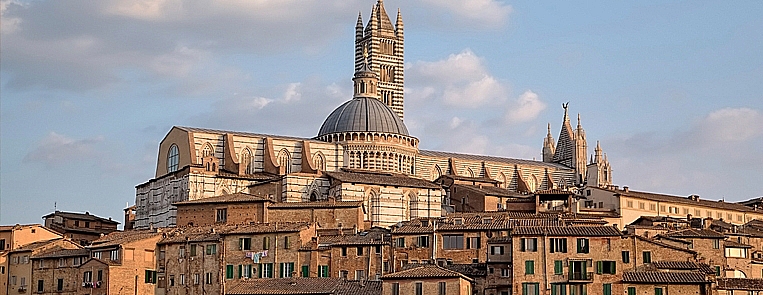
Venture on a fascinating itinerary through historic Florence and the exhilarating Tuscan countryside for a unique experience filled with art, history and traditional Tuscan fare.
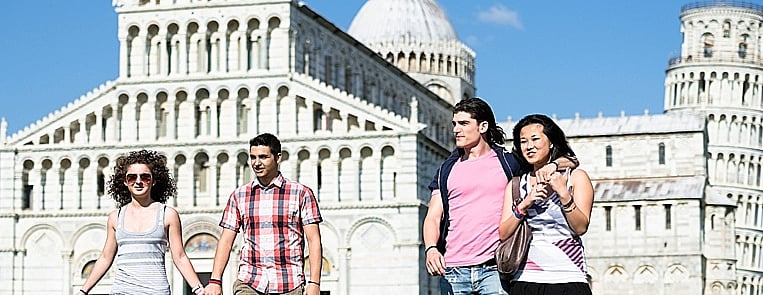
See the marvels of the medieval world, as you enjoy this private driving tour of Lucca and Pisa, home of the Leaning Tower.
Lucca was founded as a Roman colony in 180 BC on ground settled earlier by Ligurian and Etruscan peoples, giving the city well over two thousand years of continuous life. The Roman street grid still organizes the historic center, and the amphitheater’s oval survives as the Piazza dell’Anfiteatro.
Silk and banking wealth, formidable walls, and prudent diplomacy allowed the Republic of Lucca to govern itself until 1799, outlasting every other Tuscan state and even Venice. Emperor Charles IV confirmed the city’s liberty by charter in 1369, and Lucca defended that independence for over four centuries with statecraft rather than conquest.
No. The Renaissance walls, built between 1504 and 1645 with eleven bastions, were never besieged; their strength was the deterrent. Their most celebrated defense was against water, when the sealed gates held back a Serchio river flood in 1812. In the nineteenth century they were planted with trees and became the promenade travelers walk today.
The Volto Santo is an ancient wooden crucifix in Lucca’s cathedral, said by legend to have been carved by Nicodemus, which made the city one of medieval Europe’s great pilgrimage destinations on the Via Francigena. Each September 13 it is honored by the Luminara di Santa Croce, when the city glows with candlelight for its procession.
The Guinigi were Lucca’s greatest silk merchant dynasty, and Paolo Guinigi ruled the city in the early fifteenth century. Their brick tower with its rooftop garden of holm oaks remains Lucca’s most recognizable landmark, and the tomb Paolo commissioned for his wife Ilaria del Carretto, carved by Jacopo della Quercia, is a masterpiece of the early Renaissance.
Yes. We design history-centered Lucca itineraries with expert guides who unfold the city chronologically, from the Roman amphitheater and forum through the silk republic, the walls, and Puccini’s century, with access to towers, museums, and collections timed to the quietest hours. Tell us the eras that fascinate you and we will build the days around them.