
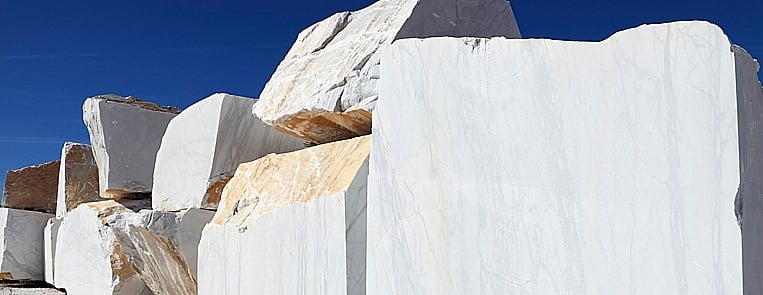
Private Tour Excursion to Lucca & the famous Marble Quarries of Carrara
Medieval art and its creation are highlighted on this interesting driving tour. We'll visit lovely Lucca and the quarries of Carrara, provider of marble for Michelangelo.
Lucca Travel Guide Culture History Food and Wine Things to Do Plan My Trip
About this guide: This Lucca travel guide was written by the Italian-born travel specialists at Trips 2 Italy, a custom tour operator that has designed hand-crafted Italian vacations since 2003. Every recommendation below reflects the same first-hand knowledge our team draws on when we build a private Lucca itinerary around a traveler’s interests, dates, and pace. Read it for your research, then let us translate it into a trip designed entirely around you.
Lucca is the walled city other walled cities are measured against. Its Renaissance ramparts, raised between 1504 and 1645, survive completely intact, and rather than sealing the town in, they lift it up: the broad tops of the walls were converted into a tree-lined promenade in the nineteenth century, so the city’s favorite park now floats above its rooftops. Inside the circuit lies a town of astonishing texture, so rich in Romanesque facades that Lucca has long been called the city of a hundred churches.
The city occupies a green plain in the northwest of the Tuscany region, and its story sets it apart from every neighbor. Medieval silk made Lucca one of the wealthiest trading cities in Europe, and shrewd diplomacy kept it an independent republic until 1799, centuries after the rest of Tuscany had bowed to Florence. That long self-possession still shows in the city’s composure, its beautifully kept streets, and its quiet confidence.
Lucca is also a living city rather than a monument. Residents cycle the lanes and the wall tops, the evening passeggiata fills Via Fillungo, the piazzas host markets and concerts, and the opera tradition of Giacomo Puccini, born here in 1858, sounds through its churches nearly every night of the year.
Our specialists have designed Lucca itineraries for more than two decades, for travelers pairing it with Florence and Pisa, for music lovers, and for those who want a gentle, elegant base in northern Tuscany. This guide distills that experience, and every trip we build from it is composed by hand around what you tell us.
Lucca lies on a fertile plain beside the Serchio river, framed by some of the most varied country in Tuscany. To the north rise the marble peaks of the Apuan Alps and the green valley of the Garfagnana, to the east spread the olive-covered hills that produce the city’s celebrated oil and wine, and to the west the coast of Versilia and the sandy beaches of Viareggio sit barely half an hour away. Pisa is closer still, roughly thirty minutes to the south.
The setting explains the city’s character. Unlike the hilltop towns of central Tuscany, Lucca is flat, which is why it became Italy’s most devoted cycling city and why exploring it feels so effortless. The walls trace a complete oval around the historic center, just over two and a half miles around, and from their tree-shaded tops the Apuan Alps and the surrounding hills form the horizon in every direction.
The climate is mild and noticeably greener than southern Tuscany, watered by the mountains that shelter the plain. Spring and autumn bring luminous walking weather, summers are warm and lively with festivals, and winters are short and quiet, with olive groves on the surrounding slopes marking the year’s rhythm through the November harvest.
The plain itself holds one of the region’s least known pleasures: the villas of the Lucchesi countryside, where the silk merchants and later nobility built summer estates whose gardens remain among the finest in Italy. Villa Reale di Marlia, where Napoleon’s sister Elisa held court, and Villa Torrigiani with its theatrical baroque facade both lie minutes from the walls, and the graceful arches of the nineteenth-century Nottolini aqueduct stride across the fields between the city and its hills.
Late spring and early autumn are the classic seasons: mild days for walking and cycling the walls, gardens in bloom or vineyards in harvest, and the city’s unhurried rhythm at its most inviting. September adds one of Lucca’s most beautiful nights, the Luminara di Santa Croce on September 13, when the historic center is lit entirely by candlelight for the procession honoring the Volto Santo.
July belongs to the Lucca Summer Festival, when international headline acts perform in the heart of the walled city, an extraordinary setting for open-air music. Summer is also the season of the Puccini Festival at nearby Torre del Lago, where the composer’s operas are staged in an open-air lakeside theater. Late October and early November bring Lucca Comics and Games, one of the largest festivals of its kind in the world, filling the city with color and costume.
Two calendar notes help the planning. The third weekend of every month brings one of Italy’s finest antiques markets to the streets around the cathedral, a browsing pleasure worth aligning a stay with. And during Comics and Games week the city is exuberant but completely full, so travelers seeking Lucca’s classic calm should choose other dates, while those who want the spectacle should reserve many months ahead.
Winter has its own rewards: quiet churches, misty walls, olive oil fresh from the press, and the city returned entirely to its residents. When we design a Lucca itinerary, your dates become an instrument. We time visits around the festivals you want, or deliberately around the calm between them, and reserve performances and experiences well in advance.
Two full days let Lucca unfold properly: one for the walls, the amphitheater piazza, and the great churches, and one for the towers, museums, and the pleasure of simply living inside the circuit, with an unhurried lunch and an evening recital. Day visitors see the monuments; overnight guests discover the city, because Lucca is at its best in the early morning and after the day trippers leave.
Lucca also makes one of northern Tuscany’s finest bases. From a hotel inside the walls, Pisa is an easy half-day, the Garfagnana and the Devil’s Bridge fill a spectacular mountain day, the wine and olive estates of the surrounding hills are minutes away, and the coast is close enough for an afternoon. A traveler could spend five days based in Lucca without repeating a landscape.
Because every Trips 2 Italy itinerary is built by hand, we weigh how Lucca fits your larger journey, whether as a serene counterpoint between Florence and the Cinque Terre or as a destination in its own right, and we give it the nights that match your pace rather than a standard allotment.
Begin with Piazza dell’Anfiteatro, the elliptical square built directly on the footprint of the Roman amphitheater. The medieval houses that ring it stand on the ancient foundations, and the oval they enclose, opened as a public square in the 1830s, is one of the most distinctive urban spaces in Italy. From there, Via Fillungo, the elegant main street, threads past centuries-old shopfronts toward the city’s towers.
The Guinigi Tower is Lucca’s signature: a fourteenth-century brick tower raised by the city’s greatest silk merchant family, crowned improbably with a rooftop garden of holm oaks. The climb ends beneath their branches with the whole city spread below. The Duomo di San Martino answers with treasures inside: the Volto Santo, the venerated wooden crucifix that made Lucca a great pilgrimage destination, and the luminous marble tomb of Ilaria del Carretto, carved by Jacopo della Quercia in the early fifteenth century.
San Michele in Foro, rising on the site of the Roman forum, carries perhaps the most theatrical facade in Tuscany, tier upon tier of carved arcades topped by the archangel Michael. Around these landmarks spread the pleasures that make Lucca beloved: the mosaic-fronted basilica of San Frediano, the clock tower of the Torre delle Ore, and the walls themselves, always a few streets away, always inviting another circuit.
The civic heart completes the picture. Piazza Napoleone, laid out under Elisa Baciocchi’s rule and shaded by planes, fronts the Palazzo Ducale where the republic once governed, and beside it stands the Teatro del Giglio, the historic opera house where Rossini premiered works and where Lucca still stages its seasons. Between monuments run the lanes that are themselves the attraction: quiet, immaculately kept, and threaded with courtyards that reward unhurried wandering.
Inside the walls, Lucca is entirely a city for walking and cycling. The historic center is flat, compact, and largely closed to traffic, and the wall-top promenade doubles as the most scenic route between its quarters. Cycling the ramparts beneath the plane trees is not merely transportation here; it is one of the city’s essential experiences, and we arrange bicycles and guided rides for travelers who want the local rhythm from the first morning.
Arriving and excursions are where our planning shows its value. Pisa’s international airport sits about thirty minutes away and Florence roughly an hour and a quarter, and we arrange private transfers for both, door to door. For the Garfagnana, the Devil’s Bridge, the wine and olive estates of the surrounding hills, and the Versilia coast, a private driver turns winding mountain and country roads into pure scenery.
Every transfer in a Trips 2 Italy itinerary is arranged in advance and supported around the clock, from the moment you land to the morning you depart. Lucca rewards travelers who never have to think about logistics, because its greatest luxury is unhurried time inside the walls.
Lucca sits at one of the most convenient crossroads in Italy. Florence lies about an hour and a quarter east, Pisa half an hour south, the Cinque Terre within easy reach up the coast, and the classic route between Tuscany and the Italian Riviera passes naturally through its gates. That position makes Lucca the ideal breathing space in a northern Italian journey: a serene, walkable interlude between the intensity of the great cities.
The occasion shapes the composition. For couples, Lucca’s candlelit lanes and wall-top sunsets make it a favorite chapter of an Italian honeymoon. For travelers who plan around the table, its olive oil estates and hill vineyards anchor a wine and culinary journey. And for those composing something larger, it becomes a graceful movement in a custom trip to Italy designed entirely from what you tell us.
This guide is one of five we have written on the city. Continue with our Lucca culture guide, Lucca history guide, Lucca food and wine guide, and Lucca things to do guide, or widen the lens with our Tuscany travel guide to see the region around the city.
Lucca deserves more than a template. Since 2003, Trips 2 Italy has designed private Italian vacations one traveler at a time, hand selecting every experience based on what you tell us rather than fitting you into a predefined package. Our Italian-born team plans Lucca with the knowledge of people who call Italy home, from the tree-lined walls to the opera evenings of Puccini’s own city, and we remain at your side throughout your trip with 24/7 assistance. Tell us how you imagine Lucca, and we will craft the itinerary that matches it.
Medieval art and its creation are highlighted on this interesting driving tour. We'll visit lovely Lucca and the quarries of Carrara, provider of marble for Michelangelo.
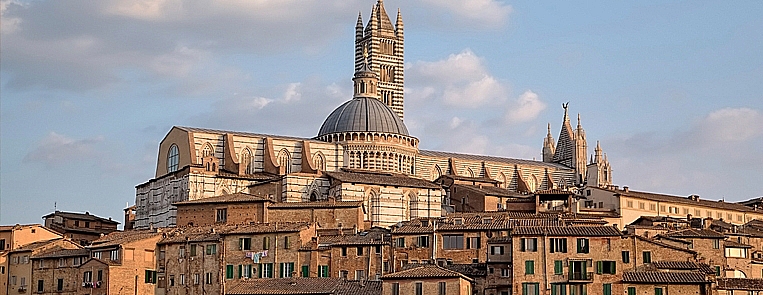
Venture on a fascinating itinerary through historic Florence and the exhilarating Tuscan countryside for a unique experience filled with art, history and traditional Tuscan fare.
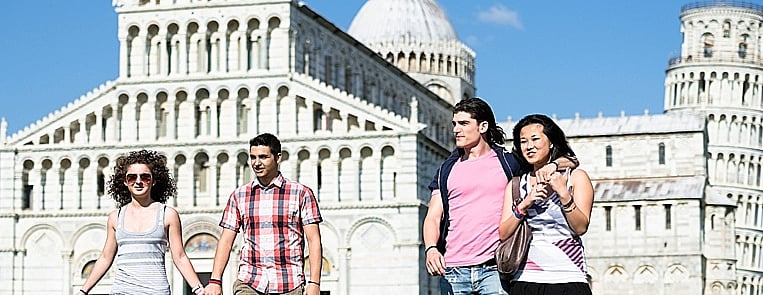
See the marvels of the medieval world, as you enjoy this private driving tour of Lucca and Pisa, home of the Leaning Tower.
Emphatically yes. Lucca offers completely intact Renaissance walls crowned by a tree-lined promenade, the amphitheater-shaped Piazza dell’Anfiteatro, the oak-topped Guinigi Tower, some of Tuscany’s finest Romanesque churches, and the birthplace and living musical legacy of Giacomo Puccini, all in a flat, walkable city that remains genuinely lived in rather than staged for visitors.
Two full days allow the walls, the great churches, the towers, and the city’s unhurried rhythm to unfold properly. Many travelers stay longer and use Lucca as a base for Pisa, the Garfagnana mountains, the surrounding wine and olive estates, and the coast. Trips 2 Italy weighs Lucca’s place in your larger journey and gives it the nights that match your pace.
Late spring and early autumn bring the finest weather for walking and cycling the walls. July offers the Lucca Summer Festival and the open-air Puccini Festival at nearby Torre del Lago, September 13 brings the candlelit Luminara di Santa Croce, and late October welcomes Lucca Comics and Games. Winter offers quiet churches and freshly pressed olive oil.
Pisa’s international airport is about thirty minutes away and Florence roughly an hour and a quarter. Trips 2 Italy arranges private transfers door to door, along with drivers for day trips into the Garfagnana, the hill estates, and the coast, so every leg of the journey is handled before you arrive.
One of the best. From inside the walls you can reach Pisa in half an hour, the Garfagnana valley and the Devil’s Bridge within an hour, the Versilia beaches in about thirty minutes, and Florence in a comfortable day trip, then return each evening to a calm, elegant walled city that day visitors have already left.
Yes. The complete rampart circuit, just over two and a half miles around, was converted into a tree-lined public promenade in the nineteenth century and is now the city’s beloved park. Walking or cycling the full loop above the rooftops, with the Apuan Alps on the horizon, is the essential Lucca experience.