
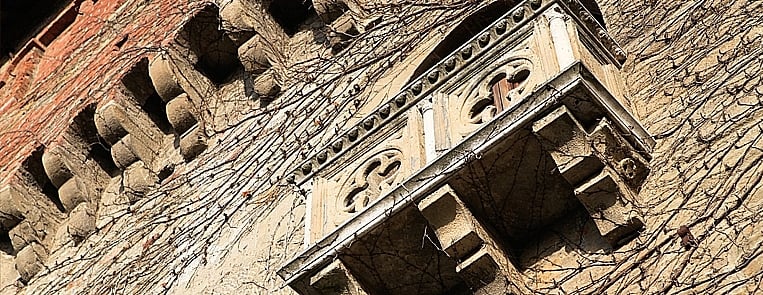
Tagliolo Castle with Wine Tasting
For the ultimate taste of Italy, this 6-hour tour offers the chance to explore Tagliolo Castle and enjoy an Italian wine tasting with some of the area’s finest vintages
HOME » POPULAR ITALIAN DESTINATIONS » CASALE MONFERRATO TRAVEL GUIDE » CASALE MONFERRATO CULTURE GUIDE
About this guide: This guide to the culture of Casale Monferrato was written by the Italian-born travel specialists at Trips 2 Italy, a custom tour operator that has designed hand-crafted Italian vacations since 2003. Every recommendation below reflects the same first-hand knowledge our team draws on when we build a private Casale Monferrato itinerary around a traveler’s interests, dates, and pace. Read it for your research, then let us translate it into a trip designed entirely around you.
Casale Monferrato’s culture is the culture of a former capital. For nearly a century this city on the Po ruled the Marquisate of Montferrat, one of the storied small states of northern Italy, and the ambitions of its court left an inheritance out of all proportion to the city’s size: a cathedral of European importance, palaces built to impress ambassadors, and a tradition of art patronage that still shapes eastern Piedmont today.
Layered over the court culture is something rarer: one of Italy’s most significant Jewish heritages. The community that settled here in the fifteenth and sixteenth centuries built a synagogue of astonishing beauty, contributed profoundly to the city’s commercial and intellectual life, and left a legacy now honored in museums that draw scholars and travelers from around the world. Few cities of any size in Europe present Christian Romanesque and Jewish baroque masterpieces within a five-minute walk of each other.
The third current is the countryside. Casale is the capital of the Monferrato Casalese, a UNESCO-recognized landscape where culture literally goes underground in the hand-carved infernot cellars, where every village festival follows the vineyard calendar, and where the identity of the people is inseparable from Barbera, from the pale local stone, and from the long view over the hills. Understanding Casale means reading all three currents together, and the itineraries we design are built to do exactly that.
What strikes travelers most is how naturally the layers coexist. The same evening passeggiata passes the cathedral of the marquises, the lanes of the old ghetto, and cafes founded when the city was Italy’s cement capital, and the same families who tend Barbera vines keep the keys to chapels, palaces, and infernot their ancestors built. Culture in Casale is not curated for visitors; it is simply continued, which makes encountering it feel less like sightseeing and more like being introduced.
The Duomo di Sant’Evasio is the artistic anchor of the city and one of the oldest and most important Romanesque cathedrals in Piedmont, consecrated by Pope Paschal II in 1107. Its glory is the narthex, a monumental two-story entrance hall unlike anything else in northern Italy, roofed by a web of interlaced stone arches whose engineering and ornament have prompted comparisons with Armenian, Islamic, and Norman architecture. Standing beneath that vault, travelers feel the reach of a medieval world far wider than one small city on the Po.
The treasures continue inside. The crucifix of Sant’Evasio, a twelfth-century wooden Christ sheathed in silver, is among the most venerated Romanesque sculptures in Italy, and the presbytery preserves fragments of medieval mosaic floors alive with allegorical scenes. Centuries of additions, from Gothic chapels to nineteenth-century restoration, turned the building into a layered document of the city’s whole artistic history.
The difference between seeing this cathedral and understanding it is the storyteller. We arrange visits with art historians who unfold the narthex arch by arch, explain how a provincial capital commanded artistic ideas from across the Mediterranean, and connect the cathedral to the sculpture, painting, and goldsmith work in the city’s museums. For travelers drawn to sacred architecture, Sant’Evasio alone justifies the journey to Casale.
Behind a deliberately modest facade in the lanes of the former ghetto opens one of the most breathtaking interiors in Italy. The synagogue of Casale Monferrato, founded in 1595 and enriched through the eighteenth century, is a baroque hall of gilded stucco, carved inscriptions, and glowing golds that scholars routinely rank among the most beautiful synagogues in Europe. Its splendor reflects the standing of a community that flourished here for five centuries as merchants, bankers, and scholars.
The synagogue complex now houses an acclaimed Jewish museum. The historic women’s gallery displays centuries of ceremonial silver, textiles, and manuscripts that narrate Jewish life in the Monferrato, while the former bakery rooms below hold the celebrated Museum of Lights, a collection of Hanukkah lamps reimagined by leading contemporary artists from around the world, a dialogue between ancient ritual and modern art that has become one of Piedmont’s most distinctive cultural attractions.
Visiting well requires arrangement, since the complex keeps limited hours and its stories deserve a knowledgeable guide. We coordinate guided visits that weave together the synagogue, the surviving streetscape of the old Jewish quarter, and the community’s role in the city’s golden ages, an experience travelers consistently describe as the emotional heart of their time in Casale.
Casale reads like a textbook of northern Italian architecture, chapter by chapter. The Torre Civica and the cathedral speak for the medieval commune, while the Castello del Monferrato on the riverfront, begun in the fourteenth century for the ruling Palaiologos dynasty, embodies the fortified capital, its hexagonal circuit of brick walls and towers built to guard the Po crossing that made the city strategically precious.
The centuries of courtly wealth built the palaces. Along Via Mameli and the streets around the cathedral rise the residences of the Monferrato aristocracy, from Renaissance courtyards to full-blown baroque theatricality, with painted facades, grand staircases, and private chapels. The church of San Domenico preserves the Renaissance taste of the Palaiologos years, Santa Caterina crowns the baroque age with its elegant dome, and the Teatro Municipale of 1791, a jewel-box court theater still in use, carries the story into the age of opera.
Even the surrounding countryside is architecture. The villages of the Monferrato Casalese are built from Pietra da Cantoni, the pale local sandstone, and beneath their houses generations of farmers carved the infernot, cellar chambers of astonishing craftsmanship recognized by UNESCO. We build architecture-focused days with specialists who read these buildings fluently, from the narthex of Sant’Evasio to the vaulted stone of a village cellar.
One more chapter hides in plain sight: the ghost of the citadel. The vast hexagonal fortress the Gonzaga raised in 1590 once made Casale the most argued-over stronghold in Italy, and although the great powers forced its demolition, its geometry still shapes the western quarters of the city, where street lines, surviving bastion fragments, and military buildings trace the outline of what contemporaries called the key to Italy. Walking that invisible fortress with a historian is one of the most evocative architectural experiences Casale offers.
The city’s most famous craft comes from the pastry bench. The krumiri, Casale’s curved golden biscuit, was created here in 1878 and is said to honor the upturned moustache of King Victor Emmanuel II; historic workshops still mix, pipe, and bake the biscuits to the original method, and watching the ridged curves emerge by hand explains why Italians consider this small city a place of pilgrimage for the sweet tooth.
In the hills, the defining craft is stonework. The carvers of Pietra da Cantoni shaped everything from church portals to the infernot themselves, chambers hollowed by hand without light or ventilation, purely to cradle wine, and the ecomuseum at Cella Monte preserves and interprets this tradition. Casale also holds one of northern Italy’s most beloved antiques markets, filling the old market pavilions on scheduled weekends with furniture, ceramics, and curiosities from the region’s attics.
Casale’s artistic workshop tradition reached its peak in Leonardo Bistolfi, the symbolist sculptor born here in 1859, whose flowing marbles made him the sculptor of choice for Italy’s great monuments; the city’s Gipsoteca preserves the plaster models from his studio, an intimate window into how a master actually worked. We arrange encounters across this whole spectrum, from pastry workshops to sculpture collections, with the people who keep each tradition alive.
Spring belongs to Riso e Rose, the beloved festival month of the Monferrato Casalese, when Casale and dozens of surrounding villages open gardens, courtyards, cellars, and infernot in a rolling celebration of the season. It is the single best window into the region’s community life, a festival made by locals for locals that welcomes travelers with genuine warmth.
Autumn answers with the wine and truffle calendar. Harvest celebrations move through the hill villages as the Barbera comes in, and the truffle fairs of the Monferrato, led by the historic market towns of the surrounding hills, fill weekends from October into December with tastings, competitions, and the unmistakable perfume of the white truffle. The city’s own calendar adds the antiques market weekends and civic festivals around the patron saint of Sant’Evasio in November.
Music runs through the year at the Teatro Municipale, one of Piedmont’s oldest working theaters, whose intimate horseshoe hall hosts opera, chamber music, and concert seasons in the very rooms where the city’s nineteenth-century society gathered. We fold performances and festivals into itineraries as part of our entertainment and festival experiences in Italy, timed so the calendar becomes a reason to travel rather than an accident.
Daily life in Casale follows the classic rhythms of the Piedmontese provinces, unhurried and deeply social. Mornings belong to the cafes under the porticoes and to the market, where farmers from the surrounding hills sell vegetables, cheeses, and salumi as they have for centuries. The day is organized around a serious lunch, and the late afternoon brings the passeggiata along the shopping streets between Piazza Mazzini and the cathedral.
Evening is the aperitivo hour, observed here with the devotion Piedmont brings to all matters of the table. Vermouth was born in this region, the local Barbera and Grignolino pour by the glass in wine bars set into historic palaces, and conversation moves at the speed of a small city where everyone knows everyone. On festival weekends the whole community migrates to the hills, to village squares, cellar doors, and long communal tables.
The deepest travel experiences here come from stepping inside these rhythms rather than observing them: a market morning with a local cook, an afternoon in an infernot village during a festival, an evening at the theater among Casalesi. Our Italian cultural tours are composed of exactly these hours, arranged through relationships and timed to the life of the place, which is how a quiet provincial capital becomes the most vivid memory of an Italian journey.
Casale Monferrato deserves more than a template. Since 2003, Trips 2 Italy has designed private Italian vacations one traveler at a time, hand selecting every experience based on what you tell us rather than fitting you into a predefined package. Our Italian-born team plans Casale Monferrato with the knowledge of people who call Italy home, from the Romanesque narthex of Sant’Evasio to the infernot cellars carved beneath the Monferrato hills, and we remain at your side throughout your trip with 24/7 assistance. Tell us how you imagine Casale Monferrato, and we will craft the itinerary that matches it.
For the ultimate taste of Italy, this 6-hour tour offers the chance to explore Tagliolo Castle and enjoy an Italian wine tasting with some of the area’s finest vintages
Rich architecture and history, fine gastronomy and wine, and splendid landscapes are all part of this mini tour off the beaten path in the Piedmont and Val d’Aosta regions.
Casale is celebrated for the Romanesque cathedral of Sant’Evasio with its extraordinary medieval narthex, for a gilded baroque synagogue considered among the most beautiful in Europe, for the castle and palaces of its era as capital of the Marquisate of Montferrat, and for the UNESCO-recognized infernot cellar culture of the surrounding hills.
Yes, through guided visits that must be arranged around the complex’s limited opening times. The visit includes the glowing baroque prayer hall, the Jewish museum’s silver and textiles, and the Museum of Lights with its contemporary artist-made Hanukkah lamps. Trips 2 Italy coordinates these visits with knowledgeable guides as part of a broader exploration of the city’s Jewish heritage.
Consecrated in 1107, the Duomo of Casale is one of Piedmont’s most important Romanesque monuments, entered through a unique two-story narthex webbed with interlaced stone arches that scholars connect to architectural ideas from across the medieval Mediterranean. Inside, the silver-clad twelfth-century crucifix and surviving mosaic floors reward unhurried attention.
Bistolfi, born in Casale in 1859, was Italy’s leading symbolist sculptor, creator of celebrated funerary monuments and public memorials across the country. The city’s Gipsoteca preserves the plaster casts and models from his studio, offering one of Italy’s most intimate views into a great sculptor’s working process.
Riso e Rose in May opens gardens, courtyards, and infernot across the Monferrato Casalese, while autumn brings harvest celebrations and the truffle fairs of the surrounding hill towns from October into December. Trips 2 Italy tracks the regional calendar year-round and builds itineraries so festivals become the trip’s centerpiece rather than a lucky accident.
Comfortably so, with the right arrangements. The city sees far fewer international visitors than Italy’s famous destinations, which is precisely its charm, so we pair travelers with English-speaking guides for the cathedral, synagogue, and infernot visits, and with drivers who bridge every conversation in the villages. The warmth of the Monferrato needs no translation.