Flavors of Langhe Tour | Vacation Packages for 2025 – 2026
Experience Piedmont’s Langhe region as you savor world-class wines, explore hilltop villages and discover castles in Italy’s gourmet heartland. Starting from $1,448 per person.
HOME » POPULAR ITALIAN DESTINATIONS » ITALIAN TRAVEL GUIDES BY REGION » PIEDMONT TRAVEL GUIDE » PIEDMONT THINGS TO DO GUIDE
Piedmont Travel Guide Culture History Food and Wine Things to Do Plan My Trip
About this guide: This guide to things to do in Piedmont was written by the Italian-born travel specialists at Trips 2 Italy, a custom tour operator that has designed hand-crafted Italian vacations since 2003. Every recommendation below reflects the same first-hand knowledge our team draws on when we build a private Piedmont itinerary around a traveler’s interests, dates, and pace. Read it for your research, then let us translate it into a trip designed entirely around you.
Turin first. The Egyptian Museum, the most important collection of its kind outside Cairo, and the National Cinema Museum inside the Mole Antonelliana form the essential pair, and both reward timed entries and a storyteller. Around them spreads the royal city: the Royal Palace with its armoury and gardens, Palazzo Madama’s two thousand years in one building, and Piazza San Carlo, the drawing room of the city, framed by arcades and historic cafes.
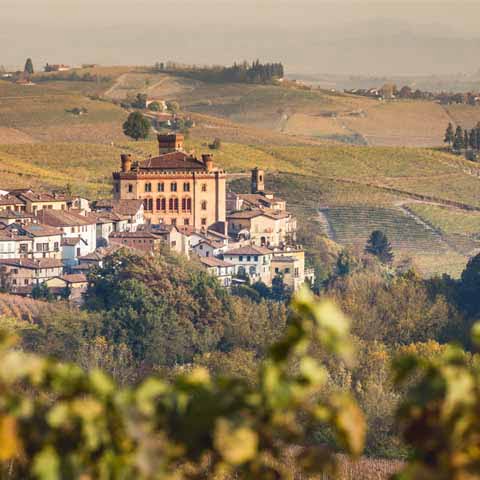
The second essential is the wine country. An hour south, the Langhe arranges Barolo, Barbaresco, La Morra, and Neive across vineyard ridges protected by UNESCO, with castle towers at Serralunga d’Alba and Grinzane Cavour offering the panoramas that explain the whole landscape at a glance. Alba anchors the district with its truffle-scented lanes and elegant shops.
Just beyond the center, two royal excursions complete Turin’s essentials: Juvarra’s hilltop Basilica of Superga, reached by a historic rack tramway and rewarded with the full sweep of city and Alps, and the vast restored palace of Venaria Reale, whose Great Gallery ranks among the most photographed Baroque spaces in Europe and whose gardens ask for a whole unhurried afternoon.
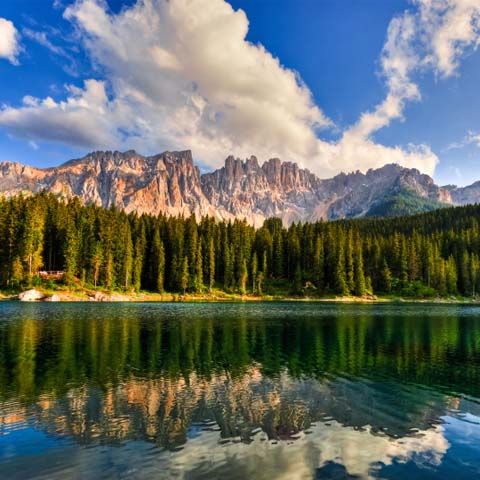
Third, water and mountains: Lake Maggiore’s Borromean Islands for Baroque gardens afloat, and the alpine skyline that gives the region its name. This is where planning shows its value. We arrange early museum entries, private cellar appointments, and boats timed to the gardens’ calmest hours, so each headline experience arrives at its best rather than its busiest.
Slowly, and from above. The Langhe reveals itself from its high points, so we begin days at a castle tower or a ridge-top village terrace, where the geometry of vineyard, village, and distant Alps composes itself like a lesson in why UNESCO protects this landscape. From there the day descends into the specifics: a morning cellar visit, a long lunch in a wine village, an afternoon estate where the family pours.
The villages deserve unhurried time. Barolo curls around its castle and wine museum, La Morra offers the belvedere every photographer seeks, Neive keeps one of Italy’s officially designated most beautiful village centers, and Monforte d’Alba stacks its lanes toward an amphitheater piazza. Between them run the ridge roads that make simply driving, with someone else at the wheel, one of the region’s finest pleasures.
In autumn the Langhe doubles its magic, fog in the valleys, amber in the vines, truffles in the kitchens, and we build harvest-season itineraries months ahead so cellars, tables, and hunts all align. A private driver, producer appointments arranged through our relationships, and one afternoon left deliberately unplanned: that is the recipe we have refined over two decades.
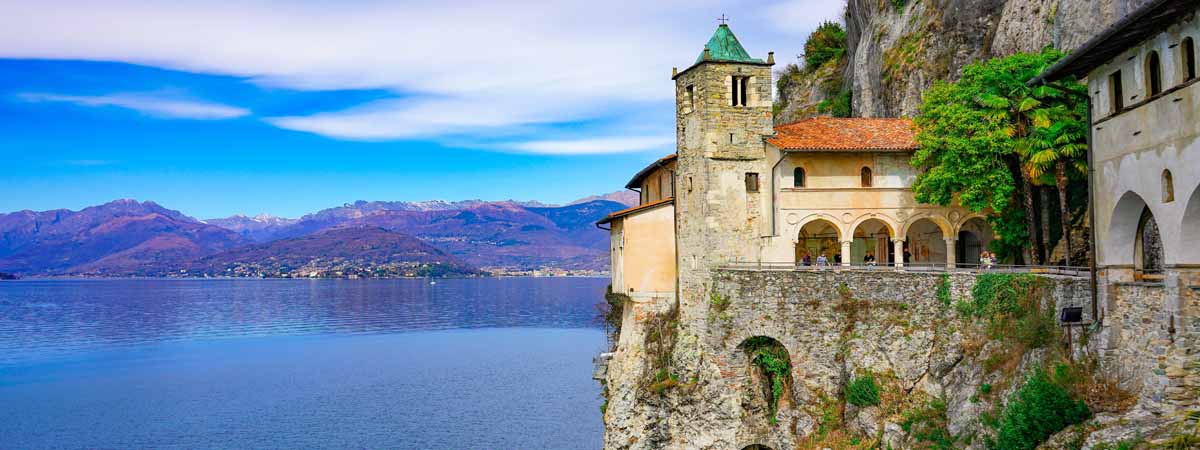
Lake Maggiore stretches between Piedmont’s shore and the mountains, and at its heart float the Borromean Islands, among the most theatrical creations of the Italian imagination. Isola Bella carries a Baroque palace and ten terraces of gardens rising from the water like a galleon in bloom, white peacocks included; Isola Madre keeps a gentler botanical paradise; and Isola dei Pescatori remains a genuine fishing village with lanes barely wider than a net.
The shore answers with Stresa’s belle epoque waterfront, camellia gardens, and the cable car toward Mottarone’s panorama over seven lakes. Just west hides Lake Orta, small, wooded, and contemplative, with the island of San Giulio floating in its center and the village of Orta San Giulio arranged around a piazza that seems designed for slow evenings. Many travelers call Orta the most romantic small lake in Italy, and we rarely argue.
The lakes keep a long season. Camellias and azaleas ignite the island gardens from March, summer brings warm evenings and open-air concerts on the Stresa shore, and autumn lays a softer light over the water while the crowds thin to nothing. Even winter has its devotees, when the mountains wear snow and the lakeside cafes turn inward and intimate.
We arrange the lakes by private boat, which changes everything: gardens reached before the crowds, a swim stop along the quiet western shore, lunch on the fishermen’s island timed to the lull, and the return crossing as the light goes gold. A lake day placed between Turin and the Langhe gives a Piedmont itinerary its perfect exhale.
The truffle hunt leads. From October into early winter, we arrange dawn walks through the oak woods of the Langhe and Roero with a trifolau and his dog, ending at a farmhouse table where the morning’s find is shaved over tajarin or eggs. Few experiences anywhere connect landscape, tradition, and plate so directly, and it is the single most remembered morning in our autumn itineraries.
The calendar offers more: harvest days in the vineyards during the vendemmia, hazelnut orchards in late summer, hands-on pasta sessions where agnolotti del plin are pinched under a grandmother’s supervision, and market mornings in Alba or at Turin’s vast Porta Palazzo with a cook who knows every stall. Cheese lovers can climb to alpine dairies where Castelmagno and Toma age in stone cellars.
Turin adds the sweet chapter, a guided walk through historic cafes and chocolate workshops, bicerin included, and the vermouth tastings that connect the city’s herbal invention to its aperitivo hour. We compose these experiences into full culinary days or scatter them through a broader itinerary, always matched to season, appetite, and pace.
The Monferrato rolls north and east of Asti in waves of vines, orchards, and honey-colored villages, carrying the same UNESCO recognition as the Langhe with a fraction of the visitors. Its infernot, tiny wine cellars hand-carved into the sandstone beneath village houses, are a World Heritage curiosity all their own, and Casale Monferrato rewards a stop with its elegant center and one of Europe’s most beautiful historic synagogues.
The rice plain around Vercelli offers a landscape found nowhere else in Italy: in late spring the flooded paddies turn the countryside into a mirror scattered with herons, farm roads run between the reflections, and the city’s basilica of Sant’Andrea stands as one of Italy’s earliest Gothic monuments. A risotto lunch at a working rice estate, grain from the surrounding fields, completes the logic of the place.
Asti itself deserves more than the pass-through it often receives. Its medieval towers and Gothic cathedral recall the banking centuries when Asti’s merchants financed half of Europe, its September Palio fills the piazza with silk and hoofbeats, and its restaurants serve the Monferrato’s kitchen with a confidence that needs no audience. Paired with a slow afternoon among the surrounding villages, it makes one of the region’s most satisfying days.
Higher still, the valleys keep their secrets: Lake Orta’s wooded calm, the pilgrimage stairways of the Sacri Monti, and stone villages in the Maira and Varaita valleys where alpine life continues at its own tempo. Our itineraries alternate the celebrated with the quiet deliberately, because the alternation is what keeps a trip feeling like discovery rather than collection.
The Alps are the region’s back garden. Gran Paradiso National Park, Italy’s first, protects ibex, chamois, and golden eagles across glacier-hung valleys shared with the Valle d’Aosta, and its trails range from meadow strolls to serious ascents. To the west, the Susa and Chisone valleys carry the great ski domain around Sestriere, where Olympic snow in 2006 confirmed what the Savoys knew a century earlier when they built the resort.
Wildlife watching here is genuinely rewarding rather than hopeful. Gran Paradiso’s ibex, saved from extinction in these very valleys, pose on ledges with regal indifference, chamois drift across the high meadows, and autumn brings the red deer rut echoing through the larch forests. We arrange naturalist guides whose eyes find in minutes what unaccompanied walkers might miss in days.
The hills invite gentler effort. Cycling and e-biking the Langhe and Monferrato ridges, walking the vineyard paths between Barolo villages, and following stretches of the old pilgrim roads reward every fitness level, and we support rides and walks with drivers so the day ends at a cellar rather than a climb. On the water, Lake Maggiore and Lake Orta offer sailing, kayaking, and swims from quiet shores. We fold these days into itineraries as part of our active trips in Italy, matched carefully to ability and appetite.
Active Piedmont pairs naturally with its rewards: the hike descends to an alpine dairy, the ride ends among the vines with a glass of Barbera, the paddle closes with lunch on a fishing island. We design the pairing deliberately, because in Piedmont effort and pleasure were never meant to be separate itineraries.
Piedmont’s position makes extensions effortless. Milan lies under an hour east by fast train, adding the Last Supper and La Scala to a northern itinerary; the Ligurian coast waits just over the southern hills, where Genoa’s palaces and the Riviera’s fishing villages trade vineyard fog for sea light; and the Valle d’Aosta rises directly north with castles beneath Mont Blanc and the Matterhorn.
The pairings work in both directions. Travelers beginning on the coast climb into the Langhe for harvest and truffles; travelers beginning at the lakes descend to Turin for museums and chocolate; and wine lovers often bridge Piedmont with Lombardy’s cellars or continue south toward the Tuscan hills, comparing Italy’s great Nebbiolo and Sangiovese landscapes across a single journey.
Within the region, the day-trip menu is generous: the Sacra di San Michele on its crag, Venaria Reale’s restored splendor, a lake day at Orta or Maggiore, or a Monferrato afternoon among the infernot cellars. For travelers with children, the region composes surprisingly well, castles, cable cars, chocolate, and boat rides, and we shape those days as part of a family vacation to Italy so every generation stays engaged.
How far to reach depends on the trip’s rhythm, and that judgment is our craft. As part of a custom trip to Italy, we sequence extensions so each refreshes the journey rather than crowding it, with every transfer arranged and supported around the clock. Piedmont rewards travelers who resist the urge to see everything, and we design itineraries that make that restraint feel like luxury.
Piedmont deserves more than a template. Since 2003, Trips 2 Italy has designed private Italian vacations one traveler at a time, hand selecting every experience based on what you tell us rather than fitting you into a predefined package. Our Italian-born team plans Piedmont with the knowledge of people who call Italy home, from Turin’s royal arcades to the vineyard ridges of the Langhe and the gardens of Lake Maggiore, and we remain at your side throughout your trip with 24/7 assistance. Tell us how you imagine Piedmont, and we will craft the itinerary that matches it.

Experience Piedmont’s Langhe region as you savor world-class wines, explore hilltop villages and discover castles in Italy’s gourmet heartland. Starting from $1,448 per person.

Experience Lake Maggiore, the Borromean Islands and Villa Taranto as gardens, lakeside towns and scenic journeys create a magical Italian escape. Starting from $1000 per person.

Experience Turin as royal palaces, grand piazzas and chocolate cafés reveal the elegance and history of Italy’s first capital. Starting from $1,644 per person.
Pair Turin with the Langhe. The Egyptian Museum and the royal city form the essential urban day, and the vineyard ridges around Barolo and Barbaresco, with a castle panorama and a family cellar visit, form the essential rural one. Trips 2 Italy arranges timed entries, private drivers, and producer appointments so both arrive at their best.
They are among the most memorable sights in northern Italy: Isola Bella’s Baroque palace and terraced gardens, Isola Madre’s botanical collections, and the lanes of Isola dei Pescatori. We arrange private boats timed to the quietest hours, which transforms the experience entirely.
Comfortably, and often better. We arrange private drivers for the wine hills and lakes, which turns ridge roads into scenery and lets every tasting be enjoyed, while fast trains connect Turin with Milan and the coast. Every transfer in our itineraries is arranged in advance and supported around the clock.
The National Cinema Museum’s playful interior, the glass panoramic lift up the Mole Antonelliana, castle visits in the Langhe, boat days on Lake Maggiore, chocolate workshops in Turin, and easy alpine walks in Gran Paradiso keep every generation engaged. Trips 2 Italy composes family itineraries so history and food arrive as adventure rather than obligation.
White truffle season runs from roughly October into December, with Alba’s International White Truffle Fair at its heart, while black truffle hunts extend other months. We arrange private hunts with a trifolau and his dog followed by a truffle lunch, one of the region’s defining experiences.
Yes. The Via Lattea domain around Sestriere, host of the 2006 Olympic alpine events, offers extensive high-altitude skiing on the French border, and smaller valleys keep a quieter charm. A winter itinerary can pair mountain days with Turin’s cafes, museums, and chocolate at their most atmospheric.